
Strategic Investment in Gradium Marks a New Era for Voice AI Innovation
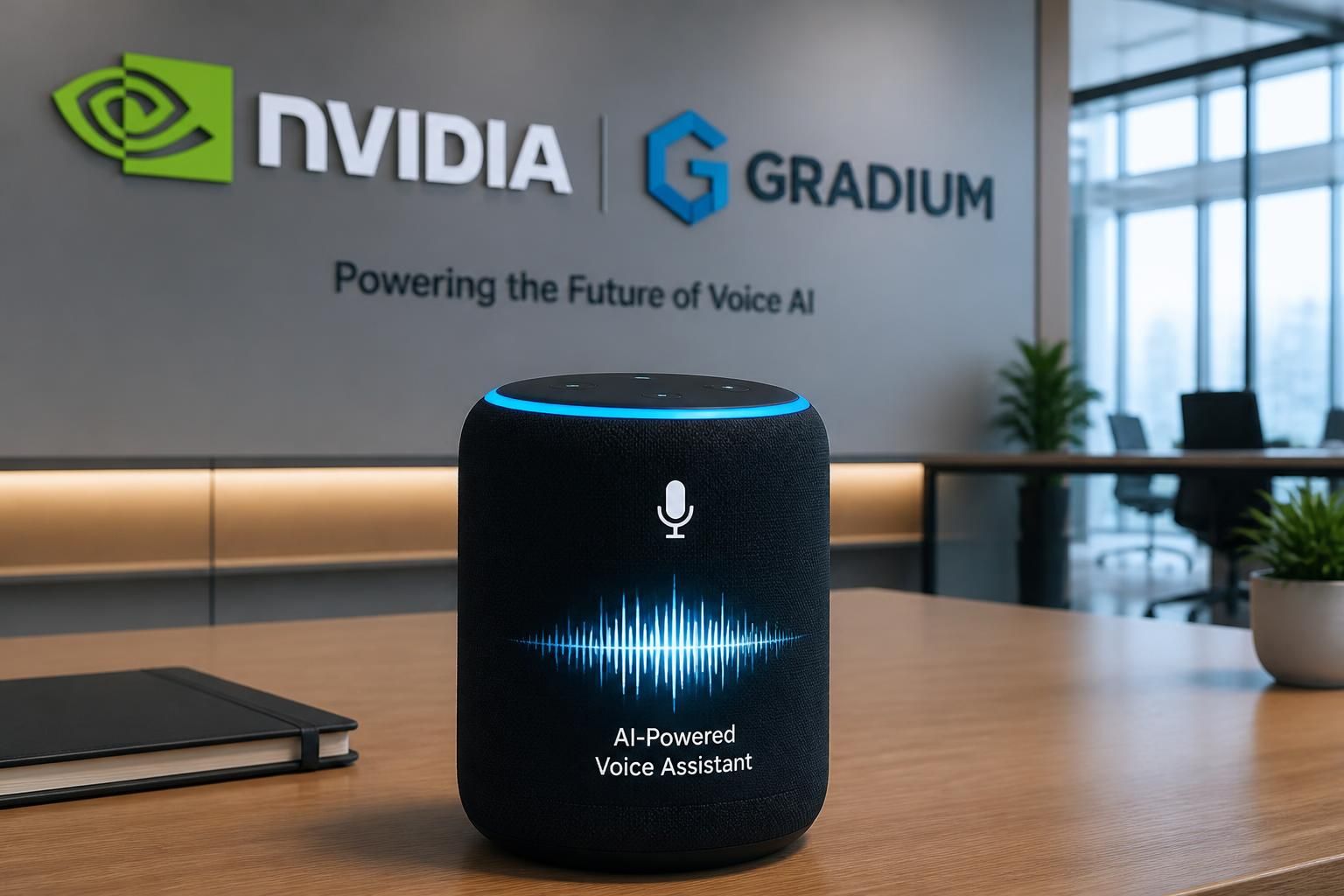
Voice AI is rapidly evolving, and the recent substantial investment round marks a significant turning point for the field. Gradium, a Paris-based startup specialized in developing cutting-edge voice AI technologies, has successfully closed a $100 million seed funding round, prominently backed by industry heavyweight Nvidia. This infusion of capital is designed to accelerate the company’s research, expand its market presence, and push the boundaries of artificial intelligence in voice technology.
Since its foundation in September, Gradium has distinguished itself through pioneering advancements in real-time voice synthesis, speech recognition, and translation capabilities. The inclusion of Nvidia as an investor does more than inject fresh capital; it forms a vital tech partnership that harnesses Nvidia’s expertise in AI compute infrastructure and machine learning acceleration for Gradium’s ambitious product roadmap.
This alliance reflects a broader trend where AI investment rounds are not mere financial gestures but strategic collaborations aimed at combining the best hardware and algorithmic breakthroughs. Nvidia’s backing amplifies Gradium’s potential to offer ultra-low-latency applications, which are critical for real-world deployments where immediate response times enhance user experience, such as in smart tourism or interactive guided tours.
The $100 million funding milestone also facilitates Gradium’s planned expansion to the San Francisco Bay Area. Establishing a presence in Silicon Valley places Gradium in closer proximity to pivotal industry partners, AI talent, and key enterprise clients who increasingly demand sophisticated voice AI solutions for their operations.
For organizations seeking to leverage voice technology in 2026, this development underscores the importance of partnering with companies that combine scientific research foundations with the agility to bring innovations swiftly to market. In the context of tourism and cultural mediation, innovations enabled by investments like those from Nvidia will empower tools such as intelligent audio guides that deliver high-quality, natural-sounding narration and real-time translation on mobile devices, enhancing visitor engagement without complexity.
Advancing Real-Time Voice AI Models: The Importance of Ultra-Low Latency
Timing and responsiveness define the user experience in many voice AI applications. Gradium’s focus on ultra-low-latency voice technology is a critical differentiator, enabling seamless, instantaneous interaction that is indispensable for both consumer and enterprise markets. This advancement is not trivial given the complexity of generating realistic text-to-speech output while simultaneously processing and translating speech inputs.
Key Innovations Driving Real-Time Voice Interaction
Gradium’s proprietary models balance the competing demands of accuracy, naturalness, and speed through algorithmic innovations developed by researchers with backgrounds in DeepMind and Meta. Their work has resulted in the creation of:
- ⚡ Gradium Translate: A speech-to-speech translation model with ultra-low latency, enabling fluid communication across languages without perceptible delay.
- 🗣 Phonon: An on-device text-to-speech model optimized for edge devices, allowing high-quality voice generation without reliance on cloud infrastructure.
- 🤖 Gradbot: An open-source framework for building production-grade voice agents, expanding opportunities for developers to create intelligent conversational tools.
These products reflect a comprehensive approach to voice AI that goes beyond isolated technologies to an integrated ecosystem capable of supporting complex applications like automated guides in museums or real-time customer service bots. The low-latency advantage enables scenarios where interruptions or pauses are unacceptable, such as in live tours or healthcare diagnostics.
Furthermore, Gradium’s technology caters to sectors outside tourism, including healthcare, media, and AI-driven consumer applications. The careful design of models that can run efficiently on edge devices compliments the growing demand for privacy-conscious solutions where data does not leave the user’s device.
For professionals aiming to deploy advanced interactive audio experiences, understanding how ultra-low latency enhances voice agent fluidity is a crucial insight. This is an area where Gradium’s collaboration with Nvidia on machine learning acceleration has a direct impact, providing the computational efficiency necessary for real-time performance.
Global Expansion and Market Dynamics Shaping the Voice AI Sector
The $100 million funding round not only fuels technical innovation but also signals Gradium’s intent to scale internationally, with a notable emphasis on establishing a footprint in the San Francisco Bay Area. This geographic expansion is strategic, reflecting the vibrant ecosystem of AI startups, enterprise clients, and research institutions in Silicon Valley that facilitate access to capital, collaborations, and customer engagement.
As voice AI applications embed deeply across industries—from smart tourism to customer engagement platforms—the competition intensifies. Gradium is positioning itself against established players such as ElevenLabs, Google’s AI divisions, and others vying to capture market share in voice technology.
This competitive landscape propels continued investment into research and development and drives diversification of voice AI applications, including:
- 🌍 Multilingual and real-time translation
- 📞 Automated voice calls and AI agents for customer service, improving scalability and personalization
- 🧠 Integration with AI-driven analytics to derive actionable insights from voice interactions
- 🏢 Corporate applications enhancing workflows with voice-enabled commands and assistance
The table below illustrates the evolving competitive factors impacting voice AI companies in 2026, highlighting key elements like latency, ease of integration, language support, and developer ecosystem maturity.
| 🌟 Feature | Gradium | Competitor A | Competitor B |
|---|---|---|---|
| ⏱ Ultra-low latency | ✔️ | ✔️ | ❌ |
| 🌐 Multilingual support | ✔️ | ✔️ | ✔️ |
| 🔧 Developer tooling | ✔️ (Gradbot framework) | Partial | Limited |
| 🔒 On-device capabilities | ✔️ (Phonon) | Limited | None |
For entities in smart tourism and cultural mediation, the availability of sophisticated developer tools and edge device deployment options means the potential to craft tailored audio experiences that balance quality, responsiveness, and privacy. The competition ultimately fuels more innovative and accessible voice AI solutions for end users.
Practical Applications of Voice AI Revolutionizing the Tourism and Cultural Sectors
The integration of voice AI technologies, powered by investments such as the one from Nvidia into Gradium, opens innovative avenues for smart tourism and cultural institutions aiming to enhance visitor engagement through personalized, accessible audio experiences.
Tour guides, museums, and cultural sites can leverage advanced voice AI for:
- 🎧 Immersive, real-time multilingual guided tours without requiring human guides on-site
- 💬 Interactive question-and-answer capabilities allowing visitors to engage dynamically with exhibits
- 🔊 High-quality narration and storytelling, adaptable to diverse visitor preferences and accessibility needs
- 🕒 Immediate speech synthesis for special events or unexpected changes in tour schedules
Such implementations make cultural heritage more approachable and inclusive. The use of edge devices powered by models like Phonon ensures that audio delivery is smooth even in locations with limited connectivity, preserving the quality and reliability necessary for an engaging experience.
Moreover, by incorporating tools like Gradbot, tour operators and cultural organizations can develop custom voice agents tailored to their content, ensuring the narrative tone and information match their unique audience profiles. This technology empowers operators to remain technologically competitive without steep development costs or complex system management.
This evolution aligns with broader trends toward making digital cultural mediation both scalable and personalized, crucial for reaching wider and more diverse audiences. For more detailed insights into integrating voice AI in such contexts, readers may find useful the resources on local voice search optimization and AI voice innovation strategies.
Key Considerations for Adopting Voice AI Solutions in 2026
While the opportunities presented by voice AI advancements backed by Nvidia’s and Gradium’s joint efforts are substantial, organizations must approach adoption thoughtfully to maximize benefits. Important considerations include:
- 🛠 Integration complexity: Ensure chosen solutions offer developer-friendly APIs and frameworks to reduce deployment time and increase scalability.
- 📱 Device capabilities: Evaluate whether edge device models meet performance needs without compromising privacy or requiring persistent cloud connectivity.
- 🔒 Data privacy and security: Prioritize voice AI platforms that support on-device processing to mitigate risks associated with data transmission and storage.
- 📊 Performance metrics: Regularly measure latency, accuracy, and user satisfaction to fine-tune voice interactions.
- 🎯 Use case alignment: Tailor voice AI applications to specific user scenarios such as tourism, healthcare, or customer support for best ROI.
Adopting emerging voice AI technologies unequivocally demands strategic planning, but with the right alignment, considerable operational gains and visitor experience improvements are achievable. Industry professionals involved in tours or cultural events will find that incorporating smart voice agents provides an accessible channel to engage and support users in evolving digital ecosystems.
To stay abreast of innovations and examples, consulting platforms focused on voice AI benchmarks and applications, such as those monitoring the performance of tools like Twilio Voice AI or Five9 Voice AI agents, often offers valuable insights and best practices.
What differentiates Gradium’s voice AI from competitors?
Gradium focuses on ultra-low-latency real-time voice models, combined with robust developer tools like Gradbot and on-device capabilities through Phonon. Their research pedigree and Nvidia partnership further differentiate them through optimized AI compute performance.
How does Nvidia contribute to Gradium’s development?
Nvidia offers critical AI compute expertise and resources, enabling Gradium to accelerate machine learning model training and deployment, which is essential for real-time voice processing and expanding their product capabilities.
What are essential factors to consider when implementing voice AI in smart tourism?
Key factors include ensuring low latency for smooth user experience, multilingual capabilities for diverse audiences, ease of integration with existing systems, and privacy-focused on-device processing to safeguard visitor data.
Which markets can benefit most from advanced voice AI technologies like Gradium’s?
Sectors including smart tourism, healthcare, customer service, media, and enterprise applications can leverage these technologies for improved interactivity, operational efficiency, and enhanced user engagement.
