
Peu de temps ? Voici l’essentiel à retenir :
- ✅ The Michigan Car Museum initiates a $3.6 million museum expansion enhancing its rural location charm.
- ✅ The expansion project aims to deepen visitor engagement with automobile history, leveraging innovative tourism approaches.
- ✅ Avoid overlooking the integration of digital and accessibility technologies to ensure a fully modern visitor experience.
Transforming Rural Attractions: The Strategic Significance of the Michigan Car Museum Expansion Project
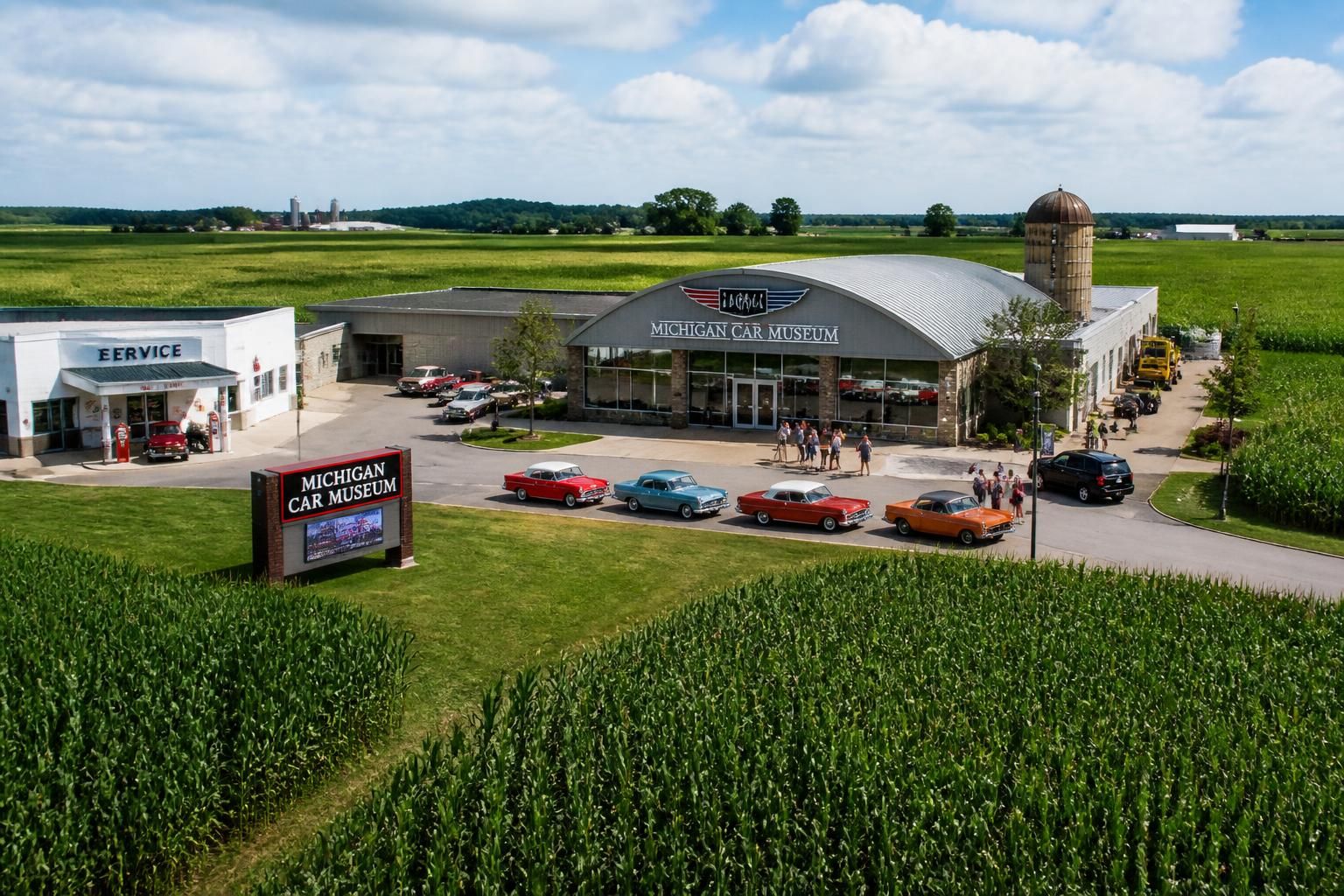
The Michigan Car Museum, uniquely situated amid the expansive cornfields of Michigan, embarks on an ambitious expansion project valued at $3.6 million. This development not only signals growth for the museum itself but represents a noteworthy stride in rural tourism enhancement. Nestled away from urban centers, this car museum leverages its location to offer visitors an authentic and immersive journey into the depth of American automobile history.
Rural tourism often grapples with challenges including limited infrastructure and lower footfall compared to city-based museums. However, leveraging a distinct rural charm and tailored thematic content, such as vintage cars and motor history, positions the Michigan Car Museum uniquely in the tourism market. The expansion project will significantly upgrade exhibition spaces, introduce new galleries, and improve visitor amenities without diluting the museum’s rustic ambiance.
Highlighting the museum’s evolution from an intimate collection to a sprawling campus, the project aligns with regional development goals. The infusion of capital will create enhanced interpretative experiences and preserve dozens of iconic automobiles, vital for curators and enthusiasts alike. Moreover, this investment promotes local economic growth through increased tourism traffic, positioning the museum as a flagship destination within Michigan’s cultural landscape.
From an expert standpoint in Smart Tourism, initiatives like this demonstrate the power of situating heritage experiences in less urbanized regions, making cultural and educational assets accessible beyond metropolitan boundaries. By integrating innovative visitor engagement strategies alongside its physical expansion, the Michigan Car Museum sets a precedent for museums aiming to enrich rural tourism.
Enhancing Visitor Engagement Through Smart Tourism Technologies at Michigan Car Museum
The $3.6 million expansion goes beyond mere physical growth by embedding smart tourism technologies designed to elevate visitor interaction with automobile history. Experiencing heritage through digital immersion and accessible platforms has become a benchmark in modern museum management, especially in locations like this car museum, where the rural environment can potentially pose accessibility challenges.
Visitors will soon benefit from state-of-the-art audio guides available through smartphone applications such as Grupem, which transform simple mobile devices into interactive storytelling tools. This technology ensures that guests absorb detailed automotive histories, preservation narratives, and unique anecdotes associated with each exhibit, enriching their visit with context and personalization. By adopting such technology, the museum addresses common pitfalls like audio clarity issues or language barriers, making the experience more inclusive.
Furthermore, the project envisions augmented reality (AR) overlays, allowing guests to virtually interact with the cars or visualize historical contexts evolving around particular vehicles. For example, AR can reconstruct the factory floor where a classic automobile was produced or simulate road trips that popularized specific models. These engagements create a multi-sensory museum visit that appeals to diverse demographics, including families and tech-savvy visitors.
Integrating these tools also facilitates data collection for the museum, enabling evaluators to monitor visitor flows and preferences to fine-tune services constantly. The emphasis placed on accessibility ensures the museum can welcome a wider audience, meeting contemporary standards without compromising the rural charm that differentiates the Michigan Car Museum from urban competitors.
Five Key Technologies Enhancing the Museum Experience 📱🚗👓
- 📱 Mobile App Guided Tours: Seamless integration of smartphone audio guides providing layered narratives.
- 👓 Augmented Reality Displays: Interactive overlays enrich storytelling by bringing exhibits to life.
- 🎧 Advanced Audio Systems: High-fidelity sound with noise-cancellation to preserve clarity throughout large exhibit halls.
- ♿ Accessibility Features: Subtitles, multi-language options, and tactile displays cater to all visitors.
- 📊 Data Analytics Platforms: Real-time visitor insights boost operational decisions and tailored offerings.
Preserving Automotive Heritage: How Expansion Supports Collection Care and Exhibition
One of the driving forces behind the Michigan Car Museum’s significant expansion involves safeguarding its exemplary collection of vehicles. Housing over 400 rare and collector automobiles, including classic cars and motorcycles, the museum serves as a custodian of automotive heritage fundamental to America’s social and industrial narrative.
The museum expansion project allocates funds towards state-of-the-art preservation facilities, climate-controlled storage, and restoration workshops. These enhancements ensure that historical vehicles endure in optimal conditions, preventing deterioration from environmental factors typical in rural settings. Enhanced exhibit spaces will allow curators to rotate displays carefully, showcasing underappreciated facets of the collection and refreshing visitor experiences.
Beyond physical preservation, the investment facilitates enriched educational programming centered on automotive history. Interpretive panels, digital archives, and documentary screenings will contextualize automobile evolution regarding technological advances, societal changes, and cultural impact. The museum also plans to host traveling exhibits and collaborate with automotive historians, drawing further audiences and scholarly attention.
By marrying conservation efforts with dynamic exhibition practices, the Michigan Car Museum secures its position not just as a static repository but an active educational institution. This robust approach underlines the broader role museums play in cultural sustainability and community engagement, crucial for museums located outside dense urban centers.
Table: Key Elements of the Michigan Car Museum Expansion Project 💡
| Focus Area 🎯 | Description 📝 | Impact on Museum 👏 |
|---|---|---|
| Exhibit Space Enlargement | Creation of multiple new themed galleries and expanded display halls. | Enables showcasing of more vehicles, improving narrative coherence and visitor flow. |
| Preservation Facilities | Climate-controlled storage and cutting-edge restoration labs. | Improves long-term care of historic automobiles and artifacts. |
| Visitor Amenities | Enhanced dining, parking, and accessible facilities. | Improves overall visitor satisfaction and inclusivity. |
| Technology Integration | Deployment of audio guides, AR experiences, and digital signage. | Drives engagement and accessibility for diverse audiences. |
| Community Programs | New educational workshops, events, and collaborations. | Fosters local involvement and educational outreach. |
Boosting Regional Tourism and Economic Growth with the Michigan Car Museum’s Expansion
The museum’s location within the tranquil cornfields of Michigan offers an unexpected tourism magnetism that supports the local economy. The $3.6 million expansion is a strategic investment meant to maximize this potential by drawing more visitors from both domestic and international circuits.
By enhancing facilities and exhibits, the museum becomes a key stakeholder in regional tourism development, creating employment opportunities and stimulating ancillary businesses such as hospitality and retail. The museum’s approach reflects current tourism trends prioritizing authentic and experience-rich travel, focusing on heritage and unique local culture beyond metropolitan options.
Moreover, the expansion aligns with the museum’s commitment to sustainable tourism by promoting car heritage education in environmentally conscious ways, such as encouraging visitation through public transport and implementing green infrastructure onsite. This holistic vision resonates with travelers who demand responsible travel options.
The museum’s prominence as a cultural landmark is further solidified by its active digital presence and partnerships, which include coverage from respected platforms highlighting its significant role in Michigan’s cultural and economic framework. For instance, reviews on TripAdvisor reflect visitor satisfaction and draw attention to its unique rural location.
Best Practices for Museums Expanding in Rural Settings: Insights from Michigan Car Museum’s Approach
The Michigan Car Museum’s expansion serves as a case study in effectively developing cultural institutions situated in rural contexts. Distilling lessons from this project offers critical insights into maximizing impact while maintaining museum identity and audience engagement.
Key practices include:
- 🌾 Leveraging Unique Local Identity: Embracing the rural cornfield setting enhances storytelling and the visitor’s sense of place.
- 🖥️ Integrating Smart Tech Solutions: From smartphone guides to augmented reality, technology bridges geographic isolation with global connectivity.
- 🚗 Curating Focused Collections: Presenting a cohesive narrative around automobile history draws both enthusiasts and general audiences alike.
- 🤝 Fostering Community Partnerships: Collaboration with local businesses and cultural organizations bolsters economic and social sustainability.
- ♿ Prioritizing Accessibility: Ensuring facilities and technologies address diverse visitor needs, including disability access and multilingual content.
Implementing these initiatives helps avoid common pitfalls such as visitor fatigue or underutilization of resources. Instead, museums can build an adaptable framework promoting longevity and visitor loyalty in often overlooked rural environments.
For further detailed case studies on effective museum expansions and modern visitor engagement techniques, the Michigan Car Museum’s plans align well with trends and success factors highlighted in resources like
