
Short on time? Here is what matters most:
- 🔒 A familiar voice is no longer proof of identity. AI can reproduce speech patterns from a very short recording.
- 📞 A recognised number is no longer proof of origin. Caller ID Spoofing can make a fraudulent call appear to come from a bank, colleague, or relative.
- 🛑 The safest response to an unexpected urgent request is to pause, hang up, and verify independently.
How AI Voice Cloning Makes Phone Scams Sound Real
Voice Cloning has changed the practical reality of phone Fraud. Traditional scam calls often relied on generic scripts, poor audio quality, and pressure tactics that were relatively easy to recognise. Today, Scammers can use AI to create speech that sounds emotionally convincing, fluent, and strikingly similar to a real person.
The process does not always require a long recording. A short public clip from a video, podcast, social-media post, voicemail, online interview, or guided-tour recording may provide enough material for an attacker to imitate a voice. Consumer reporting has highlighted demonstrations in which only a few spoken words were enough to generate a plausible synthetic version of a speaker.
This does not mean every copied voice will be perfect. It means that perfection is no longer necessary for Deception to work. During an emotional call, the target is not analysing tone, phrasing, or sound engineering. They are reacting to apparent urgency: a child asking for help, a manager requesting an immediate payment, or a bank representative warning of suspicious activity.
Why emotional pressure makes cloned voices effective
Consider a hypothetical museum coordinator named Daniel. He receives a call that sounds like a colleague travelling with a visitor group. The caller says a participant has been injured and asks Daniel to transfer money for emergency transport. The voice is familiar, the request sounds urgent, and background noise makes the call feel authentic.
In this situation, the attacker does not need a flawless replica. They only need Daniel to act before he calls the colleague through a known number. This is Social Engineering: manipulating trust, fear, authority, or urgency so that normal verification steps are skipped.
Family emergency schemes follow the same pattern. A caller may claim to be a grandchild in trouble, then hand the phone to an alleged police officer, lawyer, hospital worker, or embassy representative. Each role is designed to reduce doubt and keep the victim engaged.
The Federal Trade Commission has described how AI can enhance family emergency schemes by making an impersonation more believable. The underlying trick is familiar; the realistic voice is the new accelerant.
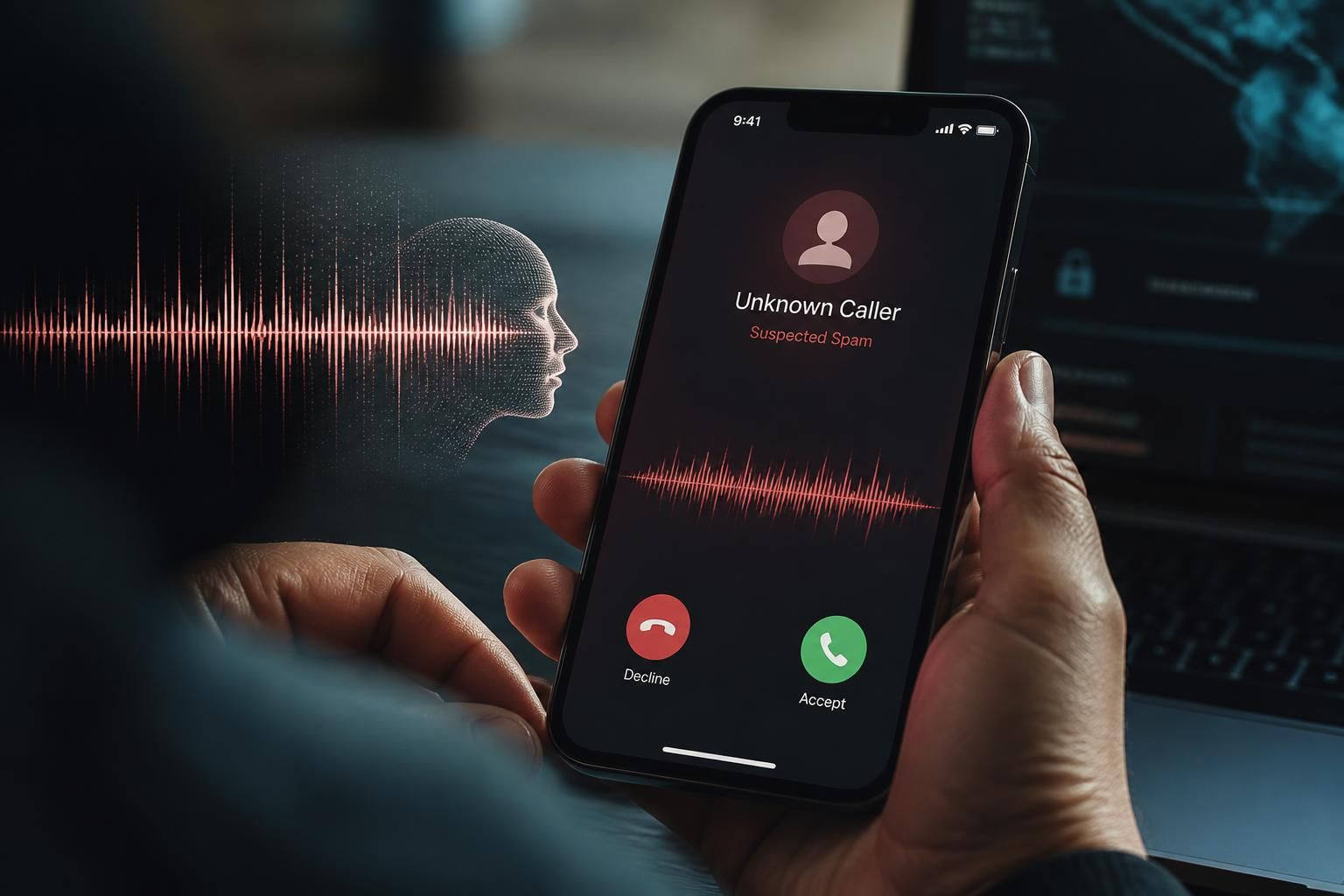
Voice-based deception is especially relevant for tourism and cultural organisations. Guides, event staff, local offices, and museum teams regularly receive calls from suppliers, visitors, public authorities, and colleagues in the field. A convincing fake request can exploit busy schedules, multilingual communication, and the expectation that a last-minute issue needs rapid action.
The practical rule is simple: treat the voice as a clue, not as authentication. Voice recognition may suggest who is speaking, but it cannot confirm it when AI-generated audio and manipulated call routing are involved.
That distinction also protects personal data. A criminal who sounds like an IT colleague may ask for a one-time login code. Another may imitate a finance manager to request payroll information. These calls can lead to Identity Theft, account takeover, or further Phishing campaigns.
The next layer of risk is visual: the number displayed on the screen can be manipulated as easily as the sound heard through the speaker.
Why Caller ID Spoofing Makes a Fake Call Look Legitimate
Caller ID Spoofing occurs when a caller deliberately changes the number displayed on the recipient’s phone. Instead of seeing an unfamiliar mobile number, the target may see the name or number of a bank, a city office, a police department, a hotel, or a relative.
This technique exploits a habit most people have developed over years of phone use: trusting the display. If the screen says “Bank Support,” many recipients assume the call has been technically verified. It has not. Caller ID was designed primarily to identify calls for convenience, not to serve as secure proof of identity.
When Caller ID Spoofing is combined with AI-generated speech, the result can feel highly credible. The screen appears correct, the voice sounds familiar, and the caller uses real details obtained from data breaches, public websites, or previous Phishing attempts. Each element supports the others.
What the attacker is trying to achieve
The goal may be money, credentials, confidential information, or access to a device. A scammer posing as a financial institution might say that a card has been used abroad and ask for a security code. A fake government office might demand an immediate fine. A fake technology provider could request remote access to a computer.
| 🚩 Scam signal | What it may mean | ✅ Safer response |
|---|---|---|
| 📞 A trusted number appears unexpectedly | The caller ID may have been spoofed | End the call and use the number on an official website or card |
| ⏱️ “Act now or your account will be closed” | Pressure is being used to prevent verification | Pause and verify through an independent channel |
| 🔑 A request for a code, password, or banking detail | Possible Phishing or account takeover attempt | Do not share it; legitimate organisations do not need your password |
| 💳 A request to move money to a “safe account” | Classic Fraud language designed to bypass caution | Contact your bank through its verified support route |
A real institution may contact a customer, but it should not object when that person decides to verify independently. A caller who becomes hostile, insists that hanging up is dangerous, or tries to keep the recipient on the line is demonstrating a major warning sign.
For example, a cultural venue might receive a call seemingly from its payment processor. The caller says that ticketing revenue is frozen and asks the finance team to “confirm” card details. The correct response is not to continue the conversation. It is to open the processor’s official portal or call the support number already recorded in the organisation’s account documentation.
Publicly available information can make these calls more convincing. A fraudster may know a venue’s opening times, a guide’s name, a municipality’s logo, or an event date. None of this proves legitimacy. It only shows that the attacker has done basic research.
Technical defences against spoofed calls are improving, but they cannot eliminate risk at the human level. Phone networks may flag suspicious traffic, while businesses can use verified callback procedures. Yet a displayed name remains insufficient evidence when the caller asks for funds, credentials, sensitive visitor information, or urgent action.
Never use the incoming call as your verification channel. Hang up, find the official contact details yourself, and start a new conversation. That small change breaks the attacker’s control over the interaction.
Once the display and voice have created trust, criminals usually move quickly to the next stage: persuading the target to disclose information or authorise a payment.
How Social Engineering Turns AI Deception Into Fraud
AI does not replace the classic tactics of Fraud. It strengthens them. The decisive element is usually Social Engineering: a set of psychological methods that guide someone toward an action they would normally question.
Scammers commonly rely on authority, fear, urgency, secrecy, and helpfulness. A caller who claims to work for law enforcement creates authority. A caller who says a relative has been arrested creates fear. A caller who says “do not tell anyone because the investigation is confidential” creates isolation.
The most effective scams often combine several pressures at once. The target may hear a familiar voice, see an apparently legitimate number, and receive a demand that appears time-sensitive. The brain naturally prioritises resolving the emergency over checking the evidence.
Recognising the pressure pattern before responding
Look for a request that changes normal behaviour. A bank allegedly calls and asks for a passcode. A director allegedly requests a payment outside the usual approval process. A relative allegedly needs funds sent by cryptocurrency, wire transfer, cash courier, or gift card. These requests are not merely unusual; they are designed to be difficult to reverse.
A useful internal question is: “What would this person or organisation normally do?” A legitimate bank may alert customers to suspicious activity, but it will not need a password or verification code to protect an account. A genuine manager can be reached using the company directory. A family member can answer a pre-arranged verification question.
- 🧠 Pause before reacting. Urgency is the attacker’s advantage; time is yours.
- 📵 End the unexpected call. Do not use a number supplied by the caller.
- 🔎 Verify through a separate route. Use an official website, saved contact, or in-person contact.
- 🤝 Ask another person to review the request. A second perspective often identifies pressure tactics quickly.
- 📝 Record the key details. Note the displayed number, time, claimed organisation, and requested action.
For families, a shared safe word can add a useful layer of verification. It should not be a birthday, pet name, school, or any detail easily found online. If an emergency caller cannot provide the agreed phrase, the family should verify through another method before sending money or disclosing information.
For organisations, the equivalent is a payment-control process. Any request to alter supplier banking details, transfer funds, share customer data, or approve remote access should require confirmation through a known channel. One phone call or email is not enough when the request is exceptional.
The financial stakes are substantial. Reports cited in consumer coverage have linked more than 22,000 AI-related scam complaints with losses approaching $893 million. Such figures should be understood as reported losses, not the full scale of harm: many people do not report incidents because of embarrassment, uncertainty, or smaller individual losses.
The human cost also extends beyond money. A successful impersonation can expose travel plans, medical details, contact lists, booking records, and payment data. That information can fuel Identity Theft or targeted Phishing long after the original call ends.
For further practical warning signs, this guide to recognising AI scam warning signs explains why urgency, secrecy, and unusual payment methods deserve immediate scrutiny.
A credible-sounding story is not a verified transaction. The more emotional the request, the more important independent confirmation becomes.
Cybersecurity Practices That Protect Families and Organisations
Good Cybersecurity is not limited to software. It includes predictable habits that make manipulation less effective. The strongest protection against a fake voice or spoofed number is a clear verification process that works even during a stressful moment.
At home, this starts with discussing the risk before an incident happens. Family members should know that emergency calls can be fabricated and that a request for money must be checked through more than one route. The conversation should be calm and practical, particularly with people who may be targeted because they are seen as more trusting or financially established.
At work, staff need permission to slow down. A front-desk employee, guide, or temporary event worker should never fear criticism for refusing to transfer money, share customer records, or bypass a process. Clear escalation routes are more valuable than vague advice to “be careful.”
Build verification into everyday operations
Tourism organisations handle sensitive information constantly: group itineraries, accessibility requirements, visitor contact details, accommodation arrangements, and payment records. A fraudulent call claiming to come from a guide or partner venue can expose that data if staff are not trained to verify unusual requests.
For example, an operator may receive an urgent call from someone who sounds like a tour leader. The caller asks for the rooming list because “the hotel system is down.” Instead of sending the file, the operator should contact the guide through the phone number saved in the organisation’s system and confirm the situation.
Technology can support this approach. Use multi-factor authentication for email, booking platforms, financial systems, and shared files. Keep software updated, limit access to sensitive data, and ensure each employee has an individual account rather than a shared password. These measures do not stop every voice scam, but they reduce what an impersonator can do after persuading someone to act.
Training should use realistic scenarios. Rather than only explaining the definition of Phishing, test how staff respond to a fake urgent supplier request, a voice message from an apparent director, or a caller who asks for an authentication code. The objective is not to catch employees out. It is to make safe behaviour automatic.
Audio platforms also deserve attention. Public-facing recordings are useful for accessible visitor experiences, remote interpretation, and multilingual content. They should not be abandoned because of Voice Cloning risks. Instead, teams should decide deliberately what voices and recordings are public, remove unnecessary personal material, and avoid posting sensitive operational discussions.
Professionally produced audio content remains valuable when it serves a clear visitor need. A secure, structured listening experience can help guides and cultural venues communicate clearly without relying on improvised calls or unprotected file sharing. The key is balancing accessibility with sensible data governance.
Anyone concerned about how synthetic speech is used in targeted attacks can review these AI voice cloning threat considerations. Awareness is useful only when it leads to repeatable actions.
Security improves when verification is designed into the workflow, not left to memory under pressure. That principle applies equally to a household emergency and a payment request at a busy visitor centre.
What to Do During and After an AI Voice Scam Attempt
If an unexpected call creates fear or demands immediate action, the first response should be simple: end the call. There is no prize for staying polite to a suspected fraudster, and continuing the conversation gives Scammers more opportunities to collect information, build rapport, or increase pressure.
Do not call back using the number displayed on the screen, a number dictated by the caller, or a link sent in a follow-up message. Search for the organisation’s official website, use the number printed on a bank card, contact a saved family number, or log into the service through its established application.
Respond quickly if information or money was shared
If a password, one-time code, banking detail, or payment has already been provided, speed matters. Contact the bank or payment provider using a verified route and explain that the transaction may be fraudulent. Ask whether the payment can be stopped, recalled, or flagged. Change affected passwords immediately, beginning with the email account that could be used to reset other services.
When a work account or visitor-data system may be involved, report it internally without delay. The relevant manager or IT contact can review access logs, reset credentials, notify partners, and limit additional exposure. Delayed reporting helps the attacker; prompt reporting supports containment.
It is also worth preserving evidence. Take screenshots of the call record, retain voicemails, record the claimed organisation, and note exactly what was requested. Do not send these details back to the caller. They may be useful for a bank, platform provider, telecommunications operator, or official fraud-reporting service.
Victims should not be blamed for being deceived. These attacks are designed to exploit ordinary human reactions to familiar voices, institutional authority, and urgent situations. Reporting an incident can help protect others and can reveal patterns that a single target could not see alone.
For a practical consumer perspective, the FTC’s guidance on fighting harmful voice cloning reinforces a central habit: verify a surprising request through a channel the caller does not control.
Families and organisations can also turn near-misses into useful learning. If a colleague receives a suspicious call, share a brief account internally: what the caller claimed, what made it persuasive, and which verification step prevented harm. This makes the threat concrete without creating unnecessary alarm.
AI tools will continue to improve, and criminals will continue to adapt familiar Fraud techniques. The response does not require technical panic. It requires better habits: limit unnecessary exposure of personal audio, assume caller displays can be manipulated, protect account access, and verify urgent requests independently.
The decisive safety step is not recognising every fake voice. It is refusing to make a high-risk decision until the identity and request have been confirmed through a trusted route.
Can AI really clone a voice from a short recording?
Yes. Modern Voice Cloning tools can create a convincing approximation from a short audio sample. The result may not be perfect, but it can be persuasive enough when combined with urgency, background noise, and a believable story.
Is a familiar Caller ID number proof that a call is genuine?
No. Caller ID Spoofing can manipulate the number or name shown on a phone screen. For any request involving money, passwords, codes, or personal data, hang up and contact the organisation through independently verified details.
What should a family do to reduce AI voice scam risks?
Discuss the threat in advance, agree on a private verification phrase, avoid acting on urgent payment requests during the first call, and contact the relative directly through a saved number or another trusted channel.
What should an employee do if a caller sounds like their manager?
Follow the organisation’s established approval process. Do not transfer funds, share credentials, disclose customer data, or change banking details based on an unexpected call alone. Verify through a known internal number or approved communication platform.
