
Short on time? Here is what matters:
✅ The Hawkins Drive Water Tower, long associated with the Iowa Hawkeyes and Kinnick Stadium, is being commemorated through an officially licensed limited-edition Bobblehead.
✅ Only 2,026 pieces are planned, turning a familiar piece of Iowa City infrastructure into a time-specific Collectible.
✅ The Celebration is not only about sports memorabilia: it shows how a Community can preserve the emotional value of an Iconic Landmark while campus infrastructure evolves.
The Iowa City Tigerhawk Water Tower Bobblehead Preserves an Iconic Landmark
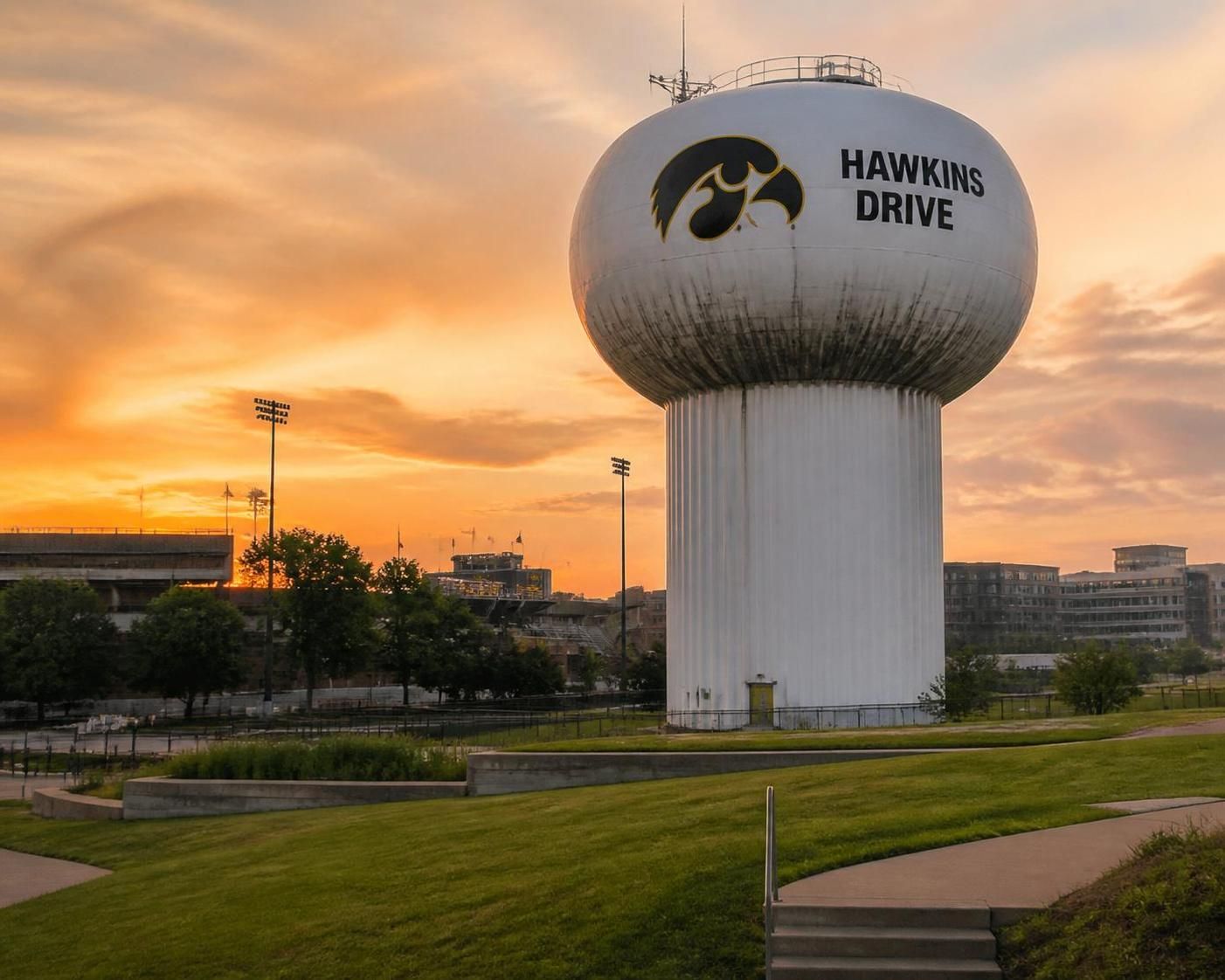
For decades, the Hawkins Drive Water Tower was more than a utility structure. Rising near the northeast side of Kinnick Stadium, its white cylindrical form and oversized black-and-gold Tigerhawk created an instantly recognizable part of the Iowa City skyline. Fans approaching game day, hospital staff arriving at the health-care campus, students crossing nearby streets, and visitors exploring the university district all encountered the same visual marker.
Built in 1960, the tower originally held roughly 750,000 gallons of water. Its operational purpose was important, but its cultural role grew over time. The Tigerhawk turned a practical public asset into a shared visual reference point. In a city where football, higher education, health care, and local identity are closely connected, the painted logo made the structure feel inseparable from the Hawkeyes experience.
The National Bobblehead Hall of Fame and Museum has now translated that familiar sight into a distinctive Souvenir. The officially licensed Iowa Hawkeyes Water Tower Bobblehead reproduces the landmark as a miniature display piece. Its design includes a grass-textured circular base, the Tigerhawk on the front, and Iowa branding on the reverse. Rather than depicting an athlete or mascot, it celebrates an element of the built environment that supported daily campus life while becoming emotionally meaningful to thousands of people.
This choice is notable because landmarks often become important only when they are about to disappear. In this case, the physical tower’s removal gave residents and supporters a reason to articulate what it represented: a reliable game-day orientation point, a backdrop in family photos, and a constant presence during changing seasons. The announcement of the commemorative water tower bobblehead captured that unusual transformation from essential infrastructure to sports-culture artifact.
Unlike a generic stadium keepsake, this Bobblehead has a specific geographic story. It refers to Hawkins Drive, the Kinnick Stadium area, and the University of Iowa health-care campus. That local specificity gives the item greater value for alumni, longtime residents, and fans who associate the structure with a personal routine. A collector who parked near Carver-Hawkeye Arena, attended football games with relatives, or worked nearby can connect the miniature tower to a real place and a particular period.
Why a Utility Structure Became a Hawkeyes Symbol
Memorable places do not need to begin as monuments. Many become symbols through repeated exposure and shared use. The Water Tower was visible from key campus routes, particularly around major athletic events. Its height made it easy to spot, while the Tigerhawk gave it immediate visual clarity even from a distance. In practical terms, it helped people orient themselves. In emotional terms, it marked arrival.
Consider a fictional visitor, Daniel, returning to Iowa City for a reunion weekend after fifteen years away. He may notice renovated facilities, new roads, and expanded medical buildings. Yet the tower evokes continuity because it has remained a stable part of his mental map. That is precisely why a small-scale Collectible can matter: it preserves an object whose significance comes from lived repetition rather than official ceremonial status.
🎯 The key point is simple: the Tigerhawk Water Tower became Iconic because it combined function, visibility, and shared memory. The Bobblehead gives that memory a durable physical form at the moment the original structure is leaving the skyline.
How the Limited-Edition Bobblehead Turns Change Into a Community Celebration
The release is structured as a limited edition, with 2,026 Bobbleheads being produced. Each is priced at $30, with an additional $8 for shipping and handling through the National Bobblehead Hall of Fame and Museum’s online store. The number does more than create scarcity; it anchors the item in the current moment, linking the release to the year in which the original structure’s final chapter became visible.
For collectors, limited runs often carry a sense of urgency. However, the most relevant value here is not speculation. It is preservation through participation. When a campus landmark is removed, photographs and news coverage document the process, but a three-dimensional miniature can become part of a household display, office shelf, museum collection, or alumni gift. It gives the story a place in ordinary life.
The product was placed on sale on Friday, July 17, with shipping expected by December. That timing matters. It allowed supporters to respond while demolition activity was still a current local event, rather than asking them to commemorate the site years later. The release connects a physical farewell with an accessible purchase decision, which is a useful model for cultural organizations managing the loss, relocation, or transformation of familiar sites.
The official design also avoids abstraction. The base resembles grass, reinforcing the sports-campus setting. The front carries the unmistakable Tigerhawk, while the rear includes Iowa branding. These details make the object legible even for people unfamiliar with the full history. A visitor may see it in a home and immediately understand that it represents the Hawkeyes, a stadium district, and Iowa City.
What Makes This Collectible Different From Standard Sports Merchandise
A jersey, cap, or player figurine typically celebrates a team identity that can be renewed every season. The tower miniature preserves a place that cannot be recreated in exactly the same way once demolition is complete. That difference increases its narrative value. It is a Sports Collectible, but also an architectural memento and a Community record.
| Feature | Water Tower Bobblehead | Why it matters |
|---|---|---|
| 🏟️ Subject | Hawkins Drive Tigerhawk landmark | Connects the item to a precise Iowa City location |
| 🔢 Edition size | 2,026 pieces | Marks a limited, time-specific Celebration |
| 💲 Price | $30, plus $8 shipping and handling | Provides a relatively accessible entry point for supporters |
| 🎨 Design | Grass-style base, Tigerhawk front, Iowa logo back | Retains the visual language of the original site |
| 🧭 Meaning | Infrastructure transformed into a Souvenir | Preserves local memory beyond demolition |
The release is also a reminder that licensing can support accurate storytelling. An officially licensed product gives audiences confidence that the university identity is represented consistently. For institutions, this matters when a local symbol has strong emotional and commercial value. The National Bobblehead Hall of Fame and Museum’s product unveiling provides the clearest source for the edition format and design details.
📌 A well-designed commemorative item does not replace a landmark. It gives the Community a tangible way to acknowledge its role, share a story, and carry a familiar visual reference into the future.
Why the Hawkins Drive Water Tower Is Being Removed Near Kinnick Stadium
The demolition of the Hawkins Drive structure is not a rejection of its local importance. It is tied to the evolving needs of the University of Iowa’s health-care and campus infrastructure. The original 1960 tower had served for decades, but storage requirements, system resilience, and development priorities have changed substantially. Maintaining an aging facility is not always the most effective way to support a growing institutional campus.
Work on the demolition was scheduled during weekend windows, beginning at 6 p.m. on Fridays and continuing until 3 a.m. on Mondays, from July 10 through the end of August. This timetable sought to concentrate disruptive work into predictable periods. For nearby residents, hospital users, event attendees, and campus staff, such operational planning is as important as the visual change itself. Clear schedules help people adapt routes, parking habits, and expectations.
Photos from mid-July showed the Tigerhawk tower partially dismantled at the intersection of Hawkins and Evashevski drives. The visual impact was immediate. A structure that had dominated the area for nearly seven decades was no longer intact, making its absence visible before the project had fully concluded. The documented demolition progress in Iowa City illustrates why the Bobblehead has resonated so quickly with fans and residents.
Replacing Capacity, Not Replacing Memory
The university’s newer Water Tower, located northwest of the football practice fields and across from Carver-Hawkeye Arena, has a capacity of 2.7 million gallons. That is more than three times the storage volume of the older Hawkins Drive structure. The new facility is intended to meet the needs of the expanding health-care campus and nearby university operations.
Its role is particularly significant given plans for a new inpatient tower, a project valued at approximately $1.5 billion. Although that development has faced delays connected to changes in federal Medicaid funding, the broader need for robust water infrastructure remains. Hospitals cannot treat water storage as a decorative concern. Reliable supply supports sanitation, patient care, fire protection, building systems, and emergency readiness.
This context prevents a simplistic reading of the demolition. The old structure is beloved, but campus planning must address real service requirements. A modern institution has to balance heritage with capacity, access, safety, and long-term operational resilience. The new tower does not reproduce the familiar Tigerhawk silhouette in the same way, yet it reflects the same commitment to supporting the people who use the campus every day.
- 🏥 Health-care continuity: larger storage supports a complex and expanding medical environment.
- 🚰 Infrastructure resilience: modern capacity helps the campus manage high-demand periods more effectively.
- 🚧 Site redevelopment: removal creates space for future facilities and circulation needs.
- 📍 Place memory: the Bobblehead and archival coverage keep the original Landmark present in local narratives.
For tourism professionals and cultural communicators, this is a useful case study. Visitors may initially focus on what has disappeared, while institutions may focus on what has been built. Effective interpretation should connect both perspectives. It can explain why the work is necessary while recognizing the emotional role of the earlier structure.
🔧 The practical lesson is that modernization and memory can coexist. Infrastructure decisions should be explained with facts, while the cultural meaning of a changing site deserves deliberate recognition.
Using the Tigerhawk Landmark Story for Better Iowa City Visitor Experiences
The Tigerhawk Water Tower story offers a strong example of how local heritage can be interpreted beyond conventional museums. Visitors do not only remember galleries, plaques, and historic houses. They also remember visual markers encountered while walking, driving, attending events, or waiting outside venues. When those markers disappear, a city has an opportunity to capture the story before it becomes vague folklore.
For Iowa City organizations, the former tower can remain part of the visitor experience through place-based storytelling. A guided walk around Kinnick Stadium, Carver-Hawkeye Arena, the health-care campus, and surrounding streets can explain how the area has changed. The old tower’s function, its Tigerhawk identity, and its replacement by higher-capacity infrastructure can be communicated in a concise, accessible sequence.
Audio is particularly effective for this type of interpretation. A smartphone-based audio guide can trigger a short story when visitors reach the former Hawkins Drive location or view the new water facility from an appropriate public route. Rather than requiring a permanent sign at every point, organizers can offer layered information: a 60-second overview for casual visitors, a three-minute historical explanation for fans, and an accessibility-friendly transcript for users who prefer reading.
A Practical Digital Interpretation Plan
Imagine a local guide operator called Riverbend Walks preparing a Hawkeyes-area heritage route. The group does not need expensive receivers, a complex app build, or large printed materials. It can use a mobile audio solution to organize geolocated content, distribute headphones where needed, and give each participant clear playback instructions. The guide remains central, while digital audio ensures everyone can hear key context in outdoor environments.
The Water Tower stop could be built around a simple narrative sequence:
- 📍 Identify the former Hawkins Drive site and explain why the structure was so visible near Kinnick Stadium.
- 🏗️ Describe the 1960 construction and its approximate 750,000-gallon capacity.
- 🔄 Explain the transition to the 2.7-million-gallon replacement facility and the health-care campus’s changing needs.
- 🐤 Connect the Tigerhawk imagery to local sports identity and the limited-edition Bobblehead Celebration.
- 🎧 Invite visitors to compare historical photos with the present-day view and share their own memories.
That approach avoids romanticizing demolition while still respecting local attachment. It also makes infrastructure understandable. Many visitors will not automatically care about water capacity, but they will understand its relevance once it is connected to hospital growth, public safety, and the practical operation of a major campus.
Digital content should be maintained carefully. A route created after the tower’s removal must not imply that visitors can still see the original structure. It should clearly distinguish archival imagery from the current landscape. This is a basic but essential trust principle: accurate location-based storytelling is more valuable than nostalgia that ignores visible reality.
For museums, visitor bureaus, and campus departments, the Bobblehead itself can support interpretation. A display case, retail shelf, or digital product page can direct users to a short audio segment on the tower’s history. The object becomes a gateway rather than only a transaction. It can encourage visitors to learn why the Landmark mattered, how the site has changed, and what the new utility system supports.
🎧 The strongest visitor experiences connect what people can see today with what shaped the place yesterday. The Tigerhawk story works because it is visual, local, and grounded in real campus change.
What the Tigerhawk Bobblehead Means for Collectors, Alumni, and the Iowa City Community
The most meaningful collectibles tend to operate on several levels at once. They may be visually appealing, officially licensed, limited in number, and connected to a personal memory. The Iowa Hawkeyes Water Tower Bobblehead meets all of those conditions, but its deeper appeal lies in its unusual subject. It honors neither a championship nor a famous athlete. It honors a familiar structure that silently watched generations of campus activity.
For alumni, the item may recall the rhythm of returning to Iowa City for football weekends. For hospital employees, it may represent a daily commute through a changing work environment. For residents, it can mark decades of seeing the Tigerhawk from nearby roads. For younger fans, it may become a way to understand an object they saw only in photographs, family stories, or demolition coverage.
The Community value is therefore broader than merchandise. When people purchase, gift, photograph, or discuss a miniature landmark, they keep local vocabulary alive. Names such as Hawkins Drive and Kinnick Stadium remain attached to memories rather than becoming merely labels on old maps. This is especially relevant in growing cities, where development can quickly alter sightlines and routines.
How to Treat a Landmark Souvenir With Context
Collectors can strengthen the object’s value by preserving its story. Keep the original packaging, note the purchase date, and store a short description of what the tower represented. A parent giving the Bobblehead to a child might add a printed photograph of the original structure. An office display could include a brief caption explaining that the tower served the campus from 1960 and was replaced by a larger system designed for future needs.
Small actions like these prevent the Souvenir from becoming detached from its origin. They also make it more useful in intergenerational conversations. A grandparent can explain why the Tigerhawk on a water tank mattered. A student can ask how the hospital campus looked before newer facilities arrived. A visitor can understand that the object represents both a sports tradition and a public-service structure.
There is also a thoughtful collecting principle at work: scarcity should not overshadow meaning. With only 2,026 units, availability may be limited, but the best reason to buy is a genuine connection to the place. The Bobblehead is most valuable as a personal or shared reminder, not as a guarantee of financial return. No collectible market is predictable, and local significance should remain the focus.
The tower’s farewell has created an opportunity for Iowa City to demonstrate how change can be documented respectfully. News photography, official information, fan conversation, and physical memorabilia each serve a different purpose. Together, they create a fuller record than any single format could provide. The limited-edition landmark tribute is one visible part of that wider record.
💛 The enduring value of this Bobblehead is its ability to make a large, changing place feel personal. It preserves the visual language of a beloved Landmark while acknowledging that Iowa City continues to build for the future.
What does the Iowa Hawkeyes Water Tower Bobblehead commemorate?
It commemorates the Hawkins Drive Water Tower near Kinnick Stadium, known for its large Tigerhawk logo and long-standing presence in the Iowa City campus landscape.
How many Tigerhawk Water Tower Bobbleheads are being made?
The officially licensed release is limited to 2,026 pieces, making it a time-specific collectible tied to the tower’s demolition period.
Why is the Hawkins Drive Water Tower being removed?
The older 1960 tower is being removed as the university transitions to a newer 2.7-million-gallon facility that better supports the growing health-care campus and surrounding operations.
What did the original Iowa City Water Tower hold?
The Hawkins Drive structure had an approximate capacity of 750,000 gallons before it was replaced by newer water-storage infrastructure.
Why is the Bobblehead significant to the local community?
It preserves a familiar Iowa City visual landmark associated with Hawkeyes culture, Kinnick Stadium, campus life, and decades of shared local memories.
