
Short on time? Here is what matters:
- 🎬 Netflix has revealed a Trailer for Wonka’s The Golden Ticket, a Willy Wonka-inspired Reality Competition set inside a recreated Chocolate Factory.
- 🎙️ The TV Show’s most debated creative choice is its use of a recreated Gene Wilder voice, connecting the format to the 1971 screen interpretation of the character.
- 🍫 For cultural venues and entertainment producers, the project is a useful case study in immersive storytelling, sound design, rights-sensitive technology, and audience expectations.
Netflix’s Willy Wonka Reality Competition Trailer Turns a Familiar Fantasy into a TV Show Format
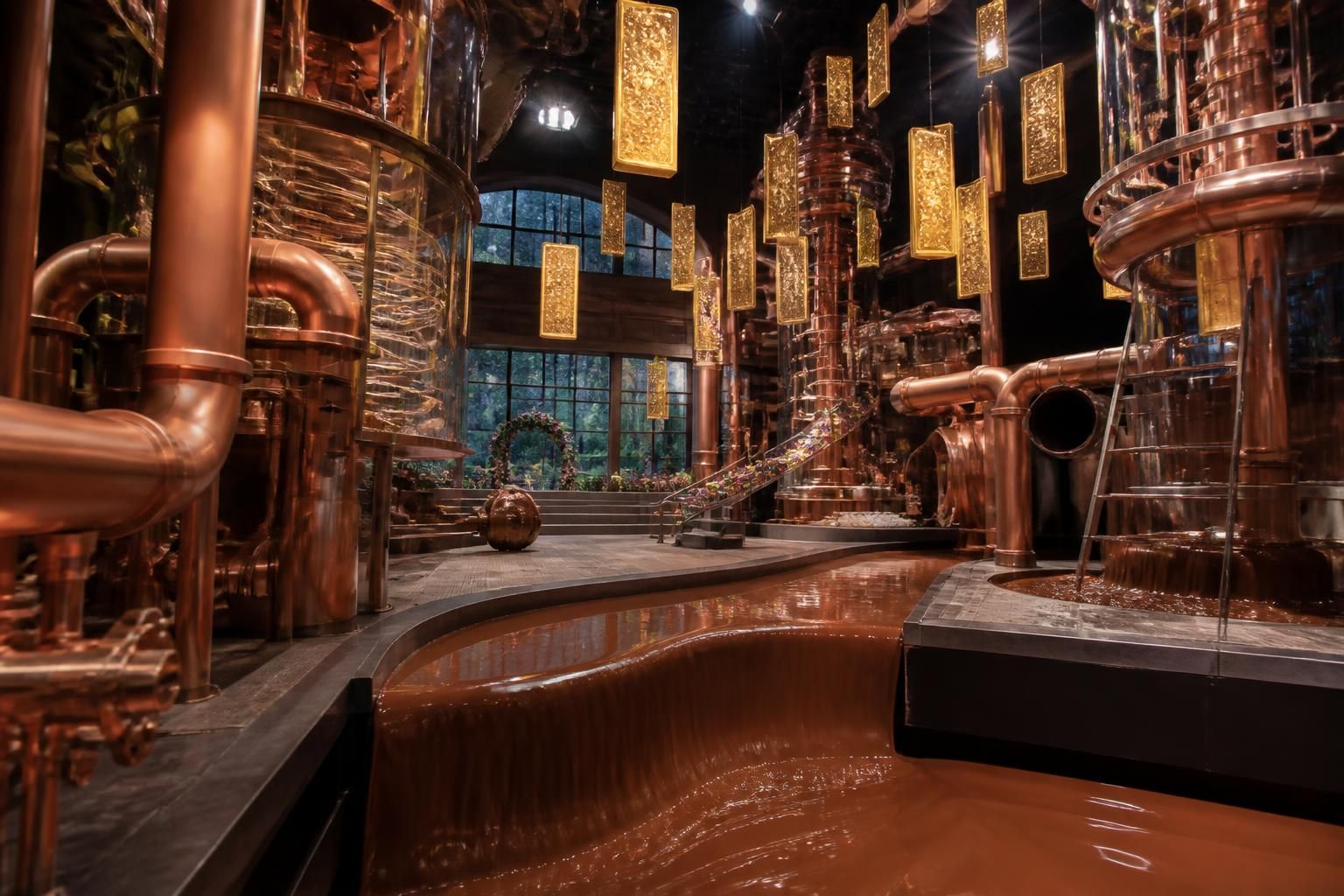
The first Trailer for Netflix’s Wonka’s The Golden Ticket presents an ambitious Reality Competition built around one of popular culture’s most recognisable imagined places: the Chocolate Factory. Rather than adapting Roald Dahl’s story as a conventional scripted drama, the Streaming platform positions the factory as a live environment where contestants must navigate games, surprises, visual spectacle, and the unpredictable rules associated with Willy Wonka.
This distinction matters. A scripted adaptation asks viewers to follow characters through a predetermined narrative. A competition format, by contrast, creates suspense through choices, performance, collaboration, and failure. The factory becomes more than a backdrop: it functions as the central mechanism of the Contest. Every room can shape a challenge, impose a rule, reward attention, or reveal a contestant’s ability to respond under pressure.
Available descriptions indicate that 12 Golden Ticket winners, each accompanied by a partner, enter the recreated venue. That pairing structure gives the format a practical source of drama without relying solely on manufactured conflict. One participant may excel at clues, planning, or puzzles, while the other may cope better with physical tasks, social pressure, or unexpected sensory experiences. The strongest teams will not simply be the loudest; they will need to share information clearly and make decisions at the right moment.
The concept draws from the enduring appeal of the 1971 film Willy Wonka & the Chocolate Factory, in which Gene Wilder’s Wonka made unpredictability feel elegant rather than chaotic. His character could switch from playful host to stern moral observer within seconds. A modern TV Show needs to preserve that tonal rhythm, because the factory should feel delightful and slightly unsettling at the same time. If it becomes only colourful, it loses tension. If it becomes only threatening, it loses the imaginative warmth audiences expect.
Netflix’s approach also arrives at a time when Entertainment audiences are increasingly accustomed to worlds that extend beyond a single screen. Viewers regularly encounter franchises through themed attractions, social video clips, interactive experiences, podcasts, games, and behind-the-scenes content. The Golden Ticket premise naturally supports this ecosystem because the factory contains visual landmarks that can be easily understood in a short clip: candy machinery, secret corridors, oversized props, riddles, and elaborate inventions.
That does not mean the format can rely on recognition alone. The notorious failure of an unofficial “Willy’s Chocolate Experience” event in Glasgow in 2024 showed how quickly audiences react when promotional images promise immersion but the physical experience cannot deliver it. The lesson remains relevant in 2026: a famous fictional world raises the standard of execution. When viewers recognise the source material, they compare every set, sound cue, costume, and interaction to a long-held mental image.
For a professional visitor-experience team, this is similar to designing a museum exhibition around a beloved historical figure. A name may encourage first interest, but the on-site experience must remain coherent. If navigation is unclear, the audio is difficult to hear, or the story has no emotional progression, the initial excitement disappears. In this Reality Competition, the production design must make the contestants’ journey easy to follow while maintaining the illusion that the factory contains endless possibilities.
A useful overview of the announced format can be found in this report on Netflix’s Golden Ticket reality series. The key point is not simply that Netflix is revisiting Willy Wonka. It is testing whether an iconic fictional setting can support a repeatable, high-stakes contest without flattening the story into generic game-show imagery.
The Trailer’s promise is therefore operational as well as nostalgic: the factory must work as a believable place, a game arena, and an entertainment event at the same time.
How the Legendary Producer Connection and Gene Wilder Voice Debate Shape the Netflix Trailer
The phrase Legendary Producer in coverage of a major franchise project can create an immediate sense of prestige, but audiences increasingly look beyond the label. They want to know how creative authority is expressed on screen. Is the producer’s role visible in casting, pacing, sound, design, challenge construction, or the protection of the original work’s tone? With Wonka’s The Golden Ticket, the more immediate discussion concerns the creative decision to recreate Gene Wilder’s voice for the Willy Wonka presence.
Gene Wilder died in 2016, yet his performance remains closely associated with the character for several generations of viewers. His vocal delivery was distinctive: calm, precise, mischievous, and capable of becoming unexpectedly severe. Reproducing that sound is not a minor technical detail. It affects how the audience interprets the entire series, because a voice is often the fastest route to character recognition and emotional memory.
Reports around the Trailer have described an AI-assisted recreation of Wilder’s voice. Coverage in Variety’s report on the Netflix Willy Wonka trailer has helped place the decision at the centre of the public conversation. The discussion is not limited to whether the result sounds convincing. It also concerns consent, estate participation, transparency, artistic necessity, and the difference between homage and substitution.
For cultural and tourism professionals, the issue has direct relevance. Audio technology can make heritage stories more accessible, especially when it provides multilingual narration, clearer playback, adaptable pacing, or support for visitors with visual impairments. However, a familiar voice carries identity, reputation, and historical meaning. A responsible production must explain how it obtained permissions and avoid presenting a digital recreation as archival material or a newly recorded performance.
The best audio experiences make the technology serve the story. Consider a fictional visitor attraction called “The Inventors’ Hall.” Its organisers could use an actor to interpret letters written by a 19th-century engineer, with a clear note explaining that the reading is a dramatic interpretation. This approach creates atmosphere without confusing the audience about the source. The same principle applies to the Wonka project: the sound design should reinforce the fictional world while remaining transparent about the modern tools involved.
The Trailer must also manage an unusual tonal challenge. Wilder’s Wonka is not merely a cheerful mascot. The character uses pauses, quietness, and verbal precision to keep children and adults unsure of what will happen next. If a recreated voice is treated as a novelty effect, it risks distracting from the contestants and reducing a complex performance to a technical headline. If it is used sparingly, with careful writing and a well-defined narrative role, it can instead become part of the factory’s atmosphere.
Audio design is a storytelling system, not a decorative layer
Reality formats often prioritise visual reactions: a surprised contestant, an opening door, a dramatic reveal. Yet sound is what organises emotional attention. A low mechanical hum can imply that a machine is about to start. A sudden absence of music can make an announcement feel serious. A carefully placed voice line can guide viewers toward a clue without explicitly explaining it.
For this Netflix production, a coherent sonic identity should include three levels. First, there is the recognisable Wonka-style musical mood: playful melodies, unusual instrumentation, and imaginative textures. Second, there is functional competition audio: readable instructions, contestant dialogue, timed alerts, and clear rules. Third, there is the legacy voice element, which should be reserved for moments where its presence genuinely adds dramatic value.
Audiences do not need technical jargon to notice good sound. They simply understand who is speaking, why a challenge matters, and what has changed in a scene. That clarity is also essential in guided visits. Whether a group is walking through a historic district or contestants are moving through a vast Chocolate Factory, intelligible audio reduces fatigue and helps people stay engaged with the experience rather than struggling to decode it.
Technology becomes credible when it improves understanding and emotion without hiding the human, legal, and creative decisions behind it.
Why the Chocolate Factory Contest Works as an Immersive Entertainment Experience
A strong Reality Competition needs rules that viewers can understand quickly. It also needs an environment that makes each rule feel specific to the programme rather than interchangeable with any other TV Show. The recreated Chocolate Factory offers that advantage. Its fictional logic supports unusual tasks that would feel arbitrary in a studio: decoding edible clues, following a production line, balancing ingredients, identifying deceptive inventions, or negotiating a room designed to reward patience over speed.
The central design challenge is fairness. Willy Wonka stories thrive on eccentricity, but a Contest loses credibility if participants seem unable to understand why they won or lost. Production teams must therefore balance surprise with legibility. Viewers should be able to say, “That twist was unexpected, but the clues were there,” instead of feeling that a contestant was eliminated because the format changed its mind.
The following table shows how a themed environment can turn familiar competition mechanics into a more coherent audience experience:
| Competition element | Chocolate Factory interpretation | Audience value |
|---|---|---|
| 🧩 Puzzle challenge | Participants decode recipe symbols, machine diagrams, or ticket fragments. | 🔍 Viewers can follow clues and test their own assumptions. |
| ⏱️ Timed task | Teams must complete a factory process before a conveyor sequence ends. | ⚡ The deadline is visual, understandable, and naturally dramatic. |
| 🤝 Partner decision | One contestant chooses ingredients while the other interprets instructions. | 🗣️ Communication becomes part of the game, not background drama. |
| 🎭 Hidden twist | A seemingly helpful invention introduces an unexpected rule. | 🍬 The surprise fits the Willy Wonka universe rather than feeling random. |
From an immersive-design perspective, the most effective challenges will use multiple senses without overwhelming either participants or viewers. A chocolate river, for example, is visually iconic, but it becomes meaningful only if it has a role in the game. Perhaps it carries floating code pieces, separates two partners who must communicate across it, or changes direction according to a riddle. In each case, the scenic element becomes a narrative tool.
Accessibility should be part of that design from the earliest stage. Complex soundscapes may be exciting, but vital instructions should not be delivered only through rapid audio. Colour-based puzzles need an alternative route for participants with different visual perception. Physical challenges should avoid equating athletic ability with strategic skill. These choices are not concessions that weaken spectacle; they improve the quality of the game because they make the rules clearer and broaden the range of contestants who can succeed.
This thinking mirrors good practice in visitor mediation. A museum cannot assume every visitor has the same mobility, language level, sensory profile, or familiarity with a subject. A clear route, readable signage, captioned video, and accessible audio all strengthen the experience for everyone. The Golden Ticket format has an opportunity to show that an elaborate fictional world can be inclusive without becoming less magical.
The programme’s partner structure can also create an important contrast with individual-elimination shows. It allows the camera to capture practical cooperation: how people divide tasks, resolve disagreements, and react when one person misses a clue. A pair who listens carefully may outperform a more confident team. That makes the series potentially more relatable, since most real cultural, event, and tourism experiences are shared rather than consumed alone.
A visitor named Maya offers a useful fictional example. She arrives at a pop-up factory experience with her brother, who notices visual details quickly while she is better at remembering audio instructions. Their success depends on combining those strengths. This is precisely the kind of dynamic a well-designed Netflix challenge can reveal: immersion is not only about impressive sets; it is about giving people reasons to observe, communicate, and act together.
The factory becomes memorable when every spectacular room also has a clear purpose in the Contest.
What the Netflix Trailer Reveals About Streaming, Nostalgia, and Audience Trust
Streaming platforms have spent years building large libraries, but discoverability remains a practical challenge. A title can disappear quickly if its purpose is unclear in the first seconds of a Trailer. Willy Wonka gives Netflix a major advantage because the name immediately communicates fantasy, candy, childhood memories, and moral mischief. The platform still has to explain why this particular project deserves attention beyond its recognisable brand.
The Trailer appears designed to deliver that explanation through contrast. It pairs an old-fashioned cultural reference with a modern Reality Competition format, a physical factory set with digital voice technology, and family-friendly imagery with the sharper tension of elimination. This mix can appeal to viewers who grew up with the 1971 film, to younger audiences familiar with newer Wonka adaptations, and to regular consumers of competition Entertainment.
However, nostalgia is not a substitute for trust. Viewers are alert to promotional material that overstates scale or obscures the real experience. In the case of a large set-based production, trust comes from concrete signals: contestants visibly interacting with practical environments, rules that are explained rather than hidden, production values that hold up outside a brief montage, and clear messaging about how legacy elements have been handled.
The issue of access also deserves attention. Some source pages and promotional materials may display a notice stating that the site is unavailable outside the United States. For international audiences, geo-restricted reporting can create gaps in information and encourage incomplete summaries to spread across social media. A global Streaming brand benefits when core details—release timing, format, accessibility options, and official Trailer availability—are shared through channels that audiences can access reliably in their own markets.
That principle is familiar to tourism organisations. A visitor may discover a city through a social platform, but if the booking page blocks their region, fails to offer their language, or provides unclear audio instructions, interest does not turn into engagement. Good digital distribution means more than publishing material; it means ensuring that the material is usable where the intended audience actually is.
Trailer design should answer practical viewer questions
A successful trailer does not need to explain every twist, but it should answer several essential questions. Who enters the factory? What are they trying to win? Why is the setting special? What could make them fail? And how does the show’s version of Willy Wonka influence the game? When these points are clear, a viewer can decide whether the programme matches their tastes without being misled.
For this TV Show, a concise communication framework would include the following:
- 🍫 Establish the factory as a real, navigable environment rather than a purely digital backdrop.
- 🎟️ Introduce the contestant pairs and clarify that the Golden Ticket opens the door to a structured competition.
- 🔊 Make the role of the recreated voice clear, avoiding ambiguity about its technical origin.
- 🏆 Show enough of the prize stakes to give each challenge a reason to matter.
- 📱 Provide captions, official clips, and regionally accessible information so audiences can engage on their preferred device.
Netflix is particularly well positioned to distribute different entry points into the project. Long-form trailers can build atmosphere. Short clips can spotlight a specific room or challenge. Cast interviews can humanise the contestants. Accessible behind-the-scenes material can explain practical effects, sound recording, set construction, and creative permissions. Each asset should add information rather than merely repeat the same promotional phrase.
For organisations working with cultural content, there is a valuable takeaway. A digital campaign should not assume that every audience member begins with the same knowledge. Some know the original film by heart; others only recognise the name Willy Wonka; others may be interested principally in the competitive format. Layered communication respects those different starting points while maintaining one coherent identity.
Further context on the discussion surrounding the voice recreation is available in this analysis of the Golden Ticket trailer and Gene Wilder AI debate. The larger lesson is straightforward: nostalgia attracts attention, but transparent delivery earns lasting audience confidence.
Practical Lessons for Cultural Venues from Netflix’s Willy Wonka Entertainment Strategy
The Netflix project is useful beyond television because it demonstrates how a familiar story world can be translated into a participatory experience. Museums, guided-tour operators, visitor centres, and event organisers do not need a giant Chocolate Factory to apply the same underlying principles. They need a clear narrative, practical technology, accessible information, and moments that give visitors an active role.
Imagine a local industrial heritage museum planning an exhibition about confectionery manufacturing. A basic approach might display machines, photographs, and written labels. A more engaging approach could invite visitors to follow a “golden ticket” route through the exhibition. Each station might unlock a short audio scene, a factory worker’s memory, or a problem-solving prompt. The format remains educational, but it gives visitors a reason to move, listen, compare, and discuss.
Smartphone audio is particularly effective when it reduces operational friction. Visitors already carry a device with headphones, screen controls, and accessibility settings. A well-prepared audio guide can offer a choice of languages, text transcripts, shorter routes, detailed commentary, and location-based triggers without requiring a large amount of specialised hardware. The goal is not to add technology for its own sake. It is to make the story easier to access in a noisy, crowded, or multilingual setting.
The same applies to temporary events inspired by film, food, or local history. If organisers promise an immersive route, they should define the visitor journey before producing decorative elements. Where does the experience begin? What does each person need to know? When should audio play? What happens if a family arrives late, a group becomes separated, or a visitor cannot use stairs? These basic questions often determine whether an experience feels polished or frustrating.
Build engagement around actions, not only decoration
The most transferable lesson from a Willy Wonka-style format is that atmosphere needs interaction. A themed wall is useful for photographs, but a themed decision creates memory. A guide could ask visitors to choose between two historical routes, listen to competing eyewitness accounts, or identify an object from a sound clue. The activity should always serve the content; otherwise, it becomes a distraction.
For example, an office of tourism running a chocolate-themed city walk could create three short audio tasks. At the first stop, visitors hear the story of a local maker and identify a scent or ingredient. At the second, they choose which historic advertisement best matches the period. At the final stop, they unlock a discount or recipe after answering a simple question. This creates progression without requiring expensive installations or a complicated app interface.
Sound quality remains fundamental. Outdoor visits involve traffic, wind, crowds, and changing distances between guide and audience. Indoor spaces can create echoes that blur speech. Clear microphone technique, paced narration, and the ability for each visitor to listen through their own smartphone can make the difference between a fragmented group and an attentive one. In this respect, the same audience-centred thinking that supports a Netflix Trailer also supports a successful guided experience.
Professionals interested in the wider creative context can explore this perspective on Netflix, Gene Wilder, and the Wonka project. Those comparing recent screen interpretations may also find useful context in these Timothée Chalamet career insights, which highlight how audiences can hold multiple versions of an iconic character in mind at once.
The production’s strongest opportunity lies in connecting spectacle to a comprehensible human journey. Contestants need to know what they are doing, viewers need to understand why it matters, and audiences need honest information about the tools shaping the experience. Cultural organisations can use exactly the same test when designing an audio route, exhibition, or event.
A modern immersive experience succeeds when visitors are not passive spectators: they can hear clearly, make choices confidently, and understand the story they are helping to move forward.
What is Wonka’s The Golden Ticket?
Wonka’s The Golden Ticket is a Netflix Reality Competition inspired by the Willy Wonka world. The format places Golden Ticket winners and their partners inside a recreated Chocolate Factory for themed challenges.
How many contestants take part in the Netflix competition?
Reported details describe 12 Golden Ticket winners entering the factory, each accompanied by a partner. This pairing makes communication and shared decision-making part of the competition.
Why is Gene Wilder’s voice part of the discussion around the Trailer?
Coverage of the project has focused on an AI-assisted recreation of Gene Wilder’s voice. The choice raises important questions about permissions, transparency, legacy, and how voice technology should be used in entertainment.
What can museums and tour organisers learn from this TV Show?
The project demonstrates the value of combining a clear story, purposeful interaction, accessible audio, and practical visitor guidance. A themed experience works best when every visual element supports an understandable activity or narrative step.
