
⏱️ Key points: The Metal Museum has received a $2.5 million Matching Grant from the Windgate Foundation for its New Facility in Memphis. The award strengthens a broader Museum Expansion campaign centred on the adaptive reuse of Rust Hall in Overton Park, while placing visitor access, education and working metal Arts at the core of the project.
Metal Museum Matching Grant strengthens the Memphis New Facility campaign
The Metal Museum has secured a $2.5 million Matching Grant
The grant arrives during a decisive phase for the National Ornamental Metal Museum, widely known as the Metal Museum. Its move from the former riverfront campus toward Rust Hall in Overton Park represents more than a change of address. It is a long-term investment in exhibition space, collections care, public programming and the infrastructure needed to welcome a broader local and regional audience.
Reports on the Windgate Foundation challenge grant describe an institution nearing the final stretch of its capital campaign. For cultural organisations, this type of milestone matters because construction and renovation costs do not disappear once a major public announcement is made. Systems for climate control, accessibility, gallery lighting, workshop safety and digital interpretation all require dependable financing.
The challenge is especially relevant to a museum devoted to metalwork. A painting gallery and a working metals studio have different operational needs. Heavy equipment, ventilation, secure tool storage and safe distances between demonstrations and visitor circulation must be considered together. The resulting facility is expected to support both quiet interpretation of objects and the active, sensory experience of making.
How a Matching Grant turns local support into measurable progress
A matching model gives prospective supporters a clear reason to act. If a donor knows that a gift may be matched, the contribution feels connected to a visible outcome: a repaired historic feature, a student workshop, an accessible gallery route or a new Sculpture installation. It also helps museum leaders explain why support is urgent without reducing the campaign to a purely financial message.
- 💰 Private gifts can be leveraged to release the challenge Funding.
- 🏛️ Public allocations can help cover essential renovation and access requirements.
- 🔨 In-kind expertise from architects, conservators and fabricators can improve delivery quality.
- 🎓 Community giving can directly reinforce youth education and neighbourhood engagement.
Consider a hypothetical Memphis family that contributes toward an education studio. The donation is not simply added to an abstract budget. Within a matching structure, it can help the museum reach a threshold that activates further foundation support. This creates a chain of value, linking one local decision to a larger Cultural investment.
That is why the announcement should be read as both a financial development and a trust signal. A major foundation is effectively recognising the project’s ability to deliver public benefit, preserve specialist knowledge and sustain a distinctive Arts institution. For the Metal Museum, the matching requirement makes every new supporter part of the construction strategy.
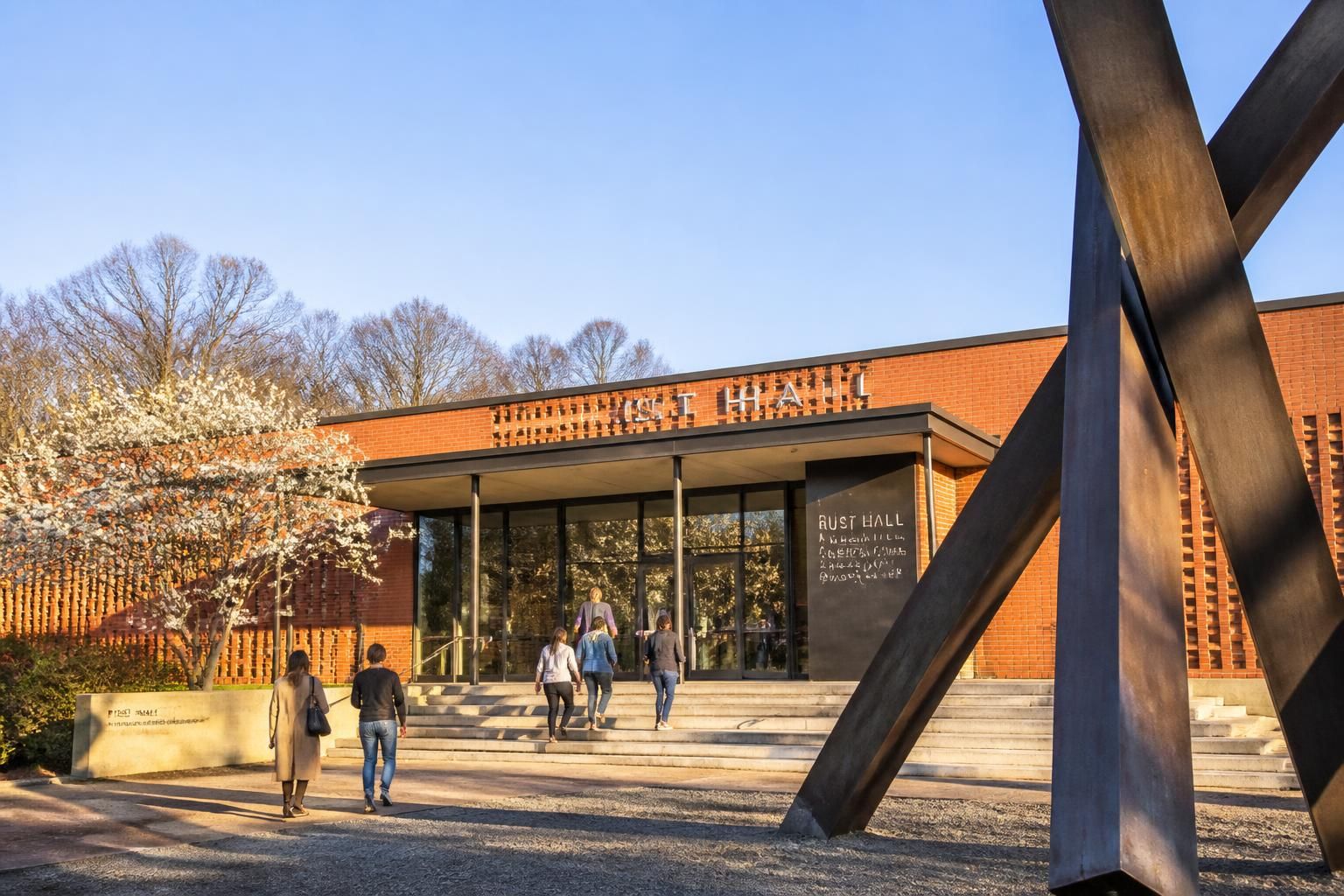
Rust Hall adaptive reuse gives the Metal Museum a larger cultural role in Memphis
The New Facility is planned for Rust Hall, the former Memphis College of Art building in Overton Park. Adaptive reuse is a demanding route for a Museum Expansion, but it can offer a better result than a generic new-build project. The building carries local memory, while its renewal gives that memory an active public purpose rather than leaving it disconnected from everyday city life.
Rust Hall’s architectural character is itself part of the visitor experience. A museum dedicated to forged, cast, fabricated and ornamental metal benefits from a setting where material choices, structural details and spatial proportions can be noticed. The building does not need to compete with the collection; it can create a meaningful framework for it.
The federal record for the NEH-supported Rust Hall renovation and adaptive reuse project identifies the transformation as a substantial institutional effort. This is important context. Cultural redevelopment often appears simple in headlines, yet it combines conservation planning, code compliance, fundraising, exhibit design and operational preparation across several years.
Tripling space changes what a specialist museum can offer
The expanded site is expected to provide roughly three times the space available at the previous location. Scale alone is not a measure of quality, but in this instance it can solve practical limitations. Larger galleries make it possible to show more of the collection, create clearer pathways and separate fragile works from areas designed for live demonstrations or hands-on learning.
| Project element | Visitor value | Operational benefit |
|---|---|---|
| 🏛️ Expanded galleries | More room to view metal Arts and Sculpture without crowding | Greater flexibility for rotating exhibitions |
| 🔥 Blacksmithing studio | Direct access to the making process | Safer, purpose-built demonstration capacity |
| ♿ Accessible circulation | More inclusive routes and resting points | Improved compliance and group management |
| 🌳 Free Sculpture Walk | Outdoor cultural access beyond ticketed spaces | Connects the museum to Overton Park activity |
For visitors, this change can mean a more coherent journey. Someone arriving for a contemporary metal Sculpture exhibition may also encounter a blacksmith at work, join a family activity or continue outdoors through a free art trail. These experiences need careful orientation, however. More floor area can become confusing when signage, entry points and timing information are not designed around actual visitor behaviour.
There is also a citywide benefit. Overton Park already attracts residents and travellers through recreation, culture and events. A stronger Metal Museum adds a specialised reason to visit while broadening the park’s role as a place where heritage and contemporary practice meet. Adaptive reuse succeeds when the historic building becomes easier to use, not merely impressive to photograph.
Funding the Metal Museum expansion requires resilient planning beyond the grant
The $2.5 million Matching Grant is a major achievement, yet it should be understood within the full Funding picture. Museum capital projects rarely move in a straight line. Older buildings can reveal deferred maintenance, infrastructure can require upgrades after plans are developed, and construction markets can change quickly. A responsible campaign communicates these realities while keeping the public focused on the long-term value of the work.
Rust Hall has been associated with renovation pressures that illustrate this point. A request for additional local support followed the discovery of costly maintenance needs, as outlined in coverage of the unexpected Rust Hall renovation costs. Such developments are not unusual in adaptive reuse. They are precisely why contingency planning and diversified revenue sources matter.
The Metal Museum has also benefited from public-sector support. Tennessee previously committed $2 million to the project, demonstrating that Cultural infrastructure can draw backing from philanthropy and government alike. The most sustainable approach does not treat these sources as substitutes. Public investment can help address regional access and preservation needs, while foundation and individual gifts can fund programmatic ambition, interpretation and visitor-focused improvements.
What transparent capital planning looks like for cultural institutions
Transparency does not mean publishing every internal negotiation. It means helping stakeholders understand what has been funded, what remains to be raised and why a revised budget may be necessary. Visitors, members and donors are more likely to stay engaged when project updates connect numbers to tangible outcomes rather than relying on vague claims about transformation.
A practical framework for a museum in this position includes several actions:
- 📊 Define project categories clearly: distinguish construction, collections care, exhibits, education technology and operating reserves.
- 🧱 Maintain a realistic contingency: historic structures require room for discoveries behind walls, ceilings and floors.
- 🗓️ Update the public regularly: explain schedule adjustments in relation to safety, quality and preservation.
- 🎧 Budget for the complete visit: audio interpretation, multilingual content and accessible wayfinding should not be treated as optional extras.
Digital interpretation deserves particular attention at a new museum site. A modest investment in smartphone-based audio guidance can allow visitors to explore at their own pace, support people who prefer listening to reading, and provide tools for guided groups without forcing everyone to crowd around a single speaker. The goal is not to add technology for its own sake. It is to make complex craft stories easier to understand.
For example, a visitor pausing beside an ornamental gate could access a short audio segment on hammering, welding or patination. A school group could receive a different version with a practical prompt: identify the joint holding two pieces together. This approach connects interpretation to observation. A robust Museum Expansion budget protects the building, but it must also protect the quality of the experience inside it.
Metal Arts, Sculpture and live making can deepen the visitor experience
The Metal Museum holds a distinctive position because its subject is both historic and immediate. Metal appears in architecture, jewellery, tools, public monuments and everyday objects, but the processes behind those items often remain invisible. A well-designed New Facility can reveal those processes through galleries, live demonstrations and structured participation without turning serious craft into entertainment.
Working studios are valuable because they make expertise visible. Visitors can see that a forged object is not simply “made of metal”; it results from heat control, timing, physical skill and repeated decisions. The sound of a hammer, the glow of a forge and the changing surface of a workpiece create a memorable encounter. Safety and interpretation must be carefully managed so that the experience remains useful rather than overwhelming.
Designing a journey from observation to understanding
An effective visit can follow a simple progression. Start with an object that attracts attention, give visitors a concise explanation of its purpose or technique, then offer a way to look closer. This could be a tactile sample, a process video, a short audio stop or a facilitator-led question. The emphasis should remain on the work itself.
Imagine “Maya,” a fictional visitor arriving with two children after walking through Overton Park. They first notice a large outdoor Sculpture, then enter a gallery featuring ornamental ironwork. A short family audio route explains why iron was shaped into leaves, scrolls and protective grilles. Later, a studio demonstration helps the children connect the gallery object to the heat-and-hammer process. The day becomes coherent because each encounter builds on the previous one.
Smart tourism tools can support this model without requiring visitors to borrow dedicated devices. A QR code at the entry can open a browser-based or app-based route on a personal phone. Museums should provide alternatives for people without smartphones, including printed highlights and staff support. Accessibility is stronger when digital content expands choices instead of replacing every other format.
Audio content also needs restraint. A two-minute explanation that directs attention to three visible details will usually be more effective than a ten-minute lecture. Clear sound, a calm speaking pace and transcripts make the material usable for more people. For museum professionals considering this approach, the practical ideas in this guide to interpreting a major art museum project offer a useful comparison for visitor-centred digital mediation.
Live making has another benefit: it gives repeat visitors a reason to return. Demonstrations can change by season, artist residency or exhibition theme. A regular programme also provides opportunities for local makers, apprentices and educators to contribute their perspectives. The strongest metal Arts interpretation does not merely explain an object; it helps visitors recognise the decisions, labour and culture embedded in it.
Memphis cultural tourism can benefit from an accessible Metal Museum New Facility
The opening of a renewed Metal Museum in Overton Park can strengthen Memphis Cultural tourism in a practical way. The city is often approached through music, food and civil-rights history, all of which remain essential. A specialist museum of metal Arts adds another dimension: a place where design, craftsmanship, architecture and contemporary Sculpture can be experienced in one visit.
For destination managers, the opportunity is to connect the museum to realistic visitor routes rather than positioning it as an isolated stop. A family might pair the free Sculpture Walk with a park visit. A design-focused traveller could combine the galleries with other architecture and maker-oriented experiences. Schools may use the museum as part of a curriculum linking art, engineering, local history and skilled trades.
Practical access is the foundation of cultural participation
Access begins before a visitor reaches the door. The website, booking information, maps and transport guidance should answer basic questions quickly: when is the museum open, where is the accessible entrance, which activities require registration, and how long should a first visit take? Clear information reduces stress, especially for group leaders, older visitors and families with limited time.
Once on site, visitors need an orientation system that works at different speeds. Large-print maps, concise signs, seating, visible restrooms and simple audio options can make a substantial difference. A group organiser should be able to tell participants where to meet and how to follow a tour without distributing complex equipment. This is where smartphone audio systems can provide a flexible complement to staff-led interpretation.
The Museum Expansion also offers an opportunity to build relationships with local tourism professionals. Hotels, visitor centres, guides and event organisers need practical assets: accurate opening details, group booking contacts, photography guidelines and a short explanation of what makes the collection distinctive. Without this operational information, even a compelling institution can remain underused by visitors who would value it.
Comparable museum developments show why relocation communications should focus on continuity as well as novelty. Readers interested in how institutions manage a move, programming shifts and public expectations can examine this museum relocation case study. The transferable lesson is simple: a new building must preserve the institution’s identity while removing barriers that limited participation before.
There is a wider economic dimension, but it should be described carefully. No single attraction can transform a city’s tourism economy. What a well-run museum can do is extend dwell time, encourage repeat visits, support local educators and makers, and add a credible Cultural option to a visitor’s itinerary. Those are measurable, grounded benefits.
The Matching Grant gives the Metal Museum a powerful tool to complete its capital effort. The ultimate test, however, will be the daily experience: whether a first-time visitor can arrive easily, understand what they are seeing, and leave with a sharper appreciation of metalwork’s place in art and civic life. A memorable Memphis museum visit begins with clear access and ends with a connection visitors can carry beyond the gallery.
What is the $2.5 million Matching Grant for the Metal Museum?
The Windgate Foundation award supports the Metal Museum’s capital campaign for its New Facility at Rust Hall in Overton Park. As a matching grant, it is designed to encourage and leverage additional qualifying contributions.
Where will the new Metal Museum facility be located?
The museum is moving to Rust Hall, the former Memphis College of Art building in Overton Park, Memphis. The adaptive reuse project creates significantly more room for galleries, education and metalworking activities.
Why does the Metal Museum need expanded space?
The larger facility can accommodate more exhibitions, a blacksmithing studio, expanded learning programmes, accessible visitor circulation and outdoor Sculpture experiences, while supporting the museum’s specialised collection and public mission.
How can digital audio improve a museum visit?
Smartphone-based audio can provide short, accessible explanations at the point of discovery, support guided groups, offer transcripts and multilingual content, and let visitors choose a pace that suits them.
