
NYC Outbreak: Why a Disease Decline Does Not End the Legionnaires’ Disease Health Alert
Key point: New diagnoses in the NYC Outbreak have slowed, but the cumulative number of confirmed Legionnaires’ Disease cases reached 60 by mid-July 2026. This distinction matters: a Disease Decline in daily reports is encouraging, yet it does not mean exposure risks have disappeared.
City health officials reported that the Upper East Side cluster was no longer growing at the initial pace seen during the first days of the investigation. On July 9, authorities had identified 46 confirmed cases. Within several days, the total increased by 14, reaching 60. The apparent slowdown refers to the number of newly reported infections, not a reduction in the number of people already affected.
Legionnaires’ Disease is a serious form of pneumonia caused by inhaling small droplets of water containing Legionella Bacteria. It is not usually spread from one person to another, and it is not linked to drinking water in the ordinary sense. The central concern is aerosolized water: fine mist generated by systems such as cooling towers, decorative fountains, spa equipment, or some large-scale plumbing installations.
For museums, guided-tour operators, hotels, schools, event venues, and visitor-facing institutions, the practical message is clear. A public health investigation can involve facilities that remain open to visitors because environmental detection and confirmed human infection are not the same thing. Still, every positive environmental finding requires disciplined remediation, transparent internal communication, and adherence to official guidance.
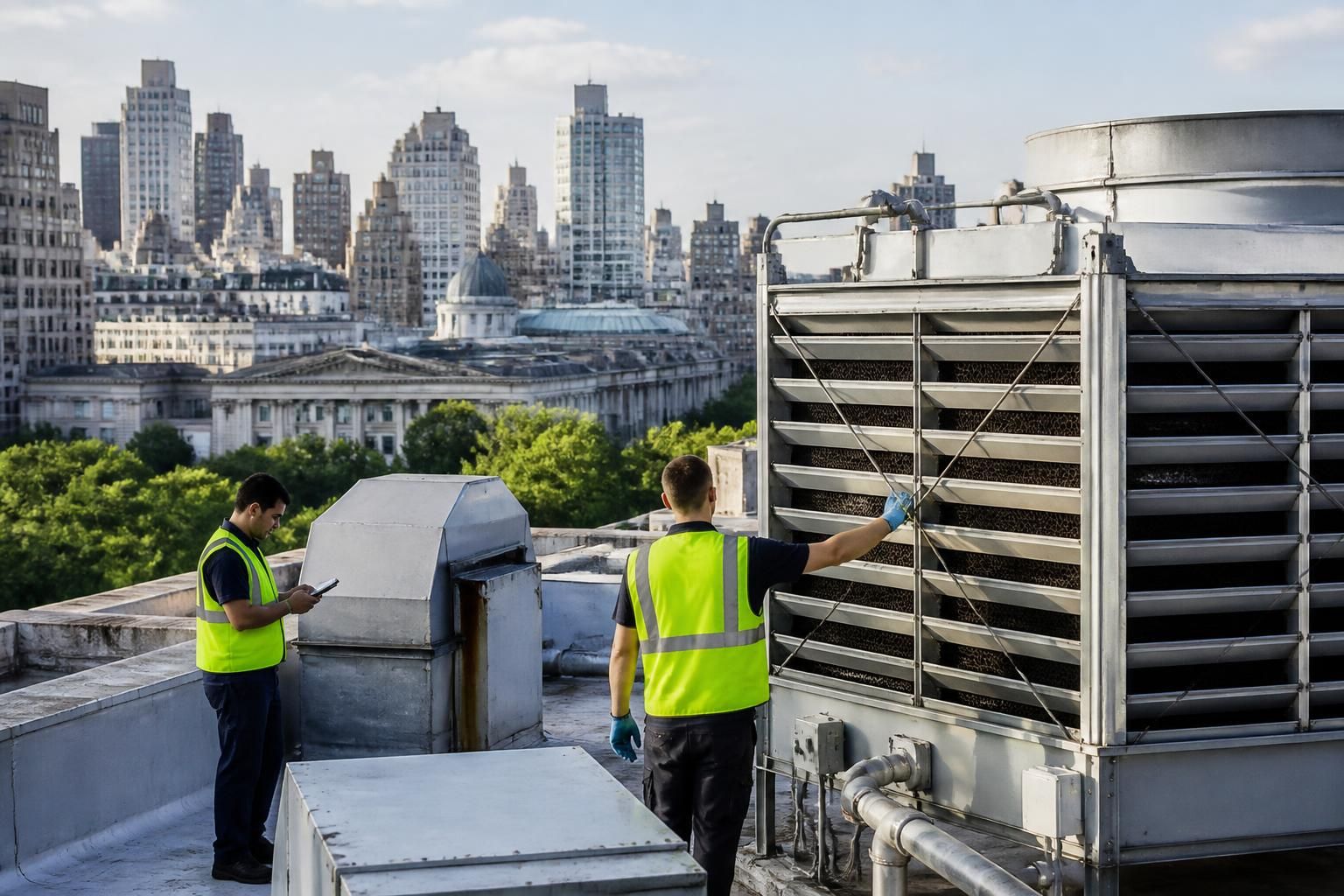
The NYC Department of Health has been collecting samples from cooling tower systems across the affected area. Past clusters in New York have frequently involved contaminated aerosol from cooling towers located on rooftops, sometimes several blocks away from the people who became ill. Wind, building density, humidity, maintenance histories, and the location of ventilation systems can all shape the exposure pattern.
That epidemiological complexity explains why investigators can identify multiple positive sites without immediately establishing one definitive source. A positive result means Legionella was detected in a tested system. It does not automatically prove that every detected site caused an Infection, nor does it identify when contamination began. Public-facing organizations should avoid making claims that go beyond the facts released by health authorities.
For a practical overview of the developing incident and the operational context for cultural venues, readers can review this guide to the NYC museum Legionella investigation. The useful takeaway is not alarm; it is preparation. Facilities that understand their water systems, maintenance records, and visitor communication channels are better positioned to act quickly.
How to read case counts without misinterpreting the outbreak
Public reporting often compresses several different measurements into one headline. Confirmed cases describe people diagnosed with the disease. Positive buildings identify locations where the bacteria was found. Buildings ordered to clean cooling towers describe an enforcement or preventive response. These are connected indicators, but they should not be treated as interchangeable.
A disease cluster can appear to slow because the main exposure event has passed, because remediation has reduced aerosol release, or because diagnosis and reporting timelines are catching up with earlier exposures. Legionnaires’ Disease has an incubation period that commonly ranges from two to ten days, although it can vary. Therefore, case monitoring must continue after the most visible response phase.
- 📉 Slower new cases: a positive trend, but not proof that the source is confirmed.
- 🏢 Positive Outbreak Sites: environmental findings that trigger cleaning and follow-up testing.
- 🩺 Confirmed patients: people diagnosed through clinical assessment and laboratory testing.
- 📢 Health Alert: guidance for residents, visitors, clinicians, and facility operators while the investigation continues.
Consider a fictional Upper East Side walking-tour company, Parkline Heritage Walks. Its guides do not manage a building’s cooling tower, but they do manage visitor expectations. Rather than speculating about the exact source, its team can monitor official notices, provide a concise script for guides, and direct anyone with compatible symptoms to appropriate medical care. That is a more responsible response than cancelling activity without public-health direction or dismissing valid questions.
The operational insight is simple: a declining curve changes the level of urgency, but it does not remove the need for verified information, careful maintenance, and clear visitor communication.
Metropolitan Museum Included Among Legionella Bacteria Detection Sites
The inclusion of the Metropolitan Museum among buildings where Legionella Bacteria was detected drew understandable attention because of the institution’s scale, international visibility, and high daily visitor flow. However, a detected environmental sample should be interpreted carefully. It signals that corrective work and oversight are needed; it does not, by itself, establish that the museum was the origin of the NYC Outbreak.
Reports indicated that the museum and several private schools were among 76 buildings associated with positive testing during the expanded inspection effort. The city’s response focused on sampling cooling tower systems, directing cleaning where necessary, and reviewing compliance with local maintenance requirements. This broad approach is consistent with the Epidemiology of urban Legionella investigations, where identifying all plausible aerosol sources is essential before a source can be ruled in or out.
According to reporting on the 76 buildings with positive environmental findings, the list extended beyond a single landmark. That breadth reinforces a crucial public-health principle: presence of bacteria in a building system is a risk-management issue, not a verdict about causation.
Large museums present distinctive operational conditions. They can combine public galleries, collections storage, staff offices, food-service operations, mechanical spaces, rooftop equipment, delivery access, and complex water infrastructure within one campus. The water-management plan must therefore connect engineering, facilities, visitor services, security, communications, and senior leadership. A siloed approach leaves gaps precisely when fast coordination is required.
For visitors, the most helpful information is practical. Legionnaires’ Disease generally affects people after exposure to contaminated mist, not after walking through a gallery, touching an exhibit label, or standing near another visitor. Those at elevated risk include adults aged 50 or older, current or former smokers, people with chronic lung disease, and people with weakened immune systems. Symptoms can include fever, cough, shortness of breath, muscle aches, headache, and pneumonia-like illness.
What cultural institutions should communicate during a water-system investigation
Communication should be accurate, short, and repeatable across the website, visitor desk, call center, staff briefings, and group-tour partners. Visitors do not need unverified technical detail. They do need to know whether official agencies have issued directions, whether facilities are operating, where to find authoritative updates, and which symptoms merit medical attention.
A museum should also avoid language that frames every positive test as a confirmed exposure event. This can create unnecessary fear and undermine confidence in the investigation. The better approach is to state that the facility is cooperating with health officials, implementing required cleaning or remediation, maintaining records, and following return-to-service requirements.
| Indicator | What it means | Appropriate institutional action |
|---|---|---|
| 🧪 Positive Legionella sample | Bacteria were detected in a tested water system. | Clean, disinfect, document, and retest as directed. |
| 🏥 Confirmed Legionnaires’ Disease case | A person has received a clinical diagnosis. | Support Public Health reporting and avoid disclosing private information. |
| 🔧 Cooling-tower order | Authorities require remediation or corrective action. | Engage qualified contractors and preserve maintenance records. |
| 📣 Visitor inquiry | A guest seeks context or reassurance. | Share official guidance and use calm, factual language. |
Accessibility is part of this response. A visitor notice should be readable on a phone, available in plain language, and usable by staff who may be asked questions in person. If audio-tour devices or smartphone guides are used, a brief optional update can direct guests to official health resources without interrupting the cultural experience or spreading speculation.
For example, a museum audio platform could place a clearly labeled service notice before the tour begins: “For current building information, consult the visitor-services page or speak with a staff member.” It should not insert medical claims into exhibit commentary. Separating operational updates from interpretive content protects both clarity and visitor trust.
The key lesson for high-traffic cultural sites is that visibility raises the standard for communication, while scientific evidence must remain the basis for every statement.
Cooling Towers and Legionnaires’ Disease: How the NYC Outbreak Investigation Works
The investigation into a Legionnaires’ Disease cluster begins with case detection, but it quickly expands into environmental mapping. Epidemiologists review where people live, work, visit, or spend time during the period before symptoms began. When those histories overlap geographically, investigators look for shared environmental systems capable of releasing contaminated mist into the air.
Cooling towers are often central to this work because they circulate water to remove heat from air-conditioning systems. If maintenance, disinfection, water chemistry, or mechanical performance is inadequate, Legionella can grow in the system. Fans can then disperse tiny water droplets. People nearby may inhale those droplets without realizing it, particularly in dense neighborhoods where many rooftops and street-level airflows interact.
New York City has extensive rules for cooling-tower registration, inspection, testing, cleaning, and maintenance. During a cluster, authorities may intensify sampling across a defined zone. The goal is not merely to find one contaminated tower. It is to reduce potential exposure quickly, establish which systems need remediation, and build evidence that can clarify the source pattern.
Coverage of the city’s orders for additional cooling-tower cleaning shows why prompt compliance matters. The expanded cleaning directives reflect a precautionary strategy: waiting for absolute certainty can prolong avoidable risk when a serious respiratory infection is under investigation.
From sample collection to corrective action
Environmental sampling requires methodical handling. Technicians collect water samples from relevant locations, such as basins, outlets, and other components specified by the water-management plan or health department protocol. Laboratory testing then assesses whether Legionella is present. A facility may also need to review temperature control, disinfectant concentration, scale, sediment, stagnant sections, and recent maintenance activities.
When results are positive, corrective action may include cleaning and disinfection, sometimes called shock treatment, followed by verification sampling. The exact procedure should be managed by qualified professionals under city requirements. A rushed or poorly documented intervention can produce a false sense of security, especially if the underlying conditions that permitted bacterial growth remain unchanged.
- 🔍 Identify the system: confirm the equipment, maintenance history, ownership, and responsible facility team.
- 🧫 Collect and assess samples: use the testing process required by regulators and health specialists.
- 🧼 Remediate: clean and disinfect the affected equipment using an appropriate documented protocol.
- 📋 Verify: conduct follow-up testing and retain records for inspection and future risk management.
- 📞 Communicate: coordinate internal staff messaging with official Public Health guidance.
For tourism and event professionals, the most relevant question is often whether a venue should close. There is no universal answer. Decisions depend on the type of system involved, the official order, the progress of remediation, and whether the venue can operate without exposing people to the implicated aerosol source. A tour company should rely on city guidance and venue confirmation, not social-media rumors.
Imagine that Parkline Heritage Walks has a private evening group scheduled near several inspected properties. The organizer can contact each venue’s operations lead, confirm whether normal access remains available, update the route if needed, and issue a factual pre-arrival note. This protects the group’s experience while respecting the seriousness of the Health Alert.
Digital tools can improve this workflow. A shared operational dashboard can record venue status, official notices, responsible contacts, and the time each item was verified. Audio-guide teams can also prepare a short contingency message for affected stops. The message should focus on logistics, not diagnosis: where the group will meet, what route has changed, and where verified information is available.
Effective outbreak management is built on documented water safety, fast remediation, and communications that never outrun the evidence.
Public Health, Epidemiology, and Visitor Safety During a Legionnaires’ Disease Cluster
Public Health agencies use Epidemiology to turn scattered medical reports into a coherent picture of risk. In a neighborhood cluster, investigators compare the timing of illness, patients’ likely exposure locations, laboratory results, and environmental samples. This work is especially important with Legionnaires’ Disease because patients may have visited many places before becoming sick, and the source can be outdoors or inside a building they did not identify as notable.
Patients do not need to have entered a specific landmark for that building to be considered in an investigation. If aerosolized water traveled through an area, the relevant exposure zone may extend beyond a property line. Conversely, people who visited a site where Legionella was detected may never become ill. The relationship between environmental positivity and human disease must be established through evidence, not assumption.
That distinction protects both residents and institutions. It helps clinicians understand which symptoms and travel histories to consider, while it prevents public attention from turning a technical environmental finding into an unsupported accusation. It also explains why city updates may evolve: early information is often broad, then becomes more precise as interviews, laboratory testing, and site inspections progress.
The disease can be severe, particularly for people with known risk factors. Anyone who develops symptoms consistent with pneumonia after spending time in an affected area should seek medical assessment promptly. Antibiotics can treat Legionnaires’ Disease, but early recognition is important. Visitors should not self-diagnose from headlines, and institutions should not offer medical advice beyond directing people to qualified health professionals and official resources.
Building a visitor-information protocol that works in real conditions
A workable protocol begins before a front-desk employee receives the first question. Staff need a one-page internal reference that separates facts from assumptions: what the city has announced, which facilities are affected by orders, which operations have changed, who is authorized to speak externally, and where the latest official update is located.
At a major attraction, this information must reach security personnel, ticketing staff, guides, volunteers, contracted educators, retail teams, and customer-service channels. A mismatch between a website statement and an in-person answer can create confusion within minutes. Smart tourism tools are helpful here because a centrally updated mobile message can reach guides and guests at the same time.
For example, a guided group using smartphones for audio content may receive a neutral service notification before departure. It can say that a route has been adjusted due to an operational notice and link to the city’s health information. The guide can then concentrate on the visit rather than repeating incomplete updates to every participant.
Official information from the city remains the most reliable reference point during an active investigation. The NYC Health Department’s cluster investigation notice explains the focus on cooling towers and ongoing sampling. This is the type of source that venue managers should monitor daily rather than relying on reposted summaries.
- 🧑⚕️ For visitors: monitor symptoms and seek medical care promptly if pneumonia-like symptoms develop.
- 🏛️ For museums and venues: follow orders, retain documentation, and give staff a single approved message.
- 🎧 For guides: keep commentary factual, avoid speculation, and direct health questions to official channels.
- 📱 For digital teams: publish concise updates that work on mobile screens and are easy to revise.
There is also a privacy dimension. Organizations should never identify a guest, employee, school group, or patient as a suspected case without a valid legal and public-health basis. Transparent communication does not require personal data. It requires clarity about the measures being taken and the source of the information.
A strong visitor-safety response gives people useful choices: where to find verified updates, when to seek care, and how the organization is following public-health direction.
Operational Lessons for Museums, Schools, Hotels, and Guided Tours at Outbreak Sites
The NYC Outbreak offers a practical reminder for all visitor-facing properties: water safety is not only a facilities issue. It is an operational resilience issue that affects scheduling, customer service, accessibility, reputation, staff confidence, and the continuity of cultural programming. The Metropolitan Museum’s inclusion in the list of tested sites demonstrates that even highly resourced institutions must respond through coordinated systems rather than reputation alone.
Museums, schools, hotels, conference centers, hospitals, and large residential buildings should maintain a current water-management plan. At minimum, this means knowing who owns each system, who performs maintenance, where logs are stored, what thresholds trigger escalation, and how outside specialists can be contacted. During an incident, time is often lost not in cleaning equipment but in locating accurate records and confirming responsibility.
Tour operators face a different, but related, challenge. They may have no control over cooling towers, yet their business depends on access to buildings and confidence in the local destination. A route plan should include alternatives for landmarks, restrooms, indoor waiting areas, and accessible meeting points. Such planning is useful for construction, weather, crowd control, and health-related disruptions alike.
Using smart visitor technology without creating unnecessary alarm
Digital communication should serve people, not amplify noise. A smartphone-based guide can provide immediate route updates, meeting-point changes, and official links. It can also reduce pressure on guides, who may otherwise have to manage questions while navigating a crowded street or leading a large group through a museum entrance.
The content should remain restrained. Do not turn a health alert into a dramatic audio segment, and do not use push notifications for every news update. A well-designed message identifies the operational change, explains the next step, and offers an authoritative information source. This respects visitor attention and supports accessibility for guests who need clear written or audio instructions.
In the Parkline Heritage Walks example, the team might change a museum-adjacent stop to an outdoor architectural viewpoint while the group’s entry arrangements are confirmed. The app can automatically update the map and play an alternate two-minute commentary about the neighborhood’s Gilded Age façades. Guests receive continuity rather than confusion, and the guide retains control of the experience.
Facility operators should also distinguish emergency communication from routine interpretation. Museum exhibition audio, tourism storytelling, and educational content should not become channels for unconfirmed reports. Instead, a dedicated service banner or alert page can handle operational information. This separation is especially valuable for multilingual audiences, who need short, consistent wording that can be translated accurately.
Actions that improve preparedness before the next health alert
Preparation is measurable. Review cooling-tower documentation before peak summer demand. Test the internal call chain by asking how long it takes to notify facilities, communications, visitor services, and leadership. Check whether a public notice can be updated from a mobile device and whether contracted guides receive messages at the same time as permanent staff.
It is equally important to review vendor relationships. Cleaning, disinfection, sampling, laboratory analysis, and engineering support may involve separate providers. A written contact list with after-hours details prevents delay. So does a clear decision matrix defining who can pause a tour route, postpone an event, or issue a visitor notice when authorities release new information.
The current Disease Decline is encouraging, but preparedness should remain permanent. Legionella risk management is not a seasonal public-relations exercise; it is a continuous maintenance and governance responsibility. Institutions that invest in reliable procedures protect both the people who visit today and the staff who make those visits possible tomorrow.
The durable lesson is this: visitor trust is built when technical maintenance, public-health compliance, and clear digital communication operate as one system.
What does a decline in new Legionnaires’ Disease cases mean?
It means the number of newly reported diagnoses is slowing. It does not erase previously confirmed cases or prove that investigators have already identified one definitive source of exposure.
Does Legionella Bacteria found at the Metropolitan Museum prove it caused the NYC Outbreak?
No. A positive environmental sample means Legionella was detected in a tested system and remediation is required. Epidemiologists must compare environmental and patient evidence before linking a site to specific infections.
Can Legionnaires’ Disease spread from one museum visitor to another?
Person-to-person transmission is not the usual route. The disease is generally associated with inhaling contaminated water mist from systems such as cooling towers.
What should a tour operator do if an Outbreak Site affects a planned route?
Confirm venue status through official sources and direct venue contacts, prepare an alternative route, notify guests with concise factual information, and avoid speculation about sources or individual cases.
Who faces a higher risk of severe Infection?
Risk is higher for older adults, current or former smokers, people with chronic lung conditions, and people with weakened immune systems. Anyone with pneumonia-like symptoms should seek prompt medical evaluation.
