
Hispanic Heritage Month History: Why the Celebration Begins on September 15
Hispanic Heritage Month is observed in the United States from September 15 through October 15. This date range is deliberate: it connects the celebration to a series of independence anniversaries that shaped the political and cultural history of Latin America.
September 15 marks the independence anniversaries of Costa Rica, El Salvador, Guatemala, Honduras, and Nicaragua. Mexico celebrates its independence on September 16, while Chile commemorates its own independence on September 18. Beginning the observance in the middle of the month allows these related milestones to be recognized within one shared national period.
The observance did not begin as a full month. In 1968, it was established as Hispanic Heritage Week after advocacy efforts called attention to the limited recognition of Hispanic Americans in public history, schools, and civic life. The initiative was supported by members of Congress, including Representative Edward R. Roybal of California, at a time when communities were increasingly organizing for visibility, representation, and equal opportunity.
Two decades later, the recognition expanded. In 1988, federal legislation extended the observance from one week to a month, and President Ronald Reagan signed it into law. The change created more room for schools, libraries, museums, cultural centers, and local governments to present the many histories that cannot be captured in a short annual event.
The calendar also offers an important reminder: Hispanic and Latino communities are not defined by one nationality, language practice, ancestry, or cultural expression. The term Hispanic generally refers to people connected to Spanish-speaking heritage, while Latino or Latina often relates to people with origins in Latin America. These labels can overlap, but they do not erase personal or regional identity.
Recognizing independence without reducing history to a single story
Independence anniversaries are central to the September dates, yet the meaning of Hispanic Heritage Month reaches beyond national liberation movements. It also creates space to discuss Indigenous civilizations, African diasporic influences, migration, colonialism, labor movements, civil rights advocacy, artistic innovation, and family memory.
For example, a museum program on Mexico may explore the legacy of Mesoamerican cultures, Mexican Independence Day, Mexican American civil rights organizing, and present-day creative industries. A program on Puerto Rican heritage might examine music, political history, migration to mainland cities, and the experience of a U.S. territory. A meaningful celebration makes these connections visible rather than presenting heritage as a decorative theme.
Public institutions can use reliable resources to build this context. The Smithsonian’s Hispanic Heritage Month learning materials help educators and cultural organizations frame activities around people, collections, and historical evidence rather than stereotypes.
| Key date | Historical connection | Practical interpretation for cultural programs |
|---|---|---|
| 📅 September 15 | Independence anniversaries of five Central American countries | 🌎 Present Central American voices, literature, foodways, and migration histories |
| 📅 September 16 | Mexico’s Independence Day | 🎺 Connect civic history with Mexican and Mexican American cultural expression |
| 📅 September 18 | Chile’s Independence Day | 📚 Highlight Chilean arts, music, democratic history, and diaspora experiences |
| 📅 October 15 | End of the federal observance | 🤝 Turn temporary programming into year-round community engagement |
The most useful way to approach the month is to treat the dates as an entry point, not a limit. Heritage becomes more meaningful when historical facts lead to deeper conversations about identity, belonging, and the people behind public celebrations.
Hispanic Heritage Month Culture: Celebrating Diversity Beyond Familiar Symbols
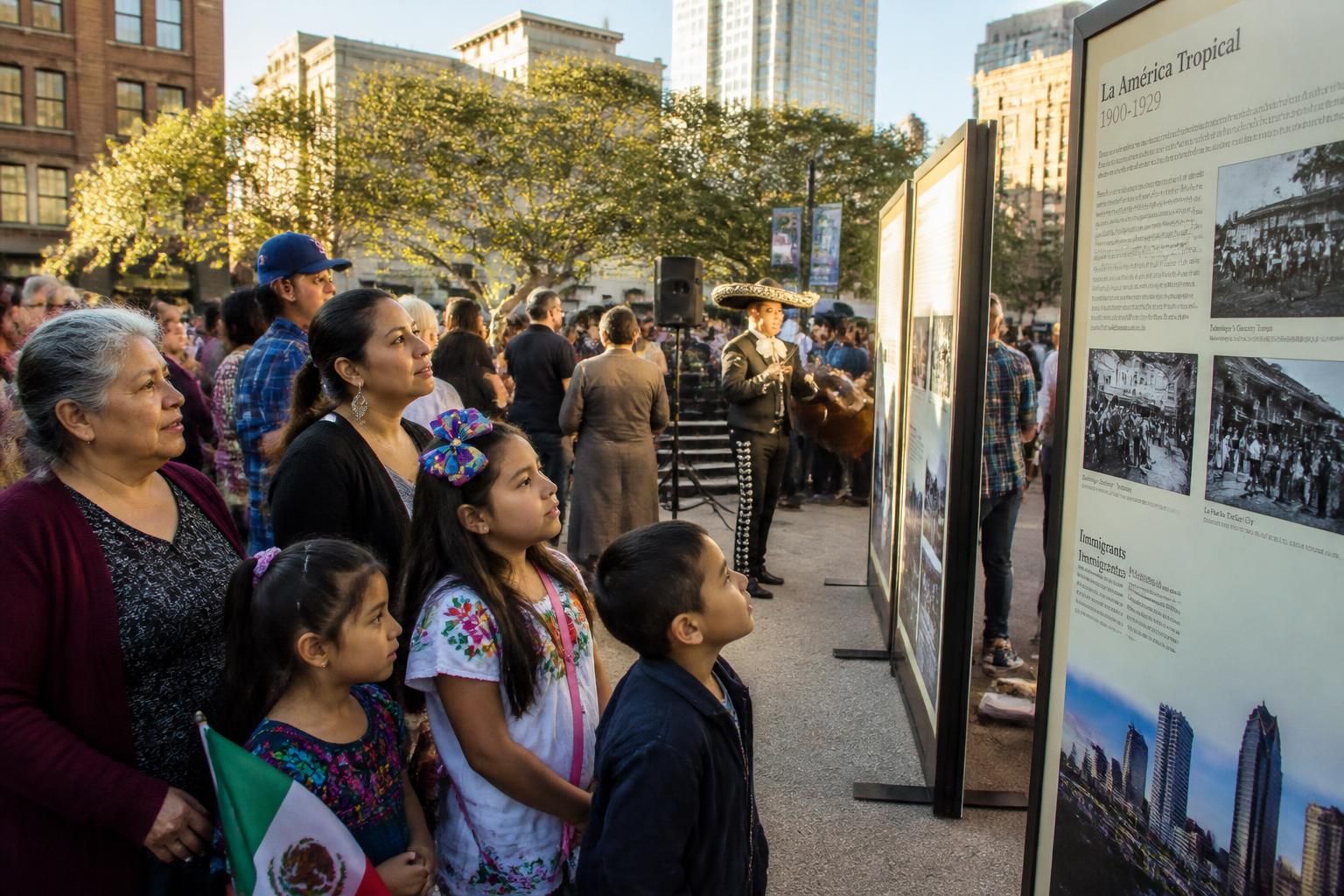
Hispanic Heritage Month often brings recognizable images into public view: flags, folk dances, regional dishes, music performances, and bilingual displays. These elements can be valuable, but they should never become the entire story. Culture is not a fixed collection of symbols; it is a living practice shaped by families, neighborhoods, languages, and changing generations.
Across the United States, Hispanic and Latino communities include people with roots in Mexico, Puerto Rico, Cuba, the Dominican Republic, Colombia, Venezuela, Peru, Ecuador, Argentina, Chile, Spain, and many other places. Each community carries distinct traditions, histories, and perspectives. A festival that treats all participants as one uniform group may unintentionally overlook that richness.
In Austin, for instance, cultural organizations have long used the observance to support public education and local gathering. Institutions such as Mexic-Arte Museum and the Emma S. Barrientos Mexican American Cultural Center demonstrate how a city can connect exhibitions, performances, workshops, and community events to a deeper civic conversation. Annual celebrations around Mexican Independence Day can sit alongside programming that makes room for Central American, Caribbean, South American, and Spanish heritage.
Building a celebration around voices, not assumptions
A practical planning method is to begin with people rather than a preselected visual theme. Ask local artists, educators, historians, restaurateurs, and youth groups what stories they want visitors to hear. Their answers may lead to subjects such as a neighborhood’s migration history, traditional textile work, contemporary muralism, oral storytelling, or the evolution of Spanish-language radio.
A fictional visitor center, Riverbend Tourism Office, provides a useful example. Rather than scheduling one “Latin Culture Day,” its team develops a four-week program with a different local partner each week. A Salvadoran community association leads a pupusa-making demonstration and family history session; a Puerto Rican musician explains bomba rhythms; a Colombian photographer presents portraits of small-business owners; and students create a bilingual audio walking route.
This approach improves accuracy because each contributor can explain context in their own terms. It also prevents a common mistake: treating food or entertainment as cultural proof without discussing the people, conditions, and memories that give these expressions meaning.
- 🎨 Invite local creators to select the stories and objects they wish to share.
- 🎵 Pair performances with short context about origins, influences, and evolution.
- 🍲 Credit cooks, artisans, writers, and community groups by name.
- 🗺️ Include countries and regions that are often absent from mainstream programming.
- 🗣️ Offer bilingual interpretation when it serves the audience and contributors.
Cultural institutions can also connect visitors with collections that reveal this range. The Library of Congress heritage collections and programs illustrate how recorded music, manuscripts, photographs, and archival material can expand a public event into a learning experience.
What does diversity look like in practice? It looks like allowing room for different accents, racial identities, religious practices, family structures, and political experiences. A credible celebration does not simplify culture for convenience; it gives audiences the tools to appreciate its complexity.
When culture is presented with context, the next question becomes practical: how can organizers make these stories accessible to audiences moving through busy public spaces, exhibitions, and events?
Hispanic Heritage Month Events: Designing Inclusive Community Experiences
A successful Hispanic Heritage Month event does more than fill a calendar. It creates conditions in which visitors can listen, participate, ask questions, and recognize the connections between local life and wider history. This is especially important for tourism professionals, museums, libraries, and municipal teams that serve audiences with varied ages, languages, and levels of prior knowledge.
Accessibility should be built into the event plan from the beginning. Clear signage, readable schedules, seating, step-free routes, quiet spaces, captions, transcripts, and understandable audio are not optional extras. They are practical decisions that determine whether a celebration is genuinely open to the community.
Using digital tools to make heritage easier to explore
Smart tourism tools can support cultural mediation without replacing human expertise. A mobile audio guide, for example, can deliver short stories at the right place and moment: beside a mural, outside a historic building, at a community market, or near an archival photograph. Visitors can move at their own pace while receiving reliable interpretation.
For Riverbend Tourism Office, the student-created bilingual route becomes an extension of the physical event. Each stop includes a two-minute audio segment, a transcript, a credit line for the narrator, and a practical map cue. Families who cannot attend the live program can still access selected stories later, while attendees can revisit the content after the festival.
Platforms such as Grupem help guides and cultural teams use smartphones as professional audio-guide tools. This can be particularly effective during outdoor walks or crowded events, where participants may struggle to hear a speaker. The priority is not technology for its own sake; it is clear listening, controlled pacing, and a more inclusive visitor experience.
Choosing formats that encourage meaningful participation
Not every activity requires a stage. A library can host a family scanning day where residents bring photographs and letters for a local-history conversation. A museum can offer a curator-led object discussion. A tourism office can create a neighborhood route that highlights restaurants, public art, bookstores, and historic sites with permission from the businesses and residents involved.
Programming should also avoid placing community members in the position of explaining an entire continent or identity group. A speaker may share a specific experience, such as growing up in a Honduran American household or documenting Dominican music in a particular city. Specificity makes stories stronger and more respectful.
- 🧭 Define one learning goal for each activity, such as understanding a local migration story or recognizing an artist’s influence.
- 🤝 Partner with organizations that have an established relationship with the community represented.
- 🎧 Test audio, captions, and signage in the actual event environment before opening.
- 📱 Publish essential information in mobile-friendly form, including time, location, access needs, and language availability.
- 📝 Collect feedback that asks what visitors learned, not only whether they enjoyed the event.
The strongest events balance celebration with interpretation. Music, food, and dance can draw people in, while personal stories and historical context make the encounter memorable long after the program ends.
Community participation is not an event feature; it is the foundation that makes public heritage programming trustworthy.
Hispanic Heritage Month Legacy: Honoring Contributions Across American Life
The legacy recognized during Hispanic Heritage Month is visible in nearly every area of American life. It can be found in agriculture, science, public service, architecture, labor organizing, education, sports, literature, film, medicine, and entrepreneurship. Reducing this influence to a short list of famous names misses the everyday contributions that sustain cities and communities.
Consider the built environment. Hispanic and Latino architects, planners, construction workers, preservation advocates, and artists have shaped neighborhoods throughout the country. In cities such as Chicago, Los Angeles, Miami, San Antonio, New York, and Phoenix, public murals, business corridors, museums, churches, and gathering spaces reveal layers of migration and local creativity.
Visitors interested in this cultural landscape can explore examples through resources such as this guide to Chicago museums celebrating Latino culture. Museum visits are especially effective when they are connected to nearby neighborhoods, public art, and community-led businesses rather than treated as isolated stops.
From recognizable figures to local civic memory
Public recognition often begins with celebrated artists, athletes, activists, and political leaders. Selena Quintanilla remains a powerful example of how music, fashion, language, and regional identity can create a lasting bond with audiences across generations. Her impact also offers a useful lesson for cultural programming: legacy is not preserved only through official monuments but through the memories and practices communities continue to share.
A thoughtful resource on remembering Selena Quintanilla’s cultural impact can support discussions about Tejano music, representation in media, and the relationship between popular culture and identity. Such topics invite visitors to consider whose stories are treated as national history and whose stories have historically been overlooked.
Military service is another important dimension. Hispanic Americans have served in every branch of the U.S. armed forces, and dozens have received the Medal of Honor. Their experiences should be presented alongside broader histories of citizenship, service, sacrifice, and the changing legal and social status of Hispanic communities in the country.
The same care applies to labor history. Farmworkers, domestic workers, factory employees, educators, health professionals, and small-business owners have contributed to regional economies while often facing unequal access to protections and recognition. Exhibitions and walking tours can use oral histories to connect these structural issues with individual lives.
| Area of contribution | Heritage interpretation opportunity | Visitor-focused format |
|---|---|---|
| 🎭 Arts and music | Explore how genres travel, blend, and evolve across borders | 🎧 Playlist with narrated audio stories |
| 🏥 Science and health | Recognize researchers, clinicians, and public-health advocates | 🔬 Short exhibit profiles and school activities |
| ⚖️ Civic leadership | Connect voting, organizing, and legal advocacy to local history | 🗣️ Panel discussion with archival materials |
| 🏙️ Neighborhood enterprise | Show how family businesses shape local identity | 📍 Community-led walking route |
Honoring legacy means resisting the idea that heritage belongs only to the past. It is an active record of contribution, creativity, and civic participation that continues to shape the United States.
These contributions become more visible when institutions build relationships that last beyond a single seasonal campaign, turning recognition into a sustained public practice.
Hispanic Heritage Month Planning: Creating Respectful Year-Round Engagement
Hispanic Heritage Month can be a valuable catalyst, but cultural recognition should not disappear on October 16. For tourism organizations and public institutions, the better goal is to use the annual observance to improve year-round interpretation, partnerships, and access. A one-month schedule becomes more credible when it is connected to an ongoing commitment.
Start by reviewing existing content. Are Hispanic and Latino histories present in permanent tours, city maps, museum labels, and school materials? Are they represented only through festivals and food, or do visitors also encounter stories of work, migration, civic leadership, art, and contemporary innovation?
Creating a realistic and responsible content workflow
A manageable approach does not require a major production budget. An organization can begin with one carefully researched walking-tour stop, one recorded oral history, or one bilingual object label created with a local partner. The important point is to establish a process for fact-checking, consent, attribution, and regular updates.
For example, Riverbend Tourism Office could retain its September audio route after the festival and add one new stop each quarter. The first update may feature a Guatemalan-owned bakery and its family history. The next can document a public artwork created by a Venezuelan American artist. Over time, the route becomes a useful civic resource rather than a temporary campaign.
Technology can support this continuity when it is easy for staff and visitors to use. Audio content should be short enough for a street environment, recorded clearly, and accompanied by text for people who prefer reading or need transcripts. A multilingual experience should be planned with qualified translators and cultural contributors, not automated word substitution alone.
Measuring whether the celebration created real value
Attendance is useful, but it is not the only measure. Ask whether community partners felt accurately represented, whether visitors discovered new local stories, and whether the program reached people who do not usually participate in cultural events. These questions reveal more than a raw headcount.
- 📊 Track participation by format: guided walk, exhibition, workshop, audio route, or school session.
- 💬 Ask partners whether the portrayal of their culture and tradition felt accurate and respectful.
- 🔎 Review visitor comments for evidence of learning, not merely entertainment value.
- ♿ Audit accessibility after the event, including sound quality, mobility access, and language support.
- 📅 Set a follow-up date before the month ends so ideas become part of the next annual plan.
It is also wise to avoid overloading one group with unpaid requests during September. Budget for artists, speakers, translators, performers, and advisors whenever possible. Compensation recognizes expertise and helps organizations build relationships based on professional respect rather than symbolic visibility.
For educators and event planners seeking background on the federal observance, this overview of Hispanic Heritage Month origins and dates provides a useful starting point. Local research and direct collaboration should then shape the final program.
The most durable expression of pride is practical: listen to the community, share authority, improve access, and keep heritage visible throughout the year.
When is Hispanic Heritage Month celebrated?
Hispanic Heritage Month is observed in the United States from September 15 to October 15. The opening date aligns with independence anniversaries in several Central American countries, followed by Mexico’s independence anniversary on September 16 and Chile’s on September 18.
Why does Hispanic Heritage Month begin on September 15 instead of September 1?
The date was selected to recognize major independence milestones in Costa Rica, El Salvador, Guatemala, Honduras, and Nicaragua. It creates a historical connection between the observance and national liberation movements across Latin America.
How can a museum or tourism office celebrate Hispanic Heritage Month respectfully?
Work with local community partners, compensate contributors, verify historical information, provide context for performances and food traditions, and include accessibility features such as captions, transcripts, clear audio, and readable signage.
What is the difference between Hispanic and Latino?
Hispanic commonly refers to people connected to Spanish-speaking heritage, while Latino or Latina generally refers to people with origins in Latin America. The terms may overlap, but individuals may choose different words to describe their identity.
