
Key points at a glance: ✅ The Missouri History Museum is scheduled to become the St. Louis History Museum in the upcoming year. ✅ The decision reflects a stronger focus on local stories, civic relevance, and visitor recognition. ✅ For museums and tourism professionals, this museum renaming offers a practical case study in aligning a venue’s public name, digital presence, and on-site experience.
Missouri History Museum Renaming Signals a Clearer St. Louis Focus
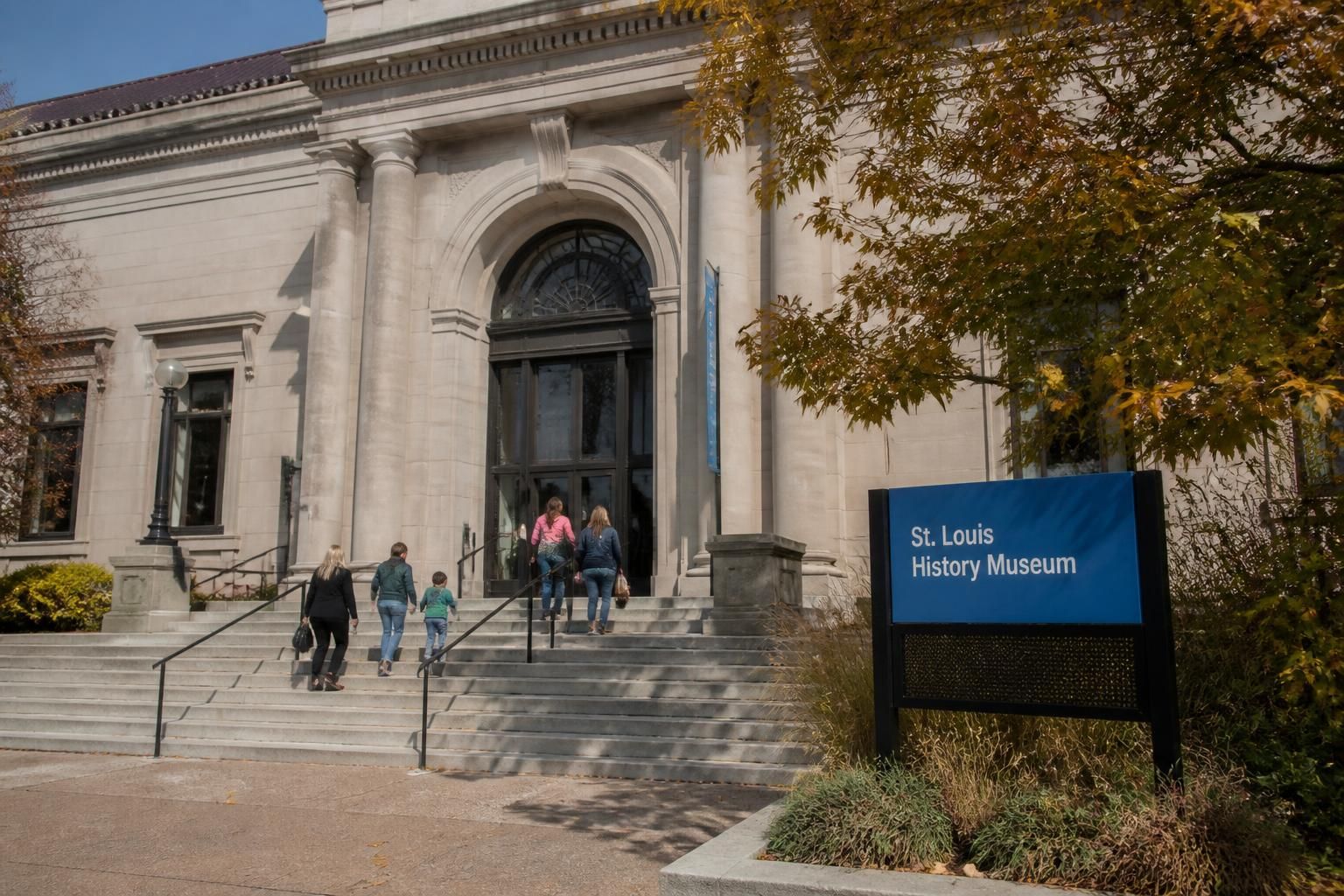
The Missouri History Museum is preparing to adopt a new public name: St. Louis History Museum. The change follows a unanimous vote by the Missouri Historical Society Board of Trustees and is intended to make the institution’s identity more direct for residents, tourists, educators, and cultural partners.
The venue remains the same well-known institution in Forest Park, operated by the Missouri Historical Society. Its mission is not being reduced to a single city narrative. Instead, the new name places St. Louis at the center of the visitor promise while preserving the wider regional context that has always shaped Missouri history. River commerce, migration, civil rights, industrial growth, sports, neighborhoods, music, and the 1904 World’s Fair all connect the city to statewide and national developments.
For a visitor planning a short stay, the word “Missouri” can suggest an institution covering an entire state in broad terms. “St. Louis History Museum” immediately identifies the place as a destination for understanding the city and its metropolitan area. This distinction matters in tourism. Clear naming reduces uncertainty before a visit, improves map searches, and helps travel planners connect a museum to nearby Forest Park institutions, downtown landmarks, and neighborhood tours.
The museum has long provided free admission through public support from the Metropolitan Zoological Park and Museum District. That access model is central to its public role. A new name therefore needs to do more than refresh branding materials: it must make the museum easier to recognize as an open, relevant civic resource for people who live in the region as well as people discovering St. Louis for the first time.
Why museum identity matters to visitors before they arrive
A museum identity is formed long before a guest reaches the entrance. It appears in search results, online maps, event listings, social media posts, school trip materials, audio guides, and recommendations from hotel staff. If those touchpoints use inconsistent names, visitors can hesitate. If they all explain the same institution in clear language, the experience begins with confidence.
Consider a fictional visitor, Maya, arriving in St. Louis for a weekend conference. She has two free hours between meetings and searches for “St. Louis history near Forest Park.” A venue named St. Louis History Museum is easier for her to interpret than a title that may appear statewide in scope. The value is not merely promotional. It is practical: Maya can quickly understand the relevance of the site, check opening hours, select an exhibition, and plan transportation.
This is why museum rebranding should never be treated as a logo-only exercise. A public-facing name is part of wayfinding. It helps visitors make choices with limited time, limited local knowledge, and varying levels of familiarity with the city’s past. In an accessible cultural experience, clarity is a form of welcome.
The organization has explained its position through its announcement introducing the St. Louis History Museum, framing the evolution around a commitment to stand up for St. Louis. That language signals a broader interpretive direction: a focus on the people, places, conflicts, achievements, and ongoing questions that define the area.
- 📍 For local residents: the new name can make the museum’s civic role more immediately visible.
- 🧭 For tourists: it provides a clearer signal about the stories and destination they will encounter.
- 🎓 For schools: it reinforces the museum as a practical learning partner for local history.
- 📱 For digital teams: it creates a reason to audit listings, navigation labels, and audio content.
The name change does not replace the need for rigorous scholarship or inclusive interpretation. It creates a more direct entry point to them. A strong public name should help more people find the stories that deserve careful attention.
How the St. Louis History Museum Name Supports Cultural Heritage Interpretation
A change from Missouri History Museum to St. Louis History Museum is meaningful because names set expectations about whose experiences will be highlighted. The St. Louis region contains layered histories that cannot be told through one viewpoint: Indigenous presence, French colonial foundations, enslavement and emancipation, immigration, labor, segregation, housing, transportation, entrepreneurship, music, sports, and environmental change all belong to the city’s cultural record.
Effective cultural heritage interpretation does not simplify these subjects into promotional slogans. It gives visitors enough context to understand why a particular object, photograph, oral history, or building matters. A city-centered title can make this work more legible. It tells audiences that the museum is a place where St. Louis can examine itself, including the difficult parts of its past.
The institution’s current role and visitor information remain available through the Missouri Historical Society museum page. For visitors, this is useful because a name transition may happen across channels at different times. The official site remains the most reliable place to verify exhibitions, programs, access details, and operational updates.
Historical exhibits need context, not only attention-grabbing labels
Historical exhibits are most effective when they combine compelling design with traceable evidence. A gallery about the 1904 World’s Fair, for example, can draw visitors through immersive environments, archival images, period sound, and personal accounts. Yet the experience becomes more valuable when it also addresses who benefited from the event, who was excluded, how the fair shaped the city’s self-image, and how its legacy remains visible in Forest Park.
The same principle applies to exhibitions on urban renewal, neighborhood displacement, the Dred Scott case, the Great Migration, or St. Louis music traditions. Visitors do not need an academic lecture at every display. They do need clear timelines, plain-language labels, representative voices, and opportunities to connect past decisions with present-day places.
Audio technology can support this approach without overwhelming galleries. A visitor using a smartphone-based guide can choose a short general route, a family-friendly route, an accessibility-focused route, or a deeper thematic trail. At an object associated with a historic neighborhood, an audio stop can pair a curator’s explanation with an oral-history excerpt from a former resident. That format gives people control over pace while preserving the authority of sourced interpretation.
| Visitor touchpoint | Practical update during museum rebranding | Benefit for cultural access |
|---|---|---|
| 🗺️ Maps and search listings | Use the new name consistently and retain the former name where platforms allow it. | ✅ Reduces confusion for first-time visitors. |
| 🎧 Audio tours | Update welcome messages, route titles, and spoken references. | ✅ Keeps the experience aligned with on-site signs. |
| 🏛️ Exhibition labels | Explain the institution’s new identity in a concise contextual panel. | ✅ Connects branding with public history. |
| 📚 Education materials | Refresh teacher guides, booking forms, and student activities. | ✅ Prevents administrative friction for schools. |
A thoughtful transition also recognizes that visitors may continue using the former name for years. That is normal. Search behavior, family habits, archived guidebooks, and word-of-mouth all change gradually. The appropriate response is not correction for its own sake, but clear continuity: “formerly Missouri History Museum” can appear where useful while the new public identity becomes established.
For museums, the lesson is direct. Historical preservation is strengthened when people can understand both the collection and the institution presenting it. The upcoming name offers an opportunity to link place, memory, and public access in a more explicit way.
Video content can also extend the gallery experience. A short behind-the-scenes feature, curator interview, or archival film clip can help visitors prepare before arrival, particularly when the museum uses captions, transcripts, and clear descriptions.
Museum Rebranding Requires Consistent Digital and On-Site Museum Updates
A public name change succeeds only when it is implemented across the complete visitor journey. For the Missouri History Museum, becoming the St. Louis History Museum involves signs and stationery, but the more complex work often happens in systems that visitors do not immediately see: ticketing databases, event calendars, staff email signatures, location directories, educational portals, media asset libraries, and audio-tour platforms.
These museum updates should be planned as a coordinated migration. A visitor should not see one name in a search engine, a second name in a podcast, and a third version at a museum entrance. Mixed naming is especially difficult for people using public transportation, guests with limited mobile data, and groups following pre-arranged itineraries.
A practical transition plan for public-facing systems
The first step is to create a complete inventory of every place where the museum name appears. This may include more than a hundred items. Some are obvious, such as exterior banners and the home page. Others are easy to miss: automated booking messages, image file names, QR codes embedded in old brochures, third-party accessibility listings, donation receipts, and captions on historical videos.
Next, each item should be assigned a priority based on visitor impact. A homepage title, map listing, and entry sign are high priority because they affect arrival. A downloadable archive from several years ago may require a transitional note rather than a complete redesign. This method prevents teams from spending too much time on low-impact details while key travel information remains unclear.
- 🔎 Audit every channel: list physical, digital, editorial, and partner-owned touchpoints.
- 🧩 Define naming rules: specify when to use “St. Louis History Museum” and when “formerly Missouri History Museum” is helpful.
- 📍 Update wayfinding first: prioritize maps, search profiles, transport references, and entry information.
- 🎧 Review spoken content: revise audio tours, recorded greetings, videos, and accessibility narration.
- 📊 Monitor real questions: log visitor and staff confusion to refine wording during the transition.
For tourism partners, a shared update kit is valuable. Hotels, visitor centers, tour guides, schools, event venues, and destination marketing organizations all distribute information about cultural attractions. Providing them with an approved description, current logo files, map language, and a brief explanation of the change makes the transition more reliable.
Smart audio tools are especially relevant because audio is frequently produced months before a visitor listens. A museum may have archived multilingual recordings that reference the old title in an opening announcement or navigation instruction. Those files should be reviewed, but there is no need to discard useful content that remains accurate. A concise updated intro can preserve existing interpretation while bringing the overall experience into line with the new identity.
For example, a route can begin: “Welcome to the St. Louis History Museum, formerly known as the Missouri History Museum.” That one sentence supports continuity, helps repeat visitors, and avoids making the name change dominate the historical content that follows. The objective is a frictionless experience, not a prolonged branding explanation.
The museum’s background remains relevant to this work. Visitors seeking a quick institutional overview can consult the Missouri History Museum reference entry, while official channels should remain the source for current visitor guidance. Maintaining both discovery and accuracy is an essential digital-public-history balance.
Good museum rebranding is invisible at the point of use: visitors simply know where they are, what they can do, and how to access the stories.
Community Engagement Makes the New Museum Identity Credible
Names become meaningful through use. The St. Louis History Museum identity will gain strength not only from official announcements but from the way community groups, residents, educators, artists, and visitors encounter it in real situations. A museum that tells a city’s story should make room for the people who continue to shape that story.
Community engagement is therefore not a communications add-on. It is a method for improving relevance, testing clarity, and widening participation. It can include listening sessions, neighborhood partnerships, pop-up collecting days, public programs, youth advisory groups, multilingual feedback, and collaborations with local historians. Each format helps the institution understand how its new name is received and what expectations it creates.
Listening before and after the name change
A useful approach is to ask practical questions rather than only broad opinion questions. Do residents understand that the renamed museum remains in Forest Park? Do teachers know whether school booking procedures have changed? Do visitors feel the name better reflects the subjects they expect to see? Are people concerned that statewide stories will disappear? Specific questions produce feedback that can guide signage, web copy, programming, and staff training.
Imagine a neighborhood association organizing a heritage walk through North St. Louis. Its members may use the museum as a research partner, borrow educational resources, or encourage residents to contribute photographs and memories. If the new identity is accompanied by genuine outreach, the association can see the institution as a place to preserve and interpret local experience rather than simply a building that displays finished narratives.
This matters for historical preservation. Archives grow when people recognize that their letters, family photographs, business records, protest flyers, recordings, and digital files may have public value. Museums and historical societies can make collecting more inclusive by explaining what they seek, how materials are cared for, and how donors retain appropriate context around sensitive family stories.
Participation should also be accessible. Evening sessions support working residents; captioned video supports deaf and hard-of-hearing participants; plain-language forms reduce barriers; mobile listening options can support people who cannot attend in person. Technology is useful when it removes obstacles rather than creating another login, download, or unfamiliar process.
A short oral-history video can be a powerful entry point for audiences who might not initially plan a museum visit. The strongest format is usually simple: a local speaker, a specific place, a well-framed memory, captions, and a clear path to learn more. It does not need cinematic excess to be engaging.
Public programming can also connect the name transition to lived experience. A “What Makes St. Louis?” series might pair historical objects with contemporary voices from different neighborhoods. A family day can invite visitors to map personal migration stories. A guided audio walk can connect Forest Park galleries with urban sites discussed in the collection. These activities show that museum identity is not static; it is built through relationships.
Clear language remains important. The museum can acknowledge that its work includes St. Louis, Missouri, and broader regional connections without implying that one scale of history invalidates another. Cities and states are linked. The new title simply makes the primary public focus easier to identify.
A credible identity is earned when communities can recognize their histories, questions, and contributions within the institution.
What Tourism and Museum Teams Can Learn From the Missouri History Museum Change
The upcoming transition provides a useful operational lesson for cultural venues of every size. A museum renaming may look like a major institutional project, but its core challenges are shared by local heritage centers, historic homes, archives, visitor bureaus, and guided-tour operators: explain the change clearly, preserve trust, update visitor tools, and keep the public focused on the experience rather than administrative complexity.
For tourism professionals, the most important question is simple: will a person using a phone in an unfamiliar place understand what to do next? This applies to a museum’s listing on a map, a tour operator’s booking confirmation, a QR code at an exhibit, or an audio-guide welcome screen. If the answer is no, the solution is usually not more promotional text. It is better hierarchy, simpler naming, and accurate information.
Use the transition to improve the visitor experience
Renaming creates a rare reason to inspect systems that may otherwise remain untouched for years. A museum can use the change to assess whether its website is readable on mobile devices, whether event descriptions explain accessibility clearly, whether gallery navigation works for first-time visitors, and whether multimedia content is available in appropriate formats.
Audio is one area with immediate practical value. In busy galleries, guided groups often compete with ambient noise and nearby conversations. Smartphone-based systems can let visitors use their own headphones, follow content at a personal pace, and access narration without forcing staff to distribute, clean, charge, and recover dedicated devices. For guided tours, a mobile audio solution can improve audibility while allowing guides to focus on storytelling and group care.
That approach is especially useful when a venue is introducing new brand language. The opening audio can briefly establish the new name, while the rest of the route focuses on historical exhibits, collection objects, and local voices. Visitors receive orientation without a heavy-handed message. The technology serves interpretation rather than distracting from it.
Tourism partners should also avoid an avoidable mistake: updating only their own website. Destination information moves through an ecosystem of platforms. A hotel concierge may use a saved PDF, a guide may have a pre-written script, and a local event calendar may draw data from an older feed. Proactive communication prevents a fragmented public message.
| Professional role | Action to take | Visitor result |
|---|---|---|
| 🏛️ Museum manager | Prepare a phased naming and signage checklist. | ✅ Consistent arrival and orientation. |
| 🎙️ Tour guide | Update spoken scripts and saved map locations. | ✅ Clear recommendations and directions. |
| 🏨 Hotel or visitor center | Replace outdated brochures and concierge notes. | ✅ Fewer missed visits or wrong searches. |
| 📱 Digital experience team | Refresh audio introductions, QR destinations, and metadata. | ✅ A coherent mobile journey. |
Reliable communication matters because trust is cumulative. A visitor who finds accurate opening information, understandable wayfinding, and relevant interpretation is more likely to recommend the venue, return for another exhibition, or explore additional local cultural sites. In contrast, a small naming mismatch can create unnecessary doubt at the exact moment a visitor is deciding where to spend time.
The Missouri History Museum’s transition demonstrates that a name can be both symbolic and operational. It signals a renewed emphasis on St. Louis while requiring detailed work across content, technology, partnerships, and visitor services. The most useful lesson for cultural organizations is to treat every update as part of one connected visitor journey.
What will the Missouri History Museum be called after the change?
The museum is set to adopt the name St. Louis History Museum in the upcoming year, following approval by the Missouri Historical Society Board of Trustees.
Will the museum still cover Missouri history after its new name is introduced?
Yes. The new public identity emphasizes St. Louis, while the city’s history remains deeply connected to Missouri and wider regional stories.
Why does museum renaming matter for visitors?
A clear name improves search, map navigation, trip planning, partner communication, and visitor understanding of what the museum presents.
How should tourism partners handle the transition?
They should update maps, brochures, booking messages, web listings, tour scripts, and audio content, while using the former name temporarily where it helps visitors recognize the institution.
