
⏱️ Little time? Here is what matters:
- ✅ Hippocratic AI is positioning its Agentic Orchestrators as coordinated teams of voice agents designed around measurable care outcomes rather than isolated tasks.
- 🎧 For healthcare organisations, the practical value depends on clear escalation rules, reliable Health Data connections, and careful patient experience design.
- 🛡️ Next-Gen Healthcare AI does not replace clinicians: its strongest use is to extend follow-up capacity, improve continuity, and route people to the right human team at the right moment.
How Hippocratic AI Orchestrators Change Next-Gen Healthcare AI Delivery
Hippocratic AI has introduced Agentic Orchestrators, a model in which several conversational voice agents operate as a coordinated service rather than as standalone automation tools. The key idea is straightforward: a patient journey rarely consists of one question, one response, and one administrative action. A successful follow-up may require outreach, symptom collection, scheduling support, medication education, and clinician escalation. Orchestrators are designed to connect these stages around a defined outcome.
Traditional healthcare automation often concentrates on individual tasks. One system sends appointment reminders, another answers basic calls, and a third records information in a separate workflow. This can create friction for patients, who may have to repeat their situation several times. It can also make it difficult for care teams to understand where a person is in the pathway. The orchestrator approach aims to manage the handoffs between specialised agents while maintaining a coherent conversation history.
For example, consider a fictional regional provider called Northbridge Care Network. Its cardiology department discharges patients after procedures but struggles to contact everyone within the recommended window. With an orchestrated workflow, a voice agent could first confirm whether the patient has returned home safely. A second agent could collect structured answers about discomfort, medication access, or warning signs. If a predefined risk threshold is reached, the orchestration layer would direct the case to an appropriate nurse queue rather than allowing the conversation to continue as routine outreach.
This is a meaningful shift in how Artificial Intelligence can support Medical Care. The objective is not simply to make more calls per day. It is to organise a dependable process where every contact has a purpose, every relevant response is documented, and every exception reaches a qualified professional. The company’s product announcement describes teams of conversational voice agents coordinated by a supervising orchestration layer, focused on outcomes rather than tasks. Readers can review the company’s new healthcare AI product overview for its stated product direction.
Outcome design must come before voice automation
Healthcare leaders should start by defining the outcome they want to improve. “Deploy a voice agent” is not an operational objective. “Increase successful post-discharge follow-up within 72 hours while ensuring high-risk symptoms are escalated within the same day” is a usable objective. It creates a clear basis for workflow design, clinical review, measurement, and improvement.
The orchestration layer can then assign tasks to agents according to the patient’s answers and the organisation’s policies. A scheduling agent may assist a patient who needs a follow-up appointment. A clinical intake agent may collect a limited set of approved questions. A benefits or access agent may help clarify the next administrative step. Each role should be narrow enough to test safely and clear enough for staff to understand.
There is also an experience advantage. Patients generally do not care which technical component is speaking to them; they care whether the call is understandable, respectful, and useful. A well-designed coordinated voice flow avoids robotic repetition and clearly identifies the reason for contact. It also gives the patient an uncomplicated route to a human professional. Coordination is valuable only when it makes care feel simpler for the person receiving it.
For tourism and cultural organisations that already use smartphone audio systems, the comparison is familiar. A quality audio guide works because content, timing, route, accessibility, and listener controls are coordinated. In healthcare, the stakes are much higher, but the interaction principle remains relevant: technology should reduce cognitive load, not create another layer of navigation. This makes conversational clarity and reliable routing central to AI Integration.
🌟 The central operational lesson is clear: an orchestrator should be judged by the patient pathway it improves, not by the number of automated conversations it can initiate.
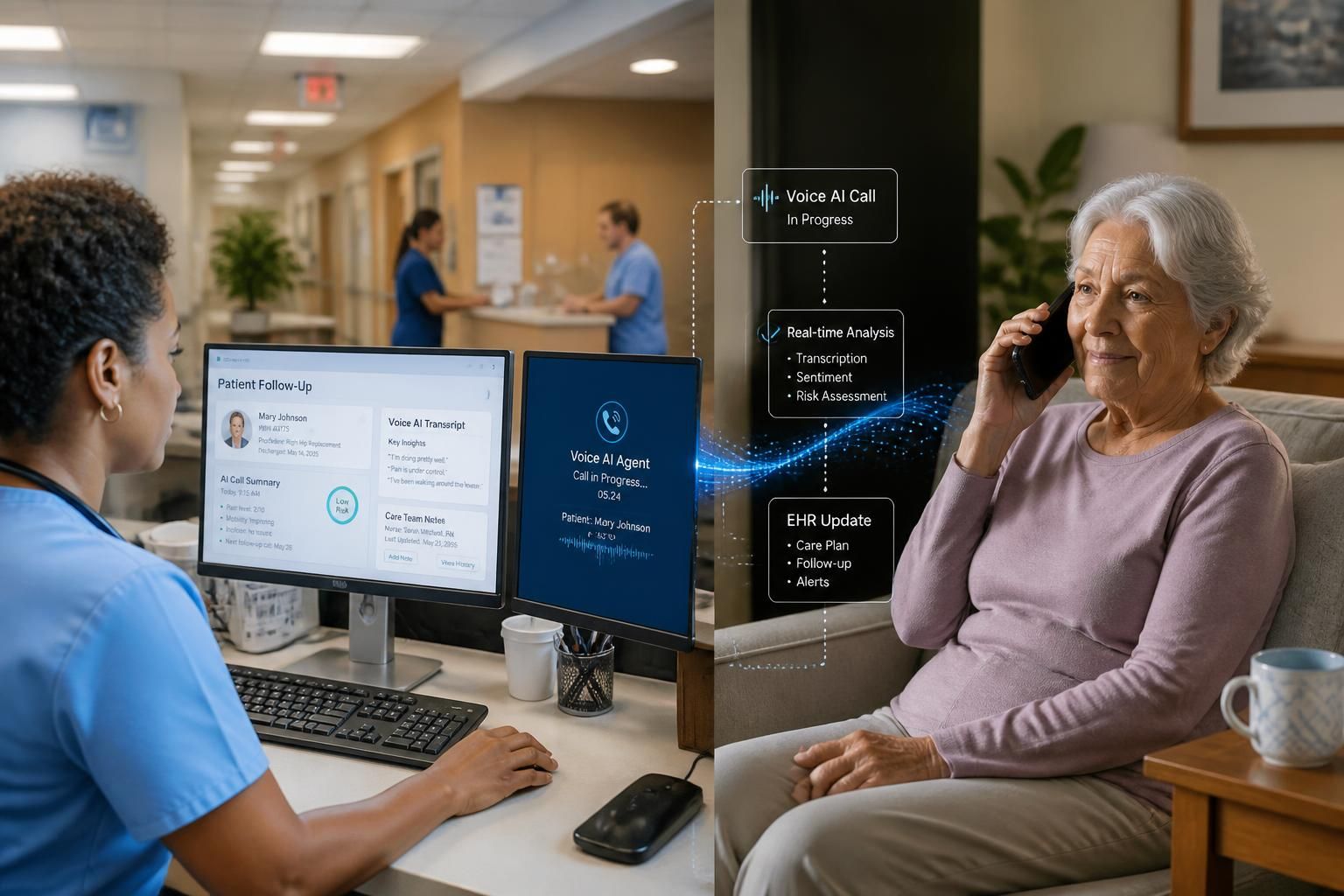
Building Safer Patient Care Workflows With Healthcare AI Orchestrators
In Medical Technology, capability alone is never sufficient. A system that can hold a natural conversation must also know when it should stop, what it must document, and how it transfers responsibility to a person. That is especially important for voice-based Patient Care, where a caller may reveal symptoms, confusion, fear, or a request that cannot be handled by a scripted process.
Safe deployment begins with scope. An organisation should define which patient populations are appropriate for an automated outreach programme and which situations require direct human contact. A post-visit satisfaction call has a different risk profile from follow-up after emergency care. Likewise, medication reminder support differs from symptom triage. Every workflow needs explicit boundaries before it reaches real patients.
Northbridge Care Network, for instance, might begin with a low-risk programme for patients who missed a preventive screening appointment. The first agent confirms identity using the approved process, explains the purpose of the outreach, checks whether the patient would like scheduling assistance, and provides a transfer option. If the patient reports alarming symptoms unrelated to the original call, the workflow must not improvise medical advice. It must follow an approved safety protocol, including urgent escalation where appropriate.
Escalation rules are the real clinical backbone
Clinical and operational teams need to define escalation triggers in language that can be consistently applied. These may include specific symptoms, a request to speak to a clinician, inability to verify identity, signs that the patient does not understand the interaction, repeated failed contact attempts, or a mismatch between the patient’s answers and available records. The rules should be written, reviewed, version-controlled, and tested against realistic call scenarios.
A useful governance checklist includes:
- 🩺 Clinical ownership: assign a named medical leader who approves the workflow’s scope and escalation logic.
- 📞 Human handoff: ensure patients can reach an appropriate staff member without being trapped in repeated automated loops.
- 🔎 Conversation review: audit a representative sample of calls for accuracy, tone, completion, and safety events.
- 🔐 Data controls: document where recordings, transcripts, and structured Health Data are stored and who can access them.
- 📊 Outcome monitoring: measure completed follow-ups, escalation timeliness, patient satisfaction, and unresolved cases.
Voice is especially powerful because it is accessible for people who may not be comfortable with portals, apps, or written forms. Yet voice interactions can also be misunderstood due to hearing differences, language preferences, environmental noise, cognitive load, or emotional stress. A safe system confirms key details, uses short sentences, avoids unexplained terminology, and does not rush the person. Accessibility is not an optional interface improvement; it is part of care quality.
This is where lessons from voice experience design become practical. A natural-sounding interaction is not merely about a realistic synthetic voice. It requires pacing, clear confirmation, easy repetition, and respectful pauses. A patient who says “I did not catch that” should hear the information repeated in simpler terms, not receive a generic error message. Organisations exploring this field can also compare approaches in this overview of voice AI in healthcare settings.
🛡️ A reliable orchestrated workflow is therefore not defined by autonomy. It is defined by controlled autonomy with visible clinical responsibility.
Connecting Health Data Without Creating Fragmented Medical Care
The value of Orchestrators depends heavily on how they use Health Data. If an agent contacts a patient without knowing whether the person has already attended an appointment, received a follow-up call, or been admitted elsewhere, the experience quickly becomes frustrating. If the same information is collected but never reaches the care team in a usable format, the call becomes another disconnected interaction rather than a service improvement.
AI Integration should therefore be planned as a workflow project, not a conversation project. The organisation must decide which systems provide the necessary context, which data the voice agents may write back, and which information should remain read-only. In many use cases, an agent does not need access to an entire record. It may only need appointment status, a defined outreach list, approved contact preferences, relevant care-plan details, and a secure destination for structured responses.
Use minimum necessary data for each care pathway
Data minimisation protects patients and makes implementation more manageable. A scheduling workflow may need a patient’s name, preferred contact method, appointment eligibility, and available slots. A care-management workflow may need a defined questionnaire and a clinical queue for escalation. Granting broad access “just in case” increases risk without necessarily improving Patient Care.
The following table illustrates how a provider can align data access with the specific outcome being pursued:
| Care pathway | Necessary information | Orchestrator action | Human control point |
|---|---|---|---|
| 📅 Missed appointment recovery | Contact preference, appointment status, available slots | Offer rescheduling and record preference | Front-desk team resolves complex booking needs |
| 💊 Medication adherence outreach | Approved medication list, refill status, escalation criteria | Collect barriers and route approved requests | Pharmacist or clinician handles medication questions |
| 🫀 Post-discharge follow-up | Discharge pathway, approved symptom prompts, care-team queue | Confirm status and flag risk responses | Nurse reviews escalated cases promptly |
| 🌍 Language-access support | Preferred language, interpreter availability, contact consent | Route to suitable communication channel | Care coordinator confirms service access |
Interoperability also affects trust. When a patient answers a follow-up question, staff should be able to see that response in the place where they manage work. When a nurse calls back, they should understand what was already asked and what prompted the escalation. The objective is not to replace clinical documentation with endless transcripts. It is to extract the approved, actionable elements that support continuity.
Security and consent must be included from the earliest design stage. Patients need appropriate notice of automated outreach and a clear explanation of how they can opt out where relevant. Identity verification should fit the sensitivity of the information discussed. Organisations must also establish retention practices for recordings and transcripts, taking into account legal, regulatory, and internal requirements. Trust is built through transparent operations, not through a reassuring voice alone.
A practical pilot can reveal where data quality needs attention. Northbridge may discover that contact preferences are outdated, appointment fields are inconsistently populated, or escalation queues lack clear ownership. These are not reasons to abandon Healthcare Innovation. They are precisely the operational issues that responsible implementation brings to light. Fixing them benefits human-led processes as well as automated ones.
🔗 The most useful AI Integration does not create a parallel care universe. It makes existing care information easier to act on, with the right permissions and accountable handoffs.
Measuring Healthcare Innovation Through Outcomes, Not Call Volume
Agentic systems can make a large number of contacts, but volume is not a meaningful healthcare outcome by itself. A programme that completes thousands of calls while generating confusion, missed escalations, or duplicate outreach has not improved Medical Care. Evaluation should connect operational metrics to patient experience and clinical service goals.
Hippocratic AI’s outcome-led framing is useful because it encourages leaders to ask the right question: what would be measurably better if this workflow succeeds? For a preventive care programme, the answer may be more completed screenings. For discharge follow-up, it could be timely connection with patients who need support. For administrative access, it might be fewer abandoned calls and faster appointment resolution.
Establish a baseline before deploying Artificial Intelligence
Before launch, teams should measure the existing pathway. How many patients are reached within the desired timeframe? How many contacts are unsuccessful? What proportion of patients need a human follow-up? How long do they wait? Which groups experience greater barriers due to language, schedule, or digital access? Without this baseline, claims of improvement become difficult to validate.
Northbridge could start with a 60-day pilot for missed oncology follow-up appointments. The programme might compare a carefully selected cohort receiving standard outreach with a cohort receiving orchestrated voice outreach plus staff escalation. The measurement plan would include rescheduling rates, successful contacts, opt-outs, patient-reported clarity, staff time spent on routine outreach, and urgent cases transferred to nurses. It would also review whether the programme performs fairly across age groups and languages.
Qualitative review is equally important. A patient may successfully schedule an appointment but still feel uneasy because the purpose of the call was unclear. A nurse may receive a technically correct escalation but lack the contextual information needed to act quickly. Listening to call samples, examining staff feedback, and following a small number of cases end to end often reveals issues that dashboards do not show.
The practical metrics should balance efficiency and care quality:
- 📈 Reach and completion: whether eligible patients were contacted and completed the intended pathway.
- ⏱️ Response timeliness: how quickly the system and human teams addressed identified needs.
- 🤝 Resolution quality: whether the patient’s issue was actually resolved without unnecessary repetition.
- 🙂 Patient confidence: whether people understood the interaction and knew how to obtain human help.
- ⚖️ Equity indicators: whether access and outcomes remain consistent across patient groups.
It is also important to separate correlation from causation. A rise in appointment completion may coincide with seasonal demand, staffing changes, or a broader outreach campaign. A robust evaluation plan identifies these factors and avoids overstating the effect of Medical Technology. This restraint protects credibility with clinicians, patients, and regulators.
For further market context, the report on coordinated voice AI teams in healthcare highlights the growing focus on structured orchestration rather than isolated conversational tools. The wider trend is clear, but every organisation must validate results within its own workflows.
📊 The strongest evidence of Healthcare Innovation is not an impressive demonstration. It is a documented improvement in access, continuity, safety, or patient understanding.
Deploying Hippocratic AI Orchestrators With a Patient-First Operating Model
A thoughtful rollout should be incremental. Organisations that attempt to automate several clinical pathways at once often struggle to identify what is working, what is failing, and who owns the correction. Starting with one high-volume, clearly bounded use case creates the conditions for reliable learning. The first goal is not maximum scale; it is a repeatable and safe operating model.
For Northbridge Care Network, a sensible first deployment may focus on appointment recovery for patients who explicitly consent to phone communications. The workflow can be tested with a limited cohort, during staffed operating hours, with a visible clinical and operational escalation route. Once the organisation confirms that the system reaches people appropriately, records outcomes accurately, and transfers exceptions reliably, it can consider additional pathways.
Prepare staff as active partners in AI Integration
Frontline teams should not discover a new automated process only after patients start asking about it. Schedulers, nurses, call-centre staff, patient advocates, privacy officers, and IT teams all need to understand the programme’s purpose and boundaries. They should know how to identify an AI-generated case, how to take over a conversation, how to report a workflow issue, and how to explain the service in plain language.
This staff preparation also improves system design. Nurses can identify prompts that may confuse patients. Scheduling teams can show where appointment logic breaks down. Patient advocates can flag language that sounds overly technical or impersonal. These insights are often more valuable than generic adoption messaging because they arise from daily care delivery.
Voice design deserves the same attention as clinical logic. Use a clear opening, state the organisation’s identity, explain why the patient is being contacted, and offer a straightforward way to decline or transfer. Avoid long monologues. Confirm important details. When a patient expresses distress, the system should respond with empathy while following its approved escalation route, rather than attempting to imitate clinical judgement.
Organisations should also plan for exceptions. What happens if a patient says they are no longer receiving care from the provider? What if a family member answers? What if someone requests an interpreter, reports a safety concern, or asks to stop calls permanently? A credible deployment is defined by its handling of unusual situations, not only by its ideal flow.
Technology leaders can learn from other voice-based service sectors, including travel, cultural visits, and public information. The best experiences do not force users to understand the architecture behind the service. They provide the relevant information at the relevant moment and make assistance easy to access. Healthcare requires stronger safeguards, but the user-centred principle is identical: a person should never have to fight the interface to receive support.
Hippocratic AI’s Orchestrators represent a significant direction for conversational Medical Technology because they place coordination at the centre of the model. Still, the real standard for success remains practical: patients should receive clearer support, staff should receive better-organised information, and clinical teams should remain firmly in control of care decisions.
🚀 The action worth taking now is to map one patient pathway from first outreach to human resolution, then identify where coordinated voice support could remove friction without weakening accountability.
What are Hippocratic AI Orchestrators?
They are coordinated teams of conversational voice AI agents managed through an orchestration layer. The model is intended to support defined healthcare outcomes, such as follow-up, scheduling, or care management, rather than performing disconnected individual tasks.
Can Next-Gen Healthcare AI replace clinicians?
No. Responsible deployment keeps clinicians and qualified staff responsible for clinical judgement, complex questions, urgent cases, and escalation decisions. Voice AI can extend outreach capacity and organise routine workflows within approved limits.
Which Medical Care workflows are suitable for an initial pilot?
Clearly bounded workflows are usually the most practical starting point, including appointment reminders, missed-appointment recovery, approved preventive-care outreach, and limited post-discharge check-ins with explicit escalation protocols.
How should organisations protect Health Data in voice AI programmes?
They should apply minimum-necessary access, clear consent and notification practices, secure identity verification, controlled retention for recordings and transcripts, role-based access, and documented integration rules for every workflow.
Which metrics show whether AI Integration is improving Patient Care?
Useful measures include successful follow-up rates, time to human response after escalation, appointment completion, unresolved-case rates, patient understanding, opt-out patterns, staff workload impact, and equity across patient groups.
