
Brian Drummond’s Dragon Ball Z Legacy and the Craft Behind an Iconic Voice
Little time? Here are the essential points:
- 🎙️ Brian Drummond’s career shows that vocal range is built through training, curiosity, and consistency rather than imitation alone.
- 🎮 His return as Gorgutz in Warhammer 40,000: Dawn of War 4 highlights how game performance requires stamina, context, and close direction.
- 📱 Aspiring actors should train their instrument and make their work discoverable through professional, focused online publishing.
- 🤖 Human performance remains valuable because character, emotional judgment, and collaboration cannot be reduced to a clean recording.
For many anime audiences, Brian Drummond is inseparable from Vegeta’s early English-language presence in Dragon Ball Z. His work in the Ocean Group dub established a sharp, forceful interpretation of the Saiyan prince: proud, volatile, and constantly prepared to challenge anyone in his path. That performance still matters because it demonstrates a core principle of voice acting: a memorable voice is not simply a sound. It is a set of choices about rhythm, intention, emotional pressure, and character status.
Drummond’s wider catalogue makes the lesson even clearer. Beyond Vegeta, he has performed roles such as Ryuk in Death Note, Zechs Merquise in Gundam Wing, and characters across animation, games, and comic-book adaptations. A detailed overview of Brian Drummond’s credited roles illustrates the scale of that work. The common thread is not one signature tone, but the ability to locate what makes each role function in its own world.
That distinction is useful for aspiring actors who start by trying to recreate a famous line. Copying a favourite performance can be an effective exercise, much like a musician learning a familiar song. It helps the performer hear pitch changes, breath placement, pacing, and vocal texture. Yet copying is training, not an end product. The professional goal is to understand why a character sounds the way they do, then develop an original, sustainable approach.
Vegeta’s voice, for example, is not effective only because it is intense. The performance uses controlled arrogance. A short line can feel confrontational because the character often speaks as though he has already judged the room and found everyone else lacking. When the script moves from fury to determination, the vocal choices need to keep that internal pride intact. This is why established anime voiceover work rewards actors who analyse story beats rather than relying solely on loudness.
Drummond’s early professional path also offers practical career insights. After graduating from theatre school in 1991, he expected theatre to remain his central focus. An opportunity on G.I. Joe Extreme in 1994 changed the direction of his career. Working alongside experienced performers revealed the energy and technical precision of the recording booth. Instead of treating an unfamiliar format as a risk to avoid, he treated it as a field to explore.
That willingness to shift formats is especially relevant in the modern animation industry. A voice talent may record dialogue for a streamed animated series one week, character barks for a game the next, and narration or accessibility content after that. The ability to adapt is not a vague motivational slogan; it means understanding practical differences in scripts, microphone technique, take volume, direction, and vocal care.
For a useful historical perspective on his work and long-running fan connection, readers can explore this Kamehacon 2025 conversation with Brian Drummond. Fan communities continue to preserve the impact of performances that were recorded decades ago. Cosplay, clips, quotes, conventions, memes, and discussion groups all extend the cultural life of a character far beyond a studio session.
That relationship works both ways. Performers provide the voice, but fans keep worlds visible across generations. Drummond has repeatedly recognised that the continued relevance of properties such as Dragon Ball Z, Death Note, and Warhammer 40,000 depends on the people who watch, play, discuss, and reinterpret them. For new performers, this is a reminder that audiences respond to specificity. They remember moments that feel genuinely inhabited, not generic impressions of a “cool villain.”
The key lesson is simple: an iconic role begins with a distinctive sound, but it lasts because the actor gives that sound a clear point of view.
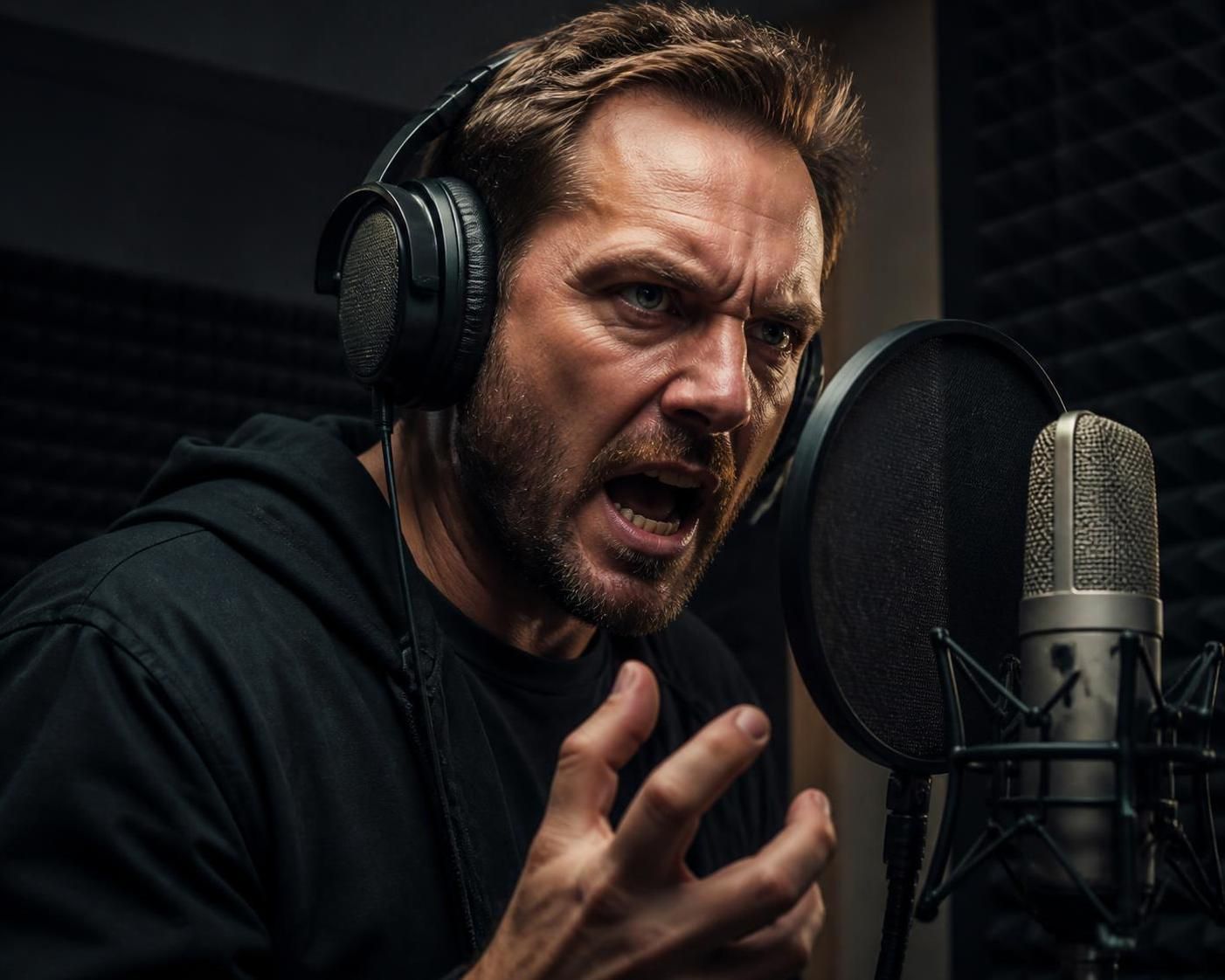
How Brian Drummond Approaches Video Game Voice Acting in Warhammer 40,000
Brian Drummond’s return as Gorgutz ’Ead ’Unter in Warhammer 40,000: Dawn of War 4 gives aspiring performers a useful view of how video game acting differs from linear animation. The game is scheduled for PC release on September 17, 2026, and it brings back a character Drummond first performed more than two decades earlier. Returning to a familiar role is not simply a matter of repeating an old voice. The actor must reconnect with the character’s identity while meeting the technical and narrative needs of a new production.
Gorgutz is an Ork warlord: physically imposing, aggressive, comic in a dangerous way, and always thinking about the next advantage. Drummond’s performance needs to communicate brute force while preserving the character’s personality. The role cannot become a constant wall of shouting, because players need to hear strategy, humour, menace, and momentum. A game character often has to remain recognisable across battle cries, short command lines, cinematic dialogue, reactions, and possible player-driven outcomes.
One of the strongest elements in Drummond’s acting advice is his theatre-based focus on motivation. Before treating a line as a vocal event, he considers what the character wants. Is Gorgutz trying to capture someone, escape danger, dominate a rival, or celebrate a victory? That question gives a performer a playable action. It also prevents a common mistake: delivering every line at the same emotional temperature.
In a game booth, context from the director is essential. Actors frequently record alone, without other cast members present. They may receive lines out of narrative order and may not see final gameplay footage. A director therefore acts as a bridge between script, gameplay, world-building, and performance. Clear direction can explain whether a line occurs during a stealth sequence, a final encounter, a retreat, or a moment where the player has just triggered a major event.
| 🎭 Performance area | 📺 Anime voiceover | 🎮 Video game voice acting | ✅ Practical focus |
|---|---|---|---|
| Scene context | Often guided by picture timing and episode flow | May be fragmented across gameplay states | 🧭 Ask where the character is and what has just happened |
| Physical demand | Dialogue and reactions can be demanding | Combat barks, pain sounds, deaths, and exertion can be extensive | 💧 Schedule hydration and safe vocal recovery |
| Performance partner | Usually recorded separately in dubbing sessions | Often recorded alone unless motion capture is involved | 🎧 Build the other character’s presence through imagination |
| Script flexibility | Bound by translation, timing, and lip movement | Bound by gameplay logic, lore, and branching content | 📝 Protect consistency across many short takes |
Drummond has described game recording as among the most demanding forms of voice work, particularly where screaming, combat effort, and battle calls are involved. That observation matters because newer performers sometimes associate game roles with limitless permission to push their voice. In practice, professionals must protect their instrument. A damaged voice can end a session, disrupt production, and create long-term strain.
Safe performance does not mean weak performance. It means using technique: grounded posture, supported breath, appropriate volume, controlled distortion, breaks when needed, and clear communication with the director. A harsh character voice should be designed to survive repeated takes. If an actor can create an intimidating sound only once, it is not production-ready.
Drummond’s audition for Gorgutz also illustrates the uncertainty actors must learn to manage. At the original audition, he had several pieces of material but limited information about the character’s design and physical scale. Hearing “orc,” he initially drew on familiar fantasy references and explored deeper vocal options. The audition process often begins with incomplete details. Rather than waiting for perfect certainty, performers need to make an informed choice that is strong enough to direct.
At the same time, direction can refine that choice. When returning to Gorgutz, Drummond was aware of balancing his own vocal instincts with the established sound and world of the series. That is a professional skill. The actor brings preparation, but the final result is collaborative. Especially in an established franchise, writers, directors, lore specialists, audio engineers, and performers all contribute to character continuity.
For creators who want to understand the wider discussion around the role, the full discussion of his Dawn of War return and creative advice offers useful context on the character and the industry pressures surrounding the release.
A believable game performance is built from playable intention, physical discipline, and accurate direction—not from volume alone.
Voice Acting Advice for Aspiring Actors: Train the Voice Like an Instrument
Brian Drummond’s most direct message to aspiring actors is practical: train your voice and make yourself visible. It is straightforward advice, but it addresses two separate problems. Training builds ability. Visibility creates opportunities for that ability to be heard. Neither element is sufficient by itself. A talented performer who never submits work remains difficult to cast, while a highly visible creator without technique may struggle to sustain professional sessions.
The comparison between the voice and a guitar is particularly helpful. Nobody expects to pick up a guitar, play one favourite song once, and become prepared for a concert schedule. Musicians learn timing, control, repertoire, maintenance, and interpretation. Voice artists need the same patient approach. They learn how their speaking voice behaves, where tension appears, how to shift emotion without forcing pitch, and how to deliver a repeatable performance.
A structured practice routine can remain accessible. It does not require expensive studio equipment at the beginning. A quiet space, a phone or entry-level recorder, headphones, scripts, and regular review can reveal important patterns. The goal is not to produce a polished commercial demo immediately. The goal is to identify habits and make deliberate adjustments.
Building a repeatable practice routine for anime voiceover and games
- 🫁 Warm up gently: Use light humming, lip trills, relaxed articulation, and supported breathing. Avoid beginning with screaming or extreme character voices.
- 📖 Read different material: Practice dialogue, narration, game commands, advertisements, and emotional scenes. Variety exposes gaps in pacing and clarity.
- 🎧 Record and review: Listen for swallowed endings, breath noise, rushed lines, excessive sameness, and tension. A recording reveals details that performance memory misses.
- 🎭 Choose an action for every line: Instead of “sound angry,” choose “intimidate,” “persuade,” “hide panic,” or “win respect.” This produces more specific acting.
- 🔁 Repeat with adjustments: Record the same short passage in three distinct ways. The exercise develops flexibility without abandoning clarity.
- 💬 Seek informed feedback: A reputable acting coach, voice teacher, or experienced peer can identify technique issues faster than unstructured self-criticism.
Consider a hypothetical performer named Maya, who loves anime and records character clips after work. Her first instinct is to reproduce famous characters exactly. After reviewing her recordings, she notices that every intense line becomes a high-volume yell. She changes the exercise: she records one scene with restrained menace, another with visible fear under anger, and a third with cold confidence. The character work immediately gains more dimension because the emotional choices become clearer.
This is the transition from vocal imitation to acting. A casting team may appreciate a performer who understands the genre, but they need someone who can respond to direction. If the director says, “Keep the power, but make it sound like the character is trying not to break,” the actor needs enough control to adjust. That flexibility is the real asset.
Drummond’s own trajectory reinforces the value of narrowing focus when a path becomes clear. He began in theatre, recognised voice work as a growing professional opportunity, and eventually committed more fully to it when the workload increased. For aspiring actors, this does not mean abandoning every other interest. It means observing where skills, opportunity, and sustained motivation meet.
His experience with Ryuk in Death Note is another concrete example. He was not originally scheduled to audition for the character. After seeing the design in the studio, he asked whether he could try it. That request created an opportunity that would not have existed if he had stayed silent. The lesson is not to demand roles or interrupt professional processes. It is to be prepared, observant, and respectfully proactive.
Many performers wait to feel fully ready before reaching out to coaches, posting a sample, attending an industry event, or asking an agent how to improve their submissions. Full readiness rarely arrives on its own. A better approach is to take measured actions: prepare two contrasting scenes, improve the recording environment, request targeted feedback, and submit only work that reflects current strengths.
Useful acting advice also includes knowing what not to do. Do not build a portfolio around copyrighted character impressions only. Do not rely on effects to replace performance. Do not record painful sounds repeatedly without rest. Do not assume a deep voice automatically makes someone suitable for every villain. Most importantly, do not confuse enthusiasm for a franchise with the job of serving a script.
Training becomes professional preparation when every exercise develops control, interpretation, and the ability to take direction.
How Aspiring Voice Talent Can Be Seen Without Losing Professional Focus
The route into voice acting has changed significantly since Brian Drummond began working in the 1990s. At that time, living near major hubs such as Los Angeles, New York City, or Toronto could heavily influence access to auditions and studios. Remote auditions, home recording workflows, online casting platforms, and social media now offer more routes into discovery. The change improves access, but it also creates an enormous volume of content. Being online is not the same as being visible for the right reasons.
Drummond encourages performers to put themselves out there, pointing to platforms such as TikTok and Instagram as places where work can reach audiences and industry professionals. This is sensible when treated as part of a wider professional strategy. A short, clearly recorded performance can show timing, character contrast, storytelling, or a unique vocal quality. Random posting without a consistent purpose is less likely to help an emerging voice talent develop a recognisable profile.
A good digital portfolio answers basic casting questions quickly. Can this actor be heard clearly? Do they make intentional choices? Can they handle different tones? Do they understand genre? Do they sound comfortable on microphone? A creator does not need millions of followers to demonstrate these qualities. A concise selection of strong work is more useful than a crowded feed of unfinished experiments.
For example, an aspiring actor could publish a short weekly series called “Three Ways to Play One Line.” Each post uses an original or public-domain script excerpt and explores different intentions: reassurance, threat, exhaustion, disbelief, or comic overconfidence. The format does more than entertain. It demonstrates versatility, makes the creative process understandable, and avoids presenting imitation as the only skill.
Audio quality remains central. Viewers may forgive a simple background, but they quickly leave a clip that is difficult to hear. A basic treated corner, a decent microphone when budget allows, reduced room reflection, and consistent recording levels can improve the experience substantially. This is where lessons from audio technology become practical: the goal is not maximum equipment, but a clean, intelligible signal that lets performance come first.
Accessibility should also be part of the publishing process. Add accurate captions to short videos, use readable on-screen text when it is needed, and avoid mixing music so loudly that it competes with spoken words. These choices help wider audiences access the material. They also signal professionalism to collaborators who care about usable, audience-centred content.
Creating a discoverable and credible online presence
Start with one clear identity statement in practice, not a grand label. A performer might focus on dramatic character work, grounded narration, creature voices, comic roles, or bilingual delivery. This does not permanently limit the career. It helps audiences and casting professionals understand what the performer currently does well.
Then create a simple publishing rhythm. One high-quality clip every week is more sustainable than posting several rushed pieces in a single day and disappearing for two months. Use each clip to test one skill, such as emotional transition, subtle reaction, a clean character switch, or concise storytelling. Keep notes after publishing: which clips retained listener attention, which formats felt sustainable, and where did comments reveal confusion?
Networking should be equally focused. Follow casting directors, studios, coaches, fellow performers, game developers, writers, and audio professionals because their work is relevant—not merely because they have large audiences. Comment with insight where appropriate, attend workshops, and maintain professional boundaries. Online platforms can start a conversation, but reliability and respectful communication are what make a collaborator willing to continue it.
Creators should be cautious about chasing trends that encourage unsafe vocal behaviour. A challenge built around endless screaming, extremely low growls, or repeated distortion may earn brief attention while creating strain. Build content around craft, not injury. The audience may first arrive for a familiar genre reference, but it stays when the performer offers genuine personality and repeatable skill.
Drummond’s story about an unknown creator with a resonant voice gaining attention after reading poetry online makes this point well. The breakthrough did not depend on a complex concept. The performer used a natural strength, accepted a practical suggestion, and posted the result. A strong voice becomes more useful when it is matched with material that gives it emotional purpose.
For a clearer view of the risks facing performers when digital voice tools are used without consent, see this analysis of voice cloning and the actor consent dilemma. Visibility should never require creators to surrender control over their recordings, likeness, or rights.
Online discovery works best when performers publish clear, safe, well-recorded evidence of what they can actually deliver in a session.
Brian Drummond on AI, Human Artistry, and the Future of the Animation Industry
The present uncertainty in games and entertainment cannot be ignored. Layoffs, studio restructures, production delays, and disputes around artificial intelligence have affected artists, writers, developers, and performers. Brian Drummond has addressed this anxiety from the perspective of a working performer and parent of artists. His response is not a promise that the sector will become stable overnight. It is a defence of continuing to make human work even when the market feels unsettled.
His core idea is that audiences continue to want real human expression. This does not mean technology has no place in audio production. Speech tools can support accessibility, assist with workflow tasks, help restore damaged recordings, or provide useful navigation features when they are designed with consent and transparency. The serious question is not whether technology exists. It is whether its use protects creators, informs audiences, and strengthens rather than replaces meaningful collaboration.
Voice performance is a good example of why the distinction matters. A recorded line contains more than words and timbre. It includes the actor’s response to a director’s note, their instinct for a pause, their awareness of a scene partner, and the tiny adjustments that make a line feel truthful. Those decisions emerge from context. They are not simply a downloadable vocal surface.
In games, this is particularly visible when a character has hundreds or thousands of lines. A voice actor must preserve identity while reacting differently to defeat, surprise, victory, discovery, danger, and humour. The work is not just generating variations. It is maintaining a character’s emotional logic across a large interactive structure. Gorgutz works because he has a point of view, not because he has a rough voice.
Consent should therefore be a baseline. Performers need to know whether recordings will be used to train systems, generate new lines, alter a performance, or create synthetic replicas. Contracts should use precise language. Studios should explain intended uses clearly. Audiences deserve transparent information when a synthetic voice has been used in content presented as entertainment or cultural interpretation.
The issue reaches beyond celebrity voices. Emerging actors may feel pressure to accept vague terms because they need early credits. That is exactly why education, professional representation where available, and industry standards matter. Before accepting a project, performers should ask practical questions about recording ownership, reuse, synthetic reproduction, training data, credit, compensation, and removal processes.
| ⚠️ Question to ask | Why it matters | ✅ Good professional practice |
|---|---|---|
| Will my recording train an AI system? | Training can enable uses beyond the original session | 📄 Obtain explicit written consent and defined compensation |
| Can my voice be altered or reused later? | Reuse may affect future opportunities and character integrity | 🔐 Set specific limits for time, territory, and project scope |
| How will synthetic material be disclosed? | Audiences and collaborators need transparency | 🏷️ Use clear production and platform labelling |
| Who approves new character lines? | New dialogue can change tone and reputation | 🎬 Keep performer and rights-holder approval pathways |
These questions also matter to museums, visitor attractions, tourism offices, and cultural organisations using audio content. Synthetic narration can appear convenient, yet the visitor experience depends on trust, clarity, and character. A carefully recorded human guide can make a local story feel grounded and credible. Tools such as Grupem can help organisations distribute clear audio-guide content through visitors’ smartphones, while keeping the human voice, editorial choices, and accessibility needs at the centre of the experience.
Responsible innovation does not require rejecting every digital tool. It requires choosing tools that solve a real user problem. For a guided tour, that could mean allowing visitors to hear content at their own pace, offering multilingual tracks with appropriate rights management, or improving audibility in crowded environments. For a studio, it could mean better script management and accessible review workflows. In every case, the technology should support the people who create and receive the experience.
For further context on the wider entertainment debate, this resource on AI dubbing and voice actor protections examines why consent and quality cannot be treated as secondary details. The most sustainable future will be built through transparent agreements, skilled human direction, and technology that earns trust through useful application.
Drummond’s encouragement to keep making art is valuable precisely because it does not deny the difficulty. A performer may need another job while building credits. A developer may face a cancelled project. A writer may publish independently before finding a studio role. Continuing to practice and create protects the skills and community that make recovery possible.
The future of voice acting should not be defined by replacing people with outputs; it should be defined by using technology responsibly while protecting the human choices audiences recognise and value.
What is Brian Drummond best known for?
Brian Drummond is widely known as the original English-language voice of Vegeta in the Ocean Group version of Dragon Ball Z. His extensive career also includes Ryuk in Death Note, Gorgutz ’Ead ’Unter in the Dawn of War series, and many animation and game roles.
What advice does Brian Drummond give aspiring voice actors?
His practical advice is to train the voice like an instrument and make your work visible. Build technique through consistent recording practice, learn to take direction, create professional samples, and actively seek appropriate opportunities.
Why is video game voice acting physically demanding?
Games can require repeated combat calls, exertion sounds, pain reactions, screams, and multiple variations of short lines. Actors need safe breath support, controlled intensity, hydration, recovery time, and clear communication with directors to protect vocal health.
How can new voice talent use social media professionally?
Use short, cleanly recorded clips to demonstrate specific skills such as character contrast, emotional range, narration, or comic timing. Captions, consistent publishing, original material, and respectful networking help turn social channels into a credible portfolio rather than a collection of random posts.
What should performers ask about AI voice use before accepting a job?
Ask whether recordings will be used for training, cloning, alteration, reuse, or synthetic dialogue generation. Request clear written terms covering consent, compensation, duration, scope, approval rights, credit, and disclosure.
