
Key takeaways: Norfolk’s recent Flash Floods have tested how cultural institutions prepare for water-related disruption. The Chrysler Museum of Art offers a practical example of how elevated construction, landscape design, operational planning, and clear visitor communication can work together to protect collections and keep a public campus functional. 🌊
Chrysler Museum of Art Responds to Norfolk Flash Floods with Flood Mitigation
The Chrysler Museum of Art occupies a sensitive position in Norfolk, near The Hague inlet and the Elizabeth River system. This setting gives the museum an important connection to the city’s waterfront identity, but it also exposes the campus to heavy rain, tidal pressure, and increasingly frequent surface-water events. When intense storms recently flooded streets around the museum, the situation became a real-world test of the site’s Flood Mitigation investments.
Rather than relying on one barrier or a single emergency intervention, the museum has developed a layered approach. Its strategy combines building elevation, drainage infrastructure, planted landscape areas, movable protection, and staff procedures. This matters because Flash Floods rarely behave in a predictable way. Water can arrive through overflowing streets, saturated ground, storm drains, or wind-driven rain. A facility that plans for only one route of entry remains exposed.
Reports on the museum’s resilience work indicate that rain gardens, flood barriers, and emergency protocols helped protect the campus during the recent downpour. The point is not that the site can eliminate all risk. The practical objective is to slow water, direct it away from critical spaces, and give teams enough time to act. For museums, libraries, archives, and visitor centers, that extra time can prevent irreversible damage to objects, equipment, and public areas.
Norfolk is particularly relevant in the broader Climate Resilience conversation because it faces sea-level rise, tidal flooding, and stronger rainfall events. A dry building design is no longer enough for many waterfront and low-lying cultural sites. Institutions need to account for the full visitor journey: arrival routes, accessible entrances, staff access, loading areas, mechanical rooms, storage zones, and safe evacuation paths.
The Chrysler Museum’s experience also demonstrates why resilient design should remain visible rather than hidden entirely behind technical systems. A well-designed rain garden can be both an attractive public landscape and an effective stormwater asset. Elevated architecture can protect operations while communicating that the institution understands its local environment. These choices turn a climate adaptation project into part of the campus story.
Why layered water protection is more reliable than a single defense
A sandbag wall may help at a doorway, but it cannot solve drainage failures elsewhere on the property. Similarly, a raised floor may protect interior galleries while leaving access routes unsafe. The museum’s approach is stronger because its components support one another: landscape features retain runoff, building levels reduce vulnerability, barriers protect defined openings, and staff plans coordinate rapid action.
This method has relevance well beyond Norfolk. A small historic house, a municipal gallery, or a tourism office can begin by mapping where water pools after a storm. That basic observation often reveals the first useful investment: regrading a threshold, clearing a drain, relocating equipment, or installing a temporary barrier. Effective Disaster Preparedness starts with understanding how water actually moves across a site.
Coverage of the project has highlighted how the museum is confronting a larger regional challenge, including a detailed account of the museum’s response to rising water risks. The lesson is direct: resilience should be designed into everyday operations before the next storm turns planning into an emergency.
Innovative Strategies at the Perry Glass Studio Improve Climate Resilience
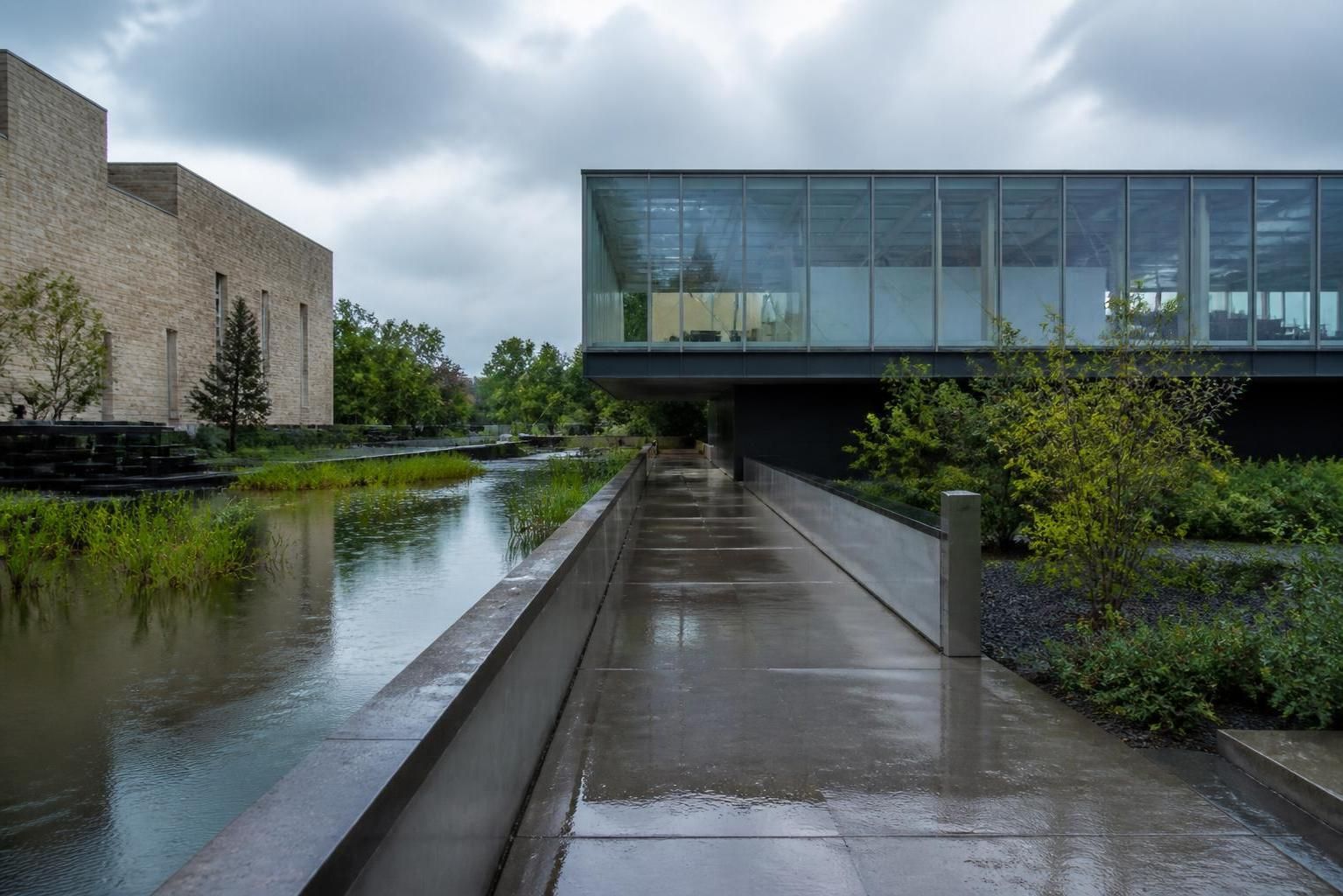
The expanded Perry Glass Studio is central to the Chrysler Museum of Art’s resilience model. The newer portion of the facility was constructed approximately four feet higher than the earlier phase, a decision that addresses the site’s flood exposure without disconnecting the building from public use. This is a clear example of Innovative Strategies being applied through architecture rather than added as an afterthought.
Elevation is often discussed as a technical construction detail, yet it has direct operational value. Raising occupied areas can reduce the likelihood that floodwater reaches electrical systems, furnaces, studios, storage, and visitor amenities. In a glass facility, where heat-intensive equipment and specialized tools are essential, protecting these systems is as important as safeguarding artworks. A flooded studio can interrupt workshops, public demonstrations, artist residencies, and earned revenue for an extended period.
The design also relies on a floodable landscape. Instead of treating all water as something that must be expelled immediately, this approach creates areas where runoff can temporarily gather and be absorbed, slowed, or released in a more controlled manner. Native planting supports this function while creating a more welcoming campus edge. Such projects show that Water Management can serve environmental performance, public education, and visual quality simultaneously.
For visitors, the value of this work is often subtle. A guest may notice planted swales, shallow basins, raised paths, or changes in paving without realizing that each feature supports stormwater control. That is not a weakness. It means infrastructure is doing its job without making the cultural experience feel defensive or inaccessible. Still, museums can use concise signage and digital interpretation to explain why these landscape elements exist.
Turning technical resilience into a meaningful visitor experience
Consider a guided group arriving for a glassblowing demonstration shortly after a storm. The guide can point to the rain gardens and explain how they retain runoff from paved surfaces. A short audio segment can connect the design to Norfolk’s coastal geography, the building’s higher floor level, and the institution’s Art Preservation priorities. This creates context without diverting attention away from the glassmaking program.
Smart tourism tools can make this interpretation available at the visitor’s own pace. A QR code near the landscape feature can open an audio stop, a short transcript, and an accessible image description on a smartphone. Platforms such as visitor communication tools designed around a human touch are particularly useful when institutions need to keep practical information clear, personal, and easy to access across multiple channels.
The important principle is to avoid overloading the visitor with engineering terminology. Explain the effect first: “This garden holds stormwater during heavy rain, helping protect the building and surrounding streets.” Then provide deeper details for those who want them. This layered communication respects different levels of interest and supports accessibility for non-specialist audiences.
The integration of landscape, building form, and cultural programming also offers a model for capital projects. Too often, drainage is treated as an invisible compliance cost and interpretation is treated as a separate communications task. At the Perry Glass Studio, the two can reinforce each other. When resilience measures are legible, they become evidence of institutional care rather than background infrastructure.
Art Preservation and Emergency Response Require More Than Flood Barriers
Flood barriers can protect doors, but they do not replace a complete Emergency Response plan. At the Chrysler Museum of Art, the value of physical defenses is amplified by staff readiness and the ability to make decisions quickly. For any institution responsible for collections, the critical question is not simply whether water reaches the property. It is whether teams know what to protect first, where to move materials, and how to do so without creating additional risks.
Art Preservation requires different priorities depending on the collection. Paper, textiles, photographs, wooden objects, and painted surfaces may be highly vulnerable to moisture, even when they are not directly submerged. Metal objects can corrode. Mold may develop after a small leak if temperature and humidity are not managed. Digital equipment, exhibit controls, and audiovisual hardware can fail before a gallery floor appears seriously flooded.
A useful response plan therefore separates life safety from collection recovery while ensuring both are coordinated. No artwork should be retrieved if conditions are unsafe for staff or visitors. Once people are secure, trained teams can assess the source of water, isolate affected areas, document conditions, and use pre-identified supplies. The best plans specify roles rather than relying on informal assumptions during a stressful event.
- 🧭 Assign incident roles: identify who leads building decisions, collection triage, visitor communication, and external coordination.
- 📦 Prepare priority lists: maintain an updated record of objects, equipment, and records that require immediate protection or relocation.
- 🔦 Stage response materials: keep gloves, plastic sheeting, absorbent materials, lights, labels, carts, and documentation tools in a safe, accessible location.
- 📱 Use simple staff alerts: send clear instructions stating the affected zone, access restrictions, and the next operational update.
- 📝 Document before cleanup: photographs and time-stamped notes support insurance, conservation decisions, and future mitigation work.
A hypothetical example illustrates the difference preparation makes. Imagine a sudden rainfall event during an evening program. The visitor services lead receives an alert that water is collecting near a side entrance. The facilities lead closes access to that route, deploys a designated barrier, and checks the nearest drain. Meanwhile, the collections coordinator confirms that no storage or display area is exposed. The communications lead updates attendees through staff announcements and the museum’s website. Each action is simple, but together they prevent confusion.
Training makes Disaster Preparedness operational
Plans stored in a folder are not enough. Teams should rehearse practical scenarios at least once a year, including a storm during opening hours and an event when the site is closed. A tabletop exercise can identify missing contact details, unclear responsibilities, or supply gaps. A short on-site drill can reveal whether carts fit through doors, whether barriers are stored too far from vulnerable entrances, or whether staff can locate shutoff controls quickly.
Training should include visitor-facing staff, not only facilities personnel. Front-of-house teams are often the first to hear about leaks, inaccessible routes, or water entering a public space. They need concise scripts that reduce anxiety: explain where visitors should go, which entrances remain open, and when updates will be provided. Calm, accurate communication is a protective measure in its own right.
For cultural venues, the goal is not a dramatic emergency performance. It is a repeatable workflow that preserves safety, protects collections, and keeps decisions traceable. The Chrysler Museum’s flood-focused investments are most effective when paired with this disciplined operational layer.
Water Management Design Gives Norfolk Cultural Sites a Practical Framework
Water Management works best when it begins beyond the building walls. At a campus such as the Chrysler Museum of Art, rain that falls on roofs, paths, parking surfaces, and adjacent streets can converge quickly during a major storm. The central design challenge is to reduce the speed and volume of runoff reaching vulnerable areas. This is why planted basins, permeable surfaces, drainage routes, and elevation decisions belong in the same conversation.
The museum’s landscape strategy provides a useful framework for cultural organizations that are planning renovations. Start with a site-wide view: identify the lowest points, map existing pipes and drains, record areas where visitors encounter puddling, and note which entrances are essential for accessibility. Then assess what happens during both short, intense rainstorms and longer periods of saturation. These conditions can create different patterns of risk.
In Norfolk, the relationship between rainfall and tidal conditions adds complexity. A stormwater system may have less capacity to drain when surrounding water levels are already high. Designers must therefore consider storage as well as discharge. Rain gardens and floodable zones offer temporary capacity, while raised utilities and protected thresholds reduce the consequences if water remains on site longer than expected.
| Resilience measure | Operational benefit | Visitor-facing value |
|---|---|---|
| 🌿 Rain gardens and planted swales | Slow and retain surface runoff before it reaches buildings | Create greener routes and opportunities for environmental interpretation |
| ⬆️ Raised finished floor levels | Reduce exposure for studios, equipment, and occupied spaces | Support reliable access to cultural programs after severe rain |
| 🚧 Deployable flood barriers | Protect selected openings during a defined water event | Limit disruption while maintaining clear, safe routing |
| 📍 Marked response zones | Help staff prioritize checks and deploy resources quickly | Improve wayfinding when an entrance or pathway is temporarily closed |
| 🎧 Digital alerts and audio guidance | Distribute timely instructions without relying on one physical notice | Provide accessible updates for diverse audiences |
Design choices must support accessibility during severe weather
A resilient site should not shift risk onto visitors with mobility, sensory, or communication needs. If one entrance closes because of standing water, staff need an alternative route that is clearly marked, step-free where possible, and communicated before visitors arrive. Temporary detours should be tested in advance, not improvised during an active storm.
Digital information supports this work when it remains straightforward. A museum can publish a short service update stating which entrance to use, whether parking conditions have changed, and whether outdoor areas are restricted. Audio guidance should be paired with text, and critical messages should not depend solely on visual signage. This is especially valuable for group leaders and tourism professionals coordinating arrival times.
Landscape architecture has been a defining part of the Glass Studio addition. The project description from the floodable landscape design team shows how stormwater management, native planting, and public space can be planned as one integrated system. This is an approach worth considering early, before a renovation scope becomes limited to cosmetic upgrades.
There is also a financial dimension. Preventing repeated minor disruptions can protect ticketing, retail, education programs, venue hire, and staff time. While no project can remove every climate-related threat, site design that manages water deliberately reduces the frequency of avoidable interruptions. A cultural campus becomes more dependable when its landscape is treated as active infrastructure.
Digital Visitor Communication Strengthens Climate Resilience at the Chrysler Museum of Art
Physical preparedness must be accompanied by clear, timely communication. When Norfolk Flash Floods affect roads or walkways, visitors need actionable information before they leave home and again when they arrive. A vague statement that “conditions may change” is less useful than a direct update: which entrance is open, which route is safest, whether a program remains scheduled, and how guests can contact the venue.
The Chrysler Museum of Art can use its resilience work as an opportunity to build trust with local audiences. Visitors generally understand that severe weather can affect operations. Frustration usually comes from unclear instructions, conflicting updates, or inaccessible alternatives. A consistent communication workflow helps the museum protect its public reputation while supporting safety.
Smartphones are especially effective during rapidly changing conditions because they allow institutions to update messages without reprinting signs or relying on verbal relays. A mobile audio guide can provide a brief alert at the beginning of a visit, directing guests to the correct entrance or explaining a modified route. It can also preserve the quality of interpretation if outdoor stops are temporarily unavailable.
Build a simple communication sequence before the storm arrives
For example, a museum could prepare three reusable messages: an advance notice when heavy rain is forecast, an active-event update when access changes, and a post-event notice when normal operations resume. Each message should have one clear action for the reader. This reduces approval delays and prevents staff from drafting critical information under pressure.
- 📅 Before a weather event: publish expected operating conditions and advise visitors where to find live updates.
- 🚪 During access disruption: state the open entrance, accessible route, affected programs, and contact channel.
- 🔄 After conditions improve: confirm reopening details and remove outdated alerts across every platform.
Audio content should follow the same principle. A 20-second spoken message is enough to explain a route adjustment, while a longer optional track can explain the museum’s Flood Mitigation design for visitors who are interested. This approach supports both operational clarity and deeper engagement. It also allows guides, educators, and event organizers to deliver consistent information without memorizing technical details.
For institutions considering wider investments, the Chrysler Museum’s model is instructive because it links architecture, landscape, collection protection, staff readiness, and visitor communication. No single tool carries the whole burden. Instead, each measure reduces friction at a different point in the visitor and operational journey.
Documentation of the Perry Glass Studio’s integrated approach has also been featured in a review of its environmental resilience design. The broader lesson for museums and tourism organizations is practical: prepare the site, train the team, and make information easy to hear, read, and act upon. Climate Resilience becomes credible when visitors experience it as calm, accessible service.
How did the Chrysler Museum of Art reduce flood risk after Norfolk Flash Floods?
The museum uses a combined strategy that includes elevated building areas, rain gardens, floodable landscape zones, deployable barriers, drainage planning, and operational emergency procedures. The system is designed to slow, redirect, and manage water before it reaches vulnerable spaces.
Why is the Perry Glass Studio elevated above the earlier building phase?
The expanded portion of the Perry Glass Studio was built about four feet higher than the initial phase to reduce exposure to floodwater. Elevation helps protect studio operations, specialized equipment, utilities, and public programming from water intrusion.
What should a museum include in a flood emergency response plan?
A practical plan should define staff roles, protect life safety first, identify collection priorities, stage emergency supplies, establish communication procedures, document damage, and include regular drills. Plans should also address visitor access and accessible rerouting.
Can flood mitigation features improve the visitor experience?
Yes. Rain gardens, native planting, raised paths, and clear digital interpretation can make a campus more attractive and informative while serving a practical water-management purpose. Audio guides and concise signage can explain these features without overwhelming visitors.
