
Short on time? Here is what matters most:
- ⚠️ AI Voice Cloning tools are now cheap enough for criminals to rent or buy with minimal technical skill.
- 🔐 A convincing voice is no longer proof of identity: verify urgent requests through an independent channel.
- 📞 Banks, museums, tour operators, and families need clear callback and approval procedures for Fraudulent Calls.
- ✅ A shared code word and a “stop, hang up, verify” habit can prevent many high-pressure scams.
AI Voice Cloning Software Is Becoming a Low-Cost Cybercrime Tool
The rapid spread of Artificial Intelligence has made high-quality Voice Synthesis accessible to legitimate creators, accessibility teams, educators, and cultural organisations. The same accessibility, however, has created a serious security problem. Tools that once required specialist audio expertise can now generate persuasive speech from short recordings, often through simple online interfaces.
Criminals do not need to build a sophisticated model from scratch. They can purchase access to ready-made platforms, call bots, scripts, and support services. A NordVPN review of dark web forums and social-media channels found that the criminal market connected to voice-cloning services expanded by 7.4 times over two years, comparing activity from January to July 2024 with the same period in 2026.
The commercial signals are equally concerning. Advertisements for cloning services reportedly rose by 82% in 2025, then increased by a further 75% during the first seven months of 2026. This does not mean every advertisement represents an active criminal operation. It does show that voice-enabled fraud infrastructure is being promoted more openly, more frequently, and at lower prices.
Some offers are inexpensive enough to be treated as disposable tools. A service aimed at extracting PINs has reportedly been advertised at around $30 per week. A call bot capable of placing 1,000 AI-supported calls has been listed around $200, while a popular cloning package can cost roughly $400 to $500 as a one-time purchase. Such pricing changes the scale of the threat: a scammer no longer needs a large organisation to conduct a convincing campaign.
Why cheaper voice technology changes the risk equation
Traditional telephone scams relied on poor impersonations, generic scripts, and unfamiliar numbers. Voice Spoofing adds emotional credibility. A caller can sound like a manager, a relative, a bank adviser, or a local authority representative. When a target hears a familiar rhythm, accent, or phrase, hesitation often drops before critical thinking has time to catch up.
Consider a fictional cultural venue, Harbor City Museum. Its finance coordinator receives a call that sounds exactly like the museum director. The caller says a supplier payment must be approved immediately before an exhibition opening. The request is plausible, urgent, and framed as confidential. Without a defined approval process, an ordinary payment query can become an expensive breach.
For tourism and cultural organisations, this is particularly relevant because teams regularly manage supplier invoices, group bookings, guide schedules, last-minute transport changes, and multilingual visitors. Criminals can exploit the everyday urgency of these activities. The dangerous element is not just Deepfake Audio quality; it is the way the audio is inserted into a believable operational context.
Detailed reporting on the expanding marketplace for these services highlights why organisations should treat voice-enabled deception as a practical issue rather than a distant technical concern. This overview of the rising voice-cloning market illustrates how quickly low-cost access is changing criminal behaviour.
The key shift is simple: voice should now be treated as a communication channel, not as proof of identity.
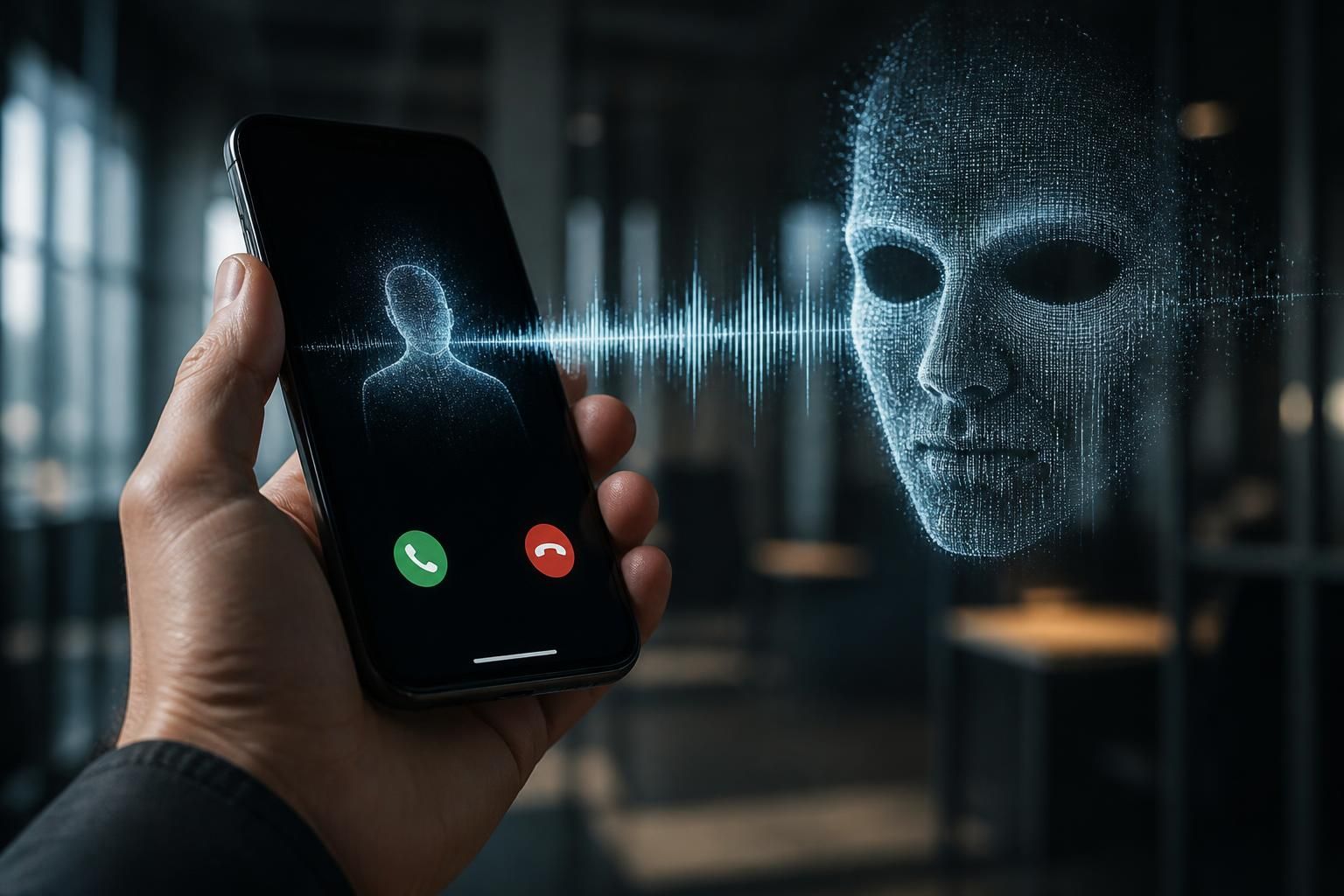
How Deepfake Audio Turns Familiar Voices into Fraudulent Calls
Voice cloning attacks work because they combine technology with social engineering. The attacker does not need a flawless replica for every situation. They only need the target to believe the call is credible long enough to reveal a password, transfer money, share a one-time code, or bypass an internal procedure.
Audio samples can come from public videos, podcast appearances, webinars, social-media stories, voicemail greetings, and recorded interviews. Professionals in tourism, events, and local government often publish material precisely because communication and public visibility are part of their work. A short welcome video or destination campaign can unintentionally provide source material for Voice Synthesis.
The typical anatomy of a voice-cloning scam
- 🎙️ Audio collection: the criminal gathers clips from public sources or records a previous conversation.
- 🧠 Voice modelling: a cloning service reproduces vocal tone, cadence, and pronunciation.
- 📋 Context building: the attacker uses social profiles, leaked data, or public organisational information to create a credible story.
- 📞 Pressure call: the target receives an urgent request for money, credentials, PINs, or sensitive data.
- 💸 Extraction: the criminal attempts a transfer, account reset, identity verification bypass, or further Identity Theft.
A bank-themed attack is especially effective because customers expect security checks. A caller claiming to be from a fraud department may say there has been suspicious activity and ask the recipient to “confirm” a PIN, card number, verification code, or online-banking credential. In reality, the caller is collecting the very information needed to take over the account.
Family impersonation follows a similar pattern. The voice may appear to belong to a child, parent, sibling, or close friend. The caller may claim to be in an accident, stranded abroad, detained, or unable to speak freely. The story is designed to create panic and isolate the target from anyone who could challenge it.
Urgency is the real weapon. Attackers often say, “Do not tell anyone,” “The transfer must happen now,” or “There is no time to call back.” These phrases should be treated as Security Risks, even when the voice appears familiar. A genuine relative, colleague, or financial institution will not object to independent verification.
For a wider explanation of attack patterns, this resource on how cybercriminals use cloned voices provides useful examples of the methods used to manipulate employees and consumers.
A sound operational rule is to separate the voice from the decision. The caller may be genuine or synthetic; the verification procedure must remain the same.
Recognising the mechanism matters, but prevention also requires knowing which signals deserve immediate attention during a call.
Recognising Voice Spoofing Before Sensitive Information Is Exposed
There is no single acoustic test that reliably exposes every cloned voice. Modern systems can produce natural pauses, emotional variation, and accent patterns that sound credible over the telephone. Listening closely may help in some cases, but it is not a dependable defence. The safer approach is to recognise behavioural signals and apply verification steps consistently.
Targets should pay attention to the request, not only the voice. A request for a password, verification code, PIN, card number, employee login, or immediate payment deserves caution regardless of who appears to be speaking. This principle is relevant to homes, visitor attractions, municipal offices, booking desks, and small businesses.
| 🚩 Warning sign | What it may indicate | ✅ Safer response |
|---|---|---|
| 🚨 Sudden urgency | A caller wants to prevent reflection or consultation. | Pause the conversation and verify through a known number. |
| 🔒 Demand for secrecy | The attacker fears an independent check. | Tell a trusted colleague or family member before acting. |
| 💳 Request for PIN or code | Possible account takeover or banking fraud. | Never disclose it; contact the institution directly. |
| 📲 New callback number | The caller may be controlling the verification route. | Use a saved contact, official website, or printed directory. |
| 🎭 Familiar voice with an unusual request | Potential Deepfake Audio or compromised account. | Use a pre-agreed question or code word. |
Use challenge questions that cannot be researched online
A family code word is effective because it introduces a fact the attacker is unlikely to know. It should not be a birthday, pet name, school, street, or any detail visible on social media. Choose something memorable to the group but meaningless to outsiders, and change it if it becomes widely known.
Workplaces should use the same logic, although the process needs to be more formal. A museum, guided-tour company, or destination management office can require a secondary confirmation for payments, schedule changes, data exports, or changes to bank details. The confirmation must use a separate channel, such as a verified corporate email, an internal platform, or a known mobile number.
For example, Harbor City Museum can require two approvals for any supplier payment above a defined amount. If the director calls with an urgent request, the finance coordinator still sends a confirmation through the established internal system. This does not question the director’s authority; it protects both the director and the organisation from Technological Abuse.
Public-facing teams should also avoid giving away operational details during unsolicited calls. A criminal may call a visitor centre and ask who is on duty, whether a manager is travelling, or which guides are working at a particular site. Small details can make the next impersonation attempt far more convincing.
A cloned voice can mimic sound, but it cannot automatically defeat a well-designed verification routine.
Reducing AI Voice Cloning Security Risks in Tourism and Cultural Operations
Tourism organisations rely on trust. Visitors call with booking questions, guides coordinate groups, museums work with suppliers, and local teams communicate across busy venues. That openness should not disappear, but it needs stronger boundaries around money, credentials, personal data, and operational decisions.
The first step is to map where voice-based decisions occur. Review payment approvals, refund authorisations, emergency contact procedures, staff scheduling, guest data access, media enquiries, and supplier bank-detail changes. If a process can be completed after a single phone call, it deserves review.
Build procedures that support staff rather than slow them down
Security is most effective when it is simple enough to use during a busy day. A guide coordinating a coach group cannot consult a fifty-page policy at a crowded landmark. They can, however, follow a three-step rule: stop, verify, document. If an unusual call involves money, personal information, or a change of plan, the guide pauses, uses a known contact method, and records the request.
Audio technology itself can be used responsibly. Clear, authentic voice messaging improves accessibility for visitors who need hands-free guidance, multilingual support, or remote interpretation. The challenge is to establish consent, provenance, and transparency. When a voice is synthetic, audiences and staff should know it is synthetic. When a real person’s voice is used, the organisation should define where recordings are stored and who may access them.
Teams using professional audio-guide systems should treat voice assets like other sensitive digital materials. Limit access to raw recordings, use secure account credentials, remove outdated clips when appropriate, and obtain documented consent from narrators. A public audio tour should not become an unprotected library of clean samples for impersonation.
Organisations can also brief staff on the difference between harmless oddities and genuine concerns. A slightly unusual sound quality is not enough evidence on its own. A request to override payment controls, share visitor data, or disclose a code is enough to trigger verification. This balances service quality with realistic Cybercrime prevention.
Practical guidance on detecting AI-enabled digital scams can help teams turn broad awareness into repeatable daily checks. The goal is not to make every phone call difficult. It is to ensure that a high-impact request cannot succeed through one persuasive conversation.
At the operational level, accessibility and security can reinforce each other: clear audio communication works best when users also know who is speaking and how to verify them.
Once procedures are in place, they should be tested in realistic scenarios rather than left unread in a shared folder.
Responding to AI Voice Cloning Incidents Without Escalating the Damage
If a person suspects a cloned-voice scam, the immediate priority is to stop the interaction. Hang up. Do not argue with the caller, confirm personal details, or follow instructions to move money. Contact the claimed bank, family member, manager, or organisation using a number already saved, published on an official website, or shown on an authentic statement.
If information has already been disclosed, speed matters. Contact the bank or payment provider immediately, request account protection steps, change passwords from a secure device, and enable multi-factor authentication where available. If a work account may be compromised, notify the responsible internal security or management contact without delay.
Document the incident for recovery and prevention
Write down the time, number, claimed identity, request made, information shared, and any transaction reference. Preserve messages, voicemail recordings, screenshots, and call logs. This documentation may help financial institutions, law enforcement, insurers, and internal incident teams understand what happened.
For organisations, an incident review should focus on process improvement rather than blame. Was there an unclear payment rule? Did the caller exploit publicly available staff information? Was a callback process missing? Did employees feel pressured to act quickly because the organisation prizes responsiveness over verification? The answers identify practical controls.
Harbor City Museum, for example, could respond to a suspected fraud attempt by notifying finance staff, alerting suppliers that no bank-detail amendments will be accepted by phone, checking public video content for unnecessary voice samples, and running a short scenario exercise. This is more useful than issuing a vague warning to “be careful.”
Individuals should discuss the issue with family members before a crisis occurs. Agree on a code word, decide who should be called for verification, and make it clear that no legitimate emergency requires secrecy around a financial transfer. A calm conversation today can prevent confusion during an emotionally charged call tomorrow.
Further practical measures for households and teams are available in this guide on protecting against AI scams. The most reliable defence is a combination of awareness, independent confirmation, and procedures that are easy to follow under pressure.
Trust should be verified through a separate channel whenever money, credentials, personal data, or urgent secrecy are involved.
Can AI Voice Cloning work from a short audio clip?
Yes. Modern Voice Synthesis systems can create convincing results from relatively short samples, although quality varies. Public videos, interviews, voicemail greetings, and social-media clips may provide usable material for criminals.
Will a bank ever ask for a PIN or one-time verification code by phone?
Legitimate banks do not need customers to disclose PINs, passwords, or one-time verification codes during an unsolicited call. Hang up and contact the bank through an official number if there is any concern.
What is the best immediate response to a suspicious call from a relative?
End the call and contact the relative using a number already saved in your phone. Ask a pre-agreed code word or a question that cannot be answered from public information.
How can organisations reduce Deepfake Audio risks?
Use independent approval channels for payments and sensitive changes, train staff to recognise urgency and secrecy tactics, protect voice recordings, and require documented verification for high-impact requests.
