
Bojangles Voice AI Expansion Targets 100 More Drive-Thru Locations
Bojangles plans to add its Bo-Linda voice ordering system to 100 more drive-thru locations by mid-2027, extending a multiyear partnership with technology provider Hi Auto. The announced expansion builds on deployment at approximately 500 company-owned and franchised restaurants, moving automated order taking further into everyday operations rather than experimental use.
According to Restaurant Dive’s coverage of the expanded agreement, the companies have worked together since 2024. The next phase combines additional installations with operational improvements, including queue-sensitive recommendations and a way to associate orders with vehicle images at merging lanes.
What the Bojangles rollout figures actually mean
The scale deserves careful interpretation. Adding 100 restaurants to an installed base of roughly 500 would bring the total to around 600, equivalent to approximately 67% of the reported 890-location estate.
That is roughly two-thirds of the chain, not a completed systemwide deployment. The distinction matters for franchise operators, suppliers and customers trying to understand where the technology is available and what remains a scheduled rollout.
| 📍 Deployment measure | Reported position | Operational meaning |
|---|---|---|
| Existing installations | Approximately 500 restaurants | An established operating base, rather than a limited pilot |
| Planned additions | 100 restaurants by mid-2027 | A forward-looking implementation commitment |
| Expected combined footprint | Approximately 600 restaurants | About two-thirds of the reported 890-location estate |
| ⚠️ Reported weekly volume | More than one million orders | A company-reported throughput figure, not independent proof of service quality |
These figures describe the announced program, not a live installation tracker. As the rollout progresses through 2026 toward its mid-2027 target, subsequent openings, closures or deployment changes could alter the final proportion.
QSR’s reporting on the nearly 500-restaurant deployment provides additional context for the installed base. Reading the existing footprint separately from future commitments avoids presenting planned capacity as an accomplished result.
Why a larger deployment changes the management challenge
Installing an automated speaker interface is only one part of expansion. Each participating restaurant also needs reliable menu information, compatible ordering connections, clear escalation procedures and employees who understand when to intervene.
Consider Maya, an illustrative restaurant manager preparing a busy roadside location for installation. Her priority is not whether the system can complete a demonstration order; it is whether a breakfast promotion, an unavailable side dish and a sudden lunchtime queue can all be handled without creating extra work.
For Maya, readiness means checking the practical details before switching on the new service. A promotional biscuit must appear at the correct price, a sold-out item must stop being recommended, and an employee must be able to take over a conversation without asking the customer to repeat everything.
This is where restaurant technology becomes an operating discipline. A deployment that performs well at one carefully supported site still needs repeatable configuration, training and troubleshooting processes to work across hundreds of different buildings and teams.
The expanded agreement signals commercial confidence, but it does not establish identical results at every restaurant. Differences in traffic patterns, equipment condition and local ordering habits make site-level monitoring essential.
For operators following this AI expansion, the useful question is therefore not simply how many installations are announced. It is whether each new site reaches a defined standard for reliable service before the next wave begins.
Scale becomes meaningful when rollout numbers are matched by consistent operating readiness. The next test is understanding exactly what the reported performance figures measure.
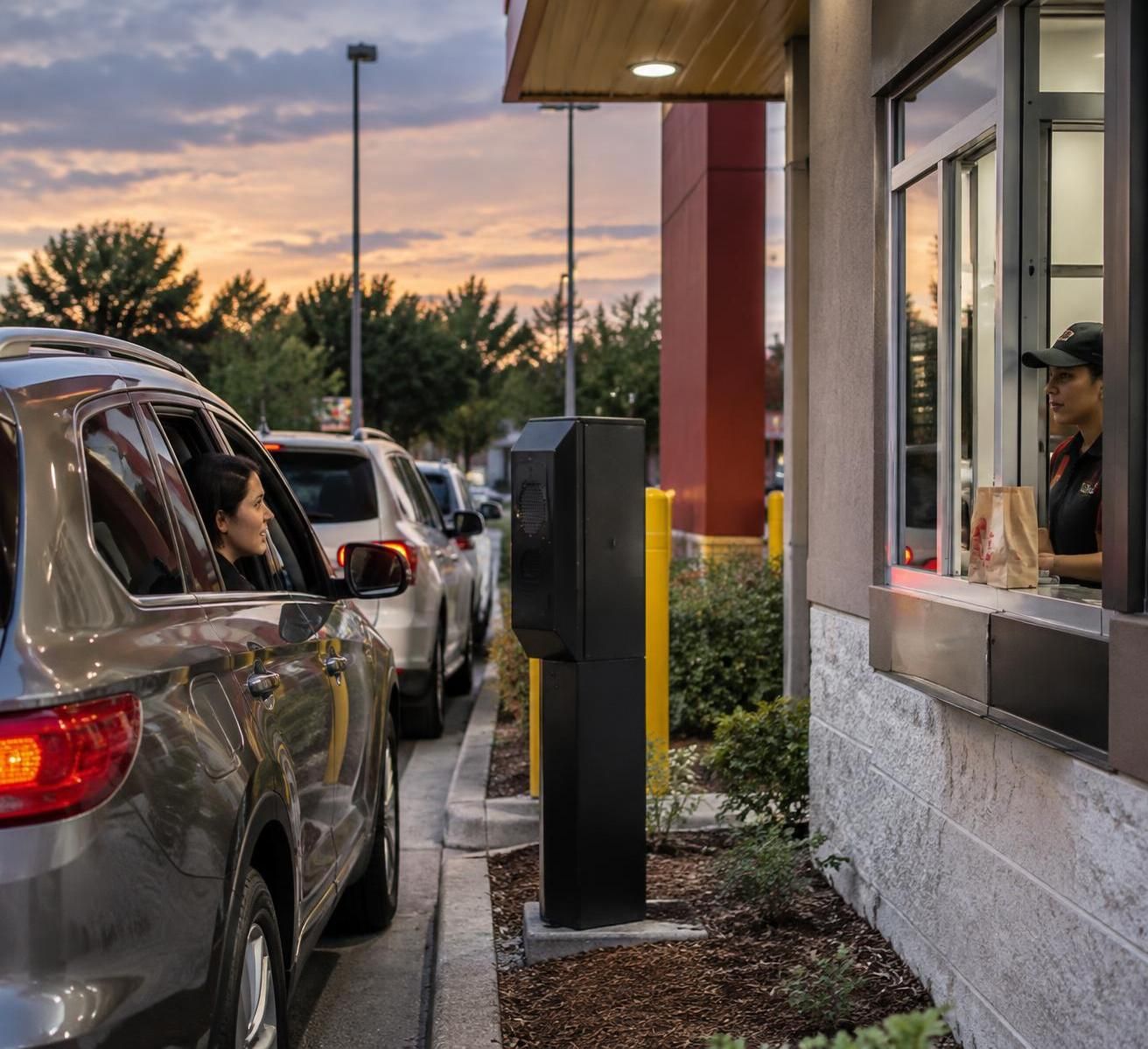
Measure Bojangles Voice AI Beyond the Reported 98% Figure
Hi Auto’s system reportedly handles more than one million weekly orders across the participating Bojangles estate. Published descriptions also cite a 98% performance figure, but the supplied coverage uses different labels, including accuracy and completion rate.
Those measurements are not interchangeable. Completion can mean a conversation reaches the ordering system without employee assistance, while accuracy can refer to whether the recorded items match what the customer requested. Neither automatically proves that the correct meal reaches the correct vehicle.
Separate speech recognition from successful service
A restaurant transaction contains several distinct steps: understanding speech, identifying the intended menu item, recording modifiers, applying prices and transmitting the basket. Kitchen preparation and handoff then add further opportunities for error.
Imagine a guest asking Maya’s team for a chicken meal with a different side and no ice in the drink. The automated assistant might recognize the words correctly but map the side substitution incorrectly; alternatively, the digital basket might be perfect while the kitchen packs the standard side.
Both situations create a disappointed customer, but they require different remedies. Improving acoustic recognition will not fix a packing mistake, and retraining kitchen staff will not resolve a misunderstood modifier.
That is why the company-reported percentage should be treated as a useful signal rather than an independently verified, end-to-end quality guarantee. Without a published methodology, operators should avoid translating it into a claim that 98 out of every 100 meals are delivered perfectly.
- 🎙️ Recognition quality: Does the system capture the intended items, quantities and modifiers?
- 🧾 Basket correctness: Does the final order match the customer’s confirmed request?
- 🤝 Human intervention: How often must an employee repair or complete the interaction?
- ⏱️ Total service time: Does the complete visit improve, including payment and collection?
- ♿ Accessible recovery: Can customers easily request another way to order?
Test the difficult conversations, not only standard orders
Real drive-thru audio includes engines, rain, passengers speaking and microphones positioned at different distances. A strong evaluation therefore needs ordinary adverse conditions, not only clear recordings of short, familiar requests.
Maya could organize a supervised test covering a quiet midmorning period, a crowded lunch window and an evening shift. Comparing similar periods before and after activation would reveal whether improvements persist when traffic and background noise increase.
She should also review interactions involving changed decisions. “Actually, make that two” is simple for a person to understand in context, but a digital ordering flow must correctly identify which quantity changes and then confirm the revised basket.
Correction effort is an especially useful service measure. A system that initially mishears a request but recovers immediately can be less frustrating than one that repeatedly insists on an incorrect interpretation.
Results should also be examined across different communication needs. Regional accents, limited English proficiency and speech differences can expose weaknesses hidden by an overall average; aggregate performance should not conceal an unusable experience for a smaller customer group.
For procurement teams, the practical request is straightforward: ask how each metric is defined, what transactions enter the denominator and whether assisted orders are counted separately. Compare those definitions before comparing vendors.
The strongest performance evidence follows the customer’s entire task, not just the automated conversation. That same principle becomes important when the assistant begins recommending additional purchases.
Use Queue-Aware Voice Ordering Without Slowing the Drive-Thru
The expanded partnership includes a dynamic upselling capability that changes recommendations according to queue length. During busy periods, Bo-Linda is intended to prioritize quicker suggestions; during quieter periods, it can promote items associated with more time-intensive service.
This develops an existing recommendation approach that considers factors such as daypart, weather and inventory. The operating logic is practical: the best commercial suggestion depends on what the restaurant can deliver smoothly at that moment, not simply which item generates the highest additional sale.
Connect recommendations to real operating capacity
At Maya’s illustrative restaurant, a short breakfast queue might leave room for a brief suggestion that complements an existing meal. During a concentrated lunch rush, a longer exchange or a preparation-heavy addition could increase pressure on both the ordering point and the kitchen.
However, “quick to suggest” and “quick to prepare” describe different things. A recommendation may require only a few spoken words while still creating a bottleneck at a fryer, beverage station or packing area.
A sensible evaluation therefore examines the complete effect of each recommendation. Operators should look at added preparation time, product availability and order complexity alongside the percentage of customers who accept an offer.
The reported queue-aware feature does not establish that every kitchen constraint is automatically incorporated. That capability should be confirmed rather than assumed when reviewing a supplier’s implementation.
Consider an illustrative comparison. A readily available packaged addition might increase basket value with little extra preparation, whereas a customized item could trigger additional work even if the customer agrees immediately.
The second offer is not inherently inappropriate. It simply needs to be matched to staffing, stock and demand instead of being promoted with the same frequency throughout the day.
Evaluate revenue gains alongside guest effort
Customer service automation can make recommendations consistent, but consistency alone is not a benefit if the same unwanted prompt appears in every interaction. Guests who have already declined an addition should not be drawn into repeated persuasion.
A clear refusal should end that branch of the conversation. Similarly, a customer correcting an order should not have to navigate another sales suggestion before the correction is resolved.
For Maya, a useful trial would compare similar trading periods with different recommendation settings. The review would include average basket value, ordering duration, abandoned attempts, complaints and employee interventions.
Those measures expose trade-offs that a revenue-only dashboard can miss. A small increase in spending may be unattractive if it also produces longer queues, more corrections or additional pressure on the pickup team.
Recommendation success should be measured as useful incremental value without disproportionate friction. That standard protects both the commercial objective and the reason customers use a drive-thru: convenient, predictable service.
Inventory accuracy is equally important. Suggesting an unavailable product creates a second conversation, forces a replacement decision and weakens confidence in the assistant’s other statements.
Menu updates therefore need an accountable owner and an operationally appropriate update process. A sophisticated recommendation engine cannot compensate for a restaurant that continues advertising products it cannot supply.
For quick-service restaurants, this is a valuable example of food service innovation grounded in context rather than novelty. A recommendation becomes genuinely intelligent when it respects the customer’s request and the restaurant’s immediate ability to fulfill it.
A useful upsell fits the queue, the kitchen and the guest simultaneously. Even then, the resulting order still has to reach the right car.
Link Bojangles Drive-Thru Orders to the Right Vehicle
Another reported improvement addresses a familiar problem in dual-lane restaurants: identifying which order belongs to which vehicle after lanes merge. Bo-Linda can associate an order with an image of the car that placed it, giving employees a visual reference during handoff.
This is a different problem from speech recognition. A perfectly captured basket can still be delivered incorrectly if two vehicles leave their ordering points in an unexpected sequence.
Why visual order matching solves a physical workflow problem
Imagine a blue sedan and a white van ordering simultaneously at Maya’s restaurant. The van finishes speaking first, but the sedan moves ahead when the lanes join because its driver finds an opening.
A strictly sequential assumption can now mislead the pickup team. A vehicle image provides another cue, allowing an employee to compare the arriving car with the associated order rather than relying entirely on position.
The image should support verification, not replace it. Similar vehicles, poor lighting, heavy rain or an obstructed camera can reduce the usefulness of a visual match.
A short spoken confirmation remains valuable when the situation is ambiguous. Asking a guest to confirm a distinctive item can prevent an incorrect handoff without requiring the entire order to be repeated.
The benefit also depends on interface placement. If the image is difficult to find, arrives late or appears on a screen employees cannot conveniently view, its theoretical usefulness may not translate into faster work.
Make integration and privacy part of deployment readiness
Visual matching belongs within a wider chain of connected systems. The ordering interface, point-of-sale platform, kitchen display and pickup workflow all need to refer to the same transaction reliably.
Operators should ask how cancellations, amendments and payment changes are synchronized. If a customer removes an item at the window, the kitchen and collection team need a clear indication of the updated order rather than competing versions.
Failure handling matters just as much as normal operation. If a camera stops working or a network connection drops, the restaurant needs a simple fallback that employees have practiced before a peak service period.
Privacy requirements should be assessed alongside functionality. Vehicle images can contain identifying details, so appropriate questions include what is captured, how long it is retained, who can access it and whether it is used beyond immediate order matching.
The supplied announcement does not establish the system’s retention settings or whether additional identification technologies are used. Image association should not be described as license-plate recognition or facial recognition without supporting evidence.
For organizations evaluating related audio systems, Grupem’s coverage of air-gapped voice AI offers a relevant starting point for thinking about deployment boundaries. It should not be read as evidence that the Bojangles implementation operates offline or uses the same architecture.
Maya’s practical preparation would include a simulated screen outage, an incorrectly associated vehicle and an amended order. Staff should know how to identify the problem, confirm the basket and continue service without improvising a new process under pressure.
This approach turns a technical feature into a dependable operating tool. The value lies not in collecting another image, but in preventing a specific handoff error while keeping information use proportionate.
Reliable automation connects digital decisions to physical service, with a clear recovery path when that connection fails.
What Bojangles’ AI Expansion Means for Staff and Accessible Service
Bojangles’ continued investment demonstrates confidence in one particular implementation, not universal proof that automated ordering works equally well everywhere. Industry experience includes successful deployments alongside accuracy problems, unusual requests and customer resistance.
Restaurant Dive’s reporting places the agreement against that mixed background, including difficulties during McDonald’s earlier IBM-backed testing. Such examples reinforce a practical distinction: progress at one brand does not remove the need to validate another brand’s menu, equipment and customer experience.
Give employees a defined role in automated ordering
The reported rationale includes improving both guest and employee experience. That outcome depends on how work changes after installation, rather than on the presence of an automated voice alone.
Removing repetitive order entry may let employees focus more consistently on preparation, payment or hospitality. However, if the same employees must monitor conversations continuously while managing other stations, the new system can introduce divided attention rather than relief.
Maya therefore needs a staffing plan that identifies who receives escalation alerts and who takes over when a guest requests assistance. A vague expectation that “someone will listen” creates an avoidable gap during the busiest periods.
The takeover should preserve context wherever technically possible. Customers should not have to repeat a complete family order simply because the final modifier required human interpretation.
Training should include calm, neutral language. An employee can acknowledge the request and continue the transaction without blaming the customer’s speech or turning a technical problem into an uncomfortable exchange.
Design accessibility as a normal service route
A spoken interface can be convenient for many guests, but it is not universally accessible. Hearing differences, speech impairments, language barriers and noisy vehicles can make an audio-only exchange difficult or impossible.
Human assistance should be easy to request and available without a penalty in treatment. Where available, visual basket confirmation and other ordering channels can also reduce uncertainty, but their presence should be checked at each location rather than presumed.
A customer who cannot reliably use the assistant should not be trapped in repeated prompts. Clear intervention rules help employees recognize when continuing the automated exchange is less useful than switching channels.
For a broader comparison of deployment challenges, Grupem’s analysis of Taco Bell’s voice AI experience provides another restaurant-sector reference point. Comparisons are most useful when they examine recovery, operational fit and customer control rather than treating every unusual interaction as either definitive failure or harmless entertainment.
Apply the service principles beyond quick-service restaurants
Tourism offices, museums and guided-visit operators face related audio challenges, even though their tasks differ from food ordering. Visitors need intelligible sound, clear instructions and an obvious way to obtain assistance when a digital interaction breaks down.
A museum evaluating a spoken information kiosk, for example, should test background chatter and unfamiliar place names rather than relying on a quiet demonstration. A guide using smartphone-based audio should check listening conditions and accessibility before adding more features.
For professionals considering an application such as Grupem for guided audio, the transferable lesson is methodological: evaluate the visitor’s complete task and the support process around it. A restaurant ordering assistant and a guided-tour audio application should not be assumed to share the same functions merely because both involve sound.
Maya’s most useful operating habit is similarly straightforward: review a small sample of difficult interactions with the team each week, identify the underlying cause and assign a specific corrective action. Some fixes will concern software; others will involve menu maintenance, equipment or employee procedures.
Useful automation makes service easier to complete—and makes human help easier to reach when it is needed.
How many additional Bojangles drive-thru locations will receive voice AI?
Bojangles plans to add Bo-Linda to 100 more restaurants by mid-2027. Combined with the approximately 500 locations in the reported installed base, that would bring deployment to around 600 restaurants.
Who provides the Bo-Linda voice ordering technology?
Hi Auto supplies the technology behind Bo-Linda. Bojangles and Hi Auto began working together in 2024 and have announced a multiyear extension covering further deployment and additional capabilities.
Does the reported 98% figure mean every order is almost always delivered correctly?
No. Published descriptions use different labels for the reported figure, including accuracy and completion rate. Without a detailed methodology, it should not be interpreted as independently verified accuracy across ordering, preparation and final delivery.
How will queue-aware recommendations change the ordering experience?
The announced capability adjusts product suggestions according to queue length, favoring quicker offers during busy periods and allowing more time-intensive suggestions during quieter periods. Its practical value depends on preparation capacity, inventory accuracy and customer acceptance.
Will every Bojangles restaurant have automated ordering after this expansion?
The announced figures indicate approximately 600 participating restaurants out of a reported estate of around 890, or roughly two-thirds. They do not establish completed deployment across the entire chain.
