
⏱️ Short on time? Here is what matters:
- 🐺 Unleashing the Wolf brings long-term outdoor Sculpture to the William King Museum of Art campus in Abingdon, Virginia.
- 📅 The public reveal is scheduled for July 24, within a three-day celebration running July 24–26 alongside the 77th Annual Virginia Highlands Festival.
- 🎧 Museums and tourism professionals can use this type of outdoor Art Exhibition to create stronger visitor routes, clearer interpretation, and accessible mobile audio experiences.
- 🌿 The project connects Contemporary Art, regional folklore, Nature, and Animal Symbolism without reducing the wolf to a simple decorative motif.
William King Museum of Art Brings the Wolf Theme Into the Outdoor Gallery
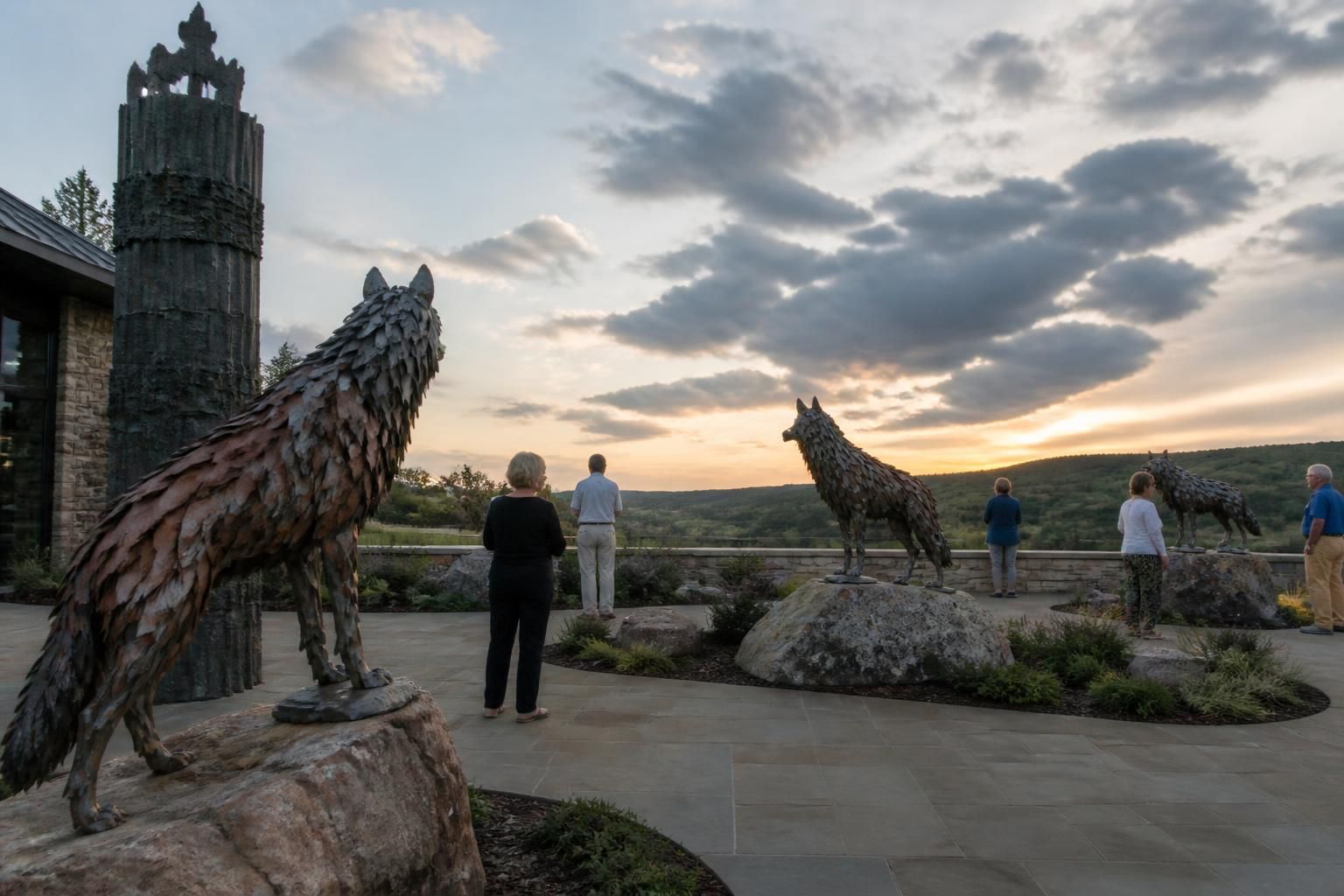
The William King Museum of Art is preparing to open Unleashing the Wolf, an outdoor Art Exhibition that places contemporary wolf-inspired sculptures across its Abingdon campus. The initiative gives visitors a reason to look beyond the traditional museum gallery: art will be encountered while walking, pausing, talking, and observing the landscape around it.
This setting matters. Outdoor Contemporary Art does not operate like a painting viewed under controlled lighting. A Sculpture can appear differently at midday, in rain, against seasonal foliage, or at the end of a late-afternoon visit. Its material, scale, shadows, and relationship to paths all become part of the interpretation. For a wolf-focused presentation, that changing environment is particularly relevant because the animal is so closely associated with movement, territory, instinct, and the natural world.
Abingdon’s historic connection to the name “Wolf Hills” gives the exhibition a local foundation. The wolf is not being introduced as a generic Wildlife Art subject selected only for visual appeal. Instead, the project draws on a regional legend and uses artistic responses to reopen a conversation about place. Visitors can consider how stories survive in towns, how animals become civic symbols, and how artists can translate inherited narratives into forms that feel current rather than nostalgic.
The museum has positioned the project as a significant long-term installation rather than a brief weekend display. The works are expected to remain accessible for three years, allowing residents, repeat visitors, schools, and regional tourists to return in different seasons. That duration changes the value of the experience. A temporary event often encourages a fast, single visit; a multi-year outdoor exhibition can become part of local orientation and cultural tourism planning.
For visitors arriving during the launch period, the museum’s public unveiling information is the most practical starting point for checking the programme. Clear event information is particularly important when sculpture is distributed across an open campus. Guests need to know where the gathering begins, whether a presentation is outdoors, how long it may last, and which parts of the grounds are suitable for families or visitors with mobility needs.
Why the Wolf Carries More Than One Meaning in Contemporary Art
Animal Symbolism is rarely fixed. In one cultural context, the wolf represents danger; in another, loyalty, intelligence, freedom, protection, or survival. Artists working with a Wolf Theme therefore have a broad but demanding subject. A successful artwork does not merely reproduce fur, teeth, or a recognizable silhouette. It asks viewers to examine what they expect the animal to mean.
That complexity is useful for a museum audience. A steel wolf might suggest industrial change as much as wilderness. A stylised form made from reclaimed timber could lead to questions about habitat, extraction, or repair. An abstract piece may not look like an animal at first glance, yet its posture, line, or grouping can evoke a pack, a trail, or a watchful presence. This openness gives the exhibition relevance for audiences who are interested in sculpture technique as well as those who are drawn to regional folklore.
A family visiting with a child may notice ears, paws, and scale. An art student may focus on fabrication decisions. A local resident may associate the work with the Legend of Wolf Hills. These are not competing readings; they demonstrate why well-designed public art can welcome varied levels of knowledge. The museum’s role is to give each audience a useful entry point without imposing a single answer.
For cultural organisations, the strongest lesson is simple: public art becomes more memorable when it is anchored to a genuine local story and supported by clear interpretation. The next stage of the Unleashing the Wolf experience depends on how the works are revealed, explained, and connected to the wider festival programme.
Unleashing the Wolf Public Unveiling Turns a Sculpture Display Into a Shared Event
The official public unveiling is planned for July 24 on the South Terrace of the William King Museum of Art. It forms part of a wider July 24–26 programme timed with the 77th Annual Virginia Highlands Festival. This combination is strategically valuable: visitors already in Abingdon for festival activity gain an additional cultural destination, while the museum can introduce its long-term installation to a broader and more varied public.
A launch event should do more than announce that artworks are now available to view. In this case, the programme is designed to provide context through artists, stories, performance, and participatory activity. Visitors are expected to see the sculptures, hear the Wolf Hills legend shared by Betsy White, meet participating artists, and attend a curator-moderated presentation in which makers explain how their individual works were produced.
That direct contact with process is especially important for Sculpture. The public often sees a finished piece without understanding the decisions behind it: why a material was selected, how sections were joined, how an outdoor work was engineered, or how an artist tested a form before installation. When makers explain their process in their own words, the artwork becomes less distant. It also helps visitors recognise that Contemporary Art includes planning, craft, technical constraints, and revision—not simply an idea placed in a landscape.
| Visitor moment | What the programme offers | Practical value |
|---|---|---|
| 📍 July 24 public reveal | South Terrace gathering and first viewing of the works | Creates a clear starting point for exploring the campus |
| 🎨 Artist and curator presentations | Discussion of creative and fabrication processes | Helps visitors read materials, forms, and artistic choices |
| 💃 Dance performances | Southern Appalachian Dance Collective participation | Links visual art with movement and regional performance |
| 🖍️ Community wolf drawing | Family-friendly collaborative activity | Offers a low-barrier way for younger visitors to participate |
| 🌳 Trails and gardens | Exploration of the museum’s lower campus environment | Extends the visit beyond the Sculpture installations |
The presence of the Southern Appalachian Dance Collective adds another interpretive layer. Dance can echo the energy of a wolf through pacing, group movement, distance, and stillness, without needing literal costume or narrative. It gives visitors a way to experience the Wolf Theme physically as well as visually. In cultural programming, this kind of cross-disciplinary approach can make an event feel coherent without requiring every element to repeat the same message.
The community wolf drawing serves a different purpose. It invites participation from visitors who may not feel prepared to discuss Contemporary Art or attend a formal artist talk. For children, drawing provides an immediate response to Wildlife Art. For adults, the activity makes the event less passive and signals that the museum welcomes diverse forms of engagement. A carefully placed family activity can also give parents time to navigate the wider programme without forcing young visitors to remain still through every presentation.
Planning an Effective Visit During the Virginia Highlands Festival
The three-day format encourages visitors to plan rather than simply arrive. Festival weekends can bring increased foot traffic, limited parking, and competing cultural activities. A visitor who wants to attend the reveal, speak with artists, and explore the grounds should review timings before travelling. The VA250 event listing provides additional context for the celebration of Abingdon’s Wolf Hills story within Virginia’s 250th-anniversary programming.
For museum teams, this is a useful operational model. A high-interest opening needs visible wayfinding, a clear welcome point, concise schedules, and staff who can direct guests between performances, talks, gardens, and artworks. Visitors should not have to guess whether a trail is part of the exhibition route or whether an activity requires advance registration. Small details determine whether a public opening feels accessible or unnecessarily complicated.
🎯 The key value of the unveiling is not simply attendance on one day; it is giving audiences enough context to return to the artworks with greater curiosity. That return visit becomes much more likely when interpretation continues beyond the terrace presentation.
Video can be a useful pre-visit tool, particularly for travellers deciding how to allocate limited festival time. A short preview of the museum, campus, or artist process can make the outdoor experience easier to imagine before arrival.
Outdoor Contemporary Art Creates a New Visitor Route Through Nature and Heritage
Unleashing the Wolf is not limited to the question of what each artwork represents. It also changes how visitors move through the William King Museum of Art campus. Outdoor installations can turn a familiar site into a sequence of discoveries: one work may be visible from a terrace, another may emerge beside a garden edge, and another may encourage people to continue along a path they would otherwise overlook.
This is where Nature becomes an active partner in the exhibition. Trees, paths, planting, weather, sightlines, and the pace of walking affect the way people interpret a work. A gallery visitor normally approaches an object in a controlled room. An outdoor visitor may first see a sculpture from a distance, then encounter it from behind, then notice how it frames a view of the grounds. That layered experience is especially suited to a wolf-inspired project, since the animal itself is culturally connected with tracking, looking, listening, and moving through terrain.
The museum’s newly completed lower campus, including nature trails and gardens, supports this extended encounter. Rather than treating the artworks as isolated photo opportunities, visitors can experience them as markers along a broader cultural and environmental route. That approach benefits both first-time tourists and people who know Abingdon well. A resident may revisit a favourite piece after a seasonal change; a traveller may use the route as a calm counterpoint to a busy festival itinerary.
Designing a Route That Works for Families, Groups, and Independent Visitors
A strong outdoor Art Exhibition requires interpretation that respects different visitor habits. Some people will join a scheduled tour. Others will arrive independently, take a few photographs, and move on. Families may need a short route with practical stops. School groups require a clear gathering plan and prompts suitable for discussion. Accessibility also needs to be considered from the first map, not added after the installation has opened.
A useful visitor journey can include the following elements:
- 🧭 A defined starting marker that explains the Wolf Theme and indicates the total walking distance.
- 🔊 Short audio stops that describe the artist’s intent in plain language and work well through personal headphones.
- 🪑 Rest points near longer interpretive material, allowing visitors to pause without blocking paths.
- 👨👩👧 Family prompts such as “Which material seems most unexpected for a wolf?” rather than questions with a single correct answer.
- ♿ Accessible route information that identifies surface changes, seating availability, gradients, and alternative viewing options.
Imagine a visiting group led by a guide called Maya. She is responsible for 18 guests during a festival weekend, including two people who prefer a slower walking pace and several who want to take photographs. If the route has no defined order, she spends valuable time gathering the group and repeating logistical directions. If each stop has a short audio explanation and a visible number, she can focus on discussion, local history, and visitor questions instead.
This is where smart tourism tools are practical rather than ornamental. A mobile audio guide can provide an artist statement, a short description of materials, and a prompt linking each wolf artwork to the wider Abingdon story. Visitors can listen at their own pace, while guides retain control of the group experience. For institutions with limited staffing, this approach also extends interpretation beyond the hours of a scheduled tour.
Grupem-style audio delivery is particularly suited to open-air settings because it allows visitors to use their own smartphones and headphones. The objective is not to replace a human guide. It is to improve audibility, reduce repeated explanations, and make cultural content available to people who arrive outside programmed hours. Museums can publish short, well-edited segments instead of overwhelming audiences with a single long recording.
A related example can be found in this overview of major art exhibitions and visitor engagement, which highlights how large cultural events benefit from clearer visitor preparation and interpretation. The same principle applies at a smaller regional scale: a route works best when the physical experience and the information layer support each other.
🌿 Outdoor Sculpture succeeds when visitors are not merely shown where to walk, but are given reasons to notice what changes along the way. That principle also informs how artists’ materials and methods can be interpreted for non-specialist audiences.
Artists’ Processes Give Wildlife Art a Stronger and More Credible Interpretation
Wildlife Art can easily become predictable when it relies only on familiar animal imagery. Unleashing the Wolf has the opportunity to avoid that trap by foregrounding artistic process. The announced curator-moderated discussion, in which artists present how their sculptures were made, offers visitors a direct connection between concept and construction.
For many people, a sculpture’s material is the first clue to meaning. Metal may suggest permanence, protection, weight, industry, or tension. Wood can point toward growth, vulnerability, regional craft, or habitat. Stone often carries associations with memory and endurance. Recycled components can introduce questions about consumption, repair, and the afterlife of manufactured objects. The same Wolf Theme can therefore produce radically different visual and emotional responses depending on the artist’s choices.
It is important not to assume that every work will be figurative. Contemporary Art often asks viewers to recognise an idea through gesture, balance, texture, or negative space rather than through literal representation. An angular form may imply alertness. Several linked shapes may refer to social bonds or a pack. A weathered surface can suggest exposure to the elements. This is one reason public explanation matters: visitors should feel invited to look closely, not pressured to “get” a hidden answer.
From Sculpture to Painting: Creating Useful Comparison Points
Although the outdoor installation centres on Sculpture, the exhibition can also help audiences think about the differences between three-dimensional and two-dimensional animal imagery. A Painting of a wolf often guides the viewer through composition, colour, and a fixed viewpoint. A sculpture gives the viewer agency: walking around the object changes its form and can reveal elements that are invisible from the front.
This distinction creates a useful educational prompt. A museum educator could ask participants to sketch one sculpture from two angles, then compare how its apparent character changes. Does the form appear protective from one side and threatening from another? Does it look like an animal only at a particular distance? Such activities demonstrate that viewing is active. They also encourage visitors to spend more time with the work than a quick photograph would allow.
The following questions can support artist-led talks, school visits, or independent mobile interpretation:
- 🔍 What material is being used, and what does it suggest before any label is read?
- 🐺 Which details connect the form to a wolf, and which details remain abstract?
- 🌦️ How might rain, sunlight, or a change in season alter the work’s appearance?
- 🏞️ Does the surrounding landscape strengthen, challenge, or complicate the artwork’s message?
- 💬 What local story or personal memory does the piece bring to mind?
These prompts are valuable because they avoid a common museum mistake: presenting interpretation as a test. Visitors should not leave feeling that only experts can participate in a Contemporary Art conversation. Instead, interpretation should give them vocabulary for observations they have already made. “The surface looks scarred,” “the shape feels watchful,” or “the work seems built for this site” are meaningful starting points.
Audio technology can reinforce this approach when it is concise. A two-minute artist clip can be more effective than a dense wall panel, particularly outdoors where lighting, weather, and group movement affect reading comfort. Museums should record in a quiet setting, use plain language, and offer a transcript where possible. The aim is audibility and access, not technical novelty for its own sake.
Process-focused video also gives educators and remote audiences an accessible way to understand fabrication. It can show welding, carving, modelling, transport, or installation details that are impossible to observe once an artwork is fully placed on site.
🛠️ When visitors understand how a work was made, they are more likely to recognise the care, risk, and intention behind the finished form. The next challenge is maintaining that quality of engagement over the exhibition’s full three-year presence.
Long-Term Public Art Needs Clear Audio, Accessible Information, and Seasonal Renewal
A three-year outdoor exhibition offers a major advantage: it can build relationships with audiences over time. Yet long duration also creates an operational responsibility. The initial opening may attract festival visitors and local media attention, but the work must remain understandable and relevant after the launch weekend has passed. Signage can weather, staff changes occur, and repeat visitors need a reason to look again.
The William King Museum of Art can support the long-term value of Unleashing the Wolf by treating interpretation as a living service. Basic information should always remain easy to find: a campus map, work titles, artist names, materials, accessibility notes, and a short explanation of the Wolf Hills connection. Beyond that core layer, the museum can refresh digital content seasonally without altering the artworks themselves.
For example, an autumn audio route might focus on changing light and the relationship between sculpture and landscape. A school-season route could use questions about materials, storytelling, and Animal Symbolism. During a later festival period, the museum might add short recordings from gardeners, local historians, or returning artists. Each update gives visitors a legitimate reason to return while respecting the integrity of the original pieces.
Practical Digital Interpretation for a Multi-Year Sculpture Exhibition
Digital access should remain simple. Visitors should not need to download several applications, create an account, or navigate a cluttered website to hear a two-minute explanation. A QR code placed at a starting point can open a mobile-friendly page, while a guided group can use an audio platform to hear synchronized commentary through personal devices. The content should complement the physical site rather than pull people away from it.
A practical content plan for a long-term exhibition could include:
- 🎧 Six concise artwork tracks, each focused on one artist, one material choice, and one visual question.
- 📖 A Wolf Hills story track, clearly identified as local folklore and connected to Abingdon’s history.
- 🗺️ A route overview for independent visitors, including estimated walking time and terrain notes.
- 👥 A group-tour version with controlled playback so guides can keep visitors together in busy periods.
- 🔤 Text transcripts and readable labels to ensure that audio does not become an accessibility barrier.
For museum professionals, measurement should be modest and meaningful. The most useful indicators are not only page views or QR scans. Teams can track which stops receive the longest listening time, whether visitors complete a route, which questions appear most often during guided tours, and whether people return for seasonal programming. These observations can help staff improve interpretation without turning a cultural visit into a data-heavy exercise.
Maintenance also belongs in the visitor experience. Outdoor works should be checked routinely for safety, stability, surface changes, and the condition of nearby paths. Digital information must be reviewed at the same time. An outdated map or broken QR code creates frustration just as quickly as an unreadable label. The strongest public art programmes acknowledge that access is maintained through small, recurring actions.
The broader museum sector can take a useful lesson from initiatives that combine exhibition storytelling with visitor-focused technology. This look at an immersive exhibition experience shows why content design matters as much as the technology used to deliver it. An effective digital layer is quiet, reliable, and purposeful: it helps people notice the art and the place rather than competing for attention.
Unleashing the Wolf also has value as a cultural tourism anchor. Visitors attending the Virginia Highlands Festival may discover the museum for the first time; those who return later can experience the campus outside the busiest event window. Local businesses, guides, accommodation providers, and visitor-information teams can refer to the installation as a durable reason to include the museum in an Abingdon itinerary.
📱 A long-term outdoor Art Exhibition remains powerful when its physical route, cultural story, and visitor information continue to work together long after opening day. For Unleashing the Wolf, that ongoing clarity can turn a public unveiling into a sustained encounter with art, landscape, and local identity.
When is the public unveiling of Unleashing the Wolf?
The public unveiling is scheduled for July 24 on the South Terrace at the William King Museum of Art in Abingdon, Virginia. It is part of a July 24–26 celebration.
How long will the Unleashing the Wolf Art Exhibition remain on view?
The outdoor contemporary sculpture exhibition is expected to remain available to visitors for three years, providing opportunities for seasonal and repeat visits.
What activities are planned during the opening event?
The programme includes sculpture viewing, artist encounters, a curator-moderated process presentation, storytelling connected to the Legend of Wolf Hills, dance performances, and a family community drawing activity.
Why is the wolf important to Abingdon?
Abingdon is associated with the historic name Wolf Hills. The exhibition uses that local folklore as a starting point for contemporary artistic interpretations of the wolf.
Can outdoor sculpture exhibitions use mobile audio guides?
Yes. Mobile audio guides can provide artist commentary, route directions, accessibility information, and short interpretive prompts while allowing visitors to explore the works at their own pace.
