
UMG and ElevenLabs Build a Licensed AI-Driven Music Platform for Fan Creation
🎵 Key point: UMG and ElevenLabs are developing a new AI-driven music platform designed around licensed catalogues and voluntary artist participation. The model is significant because it moves artificial intelligence from unapproved imitation toward a controlled environment for remixes, mashups, alternate versions, and personalised audio experiences.
The multi-year partnership between UMG and ElevenLabs signals a practical change in how major music companies are approaching generative tools. Rather than treating every music technology company solely as a legal threat, Universal Music Group is working with a specialist in synthetic voice and audio generation to build products under defined permissions. The platform is expected to let fans interact creatively with songs from artists and songwriters who explicitly choose to participate.
This distinction matters. A listener may be able to create a new interpretation of a track, assemble a mashup, or adapt a licensed piece into a personal listening format. Yet access is not presented as an unrestricted download of a label catalogue. Artist opt-in is central to the product design. That gives musicians, rights holders, and their teams a mechanism to decide whether their work belongs in this new type of digital music experience.
For a cultural venue or tourism organisation, the same principle is familiar. A museum may make selected archive recordings available in an audio guide while protecting sensitive interviews, restricted collections, or materials with complex rights. The useful innovation is not simply making every file technically available. It is giving audiences meaningful access while preserving governance. The UMG–ElevenLabs partnership applies that logic to commercial music at a far larger scale.
Why licensed creation changes the AI music conversation
Music fans have often reacted negatively to AI-generated tracks, especially when they imitate recognisable artists without consent. The concern is not only artistic. Unlicensed models can reproduce stylistic traits, vocal qualities, or song-like outputs while leaving performers uncertain about compensation, attribution, and control.
A licensed music platform offers a different route. It can establish which recordings, compositions, voices, and creative functions are available; who can use them; and which outputs can be published, shared, or monetised. That does not eliminate difficult questions, but it replaces ambiguity with product rules that can be understood by users.
- 🎤 Artists can decide whether to join and define how their music is used.
- 🎧 Fans can experiment inside an authorised environment instead of relying on unverified tools.
- ⚖️ Rights holders gain a framework for licensing, reporting, and revenue allocation.
- 🛠️ Platforms can develop features around real permissions rather than disputed training data.
An emerging singer, for example, could permit fans to produce short remix variations of one single while keeping unreleased songs and vocal identity unavailable. A legacy artist might authorise a carefully limited catalogue campaign tied to an anniversary release. These are commercial and editorial choices, not purely technical settings.
The official UMG announcement on the strategic agreement describes a collaboration that starts with fan-facing creative experiences but also includes audio products for artists and songwriters. That broader scope is important: the same infrastructure could support professional workflows as well as audience participation.
💡 The essential shift is simple: an AI music experience becomes more credible when consent, licensing, and user boundaries are built into the product rather than added after public backlash.
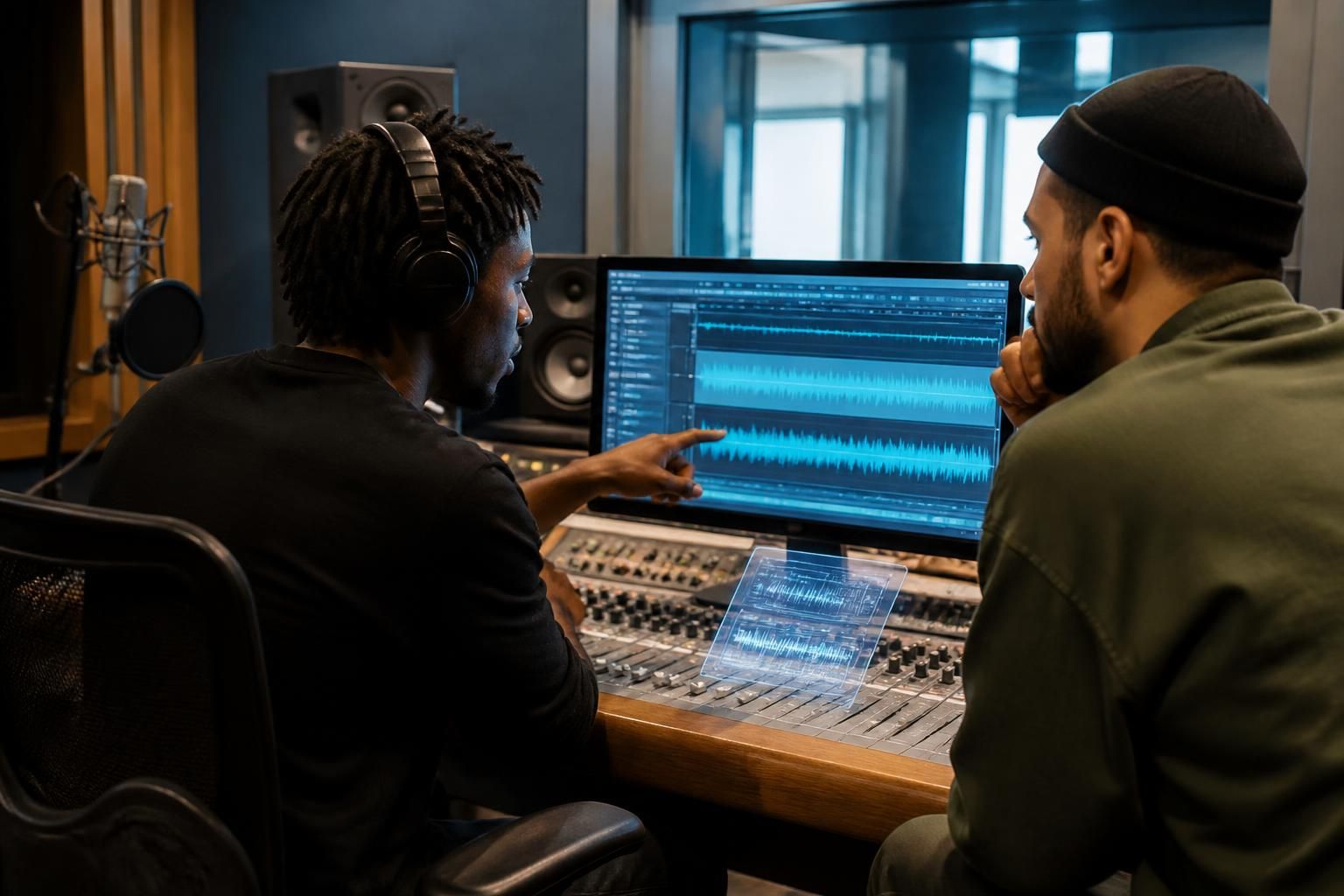
How the ElevenLabs and UMG Partnership Could Redefine Music Technology Workflows
The partnership is described as a multi-year strategic agreement, not a one-off feature launch. That wording suggests a product-development relationship in which the platform can evolve as artists, songwriters, listeners, and labels identify viable uses. ElevenLabs brings deep experience in voice generation and audio tooling; UMG brings catalogues, rights expertise, artist relationships, and distribution knowledge.
In practical terms, a fan-oriented service could offer structured creative paths rather than a blank prompt box. A user might choose an authorised song, select an available instrumental layer, define a mood or format, and generate a permitted reinterpretation. The product could limit duration, restrict the use of vocal models, identify source material, and attach clear sharing conditions to every result.
That guided approach is relevant beyond music. Good audio experiences rarely depend on unlimited options. A visitor using a smartphone during a guided walk does not need a complex control room; they need clear sound, reliable synchronisation, and easy access to the right language or content version. Similarly, successful artificial intelligence products must turn technical power into a simple, understandable journey.
From raw generation to usable creative controls
Consider a fictional campaign by an artist called Maya Vale. She approves one chorus and a set of instrumental stems for a fan challenge. The platform allows participants to create a 30-second remix, choose between three approved moods, and add a personalised spoken dedication without cloning Maya’s voice. The label can highlight strong submissions, while Maya keeps control over the original master recording.
This format creates a clear separation between participation and appropriation. Fans are not told that they can make the artist say anything. They are invited to work with a specific collection of authorised building blocks. The result can feel creative without pretending that consent is irrelevant.
| Area | Traditional unlicensed AI use | Licensed UMG–ElevenLabs approach | Practical value |
|---|---|---|---|
| 🎼 Source material | Unclear origin or disputed training inputs | Approved catalogue and participating creators | Clearer rights pathway |
| 🎙️ Vocal use | Potential imitation without permission | Artist-defined availability and restrictions | Greater identity protection |
| 📱 Fan output | Uncertain publishing rules | Platform-defined sharing and remix conditions | Safer participation |
| 💰 Revenue | Often unclear or absent for creators | Licensing model designed for rights holders | More sustainable commercial logic |
The agreement arrives after a period of intense conflict between labels and AI music companies. UMG, Sony, and Warner pursued legal action against Suno in 2024, while later licensing developments showed that commercial agreements can reshape the landscape. Warner’s subsequent collaboration with Suno and BMG’s involvement in AI music initiatives illustrate a wider industry trend: rights owners are testing regulated partnerships instead of relying on a single response to every technology provider.
A detailed analysis of the licensed AI audio deal frames this development as a potential standard-setter. The important word is “potential.” Execution will determine whether the platform becomes trusted by musicians and audiences.
🎯 A useful music platform is not defined by how many prompts it accepts, but by how clearly it translates permissions into creative actions.
Artist Consent and Rights Management at the Core of Revolutionary AI Music Innovation
Calling a product revolutionary can be tempting whenever artificial intelligence enters a creative field. The more relevant question is whether the model solves a real problem. In this case, the partnership addresses a central tension in digital music: audiences want interactive formats, while artists need their voices, recordings, compositions, and public identities to remain protected.
Consent must operate at several levels. An artist may approve a song for remixes but not approve vocal generation. A songwriter may authorise a composition for a specific type of adaptation but not commercial advertising. A featured vocalist may have separate contractual rights from the lead artist. The music platform will need to turn those layered agreements into rules that are understandable for people creating content in seconds.
Opt-in is only the first step
A meaningful opt-in model requires more than a checkbox. Participants should know what is being licensed, where the output can appear, whether it can be downloaded, whether it can be trained upon later, and how it can be removed. A responsible system should also give artists ways to revise or withdraw permissions when campaign plans change.
This is particularly important for voice-based experiences. A human voice is both a performance tool and a strong marker of identity. When AI can generate speech, narration, or vocal-like sounds, transparent boundaries become essential. The wider debate around synthetic voices has shown why attribution and explicit permission must not be treated as optional details. For further context, the discussion around the future of unique AI voices highlights how identity, authenticity, and audience trust increasingly overlap.
For event organisers, this has a direct application. If a festival uses AI-assisted announcements or interactive music installations, it should document the voice source, obtain permissions from contributors, and state clearly whether recorded audience contributions may be reused. These habits are not administrative friction. They make creative participation safer and easier to scale.
- ✅ Define the authorised recordings, stems, lyrics, or voices before opening access.
- ✅ Set output limits, including duration, format, and permitted distribution channels.
- ✅ Explain ownership and revenue rules in plain language at the creation stage.
- ✅ Provide reporting and removal routes for artists, collaborators, and users.
- ✅ Review the experience after launch using feedback from creators and audiences.
There is also a reputational dimension. Fans may accept AI-assisted formats when the artist is visibly involved and the purpose is clear. They are more likely to reject content that appears to exploit an artist’s likeness or catalogue without approval. Transparency therefore becomes a design feature, not merely a legal disclaimer.
⚖️ The strongest innovation is not unrestricted generation; it is a system where creative freedom has visible, consent-based boundaries.
Fan Co-Creation on an AI-Driven Music Platform: Experience Design That Builds Trust
Fan co-creation can be valuable when it gives people a genuine role without requiring specialist production skills. The UMG and ElevenLabs platform is expected to explore remixes, mashups, new interpretations, and personalised tracks involving participating artists. These formats can create deeper engagement than a passive stream, particularly when campaigns are linked to tours, releases, communities, or cultural events.
However, fan participation is not automatically meaningful because it uses new technology. A poorly designed experience can become repetitive, confusing, or flooded with low-quality content. The platform will need thoughtful creative constraints, accessible controls, and moderation mechanisms that protect both artists and communities.
Designing simple journeys instead of novelty features
A strong user journey might begin with an artist-approved creative brief: “Create a late-night electronic version of this chorus.” The fan then selects tempo, instrumentation, and atmosphere from a limited menu. Before generating, the interface shows what can be shared and identifies the original work. This creates a straightforward experience while preserving provenance.
Imagine a city tourism office working with a local music collective during a heritage weekend. Visitors scan a QR code at three historic locations, unlock approved ambient sound layers, and build a short soundtrack for their walking route. The final creation remains inside the event environment, credits the local musicians, and can be shared as a memory clip. This is an example of AI-supported audio mediation with a clear context, limited rights, and a concrete benefit for participants.
Such ideas are relevant to cultural organisations because smartphones already serve as personal listening devices. Tools like Grupem demonstrate how mobile audio can make a group visit more flexible, accessible, and intelligible without forcing every participant to gather around a single loudspeaker. The same user-experience discipline applies to a music technology service: sound must be easy to access, actions must be clear, and participants must understand what they are allowed to do.
Personalisation must also respect accessibility. Text instructions should be concise, listening modes should not rely solely on visual controls, and generated content should be labelled. If users can add a spoken message, captions and transcript options can make the feature more inclusive. A revolutionary platform should not only create novel sounds; it should make participation possible for varied audiences.
A useful quality-control layer could include curated templates, featured community creations, artist-selected challenges, and rules against harmful or deceptive submissions. These elements reduce the risk that the platform becomes an endless feed of anonymous output. They also give participating musicians a visible editorial role.
🎧 Fan creativity works best when the audience receives a clear invitation, not an unlimited and unexplained set of tools.
What UMG and ElevenLabs Mean for Digital Music, Tourism Audio and Responsible Artificial Intelligence
The UMG–ElevenLabs partnership is part of a broader shift in which AI companies and rights holders are negotiating the terms of future digital music services. The immediate focus is entertainment, but its implications extend to museums, visitor attractions, cultural festivals, guided tours, and public institutions that use sound to tell stories.
Audio has always been a powerful mediation format. A song can establish a period, a place, or an emotional atmosphere in seconds. In cultural interpretation, a licensed soundtrack can help visitors understand the character of a neighbourhood, the context of a historical movement, or the creative identity of a local scene. Yet adding music to an experience brings rights obligations. AI-assisted tools make those obligations more visible, not less.
Practical lessons for cultural and tourism professionals
Organisations should avoid assuming that a generated audio file is automatically safe to publish. If a tool uses recognisable music, voices, lyrics, or artist-inspired elements, teams need to verify the licence, territory, duration, and intended use. A track suitable for a private in-app activity may not be cleared for a public campaign, paid event, or archived visitor recording.
There is a useful parallel with guided-tour audio. A local guide may record excellent commentary, but the organisation still needs consent forms, version control, music clearance, and a process for updating material. The operational question is always the same: who approved this content, where can it be heard, and what happens when circumstances change?
Before adopting an AI audio feature, professionals can use this short evaluation framework:
- 🔎 Rights: Is the music, voice, and source content licensed for the exact planned use?
- 📲 Experience: Can visitors or fans understand the feature without training or technical vocabulary?
- 🧩 Context: Does the generated audio add value to the visit, campaign, or event?
- 🛡️ Governance: Are moderation, attribution, reporting, and deletion procedures defined?
- ♿ Accessibility: Are transcripts, volume controls, captions, and alternative formats available?
For instance, a museum could invite visitors to arrange licensed instrumental fragments into a short soundscape inspired by an exhibition room. The tool should display credits, prevent export if the licence does not permit it, and offer a headphone-based listening route. A city guide could let groups choose between approved sound moods during a tour, while keeping narration intelligible and music levels controlled.
Responsible deployment also depends on accurate communication. Teams should never present AI output as an original historical recording, a real artist endorsement, or a human performance if it is not. Clear labelling protects public trust. It also helps audiences appreciate the distinction between archival material, commissioned creative work, and machine-assisted interpretation.
UMG and ElevenLabs are attempting to show that innovation can operate within a licensing structure. Whether the service becomes a lasting reference will depend on compensation, creator confidence, platform safeguards, and the quality of the fan experience. For every organisation using audio, the lesson is already concrete: use technology to expand participation, but never detach it from consent, clarity, and human editorial judgement.
What is the UMG and ElevenLabs music platform expected to offer?
The planned platform is intended to let fans create authorised remixes, mashups, alternate track interpretations, and personalised audio using music from artists and songwriters who choose to participate.
Can every UMG artist be used on the AI-driven music platform?
No. Participation is based on opt-in decisions. Artists and rights holders can determine whether, and in what form, their music or voice-related assets are made available.
Why does licensing matter for artificial intelligence in music?
Licensing helps define permissions, compensation pathways, content limits, attribution, and publishing rules. It provides a clearer alternative to unapproved use of recordings, compositions, or recognisable vocal identities.
How can tourism and cultural organisations apply similar principles?
They should use cleared audio, obtain contributor consent, explain AI use clearly, design accessible listening experiences, and define how visitor-created content can be stored, shared, or removed.
