
SoundHound’s Kia Sorento Deployment Brings Conversational Automotive AI to India
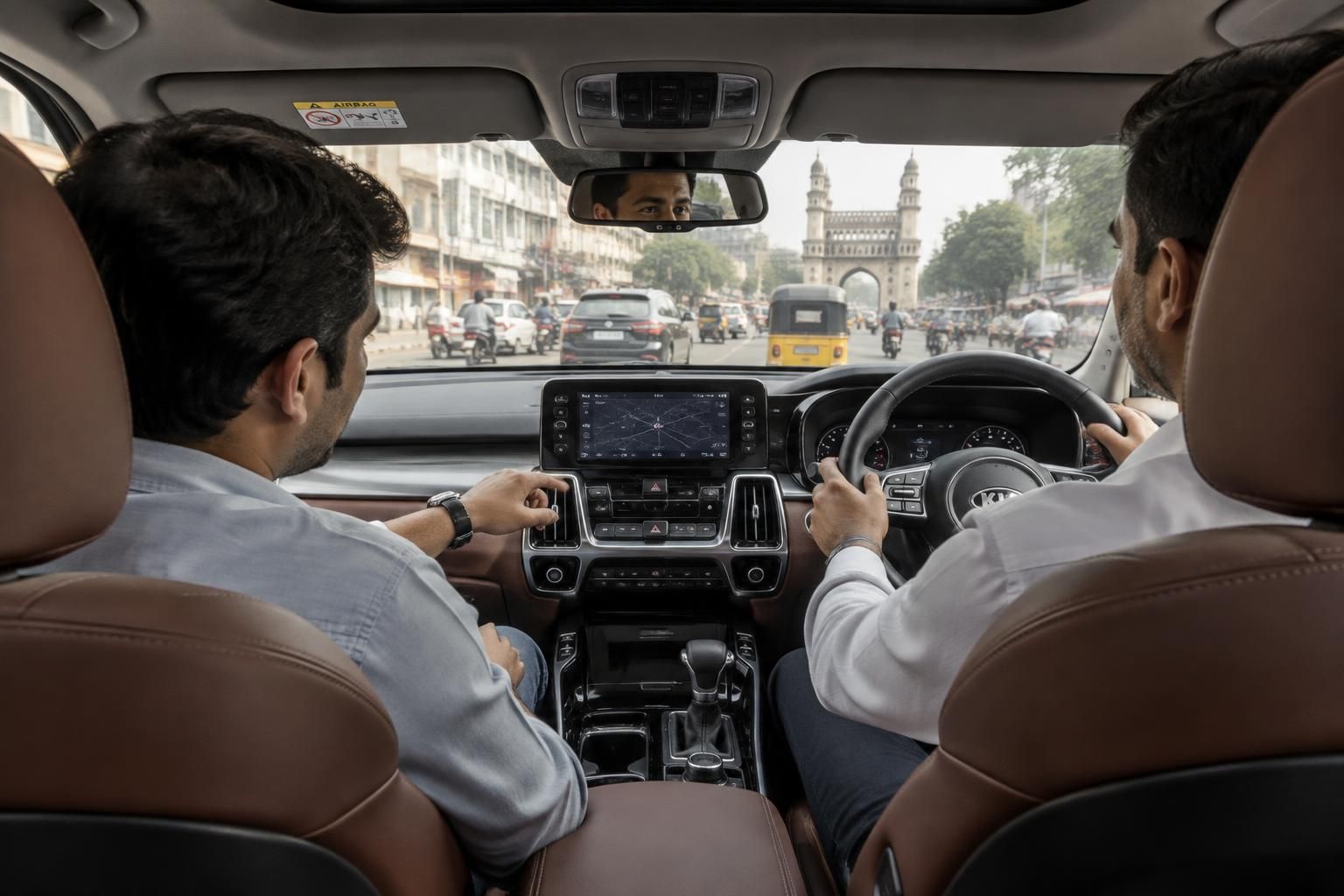
Launch coverage dated September 30, 2026 describes SoundHound’s voice and generative AI deployment in the Kia Sorento in India. The reported integration introduces Kia’s real-time generative assistant to the Sorento lineup, combining spoken vehicle commands, conversational answers and access to contextual information within the cabin.
The important change is not simply that drivers can speak to their vehicle. It is that the interaction can continue across several exchanges, allowing a person to refine a request without repeatedly restarting the conversation or remembering a rigid command sequence.
The SoundHound announcement about Kia’s next-generation assistant describes an experience activated through “Hey Kia.” Reported functions include cabin controls, information drawn from the digital owner’s manual, navigation, local search and broader contextual answers.
What the Kia Sorento announcement establishes—and what buyers should check
The company presents the rollout as a first for the Sorento range and a category milestone in the Indian market. Those claims describe the announcement’s positioning; they should not be interpreted as proof that every competing vehicle lacks conversational functionality.
For buyers and fleet operators, the practical questions are narrower. Which trim includes the system, what services require connectivity, which languages are supported, and do any functions depend on a subscription? The supplied launch coverage does not settle every configuration detail.
Availability should be confirmed against the locally delivered vehicle and its current documentation. A feature demonstrated in promotional material may have different operating conditions from the same feature used on an ordinary journey.
Why connected cars matter to tourism operators
Consider a hypothetical premium tour company, Deccan Routes, planning transfers between Hyderabad hotels, heritage attractions and regional destinations. Its manager, Meera, is evaluating whether conversational cabin tools can reduce the small interruptions that accumulate during a full day of travel.
A passenger may ask whether the next attraction is open, request a cooler cabin or need help understanding a seat adjustment. If suitable requests can be handled through speech, the driver may spend less time explaining controls or navigating menus.
However, a convenient interface does not automatically create a reliable visitor service. Attraction opening times can change, local businesses can close temporarily, and a route that appears efficient on a map may be unsuitable for a particular vehicle or passenger.
For Meera, the value of automotive AI therefore depends on how well it supports an existing operating procedure. Verified itineraries, accessible boarding arrangements and knowledgeable staff remain essential even when the vehicle can answer questions.
Assess the deployment through everyday journeys
A sensible evaluation begins with ordinary situations rather than impressive demonstrations. Test a temperature adjustment during conversation, a destination search with a difficult place name, and a follow-up question about a vehicle feature.
Record whether the request succeeds on the first attempt, whether the answer is understandable, and whether the driver needs to intervene. Also note whether passengers know when the microphone is listening and how to stop an interaction.
These observations reveal more than a broad claim about technological sophistication. They show whether the interface fits the people, routes and acoustic conditions in which it will actually operate.
The deployment’s operational significance lies in making routine journeys easier—not in replacing the judgement that safe transport and good hospitality require.
How Agentic Voice AI Turns Spoken Requests into Useful In-Car Actions
A conventional voice assistant often works as a command interface: the user says a recognised phrase, and the system performs a predefined action. Agentic voice AI aims to go further by interpreting intent, retaining conversational context and coordinating permitted actions.
That distinction matters because people rarely describe their needs like software instructions. A passenger is more likely to say, “It feels warm back here,” than to name a specific climate-control function and its corresponding setting.
Separate conversation, interpretation and execution
Three capabilities sit behind a useful spoken interaction. Speech recognition identifies the words, natural language processing interprets their meaning, and an action layer determines what the system is authorised to do.
Generative technology can help formulate an understandable answer or interpret a less predictable question. It should not, by itself, grant unrestricted access to vehicle functions; actual execution needs defined interfaces, permissions and operating constraints.
SoundHound describes proprietary Speech-to-Meaning and Deep Meaning Understanding technologies as central to its approach. The company positions these technologies as a way to interpret speech efficiently, although comparative claims about speed and accuracy require testing under equivalent conditions.
For Deccan Routes, this distinction prevents an important purchasing mistake. A fluent answer is evidence of conversational quality, but it is not proof that the requested action was completed correctly.
Use multi-turn exchanges to reduce repetition
Imagine a passenger asking, “Find a museum near our hotel,” followed by, “Which one is open this afternoon?” A context-aware system should understand that the second question refers to the earlier search rather than asking the passenger to repeat the entire request.
A further instruction—“Take us to the closer one”—introduces an action. Before changing navigation, the interface should make the selected destination clear, especially where several attractions have similar names.
The reported Sorento integration supports continuous, multi-turn conversation. Specific combinations of search, comparison and routing should nevertheless be evaluated in the delivered system rather than assumed from that general description.
- 🎙️ Start with intent: test ordinary requests expressed in everyday language, not only phrases supplied by a salesperson.
- 🔄 Check context: ask a relevant follow-up and observe whether the previous subject is retained correctly.
- ✅ Confirm the outcome: verify that the destination, setting or information matches the request.
- 🛑 Test cancellation: make sure users can interrupt, correct or stop an unwanted interaction.
Keep permissions proportional to the action
The supplied coverage lists climate, lighting, windows and driving modes among supported control areas. These functions do not carry identical consequences, so a responsible design should apply safeguards appropriate to each action and the vehicle’s operating state.
A temperature adjustment may need a brief acknowledgement. An ambiguous request affecting a more consequential setting may require clarification or may be unavailable under certain conditions.
Similar principles apply outside the vehicle. Grupem’s discussion of empathetic interaction in agentic voice systems provides a relevant perspective: understanding the person’s request should reduce friction, not encourage the system to make unsupported assumptions.
Meera can turn this into a practical acceptance test by deliberately using vague language. “Make it more comfortable” should trigger an appropriate clarification when several interpretations are possible.
A dependable conversational system knows when to act, when to ask and when to leave control with the user.
Making the Kia Sorento Voice Assistant Useful in India’s Real Travel Conditions
India presents a demanding environment for voice-enabled mobility because journeys combine varied languages, regional accents, dense traffic and changing connectivity. A successful demonstration in a quiet cabin is therefore only a starting point for assessing everyday usability.
The launch material describes performance in noisy cabin conditions. That claim should translate into a structured field test covering road noise, air-conditioning, passenger conversation and the distances between speakers and microphones.
Test language support without assuming universal coverage
Language availability and mixed-language understanding are separate issues. Even where a particular language is supported, passengers may switch between English and a regional language or pronounce a destination according to local usage.
The provided announcement does not establish comprehensive support for every Indian language or every form of code-switching. Operators should confirm the documented language list and then test the names, accents and expressions common on their routes.
For Deccan Routes, a useful exercise would include Hyderabad landmarks, hotel names, nearby towns and attractions with multiple transliterations. The objective is not merely recognising words; it is selecting the correct destination without repeated intervention.
Passengers should also receive a simple explanation of how to use the interface. A short instruction at departure can prevent frustration, particularly for visitors who are unfamiliar with the activation phrase or supported commands.
Evaluate the cabin as an audio environment
Microphone performance is influenced by placement, speaker distance and competing sound. A person speaking from a rear seat may produce a different result from a driver speaking near the dashboard.
Meera’s team should therefore test front and rear seating positions, windows open and closed, and different ventilation settings. These checks identify whether certain conditions consistently produce errors or require passengers to raise their voices.
| Test condition | Practical check | Operational value |
|---|---|---|
| 🎙️ Rear-seat request | Ask for a cabin adjustment from a normal seated position. | Shows whether passengers can use the system comfortably. |
| 🚦 Urban traffic noise | Repeat a destination search during a representative journey. | Reveals recognition problems hidden by showroom conditions. |
| 📍 Ambiguous landmark | Search for a place with several similarly named results. | Tests clarification before navigation changes. |
| 📶 Reduced connectivity | Check which functions remain available when service weakens. | Helps staff plan an appropriate fallback. |
Make connectivity failures manageable
Connected cars can draw on current online information, but not every function necessarily shares the same connectivity requirements. Local vehicle commands, cloud-generated answers and live search may behave differently when a connection becomes unreliable.
The architecture of the specific Sorento implementation should be confirmed rather than inferred. Staff need to know what remains available offline, whether failed requests are explained clearly, and how easily passengers can return to manual controls.
A tourism operator should also retain verified destination details outside the conversational interface. Saved addresses, contact numbers and booking confirmations provide continuity when an online response is delayed or unavailable.
Accessibility belongs in the same test plan. Spoken interaction can help some users avoid small screens, but passengers with speech or hearing differences still need clear alternative controls and assistance.
Useful in-car technology is measured by how gracefully it handles imperfect conditions, not only by how well it performs in ideal ones.
Connecting Automotive AI with Better Tourism Audio and Visitor Services
A conversational vehicle interface and a professional guided-tour audio service solve different problems. The former helps people interact with transport and contextual information; the latter helps a group hear structured interpretation clearly and consistently.
Keeping those roles distinct creates a stronger visitor experience. An assistant can support a transfer, while a guide remains responsible for the narrative, cultural context and practical management of the visit.
Use the vehicle for assistance, not unverified interpretation
Suppose Deccan Routes transports a group to a heritage site. During the drive, a passenger asks about opening hours, parking or the meaning of an unfamiliar vehicle warning.
Those questions fit the reported functions of the cabin system, provided relevant information is available and accurate. A detailed explanation of a monument’s history, religious significance or conservation challenges requires a different standard of editorial review.
A generated answer may sound authoritative while overlooking disputed interpretations or local sensitivities. Guides should therefore use researched material for important cultural explanations and check factual claims before incorporating them into a tour.
This is particularly valuable at destinations where a building has served several purposes across different periods. A short automated answer may compress that history into a misleading narrative, whereas a prepared guide can explain what is known, what is debated and why the distinction matters.
Plan a clear handover from transport to guided audio
Grupem is positioned around turning smartphones into tools for professional guided audio. That use case complements vehicle assistance: visitors can move from transport-related interaction to a dedicated listening experience once the guided visit begins.
No connection between Grupem and the Sorento system should be assumed. The practical opportunity is an organised service workflow, not an unannounced technical integration.
Meera could prepare visitors before arrival by explaining what they will need for the audio tour and where staff will assist them. Once the vehicle is parked, the guide can check participation and listening comfort before the group enters a busy attraction.
The handover should avoid multiple audio sources competing for attention. Navigation prompts, cabin responses and tour commentary need clear priorities so that passengers are not trying to follow several spoken messages simultaneously.
Design the experience around clarity and choice
Tour operators often focus on adding features when the more useful improvement is removing friction. A visitor should know which tool to use for a practical question, where to hear the guide and how to request human help.
For example, a passenger who cannot comfortably use speech commands should still receive the same transport support. Someone who prefers not to interact with automated services should not lose access to itinerary information or staff assistance.
Grupem’s coverage of SoundHound partnerships and voice technology adoption offers a relevant starting point for examining how conversational tools fit into wider service operations. Partnership announcements, however, should always be distinguished from capabilities actually available to a particular operator.
Meera’s team can document a simple division of responsibilities: the driver manages safe transport, the vehicle interface handles supported requests, and the guide delivers verified interpretation. This makes escalation straightforward when a question falls outside the automated system’s scope.
Any proposed workflow should be tested with visitors, not only staff. Their questions often expose unclear instructions, unnecessary steps or assumptions about digital confidence.
The strongest tourism experience uses automation for practical assistance while preserving human expertise where meaning, inclusion and trust matter most.
Evaluating SoundHound’s OASYS Strategy and the Business Case for Voice-Enabled Mobility
The Kia announcement sits within a broader SoundHound strategy spanning automotive, customer service and other enterprise markets. Its OASYS platform is presented as a way to bring conversational and agentic capabilities together across the company and acquired businesses.
For customers, the relevant promise is organisational rather than purely technical: branded assistants, configurable workflows and control over how interactions are delivered. A broad platform strategy is not evidence that every capability is installed in every vehicle.
Distinguish enterprise capabilities from the Sorento feature set
The supplied material also references Polaris, specialised language models, speech synthesis and a portfolio described as exceeding 400 patents. These details indicate the company’s investment in proprietary technology, but they do not independently establish real-world quality.
A patent count does not measure recognition accuracy, response usefulness or the clarity of a privacy notice. Similarly, an expanding model portfolio does not reveal which components power a specific regional vehicle configuration.
SoundHound’s independent platform positioning may appeal to organisations seeking their own branded experience rather than a generic third-party interface. Buyers should still ask how customisation works, which data can be exported and what happens if a supplier relationship changes.
Coverage of SoundHound’s automotive expansion and market response connects the deployment with wider commercial expectations. For tourism professionals, those expectations are background information rather than a substitute for product assessment.
Keep stock-market signals separate from operational value
The supplied financial reporting cites a 3.1% trading-session gain and a further 1.7% after-hours increase following the integration news. It also describes an 8.1% decline over a three-month comparison period.
These figures refer to particular reporting windows, not a current quotation or a durable assessment of the product. A positive market reaction cannot show whether a passenger’s request will be recognised on a noisy transfer.
The same coverage notes operating losses, negative cash flow and execution risks alongside diversification and acquisition activity. Such factors matter when assessing supplier continuity, but they should be considered using current filings and contract terms rather than isolated price movements.
For a fleet purchaser, useful questions concern software support, update policies, regional service availability and responsibility when connected features stop working. Those issues have a direct relationship with service quality and ownership costs.
Build a measurable pilot before committing
Deccan Routes can assess the system through a limited trial using representative routes and passenger profiles. Its team should establish a baseline first: how often drivers currently handle cabin requests, explain controls or help passengers find destination information.
The pilot can then measure successful first attempts, repeated requests, manual interventions and passenger satisfaction. Staff should also record cases where an answer was plausible but incorrect, because those failures can be more consequential than an explicit inability to respond.
Privacy review should run alongside usability testing. Confirm what audio or transcripts are retained, whether occupants receive understandable notices, and what controls exist for permissions and deletion.
Finally, estimate the complete cost of the proposed service, including connectivity, subscriptions where applicable, training and support. A feature that saves a little time may still be worthwhile, but its value should be demonstrated rather than assumed.
A sound purchasing decision connects conversational convenience with measurable service improvements, clear safeguards and dependable long-term support.
What does SoundHound’s assistant reportedly do in the Kia Sorento in India?
Launch coverage describes multi-turn conversations, supported cabin controls, answers based on the digital owner’s manual, navigation, local search, news and contextual information. Exact availability should be checked for the locally supplied trim and software version.
How is agentic voice AI different from basic voice commands?
Basic commands trigger predefined functions. An agentic system can interpret intent, retain context and coordinate permitted actions across several exchanges. Reliable execution still depends on defined permissions, clarification and confirmation.
Does the announcement confirm support for every Indian language?
The supplied launch coverage does not establish support for every Indian language or all mixed-language conversations. Buyers should check documented language availability and test regional accents, destination names and everyday expressions.
Can the vehicle assistant replace a professional tour guide or guided audio service?
It serves a different role. Vehicle assistance can support transport-related requests, while professional guides and dedicated audio tools provide structured, verified interpretation and group listening. No integration between Grupem and the Sorento assistant is established here.
What should a tourism operator test before adopting the system?
Test ordinary requests, follow-up questions, rear-seat speech, road noise, ambiguous destinations, reduced connectivity and cancellation. Also review accessibility alternatives, privacy controls, support terms and the complete operating cost.
