
Short on time? Here is what matters: ✅ Pioneer Village gives the San Joaquin County Historical Museum a permanent setting for hands-on education about nineteenth-century life. ✅ The July 25, 2026 opening at Micke Grove Park combines historic interpretation, family programming, and a renewed focus on local learning. ✅ For museums planning similar projects, the strongest lesson is practical: immersive spaces work best when physical storytelling, clear visitor flow, and accessible audio information support one another.
San Joaquin County Historical Museum Opens Pioneer Village as a Living History Destination
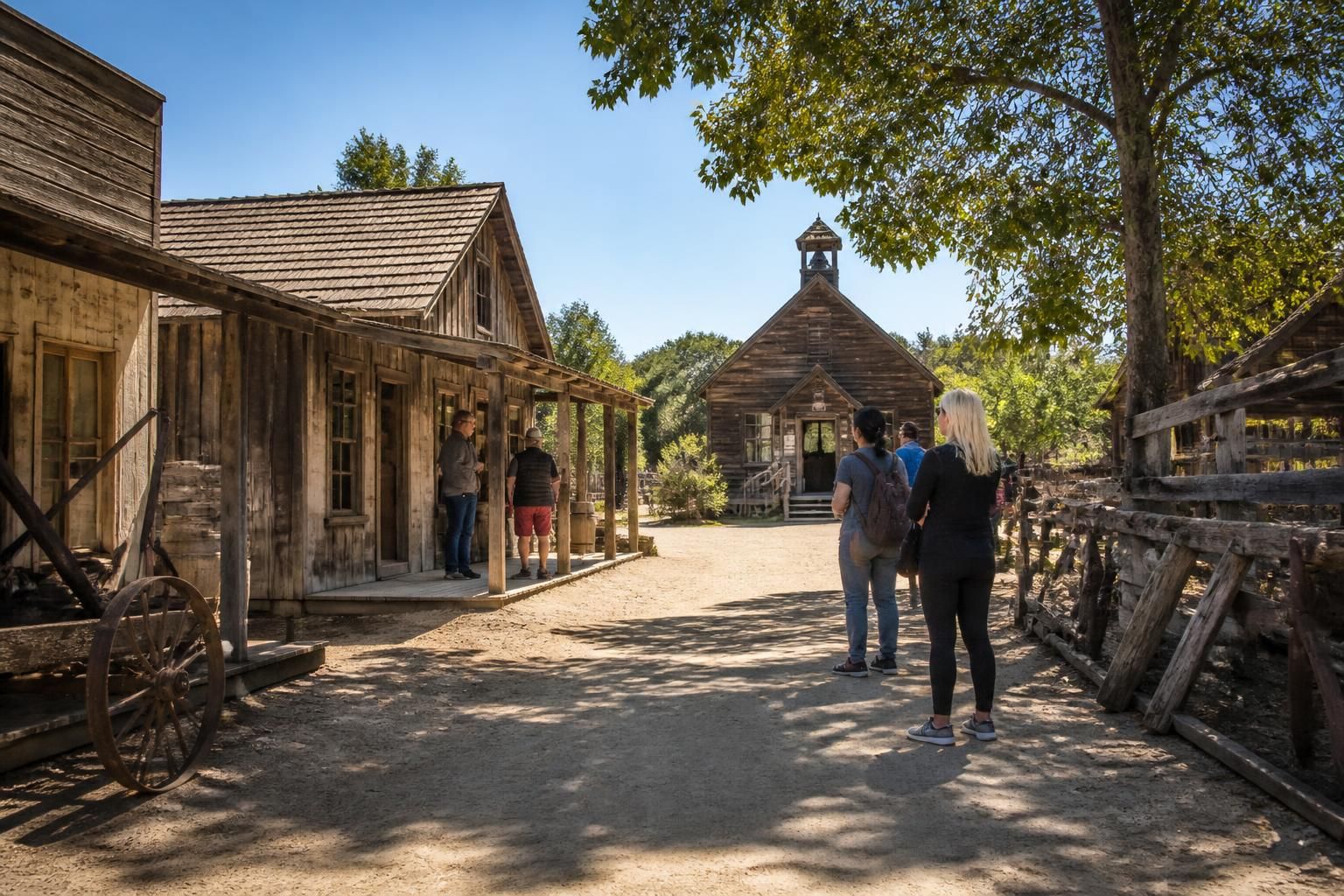
The San Joaquin County Historical Museum has debuted its long-awaited Pioneer Village, an immersive education environment designed to make regional history easier to see, discuss, and experience. Located at Micke Grove Park in Lodi, the development creates a reconstructed nineteenth-century streetscape rather than relying solely on display cases and labels.
The public grand opening was scheduled for Saturday, July 25, 2026, from 9 a.m. to 1 p.m. at 11793 Micke Grove Road. Visitors looking for practical event details could also consult the museum’s upcoming events calendar, which places the celebration within the institution’s wider public-programming schedule.
This is not simply a new set of period façades. The village has been developed as the permanent home for established museum education programs, including Valley Days and Pioneer School. Those initiatives help students connect classroom subjects with the everyday choices that shaped San Joaquin County: where people found food, how they traded goods, which tools they used, and how agriculture changed the region.
A strong living-history setting matters because it gives visitors physical context. A child can understand the function of a general store more quickly when standing in a space that suggests its scale, its shelves, and its social role. An adult visitor can better appreciate the complexity of rural commerce when the blacksmith, schoolhouse, home, and agricultural work are interpreted as connected parts of one community.
Reports surrounding the opening describe a project that has taken nearly four decades to reach this stage. That long timeline is meaningful. It shows that cultural infrastructure is rarely built through a single grant cycle or a short promotional campaign; it requires patient planning, collections stewardship, community support, and a durable educational purpose.
The timing also aligns with the museum’s 60th anniversary, making Pioneer Village both a forward-looking investment and a reflection on the institution’s continuing role. Instead of treating History as a fixed set of dates, the space makes room for questions: Who lived and worked here? What did daily routines demand? How did migration, farming, transportation, and trade influence the county’s development?
- 🏛️ A permanent learning setting: Valley Days and Pioneer School now have a dedicated environment built around active interpretation.
- 👨👩👧 A family-friendly format: visitors can move through recognizable places such as storefronts and civic spaces rather than reading one long wall panel.
- 🌾 A regional lens: the focus is not an abstract frontier story, but the social and agricultural development of San Joaquin County.
- 🎓 A school-ready resource: educators can use real objects, spaces, and demonstrations to turn historical topics into concrete observation.
For cultural organizations, this model is especially useful because it turns a museum visit into a sequence of encounters. Each building can answer one question while leading naturally to the next. The result is easier for groups to navigate, easier for educators to frame, and more memorable for visitors who may be unfamiliar with local history.
Consider a hypothetical Grade 4 group arriving for Pioneer School. Instead of starting with a lecture about nineteenth-century commerce, an educator can ask pupils to identify the goods in a store, decide which items might be imported, and compare them with products available today. That small activity introduces geography, economics, food systems, and social history without making the experience feel like a test.
The project’s value therefore lies in its ability to support active learning without requiring every visitor to arrive with specialist knowledge. A well-designed Museum Exhibit should offer entry points for the curious local resident, the school group, the multigenerational family, and the traveler exploring Lodi and Stockton-area cultural sites.
The key point is simple: Pioneer Village gives the museum a place where San Joaquin County’s past can be explored through movement, observation, and conversation—not only through passive viewing.
How the Immersive Exhibit Makes Pioneer Life Easier to Understand
An Immersive Exhibit succeeds when visitors understand why a place, object, or activity mattered—not merely what it was called. Pioneer Village has the potential to do this by presenting built environments as a connected system. A store is not only a building; it is evidence of supply networks. A school is not only a room with desks; it reveals expectations around literacy, discipline, language, and civic participation.
That distinction is important when interpreting Pioneer Life. The phrase can easily become vague or overly nostalgic if it is reduced to bonnets, wooden wagons, and picturesque architecture. Strong museum mediation places these visual elements in context, explaining the labor, uncertainty, adaptation, and unequal opportunities that existed in nineteenth-century communities.
For instance, an interpreter discussing a general store can explain how distance affected the cost and availability of goods. A visitor may recognize a sack of flour or a metal tool, but the story becomes richer when the guide connects that item to farming seasons, river and rail transport, household budgets, and changing commercial networks in California’s Central Valley.
The built environment also encourages comparison. Visitors can notice the difference between a compact historic classroom and a contemporary school, then consider how education has changed. They can examine a domestic workspace and reflect on how food preservation, washing, heating, and childcare required far more time without modern utilities. These comparisons make the visit relevant without forcing artificial parallels.
Designing Interactive Display Moments That Support Learning
The most effective Interactive Display elements do not need to be complicated screens. A replica ledger that invites visitors to calculate the cost of supplies, a map that traces goods into the county, or a tool-handling station with clear supervision can produce meaningful engagement. The goal is to turn observation into a small decision or discovery.
Digital layers can strengthen this approach when they solve a real visitor need. A QR code or mobile audio point can offer an optional 60-second story in English, Spanish, or another relevant language. It can also provide a transcript, a period photograph, or a short explanation for visitors who want more context without placing dense text on the physical exhibit.
Audio is especially useful in active outdoor heritage settings. Families often move at different speeds, school groups can be noisy, and staff cannot repeat every explanation simultaneously. A smartphone-based audio guide allows a visitor to pause, replay, or choose a themed route, such as agriculture, childhood, trade, or women’s work.
For museum teams, platforms built around personal devices can reduce the need for distributing and cleaning dedicated receivers. The method should remain simple: provide clear signs, concise audio tracks, visible transcript access, and an alternative for visitors without a smartphone. Technology should never become a barrier to the cultural experience it is meant to support.
| Visitor moment | Interpretive goal | Practical delivery method |
|---|---|---|
| 🏪 Entering a historic storefront | Explain trade and household purchasing | Short label plus optional audio story about supply routes |
| 📚 Exploring a school setting | Compare historic and modern education | Replica lesson card, educator prompt, accessible transcript |
| 🌾 Viewing farming equipment | Connect tools to agricultural labor | Demonstration schedule and close-up object interpretation |
| 🧭 Moving between buildings | Maintain visitor orientation | Simple map, numbered stops, and mobile route guidance |
A practical example helps illustrate the difference. Imagine a family visiting the village with two children and one grandparent. The children choose a short “daily chores” activity, the grandparent reads a larger-print panel, and the parents listen to a two-minute audio segment while waiting near the next stop. One location has served three different needs without fragmenting the shared visit.
That is the standard worth aiming for: interpretation that remains historically grounded while allowing visitors to choose their level of depth. The museum does not need to turn every building into a digital attraction. It needs to make the stories legible, inclusive, and easy to explore at a human pace.
Immersion works when each interaction reveals a relationship: between a tool and a task, a building and a community, or a personal story and the wider development of the county.
Video can extend that learning before or after a visit, particularly for teachers preparing a class or families deciding which activities to prioritize. The strongest companion videos introduce the site’s purpose and encourage visitors to look more carefully once they arrive.
Pioneer Village Strengthens Cultural Heritage Education for Schools and Families
The educational role of Pioneer Village is central to its value. Museums increasingly compete for limited field-trip time, transport budgets, and teacher attention. A site must therefore offer more than a pleasant outing; it must provide clear links to learning objectives, reliable group logistics, and activities that children can recall after returning to the classroom.
As the new home of Valley Days and Pioneer School, the village offers a stable framework for those needs. A dedicated environment allows staff to schedule demonstrations, set group rotations, and use buildings as learning stations. Rather than improvising around a temporary gallery, educators can build programs that improve over time through observation and feedback.
Cultural Heritage education is most durable when it connects broad themes to recognizable places. San Joaquin County’s development includes agriculture, migration, commerce, waterways, labor, and community institutions. These themes are large, but they become manageable when pupils can see how a household, shop, school, or farm depended on them.
One useful approach is to structure a school visit around roles. A group might be asked to investigate the daily decisions of a farmer, merchant, teacher, or young student. Each group gathers evidence from a different place in the village, then shares what it found. This creates a clear reason to observe details instead of rushing from building to building.
Making Local History Relevant Without Simplifying It
Local History can sometimes feel less important to students than national events because it appears close and familiar. In reality, that proximity is its strength. When learners understand that their own region was shaped by water access, food production, transportation corridors, and changing populations, historical processes become easier to recognize in the world around them.
Educators should avoid presenting pioneer-era life as a single experience. Different communities encountered California’s economic and social changes in different ways. A responsible program acknowledges that opportunity, hardship, land use, labor, and access to institutions were not shared equally. This does not make the material harder to teach; it makes the interpretation more accurate and more respectful.
For a teacher, preparation can remain straightforward. Before arrival, share three vocabulary words, one historic image, and one question such as: “What would make it difficult to run a household without electricity, refrigeration, or a nearby supermarket?” After the visit, ask students to compare their predictions with the evidence they observed.
- 📝 Before the visit: introduce the county map and define a small set of period terms.
- 🔎 During the visit: assign a focused observation task at each historic setting.
- 🗣️ After the visit: ask groups to explain one object or building in their own words.
- 📱 For accessibility: provide audio, written transcripts, visual prompts, and calm pacing options.
Accessibility should be treated as part of program design, not as a last-minute adjustment. Captions and transcripts support visitors who are deaf or hard of hearing, but also help teachers prepare material in advance. Short audio segments assist people who prefer listening, while large-print or plain-language versions make interpretation more welcoming for a broader public.
Visitor information can also help people plan a full day in the area. The Pioneer Village grand opening listing gives event-focused travelers a practical reference point, while museum staff can use similar pages to clarify arrival times, parking, accessibility, and program highlights.
For organizations developing their own family experiences, lessons from other institutions can be useful. This guide to must-see museum attractions highlights how memorable museum moments usually combine a clear story, a visible object, and a reason for visitors to participate.
The educational advantage of Pioneer Village is not nostalgia: it is the opportunity to turn abstract lessons about work, community, and change into observations students can test for themselves.
Visitor Flow and Smart Audio Can Improve the Pioneer Village Experience
A new heritage area needs more than compelling buildings. It must be easy to navigate, especially during an opening period when visitors may arrive with different expectations and varying levels of familiarity with the museum. Clear orientation is a service: it reduces uncertainty, prevents crowding, and gives guests confidence that they will not miss the central stories.
Pioneer Village is well suited to a route-based experience. Visitors can begin with a simple map and choose a 20-minute overview, a 45-minute family circuit, or a deeper thematic itinerary. Signage should show where a route starts, how long it takes, and whether a stop involves seating, uneven surfaces, demonstrations, or high activity levels.
Audio technology can support this format without competing with museum staff. At an outdoor site, ambient noise varies throughout the day. A docent may be speaking to one group while another family is waiting nearby. Short, location-based audio content allows the second group to continue learning while staff focus on live discussion and object handling.
For museums, guides, tourism offices, and event organizers, smartphone audio is often the most scalable option. Visitors already carry a familiar device, and teams can update narration, add translations, or change route order without replacing hardware. Solutions such as Grupem are designed to help professionals deliver guided audio through participants’ own phones, which can be particularly practical for temporary demonstrations, crowded opening days, or outdoor paths.
Building an Audio Route That Respects the Site
An audio route does not need to narrate every object. In fact, too much audio can make an experience feel controlled and tiring. A better approach is to select a limited number of high-value stops, give each one a precise purpose, and allow silence between them so visitors can observe the physical setting.
For Pioneer Village, a useful route might start with an orientation message at the entrance, followed by focused clips at the store, school, domestic setting, and agricultural area. Each track should normally stay between one and three minutes. It should open with a concrete detail, explain why it matters, and end by directing attention to something visible nearby.
For example, a store audio track could begin with a fictionalized but historically grounded shopping list: flour, lamp oil, fabric, nails, and coffee. It could then explain how access to those items depended on transportation and seasonal supply. The visitor immediately has something to look for and a reason to think about the connections between the village and the wider region.
Good implementation also requires a fallback plan. Printed route cards, staff guidance, and visible stop numbers must remain available. Visitors should never be required to download an app just to understand an exhibit, and public Wi-Fi should not be the only route to essential content.
Short video examples can help museum teams evaluate pacing, speaker tone, and crowd management before recording their own material. They are most useful when treated as references for visitor comfort, not templates to copy.
The following operational priorities are relevant for a site like Pioneer Village:
- 🎧 Keep audio concise: one clear idea per stop is easier to remember than a dense historical lecture.
- 📍 Use visible stop markers: visitors should know exactly when a track is relevant.
- 🗺️ Offer route choices: families, schools, and independent adults do not move at the same speed.
- ♿ Provide equivalent access: transcripts, captions, printable content, and staff support should accompany digital tools.
- 🔄 Review real usage: observe where guests pause, skip, or ask for help, then revise content accordingly.
These small choices protect the essential quality of a historic site: the feeling that visitors are discovering a place, rather than being processed through an attraction. Technology is most effective when it makes the physical environment easier to understand and never distracts from it.
What Pioneer Village Offers San Joaquin County Tourism and Museum Practice
Pioneer Village adds a distinctive experience to the cultural offer of San Joaquin County. Heritage destinations can encourage longer stays, support educational travel, and give residents a reason to revisit a familiar museum. Their impact is strongest when they are connected to nearby parks, downtown areas, food businesses, seasonal events, and regional tourism information.
The project also demonstrates why permanent interpretive environments matter. Temporary exhibitions are valuable for flexibility and topical relevance, but a reconstructed village can become part of an institution’s identity. It gives audiences a simple reason to return with different people at different ages: a class trip, a grandparents-and-grandchildren outing, or a visitor’s first exploration of the county.
For tourism professionals, the message should remain accurate and specific. Marketing should describe Pioneer Village as a living-history education space and explain what visitors can actually do there. Broad claims about “stepping back in time” are less useful than practical information about guided programs, open buildings, demonstrations, accessibility, and the stories represented on site.
The project is also a reminder that visitor experience begins before arrival. A clear event page, consistent opening hours, up-to-date directions, and useful photographs help families decide whether the visit fits their day. The regional grand opening calendar entry is an example of the kind of partner information that can extend visibility beyond the museum’s own channels.
Using the New Museum Exhibit as a Sustainable Community Resource
After the opening celebration, the most important work will be maintaining relevance. That involves refreshing school activities, training interpreters, evaluating visitor feedback, and ensuring that the village’s stories remain connected to the wider history of the region. A successful heritage area is never fully finished; it is carefully maintained, tested, and improved.
Staff can collect useful feedback with three simple questions: Which stop was most memorable? Was any information difficult to find or understand? What topic would visitors like to explore next? These responses are more actionable than a generic satisfaction score because they identify gaps in interpretation and wayfinding.
Partnerships can also add depth. Local schools can contribute student observations. Agricultural organizations can discuss the evolution of farming. Community historians can help identify overlooked stories and sources. Tourism partners can promote the site as part of a day itinerary without reducing it to a photo opportunity.
Other museum projects show the value of pairing place-based storytelling with clear visitor support. For example, the discussion around museum resilience and visitor engagement underlines a practical point relevant here: cultural sites need experiences that are meaningful on location and easy to understand before visitors arrive.
A realistic measure of success is not only attendance on a grand-opening day. It is whether teachers rebook, whether local families return, whether visitors can explain something new about the county, and whether the museum has built an adaptable platform for future programs. Those outcomes depend on consistent interpretation and operational care.
Pioneer Village has a particular advantage because it can host both scheduled learning and self-guided discovery. A weekend visitor may spend fifteen minutes investigating a storefront; a school group may spend an hour rotating through activities; a seasonal event may add costumed interpretation or food-history demonstrations. The physical setting can support these formats without losing its core purpose.
The enduring opportunity is clear: by combining thoughtful historical interpretation, practical visitor services, and accessible digital support, Pioneer Village can make San Joaquin County’s cultural heritage useful to residents and visitors long after the opening-day celebration.
When did Pioneer Village open at the San Joaquin County Historical Museum?
The grand opening took place on Saturday, July 25, 2026, from 9 a.m. to 1 p.m. at the San Joaquin County Historical Museum in Micke Grove Park, Lodi.
What is Pioneer Village designed to offer visitors?
It is a living-history education space with recreated nineteenth-century settings that support hands-on learning about daily life, trade, schooling, agriculture, and the development of San Joaquin County.
Which museum programs are based in Pioneer Village?
The village is the permanent home of the museum’s Valley Days and Pioneer School programs, both of which use active interpretation to support student learning.
How can digital audio improve a visit to a historic village?
Short, optional smartphone audio tracks can provide context at key stops, support multiple languages and transcripts, and help visitors explore independently without replacing live museum staff.
