
⏱️ Short on time? Here is what matters:
- 🔎 Two Renoir Paintings remain missing after a rapid pre-dawn break-in at the Renoir Museum in Cagnes-sur-Mer.
- 🚨 The alarm activated at 5:48 a.m., and police arrived within about five minutes, leading the thieves to abandon two works in the garden.
- 🏛️ The case highlights a practical security issue for smaller cultural sites: valuable collections need layered protection, not only alarms.
Four Renoir Masterpieces Stolen from the French Museum in a Three-Minute Heist
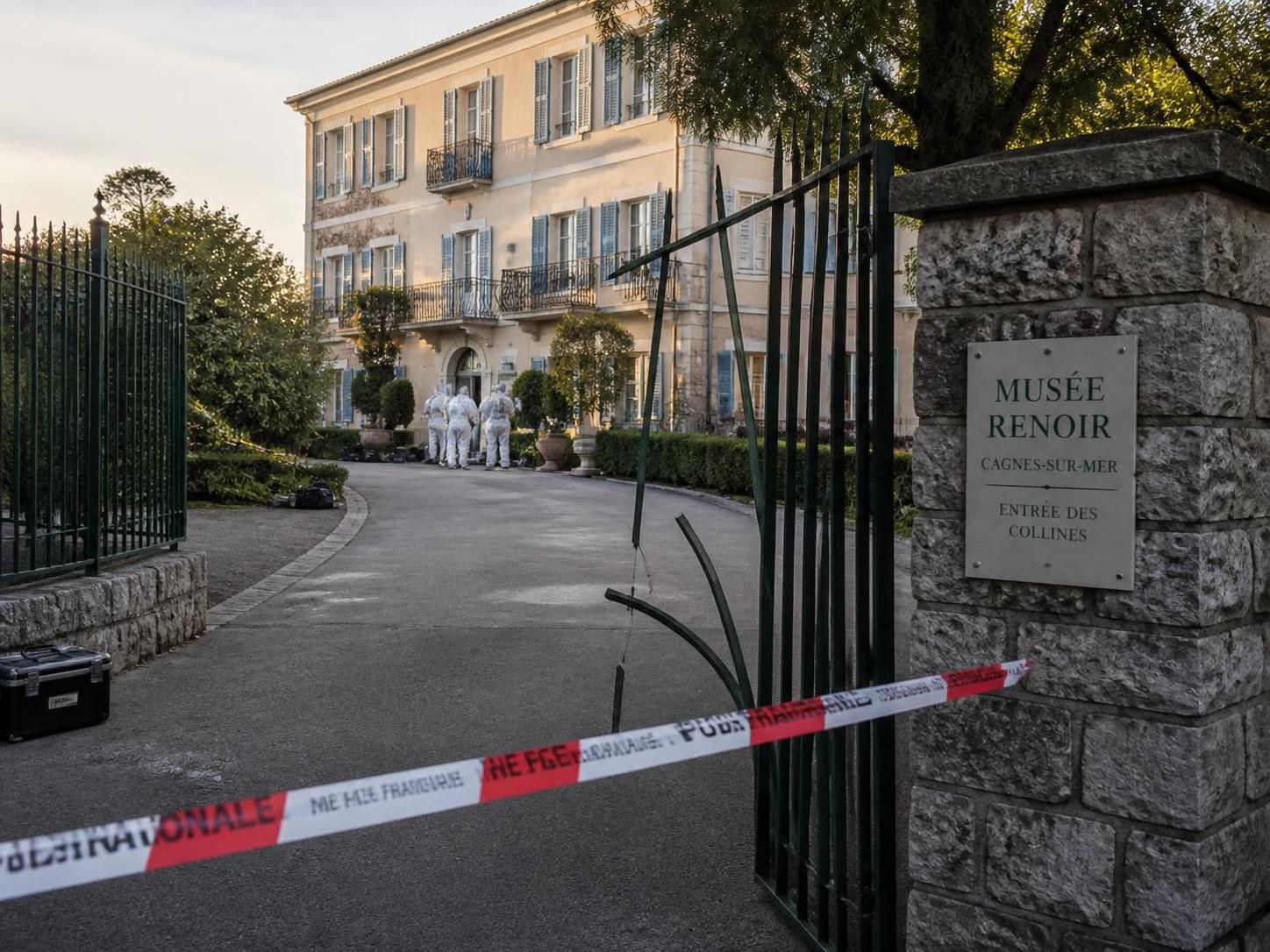
The theft at the Renoir Museum in Cagnes-sur-Mer has placed one of the French Riviera’s most personal artist houses at the centre of a major Art Crime investigation. Two intruders reportedly entered the property early on Tuesday, cutting through a garden fence before gaining access through a ground-floor window. Their objective was clear: remove high-value Renoir works quickly and leave before authorities could secure the site.
The operation lasted less than three minutes, according to the regional prosecutor’s office. That time frame is significant. It suggests preparation, familiarity with the exterior layout, and a deliberate selection of works that could be detached and carried without creating a lengthy disturbance. The thieves allegedly cut the clips holding the frames rather than trying to remove larger display structures.
The museum occupies Pierre-Auguste Renoir’s final home, where the artist lived until his death in 1919. It is not simply a venue exhibiting paintings; it is a heritage site connected to the painter’s daily life, studio practice, Mediterranean surroundings, and late period. Located between Nice and Cannes, the property is one of Cagnes-sur-Mer’s most recognisable cultural attractions and holds particular importance for visitors seeking a more intimate alternative to major national museums.
Officials said that four works were initially taken. The group’s escape was interrupted after the building’s alarm system sounded at 5:48 a.m. Police were at the museum around five minutes later. That response appears to have forced a rushed departure, leaving two paintings behind in the museum garden. The immediate recovery of those works reduced the scale of the loss, but it did not prevent the disappearance of two important pieces.
| Artwork | Status after the Heist | Key Context |
|---|---|---|
| 🎨 Portrait of Madame Pichon | Recovered in the garden | One of two Renoir works abandoned during the escape. |
| 📖 Coco Reading | Recovered in the garden | Previously displaced during World War II and returned to France in 1994. |
| 🖼️ Portrait of Madame Colonna Romano | Missing | Subject of the active national search. |
| 💧 Young Woman at the Well | Missing | Recorded as Nazi-looted art before its recovery and return to France after the war. |
The reported value of the four targeted works was estimated by Cagnes-sur-Mer Mayor Bryan Masson at around €9 million, or approximately $10.5 million. Valuation should not be mistaken for liquidity, however. A famous Painting with established provenance is exceptionally difficult to sell legally, because reputable dealers, auction houses, insurers, and museums check ownership records closely.
Coverage from the BBC’s report on the Renoir Museum break-in confirms the core sequence of the attack: forced access, four works removed, and two abandoned as the police response tightened. The details point to an offence designed for speed rather than concealment over time. That distinction matters for investigators, because rapid thefts often leave behind physical evidence at points of entry, frame fixings, garden routes, or transport access points.
For museum professionals, the event demonstrates that a small collection can be a high-value target even when it is not located in a large urban institution. What makes a site attractive to criminals is not visitor volume but a combination of recognisable works, predictable routines, limited staff coverage, accessible perimeter areas, and a feasible escape route.
The central fact remains stark: four Renoir Masterpieces were Stolen, two were recovered almost immediately, and two remain Missing from a museum that exists to preserve the artist’s legacy.
Why the Missing Renoir Paintings Carry a Complex History Beyond Their Market Value
The two Missing works are not merely valuable objects in a collection inventory. Their histories connect the current Art Theft to the longer European record of wartime looting, restitution, cultural memory, and provenance research. That context will shape the Recovery effort because each recognised work carries photographs, archives, ownership records, catalogue references, and a distinctive place in the public history of Renoir’s art.
Young Woman at the Well, one of the two paintings that has not been recovered, is believed to have been looted by the Nazis during World War II. It was located in Bavaria in 1949 and returned to France. The French Culture Ministry’s records on spoliated art preserve this history. Its disappearance in the current case is therefore particularly troubling: a work that had already survived wartime displacement has once again been removed from its lawful public setting.
Coco Reading, which was recovered in the garden, also had a complicated wartime trajectory. Historical records indicate that a German officer in Paris transferred it to a soldier under instructions to take it to Germany at the end of the war. The work later passed through a German priest and entered a Berlin museum before Germany returned it to France in 1994. Its recovery after this break-in avoids a second chapter of uncertainty for a painting already marked by forced displacement.
Why does this provenance matter in practical terms? Each documented stage makes illicit resale more difficult. A thief cannot simply introduce a famous Renoir onto the conventional market. Auction specialists compare physical works to catalogue raisonné records, museum images, restoration reports, published exhibitions, and stolen-art databases. Even when a painting has been removed from public view for years, its image and ownership trail remain available to professionals.
Art Theft is not the same as a legitimate private sale
A buyer who knowingly acquires a stolen artwork faces substantial legal and financial risk. The work can be seized, the transaction can trigger criminal scrutiny, and the buyer may lose both the artwork and the money paid. That is why high-profile cultural property is sometimes stolen for reasons that are not immediately visible: attempted ransom, leverage in a separate criminal negotiation, fraudulent collateral, or a pre-arranged illicit transaction.
Art-loss experts have stressed that Renoir’s fame makes the Missing Paintings extremely hard to monetise openly. Unlike gold, which can be melted down, or gems, which can be recut, a Renoir canvas retains its visual identity. Removing a label or changing a frame cannot erase the artist’s brushwork, subject, dimensions, condition marks, and extensive documentation.
The case also requires careful public communication. Museums, local authorities, and media outlets need to circulate accurate images and descriptions without encouraging uncontrolled online speculation. A false claim of ownership or an incorrect image can complicate the work of law enforcement. The most effective public awareness is factual: correct titles, dimensions where available, confirmed theft status, and instructions to contact authorities if suspicious information emerges.
For cultural venues, the incident is a reminder that provenance is not administrative background. It is part of the object’s protection system. A well-maintained digital record can assist identification after a loss, support insurance claims, and help border agencies or market professionals recognise a work immediately.
Visitors can also benefit from this approach. A museum audio tour that explains an artwork’s history, including restitution and conservation, gives the public a fuller understanding of why protection matters. Digital interpretation should never replace secure collection management, but it can make cultural responsibility visible and understandable.
A documented past turns every verified archive, photograph, and catalogue entry into a practical tool for Recovery.
French Museum Security Lessons After the Renoir Art Crime
This French Museum Heist comes after renewed debate about security across the country’s cultural network. France has world-famous national institutions, but it also has numerous municipal museums, historic houses, chapels, archives, and local collections. These sites often hold objects of immense artistic or historical value while operating with fewer guards, smaller technical teams, and less capital for upgrades.
The Renoir Museum reportedly had twelve works by the artist. A collection of that scale can create a false sense of reduced risk: it may be less crowded and less visibly prestigious than a major Paris institution, but individual paintings can still attract organised criminals. The relevant question is not whether a site resembles the Louvre. It is whether its perimeter, access points, detection tools, response procedures, and staff routines are aligned with the value and vulnerability of the objects on display.
The alarm did perform an essential function in this case. It activated rapidly, and the police response reportedly arrived within five minutes. That sequence likely explains why Portrait of Madame Pichon and Coco Reading were abandoned. Yet the loss of two other works shows that alarms alone are not enough when offenders can reach and detach objects within minutes.
- 🔐 Protect the perimeter: fences, garden gates, service routes, lighting, and exterior cameras should be assessed as seriously as gallery doors.
- 🪟 Secure vulnerable openings: ground-floor windows need reinforced hardware, vibration detection, glass protection, and monitoring linked to a response plan.
- 🖼️ Use object-level detection: frame sensors, tamper alerts, and secure hanging systems can identify removal before a thief reaches the exit.
- 📞 Test escalation routes: an alarm matters only if staff, monitoring providers, and police know precisely what action follows.
- 🎧 Plan visitor communication: museums should be able to inform tour groups calmly during closures without spreading unverified details.
A useful framework is layered defence. A criminal should encounter multiple barriers: delayed exterior entry, protected openings, object-level alerts, camera verification, and swift escalation. Any single layer can fail, but several independent layers increase the chance that the attempt is interrupted before a work leaves the premises.
Small institutions do not need to begin with expensive, highly complex systems. They can start with a practical risk assessment. For example, a museum manager can walk the site at dawn and after closing, identify blind spots, check whether shrubs obscure windows, verify that emergency contact lists are current, and review how quickly an alarm signal becomes a real response. These basic checks often reveal weaknesses that are inexpensive to correct.
Technology must also respect visitor experience. Heavy-handed controls can make a historic artist’s home feel hostile, while poorly placed devices can distract from the works. The goal is discreet security that preserves both safety and atmosphere. Intelligent sensors, unobtrusive cameras, protected mounts, and accessible visitor guidance can coexist when included early in the museum’s operational planning.
The wider discussion has intensified since the previous year’s Louvre crown-jewel theft. A related analysis of museum security after the Louvre heist shows why institutions must balance physical systems, staff procedures, and crisis communication. The Renoir case reinforces that this balance is relevant far beyond Paris.
Fast police arrival limited the damage; layered prevention is what reduces the chance of the next attack succeeding.
How Smart Visitor Communication Supports Recovery and Museum Resilience
When a museum closes suddenly after an Art Crime, its immediate priority is evidence preservation and cooperation with investigators. Yet the public-facing consequences must also be managed. Visitors may have booked guided tours, school groups may be travelling to the venue, and local tourism offices may be recommending the site. Clear information prevents confusion while ensuring that no operational details are disclosed.
The Renoir Museum was closed as the investigation unfolded. In a destination such as the French Riviera, where travellers frequently plan packed cultural itineraries, a closure affects more than one building. Hotels, guides, transport providers, and nearby attractions may all receive questions. A reliable message should state only what is confirmed: the venue is closed, authorities are investigating, booked visitors should use a designated contact channel, and reopening information will be published through official channels.
For museums and guided-tour operators, smartphone-based audio communication can make that process more efficient. A guide can deliver a verified update directly to a group through a secure audio channel instead of asking visitors to gather around a noticeboard. This is especially useful for multilingual groups, outdoor waiting areas, accessibility needs, or large parties where spoken announcements are easily missed.
Use audio technology for continuity, not for speculation
Digital tools should not turn a criminal investigation into entertainment. They should help institutions provide accurate alternatives. If a gallery is closed, a guide might offer an adjusted exterior interpretation of Renoir’s life in Cagnes-sur-Mer, direct visitors to another approved cultural site, or provide an audio segment about conservation and provenance using only validated information.
Consider a hypothetical local guide, Claire, who is leading a group of twenty visitors from Nice. Her itinerary includes the museum shortly after a security incident. Rather than improvising a confusing explanation at the gate, she sends a brief verified audio update, redirects the group to a nearby viewpoint associated with Renoir’s landscape, and shares a pre-prepared interpretation of his late work. The visit remains respectful, useful, and organised without obstructing the authorities’ work.
This model also improves inclusion. Visitors with visual impairments, hearing preferences, limited mobility, or limited familiarity with the area benefit from clear, device-based guidance. A modern audio solution can distribute instructions, translated explanations, meeting points, and alternative routes without requiring additional loudspeakers or specialist hardware.
Digital visitor tools require governance. Institutions should define who can publish an alert, which channels are official, how updates are timestamped, and when outdated notices are removed. During a sensitive event, inconsistent messaging damages trust. A single operational dashboard and approved message templates can prevent fragmented communication among reception staff, guides, tourism partners, and municipal services.
The public can follow reporting such as this account of the mayor’s response to the theft, but museums should avoid relaying rumours from social platforms. Investigative facts change as evidence is verified. Communication must be timely without pretending to know more than authorities have released.
In a disruption, the best visitor experience is not a polished script; it is a clear, accessible, verified next step.
Recovery of the Missing Renoir Masterpieces Depends on National and International Coordination
The Marseille prosecutor opened an investigation into theft by an organised gang, while France’s national office for trafficking in cultural goods joined the response. This level of involvement reflects the likely movement of stolen cultural property beyond the immediate region. A work removed from Cagnes-sur-Mer could be concealed locally, transported across France, or moved toward international networks. Recovery efforts therefore depend on speed, accurate records, and coordination across several sectors.
Law enforcement will examine the physical route used by the suspects: the cut fence, the ground-floor entry, the garden, any nearby vehicle access, and traces left during the rushed retreat. The two recovered works may provide important forensic material. Their frames, surfaces, handling marks, or locations where they were dropped could help investigators reconstruct the sequence of events.
Market monitoring is equally important. Auction houses, galleries, restorers, insurers, logistics companies, border officers, and collectors may all encounter information relevant to a recovery. Reputable professionals understand that a high-profile stolen Renoir cannot be treated as an ordinary private offer. The lack of a lawful provenance chain is itself a major warning sign.
Historical cases show that recovery can take time. The goal is not merely to find a canvas but to establish lawful custody, protect its condition, and return it to the institution safely. Paintings moved in haste can suffer from bent stretchers, surface abrasion, moisture exposure, poor storage, or temperature shifts. Once recovered, each artwork will need a professional conservation assessment before it can be displayed again.
There is also a broader tourism dimension. Art theft damages public confidence when visitors feel that heritage sites are insufficiently protected. Conversely, a transparent recovery process can demonstrate institutional responsibility. Museums do not need to reveal sensitive security arrangements, but they can explain how collections are documented, protected, conserved, and made accessible.
For cultural organisations reviewing their own preparedness, a concise incident checklist is valuable:
- 📋 Confirm that every priority object has current photographs, dimensions, condition notes, and ownership documentation.
- 📱 Ensure that staff and guides can send approved closure or rerouting messages immediately.
- 🔎 Review alarm response times and conduct realistic tests involving external access points.
- 🧩 Establish direct contacts with local police, insurers, conservation specialists, and cultural-property advisers.
- 🎙️ Prepare accessible audio updates for visitors when a gallery, route, or building must close unexpectedly.
The case has revived attention around the vulnerability of smaller museums, particularly those with iconic names but limited budgets. Funding should not be understood only as money for cameras or locks. It also supports staff training, collection documentation, maintenance, emergency exercises, accessible communication, and professional partnerships. These everyday capabilities create resilience long before a crisis occurs.
The two recovered works demonstrate that swift intervention can matter. The two Missing Paintings demonstrate that speed alone cannot compensate for every weakness in a determined attack. The most credible response combines criminal investigation, market vigilance, conservation planning, and practical investment in museum operations.
The Recovery of the remaining Renoir works will depend on making their fame, documentation, and unmistakable identity impossible for traffickers to turn into profit.
Which Renoir paintings are still missing?
The paintings still missing are Portrait of Madame Colonna Romano and Young Woman at the Well. Two other works, Portrait of Madame Pichon and Coco Reading, were recovered in the museum garden.
Where did the Renoir Museum heist take place?
The theft took place at the Renoir Museum in Cagnes-sur-Mer, a French Riviera town located between Nice and Cannes. The museum is housed in Pierre-Auguste Renoir’s final home.
How quickly did police respond to the museum alarm?
The alarm reportedly sounded at 5:48 a.m., and police arrived about five minutes later. The rapid response appears to have forced the suspects to abandon two of the four stolen works.
Why are stolen Renoir masterpieces difficult to sell?
Recognised Renoir paintings have extensive provenance records, published images, museum documentation, and strong market scrutiny. Their visibility makes legitimate resale extremely difficult and increases the likelihood that suspicious offers will be reported.
