
Peu de temps ? Voici l’essentiel à retenir :
✅ Hasbro’s new AI clause for child actors on Peppa Pig has ignited a significant ethical debate.
✅ The animation industry must navigate the balance between digital innovation and protecting young performers.
✅ Ensuring transparent and responsible AI integration is critical to the creative process in entertainment.
✅ Avoid contractual terms that indefinitely transfer voice rights, particularly for minors.
How Peppa Pig’s AI Decision Challenges Traditional Animation Industry Practices
The Peppa Pig animation studio recently introduced a groundbreaking but contentious AI clause into its contracts with child actors. This move requires young performers to assign their voice rights for use with artificial intelligence technologies, enabling the company to digitally reproduce their voices without further consent. While AI integration is increasingly prevalent in various sectors, this particular decision has thrust the animation industry into a rigorous ethical debate about the long-term implications of technology utilization within children’s entertainment.
Historically, voice acting in animation has relied exclusively on human performers, especially when involving children, given the unique qualities and natural inflections their voices bring to characters. The creative process thrived on these authentic nuances. However, the introduction of AI-generated voices represents a shift towards digital innovation, offering studios potential cost savings and production flexibility. Yet, the use of artificial intelligence to synthesize child actors’ voices—in exchange for lifetime usage rights—pulls into question the balance between technological advancement and ethical responsibility.
Numerous industry professionals express concern that such clauses could set precedent not only for remote voice duplication but for broader applications, including extensive commercial exploitation. Legal experts and advocacy groups emphasize that children, due to their developmental stage, cannot provide legally informed consent, making parental approvals insufficient as a blanket authorization. This nuance is critical when considering that a child’s vocal identity impacts their future professional opportunities and personal privacy.
An open letter backed by nearly 1,000 signees, orchestrated by the Agents of Young Performers Association, voices explicit opposition to such contractual terms. It stresses the irreversible nature of AI voice cloning and the potential ethical violations this practice represents within family-friendly animation franchises like Peppa Pig.
While Hasbro, the parent company that acquired Peppa Pig in 2019, acknowledges the evolving nature of AI standards and pledges transparency, the industry awaits more structured guidelines to ensure the responsible integration of AI tools without compromising child performers’ rights or the creative integrity intrinsic to animation.
Industry Adaptation and the Need for Clear AI Governance
The incorporation of AI into animation studios heralds a technological transformation reverberating through production pipelines worldwide. These innovations promise creative efficiencies and enriched storytelling capacity. However, the Peppa Pig case exemplifies the urgent need for clear governance frameworks that mediate advancements with protective measures—especially concerning minors.
Studios adopting AI-driven voice replication seek reduced studio time, budget optimisation, and the ability to generate fresh content without the constraints of actor availability or scheduling conflicts. Such efficiencies appeal strongly in today’s fast-paced entertainment environment. Still, embracing AI must come with regulatory safeguards that respect performers’ rights. Particularly in the context of young actors, this means establishing contract clauses that are transparent, time-bound, and tailored to the performers’ evolving professional status.
Animation companies can benefit from engaging with stakeholders, including legal bodies, unions, and ethics committees, to craft AI usage policies that are robust and fair. Through collaboration, it is possible to create standards that support both ambitious digital innovation and the safeguarding of the human elements that make animation emotionally resonant and authentic.
As the animation industry grapples with this transformation, Peppa Pig’s AI decision acts as a case study emphasizing the importance of balancing technical possibility with ethical prudence. This equilibrium is critical to sustainable creative output and maintaining public trust.
Assessing the Impact on Child Voice Actors and Guardians
The contractual imposition of AI-related voice rights on child actors introduces complex personal, legal, and psychological considerations. Unlike adult artists who can weigh the consequences of relinquishing long-term voice rights, children are developmentally limited in understanding the ramifications of lifetime digital usage of their voices. Guardians and agents face the challenging responsibility of making decisions that may affect the child’s future identity and earnings.
Experts in child development and entertainment law highlight that consent in such contexts should be dynamic, revisable, and subject to ongoing clarification as children mature. A one-off signature allowing indefinite AI use fails to meet these standards. Additionally, there is the risk that AI-generated voices could be used in unintended ways, from unauthorized commercials to messaging that may not align with the child’s or family’s values.
This concern is not merely theoretical. With the rise of voice cloning technologies in recent years, instances of unauthorized AI voice replication have heightened awareness about safeguarding performers’ rights. Consequently, the Ethical debate around Peppa Pig’s approach extends beyond animation to broader entertainment and technology sectors, where voices and personal data increasingly become commodified digital assets.
- 🛡️ Ensure contracts explicitly limit AI use to specific projects and timeframes.
- 🧑⚖️ Advocate for child-specific clauses reviewed periodically with informed consent.
- 🔍 Maintain transparency concerning the types of AI applications permitted.
- 👂 Involve independent ethics committees or legal representatives during contract negotiations.
- 📚 Educate guardians and young performers on AI’s potential professional and personal impacts.
Ensuring these protections fosters trust between studios, families, and the industry at large, reinforcing a child-centered approach that prioritizes welfare and autonomy alongside innovation.
Navigating AI’s Role in the Animation Studio Creative Process
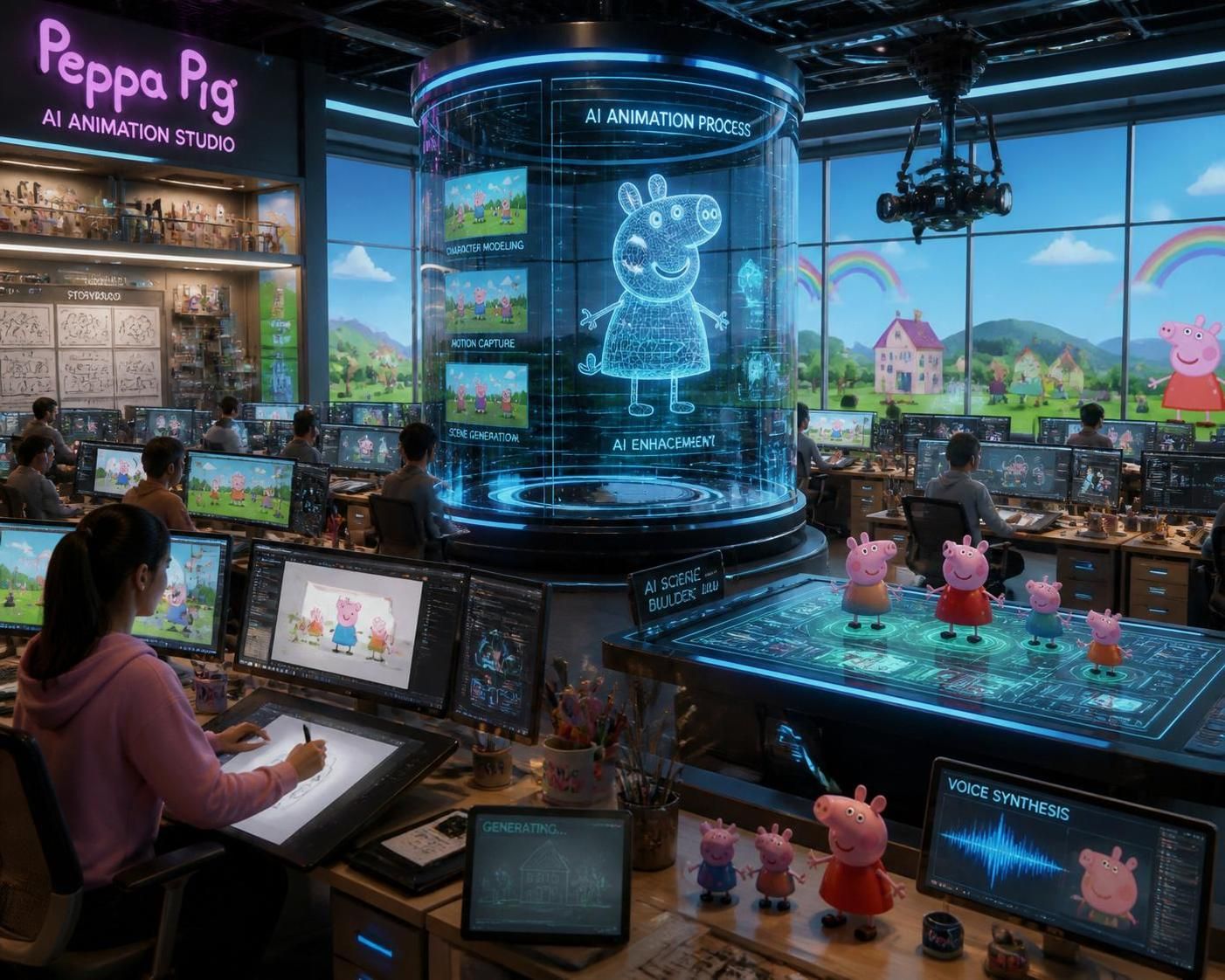
The integration of AI technology within animation studios influences every step of the creative workflow—from script drafting and character design to voice recording and post-production. In shows like Peppa Pig, AI has the potential to streamline tasks such as generating temporary voice tracks, automating lip-sync, and even enhancing sound effects.
However, partnership between human creativity and AI tools must be approached deliberately. The creative process remains grounded in the authenticity and spontaneity of human performance, qualities that technology cannot fully replicate. Hence, studios must balance the use of AI for efficiency with retaining the emotional depth and nuanced delivery unique to child actors.
For example, instead of fully replacing vocal performances with AI-generated content, studios might employ AI as a supplement—enabling voice actors to extend or modify their work with greater flexibility. This approach can reduce recording sessions and ease logistical challenges without diminishing the artistic input of performers.
A practical framework involves:
- Setting clear limits on AI’s usage scope within production.
- Preserving original voice recordings for archival integrity.
- Using AI outputs only with performer or guardian approval on a case-by-case basis.
- Training studio staff on ethical AI application and technological constraints.
- Monitoring audience reception concerning AI involvement in beloved franchises.
Such guidelines ensure that while innovation advances, it does so with respect for creative integrity and performer rights—a critical balance for legacy franchises like Peppa Pig.
Real-World Insights: How Peppa Pig’s AI Decision Shapes Entertainment Technology Trends
Peppa Pig’s AI clause controversy reflects a broader tension in entertainment between embracing technological evolution and maintaining ethical norms, especially where young talent is concerned. As one of the most recognized children’s brands worldwide, Peppa Pig serves as a bellwether for how AI might redefine voice acting and content production going forward.
The repercussions of Hasbro’s approach extend beyond animation, affecting adjacent industries like gaming, audiobooks, and interactive experiences that increasingly rely on digital voices. For instance, voice cloning initiatives promise to revolutionize localization and accessibility but require comprehensive policies to prevent exploitation and abuse.
In light of these dynamics, studios and technology providers are encouraged to:
- ⚖️ Develop AI policies collaboratively with unions, ethicists, and child advocates.
- 📊 Implement transparent reporting on AI’s impact on production quality and workforce.
- 🌐 Engage with audiences on the ethical use of AI in beloved franchises.
- 🔗 Reference industry case studies such as the Peppa Pig AI clauses to inform future decisions.
| Aspect 🎯 | Potential Benefit 🌟 | Key Challenge ⚠️ |
|---|---|---|
| Cost Efficiency 💰 | Reduced recording and production expenses | Risk of undervaluing human talent and creativity |
| Content Availability 📅 | Ability to produce new episodes rapidly | Possible detachment from authentic performances |
| Performer Rights 👩🎤 | Clearer management of voice usage | Ethical dilemmas around long-term consent |
| Audience Trust 🤝 | Innovation perceived positively if transparent | Potential backlash impacting brand reputation |
Understanding these factors aids professionals across entertainment sectors in navigating the intersection of technology and human creativity.
This case study on Peppa Pig’s AI voice rights provides essential lessons for studios seeking balanced AI adoption.
Legal Frameworks and Future Directions for AI in Children’s Entertainment
The Peppa Pig AI contract controversy underscores the pressing need to evolve legal frameworks that accommodate AI developments while safeguarding child performers. Governments, industry bodies, and advocacy groups must collaborate to formulate regulations that define:
- 📝 Standards for obtaining informed consent related to AI usage in contracts.
- ⏳ Limitations on duration and scope of digital voice rights assignments.
- 🚼 Enhanced protections for minors recognizing their unique vulnerabilities.
- 🔒 Transparency obligations for studios regarding the technological applications involved.
- ⚖️ Mechanisms for contesting and revising contracts as AI practices mature.
Without these measures, children’s voices risk becoming digital assets exploited without recourse, forever linking their identities to AI models conceived before they fully comprehend their implications. The international community must consider harmonized approaches given the global distribution of content like Peppa Pig.
For professionals managing tours, educational programs, or cultural events relying on media and technology, it remains crucial to monitor such developments closely. Aligning with ethical AI use enhances audience engagement and institutional credibility.
Further insights on voice cloning AI concerns help guide responsible technology deployment in cultural domains.
What is the core issue with Hasbro’s new AI contract clause for Peppa Pig child actors?
The core issue revolves around child actors being required to sign contracts that grant Hasbro indefinite rights to use AI-generated versions of their voices, raising concerns about consent, ethical usage, and future control over their vocal identity.
How does AI integration impact the creative process in animation?
AI can streamline voice and animation production tasks, reducing cost and time. However, maintaining the nuanced, emotional performance of human actors is essential, so studios use AI as a supplement rather than a replacement to preserve creative authenticity.
Why is informed consent particularly important for child performers in AI contracts?
Children lack the full legal capacity to understand the long-term implications of voice rights related to AI. Guardians’ consent cannot be a blanket approval; ongoing, transparent consent protections are necessary to safeguard minors’ interests.
What industry responses have emerged regarding AI use in child actors’ contracts?
An open letter from the Agents of Young Performers Association, signed by nearly 1,000 industry professionals, condemns clauses requiring children to surrender voice rights for AI, calling for ethical contract standards and protections specific to minors.
How can entertainment studios balance AI adoption with ethical considerations?
Studios should implement clear policies limiting AI use scope, engage stakeholders in policy development, maintain transparency with performers, and prioritize human creativity, ensuring technological innovation supports rather than supplants the artistic process.
