
⏱️ Key points at a glance: Skywalker Grill will open on September 22 at the Lucas Museum of Narrative Art in Los Angeles. Reservations are already available for museum visitors and members of the public, making the venue a standalone dining option as well as part of a gallery visit. 🍽️
Skywalker Grill Brings Skywalker Ranch Hospitality to the Lucas Museum
The Lucas Museum is expanding its visitor offer with Skywalker Grill, a full-service restaurant and bar positioned at the top of its Los Angeles building. Announced ahead of the museum’s public opening on September 22, the venue is inspired by the welcoming atmosphere of George Lucas’ Skywalker Ranch in Marin County. Rather than functioning as a conventional museum café, it has been designed as a destination where dining, architecture, city views, and narrative culture intersect.
The reference to Skywalker Ranch is significant. The ranch is not simply associated with the Star Wars universe; it is also known as a working film studio environment, a place where creative teams, technical expertise, and hospitality coexist. This approach gives the restaurant a more grounded identity than a themed food outlet. Guests should expect an environment connected to Lucas’ storytelling legacy without being reduced to props, costumes, or franchise branding.
Skywalker Grill will welcome people visiting the museum galleries, but ticketless diners can also book a table. That detail changes the operational role of the space. It creates an evening venue for local residents, workers in the Exposition Park area, cultural travelers, and groups who may not be planning a museum visit on the same day. The restaurant’s lunch, dinner, and weekend brunch service will also continue beyond the museum’s usual closing hours.
For cultural institutions, this model is increasingly important. A restaurant can extend a visitor journey before an exhibition begins or give guests time to discuss what they have seen afterward. It can also generate new reasons to return. A family may visit for “Star Wars in Motion” during the afternoon, for example, while another group may reserve dinner solely because the rooftop setting suits a celebration. The same venue serves two distinct journeys without forcing one audience into the other’s itinerary.
Tracey Bates, the museum’s chief executive, has described the grill as a natural complement to the broader museum experience and as a place for conversation before or after time in the galleries. This is a practical expression of visitor engagement. Museums are no longer evaluated only by the quality of objects on display. Visitors also notice how clearly the day flows: finding the entrance, understanding the program, taking a break, eating comfortably, and leaving with an experience worth sharing.
The announcement has also reinforced Skywalker Grill’s position as the venue’s signature food-and-beverage offer. Coverage of the official Skywalker Grill announcement confirms that the restaurant is intended to welcome both museum guests and the wider public. That distinction matters for tourism professionals assessing the Lucas Museum as part of a Los Angeles itinerary: it is not a stop where visitors need to choose between culture and a proper meal.
The restaurant is being operated by Rhubarb Events & Hospitality Collection, part of Oak View Group. Rhubarb has experience running high-profile hospitality settings, including Coda and Kensington Gardens Bar at London’s Royal Albert Hall. Operational experience is especially relevant in a museum context, where service must adapt to timed entry peaks, family groups, school holidays, evening audiences, dietary expectations, and guests arriving directly from exhibitions.
- 🌆 Rooftop location: the dining room sits above the Lucas Museum with broad views across Los Angeles.
- 🍴 Full service: lunch, dinner, weekend brunch, cocktails, and bar service are part of the offer.
- 🎟️ Independent access: a museum ticket is not required to dine.
- 🗓️ Extended availability: service continues after the galleries have closed.
- 🤝 Shared purpose: the space is designed for conversation rather than quick visitor turnover alone.
This matters because a successful museum restaurant does not have to imitate a theme park. Theme-park dining often prioritizes speed, visual spectacle, and franchise recognition. Skywalker Grill instead appears to use a recognisable cultural reference as the starting point for a mature hospitality experience. The practical idea is simple: a museum meal should feel like part of the destination, not an interruption in the visit.
How the New Reservation System Supports a Smoother Lucas Museum Dining Experience
The most immediately useful detail for future guests is that reservations for Skywalker Grill are open before the restaurant begins service. The new reservation system gives visitors a way to plan dining around their museum activity rather than treating food as an uncertain last-minute decision. For a major opening in Los Angeles, this is a simple but important service design choice. It reduces avoidable queues, helps staff prepare for demand, and lets diners choose a time that suits their own pace.
It is important not to overstate the technology behind the process. The available announcement confirms that booking is open; it does not present the system as a complex artificial-intelligence platform or a replacement for hospitality staff. Its value lies in usability. A reservation tool succeeds when it provides clear time slots, understandable booking conditions, and a friction-free route from discovery to confirmation.
Visitors planning a day at the Lucas Museum can use a reservation as an anchor point. A 12:30 p.m. lunch booking can shape a morning exhibition route. A 6:30 p.m. dinner booking can encourage guests to explore the galleries later in the day and stay in the area after closing. For people without museum tickets, the same booking can simply secure a table with skyline views. This flexibility is central to a well-designed dining experience.
The restaurant’s accessibility to non-ticket holders is particularly useful for group planning. Consider a fictional example: Maya is organizing a weekend visit for four friends, two of whom want to see the exhibitions while two are primarily interested in dinner. A shared reservation means the group can meet at the same time, even if their daytime activities differ. The meal becomes a point of connection rather than a logistical obstacle.
For museums, reservation data can also support better service when handled responsibly. Knowing likely covers by time slot helps operators schedule kitchen teams, allocate seating, plan stock, and anticipate demand for weekend brunch. This is not glamorous new technology, but it is meaningful innovation because it directly improves reliability. A visitor who is welcomed at the expected time is more likely to remember the institution positively than one who waits an hour after a gallery visit.
| Planning need | How the reservation system helps | Visitor benefit |
|---|---|---|
| 🕛 Timed museum entry | Match a lunch or dinner time to the exhibition schedule | Less rushing between galleries and meal service |
| 👥 Group coordination | Confirm a shared arrival time in advance | Friends and families can plan around one clear meeting point |
| 🌙 Evening visits | Book after galleries close | Extend the cultural outing without changing locations |
| 🍽️ Public dining | Reserve without a museum admission ticket | Use the restaurant as a Los Angeles destination in its own right |
| 📱 Mobile planning | Check availability before travel | Fewer last-minute decisions and a more predictable visit |
Reservation systems are also relevant to guided-tour organizers and destination managers. If a group has a fixed museum entry time, booking a restaurant table separately can protect the schedule. If no group booking process is displayed publicly, organizers should contact the venue directly rather than assuming standard individual reservations will fit a larger party. This small operational step prevents a common failure: building a cultural itinerary around an unconfirmed meal break.
Digital services should remain inclusive. Not every visitor has the same confidence using mobile booking interfaces, and not every guest is able to make plans weeks in advance. An effective restaurant operation therefore needs clear support channels, transparent cancellation rules, accessible information, and staff able to assist guests on site. Technology should reduce barriers, not shift them onto visitors.
Those monitoring the opening can consult reporting on Skywalker Grill reservations at the Lucas Museum for the latest public-facing availability context. The key planning principle remains consistent: book the meal as deliberately as the museum ticket, especially for weekends, celebrations, and opening-period visits.
Skywalker Grill’s California Menu Connects Local Ingredients and Narrative Dining
Skywalker Grill’s culinary direction is described as classic American cuisine shaped by California-sourced seasonal ingredients. That formulation may sound broad, yet the announced dishes provide a clear view of the intended balance: familiar comfort food, premium seafood, produce-led plates, and a few items tailored to the venue’s identity. It is a sensible approach for a museum restaurant serving tourists, residents, families, and evening diners with different levels of culinary curiosity.
Appetizers are expected to include Dungeness crab cake and lobster corn dog. These dishes combine regional seafood associations with a playful format. The corn dog, in particular, signals that the restaurant is not attempting to create an overly formal experience. It offers a recognisable American reference while using lobster to elevate the proposition. Such choices can appeal to visitors seeking memorable menu items without turning the entire venue into a novelty-driven attraction.
Among the main dishes, the announced selection includes crispy chicken Milanese, honey-miso glazed salmon, a Skywalker Ranch Wagyu burger, house-made pastas, and seasonal salads. This range is strategically broad. A visitor after an afternoon of standing in galleries may want a substantial burger or chicken dish. Another may prefer salmon or a salad before an evening event. Families and mixed groups benefit when a menu includes dependable choices alongside signature plates.
The use of seasonal California produce also provides the kitchen with flexibility. A restaurant located within a cultural attraction must often deliver consistency, but seasonality helps prevent the menu from becoming static. Spring salads can differ from late-summer compositions, while local vegetables can influence side dishes and pasta preparations. This supports a more authentic regional story than a permanently fixed menu that merely uses California as an advertising label.
Menu design without overusing the Star Wars connection
A restaurant linked to George Lucas could easily rely on film references at every turn. Skywalker Grill appears to take a more restrained route. Its name clearly connects to the Skywalker family, central to the Star Wars saga, but the food announcement emphasizes classic American cooking rather than an overtly sci-fi menu. This is a valuable distinction for cultural venues.
When food concepts lean too heavily into intellectual property, they can become limiting. Guests may enjoy the novelty once, but local diners need a reason to return. A regional menu, reliable cooking, flexible service hours, and a pleasant setting create that reason. The franchise connection can spark awareness, while the actual meal determines whether the destination earns repeat business.
There is also a useful lesson here for museums and visitor attractions building hospitality programs. Storytelling does not require literal decoration on every plate. A museum dedicated to narrative art can express its mission through pacing, mood, material choices, menu language, and the social experience of dining. In this case, the reference to Skywalker Ranch functions as an atmosphere rather than a costume.
For visitors with dietary requirements, the announced menu cannot be treated as a full accessibility guide. Seasonal dishes, ingredients, allergen handling, vegetarian options, and children’s choices should be checked directly at the time of booking or before arrival. That approach is more reliable than assuming a listed salad or pasta dish meets a specific need. Clear pre-visit communication is essential to inclusive hospitality.
The menu also opens an opportunity for cultural mediation. A guide leading guests through “Star Wars in Motion” could suggest that the meal be discussed as a continuation of design thinking: how does a restaurant translate a cinematic legacy without becoming a replica set? This is where audio-guided journeys and mobile interpretation can add value. A tool such as this overview of George Lucas’ museum vision helps tourism professionals frame the destination as more than a single exhibition or food venue.
In practical terms, visitors should avoid expecting a food court or a quick-service counter. Skywalker Grill is a full-service restaurant, so the pace is likely to be different from casual grab-and-go museum dining. Allow adequate time, especially if the table booking sits close to a scheduled exhibition entry. Its culinary proposition is strongest when guests treat the meal as a planned part of the cultural outing, not a rushed add-on.
Rockwell Group Design Makes the Lucas Museum Restaurant a Destination Beyond the Galleries
The physical environment is central to Skywalker Grill’s appeal. The restaurant was designed by Rockwell Group, a studio with a record of work across hospitality, cultural projects, and restaurants such as Nobu, Chicago’s The Hand & The Eye, and Museo Casa Kahlo in Mexico City. This background matters because restaurant design within a museum has to solve more than visual questions. It must manage circulation, acoustics, comfort, views, lighting changes, and the transition between a public institution and a hospitality venue.
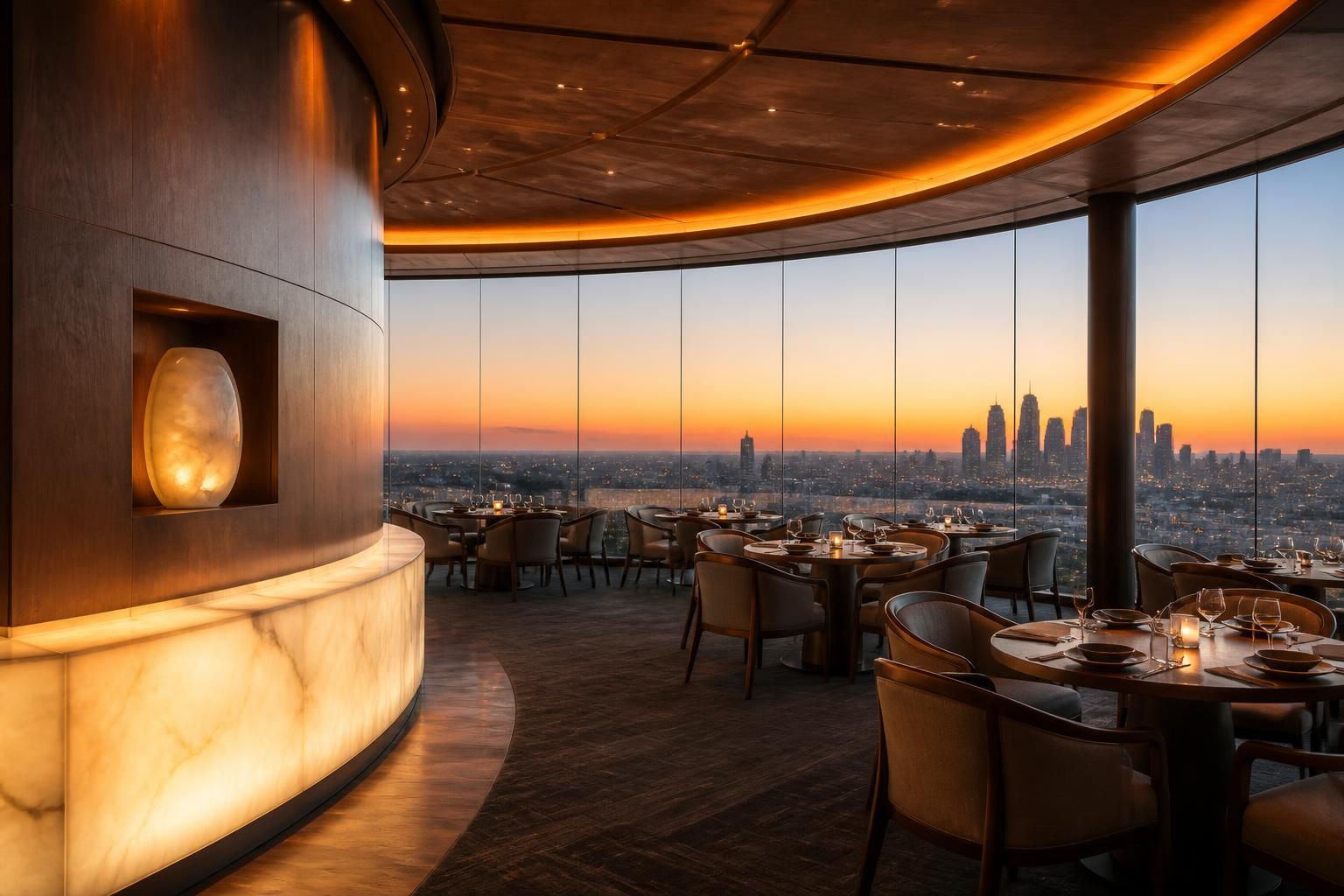
The announced design includes Midcentury Modern influences, curved cherry wood walls, paneled ceilings, and illuminated white onyx Corian surfaces. These details suggest warmth and craft rather than a literal recreation of a sci-fi environment. Curved wood can soften a large architectural space and encourage a sense of enclosure. Light-coloured illuminated surfaces can make a bar or dining room feel active in the evening while remaining elegant during daytime service.
For visitors, these choices influence more than photographs. They affect how easily people move through the room, whether tables feel private enough for conversation, and whether guests can remain comfortable as the daylight changes. A museum restaurant often receives a concentration of arrivals at predictable times. Good spatial design reduces the stress of those peaks by making reception points, routes, waiting areas, and seating zones legible.
Sound deserves particular attention. Architectural materials such as glass, stone, and hard composite surfaces can create echo, especially during busy dinner service. A visually impressive dining room can become tiring if conversations compete with background noise. Curved surfaces, ceiling treatments, furnishings, and operational choices all contribute to acoustic comfort. Cultural operators should see audio quality as part of accessibility: guests with hearing differences, older visitors, multilingual travelers, and families all benefit from spaces where conversation remains intelligible.
Designing for views, conversation, and evening use
The rooftop position gives the restaurant sweeping Los Angeles views, making the experience distinct from a conventional gallery-level café. City views create value at several moments of the day: bright lunch service, late-afternoon light, sunset dining, and evening drinks. The extended hours after museum closing are therefore more than a scheduling detail. They allow the space to transition from a daytime cultural amenity to a nighttime social destination.
Yet a view alone is not enough. The strongest public spaces provide a reason to stay once the initial novelty has passed. This is where seating comfort, table spacing, staff flow, menu timing, and sound all become essential. A couple having dinner after an exhibition needs a different environment from a multigenerational family at brunch or a group of colleagues meeting after work.
The project can also be read as a case study in museum innovation. Innovation is not limited to touchscreens, virtual reality, or immersive projections. It can mean improving the complete visitor journey through coherent spaces. A visitor who can find their table, hear their companions, enjoy regional food, and leave without a queue has experienced effective design even if no visible technology was involved.
For cultural sites considering similar projects, the relevant question is not whether to copy the visual language of Skywalker Grill. The question is whether the restaurant reflects the wider destination honestly. Here, mid-century materials and the Skywalker Ranch reference align with George Lucas’ creative history and the Lucas Museum’s focus on visual storytelling. A generic branded café would have weakened that connection.
Professionals can also follow Rockwell Group’s project information to understand the design perspective behind the space. When hospitality architecture supports orientation, comfort, and conversation, it becomes a meaningful part of the museum visit rather than a decorative backdrop.
Star Wars in Motion and Skywalker Grill Create a More Connected Lucas Museum Visit
The opening program at the Lucas Museum includes “Star Wars in Motion,” an inaugural exhibition examining vehicle designs, high-speed racers, transport vehicles, and flying vessels from the first six Star Wars films. The show will include props, costumes, and illustrations, with highlights such as Luke Skywalker’s Landspeeder and the first build of General Grievous’ Wheel Bike from Star Wars: Episode III – Revenge of the Sith.
This exhibition offers a useful context for the restaurant’s Skywalker Ranch inspiration. The two experiences are related, but they serve different functions. “Star Wars in Motion” focuses on creative development, design, visual objects, and the mechanics of cinematic storytelling. Skywalker Grill provides a social space where guests can process what they have seen, meet companions, or end their visit in a setting that continues the broader atmosphere without duplicating the exhibition.
This is an effective model for visitor flow. A museum can become exhausting when every element demands attention at the same intensity. Galleries require focus: reading labels, looking closely, navigating crowds, and making choices about what to see. A meal gives the mind a different rhythm. When planned well, it encourages visitors to slow down and exchange impressions. What detail from the Landspeeder’s design stood out? How do physical props change the perception of a film created decades ago? Conversation can be a genuine part of interpretation.
Tour guides and museum educators can use this relationship constructively. A guide should not turn the restaurant into an additional exhibition room or deliver commentary at every table. Instead, a short prompt before dinner can be enough: invite visitors to identify one design decision in the exhibition that made a fictional vehicle feel believable. The discussion can then continue naturally over the meal.
For larger groups, smartphone-based audio systems are especially helpful before reaching the restaurant. Clear audio lets guides explain final practical information—meeting time, reservation name, dietary reminders, and post-meal departure arrangements—without shouting in public circulation areas. Platforms such as Grupem allow organizers to use visitors’ own smartphones for clearer listening, which supports group management while keeping the experience flexible and accessible.
- 🎫 Confirm museum entry: select a gallery arrival time before organizing the meal.
- 🍽️ Reserve Skywalker Grill: choose lunch, dinner, or weekend brunch based on the group’s pace.
- 🎧 Share logistics clearly: provide meeting points and timing through a guide or audio solution before entering the venue.
- 🖼️ Leave discussion space: avoid packing every minute with commentary; exhibitions benefit from reflection.
- 🌃 Plan the departure: account for evening restaurant hours, transport, and the time needed to exit Exposition Park.
The Lucas Museum is therefore entering Los Angeles with a layered offer: narrative art, landmark architecture, film history, public programming, and a restaurant with its own booking pathway. The destination will appeal to people who already follow George Lucas’ work, but the public access policy also broadens the audience to local diners and travelers seeking a new rooftop setting.
For museums opening in 2026, this provides a useful operational reminder. Visitor engagement improves when the main exhibition, the physical building, digital planning tools, and food service are designed as connected parts of one journey. None of these components needs to overwhelm the others. The gallery remains central, while the restaurant supports longer, more comfortable, and more memorable visits.
📍 The strongest next step for visitors is to align a Skywalker Grill reservation with the museum schedule, leaving enough time to experience “Star Wars in Motion” without turning either the meal or the galleries into a race.
When does Skywalker Grill open at the Lucas Museum?
Skywalker Grill is scheduled to open on September 22, the same day the Lucas Museum of Narrative Art opens to the public in Los Angeles.
Do diners need a Lucas Museum ticket to visit Skywalker Grill?
No. The full-service restaurant is open to museum visitors and to members of the public who do not hold museum admission tickets.
Can visitors make reservations for Skywalker Grill?
Yes. Reservations are open ahead of the restaurant’s debut. Booking in advance is advisable for weekends, evening dining, and opening-period visits.
What food will Skywalker Grill serve?
The announced menu includes classic American dishes using California ingredients, including Dungeness crab cake, lobster corn dog, crispy chicken Milanese, honey-miso salmon, a Skywalker Ranch Wagyu burger, house-made pasta, and seasonal salads.
What Star Wars exhibition will open at the Lucas Museum?
The inaugural program includes Star Wars in Motion, featuring vehicle designs, props, costumes, illustrations, Luke Skywalker’s Landspeeder, and an early General Grievous Wheel Bike build.
