
Why Jack Dorsey’s AI Voice Assistant Sounds Unusually Human
Reports about Dessa, a speech model associated with Jack Dorsey’s company Block, describe an AI voice assistant designed to make conversation feel less like a sequence of commands and more like a live exchange. Its reported approach puts spoken interaction, rather than written text, at the center of the experience.
For tourism and cultural organizations, the interesting question is not simply whether the voice is convincing. It is whether a more responsive interface can help visitors get reliable information without obscuring the fact that they are speaking to software.
What makes a humanlike voice different?
Many familiar voice systems follow a recognizable rhythm: a person speaks, the system waits for the turn to end, and an answer arrives after a pause. Even when the wording is helpful, the timing can make the exchange feel rigid.
Dessa is described as a full-duplex speech model: it is designed to listen and speak at the same time. That matters because ordinary conversations contain interruptions, brief acknowledgments and changes of direction that do not fit neatly into separate turns.
Imagine a visitor asking a museum assistant for directions, then correcting the destination halfway through: “Where is the sculpture gallery—sorry, the photography gallery?” A system that handles overlapping speech could adapt without forcing the visitor to finish the original request and start again.
The difference is not just speed. A response that arrives at the right moment, with an appropriate pause or change in tone, can make synthetic speech easier to follow. Yet the same qualities can create an uncanny valley effect: the voice feels almost human, while the listener knows there is no person behind it.
What the reported demonstrations show
Descriptions of Dessa’s demonstrations include a conversation in which the model laughs during an exchange and asks a speaker to move closer to the microphone. Another reported clip involves a surprise trip to Paris, answered with a gasp and an emotional-sounding response.
These examples illustrate why timing and vocal expression attract attention. They do not, by themselves, establish that the model experiences amusement or gratitude, understands every situation, or will behave consistently with every visitor.
The Verge’s account of Block’s speech model provides context on the reported research, while Notebookcheck’s coverage of the training approach discusses its claimed focus on conversation.
For an operator assessing AI realism, a polished recording is a starting point, not an acceptance test. Ask to hear the system in a noisy room, with different accents and with a visitor who interrupts or changes their mind.
🔎 Key distinction: a humanlike voice can improve the flow of an interaction, but it is not evidence that the assistant has human understanding. That distinction becomes particularly important when examining how the model processes speech.
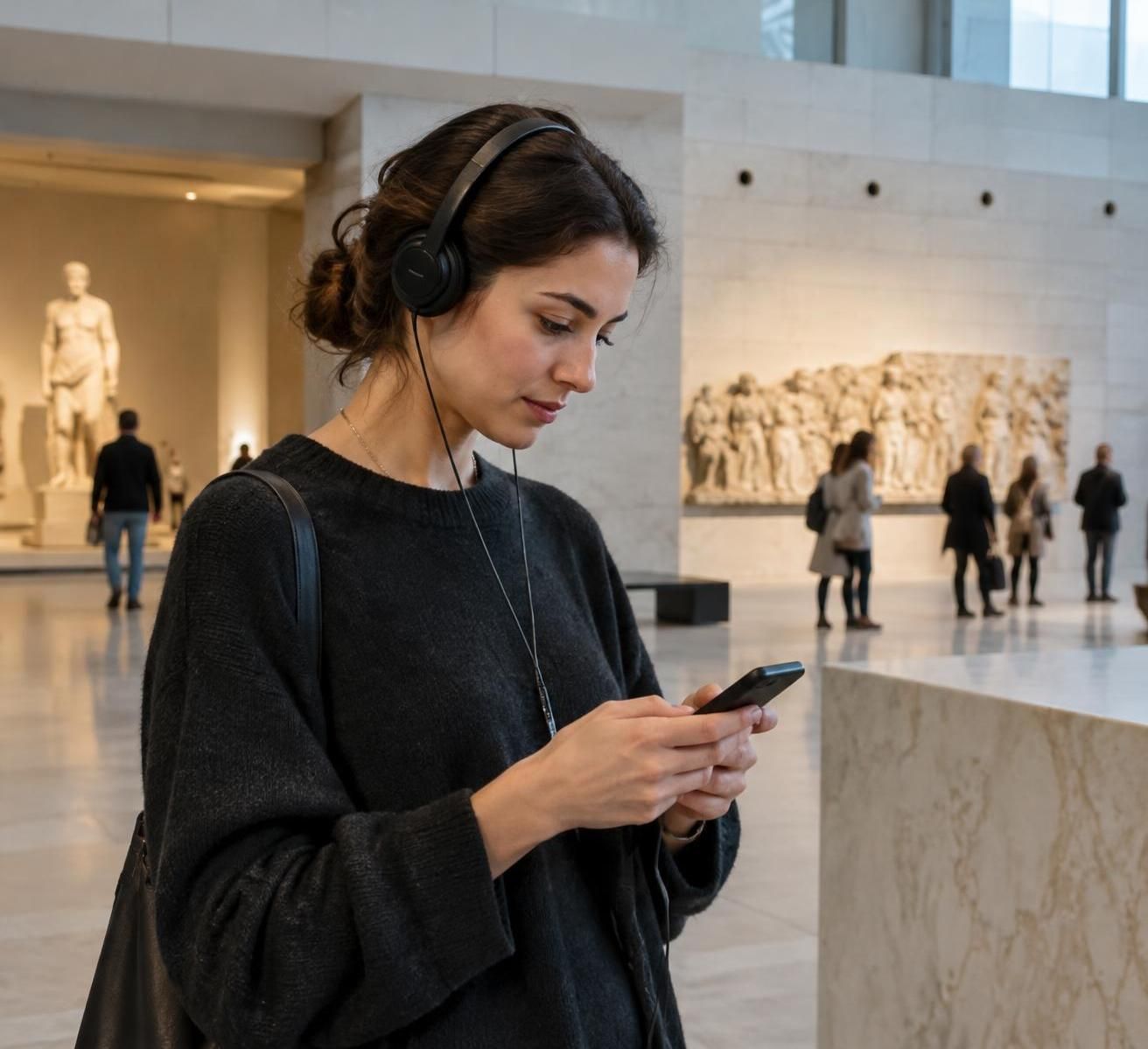
How Dessa’s Speech-to-Speech Voice Technology Could Change Conversations
The reported technical distinction is that Dessa was trained on human conversation and operates as a speech-to-speech model. Its creators describe an audio-in, audio-out approach rather than a conventional pipeline that first converts a visitor’s words into text and then turns a written answer back into speech.
A simplified comparison helps explain why that matters. In a staged pipeline, speech recognition, response generation and voice synthesis each contribute to the final result. An error or delay at any stage can affect the exchange, although strong implementations can still deliver useful, natural-sounding audio.
A model built around audio may retain more information about rhythm, pauses and vocal delivery throughout the interaction. That is a design claim, not a guarantee of accuracy: the assistant still needs testing on the languages, environments and questions it is expected to handle.
Why full-duplex interaction matters for guided visits
Consider a fictional city museum preparing a temporary exhibition. Its team wants visitors to ask short questions at an information point without navigating through several menus.
A visitor might say, “Is the upper floor accessible?” and add, “The lift is not working, though,” before the assistant finishes its answer. If the system can handle the interruption, it could stop giving the standard lift directions and identify an alternative route—or direct the visitor to staff if no verified alternative is available.
That behavior depends on more than full-duplex design. The service also needs current accessibility information, clear escalation rules and a way to prevent confident answers when the underlying information is missing.
The research team has also described local inference on a suitably powerful computer. Local processing and local storage are separate decisions: an application could run a model on a device while still transmitting recordings or analytics elsewhere.
Compare approaches by the visitor experience
| Feature | Conventional staged voice system | Reported Dessa approach | Practical question |
|---|---|---|---|
| 🎙️ Input and output | Often uses speech recognition and speech synthesis around a text-based response. | Described as speech-to-speech. | Does it understand the visitor’s actual question? |
| 🔄 Turn-taking | May wait for a speaker to finish before answering. | Designed to listen and speak simultaneously. | Can visitors interrupt or correct it? |
| 💻 Processing | Depends on the provider and deployment. | Local inference has been reported on capable hardware. | Where do audio and logs actually go? |
| ✅ Reliability | Varies by configuration and source material. | Requires independent evaluation in the intended setting. | Can staff check and update its answers? |
Audio-only training should not be confused with a complete tourism product. A museum still needs a content source, an interface, maintenance arrangements and a plan for inaccurate or inappropriate responses.
Grupem’s overview of next-generation AI voice assistants offers a broader view of how these interaction patterns are developing. For the fictional museum, the first decision is not which model sounds most impressive, but which tasks genuinely benefit from a conversation.
Use Conversational AI to Improve Visitor Information Without Replacing Guides
A responsive voice interface can be useful where a visitor has a brief, variable question: finding an accessible entrance, checking whether a gallery is open, or locating the meeting point for a tour. These requests are well suited to a bounded service because staff can identify the necessary information and keep it current.
For the fictional city museum, the first pilot could focus on orientation rather than attempting to answer every question about the collection. A visitor who asks where to leave a bag should receive a concise, verified answer; someone seeking an interpretation of a sensitive historical event may need a curated resource or a human guide.
Start with a defined visitor journey
Map the moment before choosing the technology. At a busy entrance, a spoken answer may be easier than reading a small screen, but background noise can make voice recognition unreliable. In a quiet gallery, speaking aloud may disturb other visitors, making a text option or headphones more appropriate.
Test a small set of tasks before adding features:
- 🧭 Orientation: ask for the entrance, toilets and tour meeting point, including a correction made halfway through the question.
- ♿ Access: check whether the answer reflects current step-free routes and directs visitors to staff when information is unavailable.
- 🌍 Language: test the languages actually needed by visitors, using speakers with different accents and speaking speeds.
- 🔊 Listening conditions: repeat the same questions in a quiet room, near a queue and during normal gallery activity.
- 🙋 Handover: ask a question outside the pilot’s scope and verify that the assistant offers a clear route to a person.
These tests reveal operational issues that a demonstration cannot. If the assistant repeatedly mishears gallery names, for example, staff may need to adjust the content, provide visible choices or keep the interaction at a staffed desk.
Give professionals control over the story
Guides and curators contribute judgment, context and the ability to respond to a group. An AI voice assistant can support those professionals with routine information, but a convincing delivery should not be allowed to improvise authoritative claims about an artifact.
For narrated visits, Grupem provides a practical reference point: it uses visitors’ smartphones to support guided audio experiences. A voice model and an audio-guiding tool address different needs; an organization should check whether a proposed combination is actually available and appropriate rather than assuming the two are integrated.
For example, a guide might use smartphone audio for a planned route and reserve an information assistant for opening hours or directions. The guide retains control of the interpretation, while the visitor has another way to access straightforward operational information.
Grupem’s discussion of AI voice assistants and deployment is useful background when comparing tools and infrastructure. The practical benchmark is simple: does the system remove a real obstacle for visitors without creating extra work or uncertainty for staff?
Once a useful task is defined, the next issue is trust. A visitor who hears an expressive voice should still know who—or what—is answering.
Reduce AI Realism Risks With Disclosure, Privacy and Human Oversight
The more convincing synthetic speech becomes, the easier it is for a listener to mistake an automated service for a person. That confusion matters in tourism: visitors may share travel plans, contact details or accessibility needs while believing they are speaking to a member of staff.
A clear disclosure is therefore part of the interface, not a footnote. An opening such as “You are speaking with the museum’s automated voice assistant” establishes the nature of the service before the visitor decides what to say.
Make the boundaries audible and visible
Place the same information on the screen or sign beside the service, and repeat it when a conversation is transferred or restarted. If the assistant cannot book a ticket, access a personal reservation or arrange emergency help, say so in plain language.
For the fictional museum, a caller asking about a lost child should not be left in a general question-and-answer flow. The assistant should direct the caller immediately to the appropriate staff or emergency process, with instructions that the organization has approved and tested.
Equally, a voice that sounds upset, amused or reassuring should not be treated as proof of emotional understanding. A system may reproduce vocal patterns associated with emotion without knowing what a visitor is feeling or what response is appropriate.
Protect recordings and reduce impersonation risks
Before deployment, ask the provider whether conversations are recorded, where data is processed, how long it is retained and who can access it. Obtain the answers in the service agreement and privacy documentation, not only in a sales demonstration.
Collect the minimum information needed for the task. An orientation service usually does not need a visitor’s full name or payment details; if a question requires sensitive information, a secure and clearly identified human channel may be more suitable.
Local operation can be valuable where connectivity is unreliable or an organization wants closer control of processing. It does not automatically mean that recordings never leave the device, that the device is secure or that privacy obligations have been met.
Coverage of reactions to Block’s voice model highlights the broader concern that convincing voices can also be used for deception. Organizations should never use a familiar staff member’s voice without appropriate permission and clear safeguards against misuse.
For calls involving payments or account changes, do not rely on vocal familiarity as identity verification. Use the organization’s established authentication process, and give visitors a way to end the interaction and contact an official number or desk.
⚠️ Trust comes from accurate answers, clear disclosure and control over personal information—not from sounding human. These safeguards also provide criteria for deciding whether a pilot is ready to expand.
Evaluate Jack Dorsey’s Voice AI Claims Before Choosing a Tourism Tool
An engaging clip can demonstrate a capability, but it cannot establish whether a service is available for a particular organization, affordable at its expected volume or suitable for public use. Treat product availability, pricing, licensing and supported hardware as items to confirm directly with the provider.
That distinction is especially important for a research model. A model demonstration, a developer interface and a fully supported visitor-facing product are different things, with different requirements for security, updates and staff training.
Run a small, measurable pilot
The fictional museum can begin with ten common orientation questions and a fixed set of approved answers. Staff should include straightforward requests, ambiguous questions and cases where the correct answer is to refer the visitor to a person.
Have participants test the same scenarios across different conditions. Record whether the system answers correctly, whether it accepts an interruption, how often it misunderstands a request and whether visitors can identify it as automated.
Use a simple review sheet rather than judging success by how pleasant the voice sounds. A wrong answer delivered fluently is still wrong, and a slightly less expressive system may be preferable if visitors understand it and staff can maintain it reliably.
Ask the supplier to demonstrate how an authorized employee updates information. If an entrance closes for maintenance, the museum needs to know how quickly the answer changes and whether outdated information remains accessible through another channel.
Check the total operating requirements
For local deployment, confirm the supported hardware, setup procedure, power requirements and update process. A claim that inference runs on a powerful laptop does not establish that the entire visitor service will run offline or that every device will perform equally well.
For a hosted service, review connectivity needs, processing locations, usage limits and the response plan for outages. Either way, identify who monitors failures, who approves content and how staff disable the assistant when information is wrong.
Accessibility testing should include more than language choice. Check volume controls, captions or written alternatives where available, compatibility with assistive technology, and whether a visitor can receive help without speaking aloud.
A comparison with existing voice technology should also reflect the intended task. A prerecorded guide can be effective for a carefully scripted exhibition; conversational AI may be more useful for unpredictable questions, provided its answers are controlled and verified.
Before signing an agreement, request documentation for data handling, content management, accessibility and incident response. Then repeat the pilot after changes to the exhibition or building: an assistant is only as useful as the information and processes that support it.
✅ Decision rule: expand only when the tool improves a defined visitor journey, staff can correct it promptly, and visitors have a clear alternative. The following questions can help teams assess the reported model and its practical implications.
What is Dessa in Jack Dorsey’s AI voice coverage?
Dessa is described in reports as a speech-to-speech model associated with Block, the company co-founded by Jack Dorsey. Its reported design emphasizes conversational audio and simultaneous listening and speaking.
Does a humanlike voice mean the assistant understands emotions?
No. Laughter, pauses or an emotional-sounding tone are generated vocal behaviors. They do not establish that the system experiences emotions or can reliably identify a visitor’s feelings.
Can museums or tour operators use Dessa today?
Organizations should confirm availability, licensing, pricing and support directly with the provider. A research demonstration does not by itself establish that a public-facing product or integration is available.
Does running a voice model locally guarantee privacy?
No. Local inference does not automatically prevent recordings, transcripts or analytics from being stored or transmitted. Check the complete application, provider agreement and data-retention settings.
What should a tourism organization test first?
Start with a narrow set of visitor questions, such as directions and opening hours. Test answer accuracy, interruptions, accessibility, disclosure, noisy conditions and the handover to a staff member.
