
Key points at a glance:
- 🕯️ The Holocaust Museum chair’s Formal Invitation to Zohran Mamdani has shifted a political dispute into a question of Holocaust Memory, language, and public responsibility.
- 🏛️ The Museum Response distinguishes legitimate criticism of government policy from language that may deepen hostility toward Jewish communities.
- 🎧 For museums and cultural institutions, this episode highlights why historical interpretation needs clear sourcing, careful mediation, and accessible context.
Renowned Holocaust Museum Issues a Formal Invitation to Mamdani
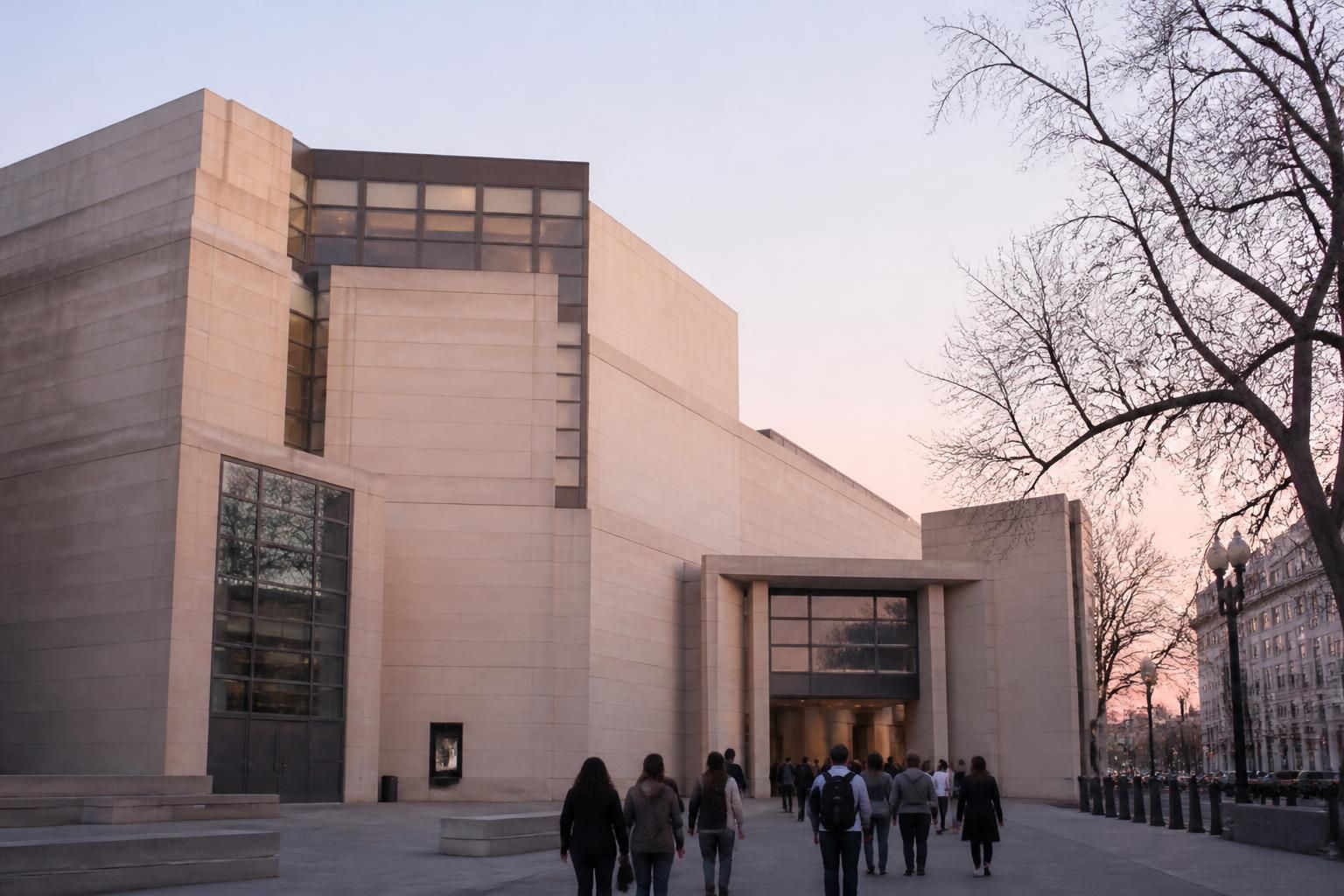
A prominent Washington institution dedicated to Holocaust remembrance has publicly invited New York City Mayor Zohran Mamdani to visit its galleries after his repeated use of the term “genocide” in relation to Gaza. Jeff Miller, chair of the United States Holocaust Memorial Council, presented the offer as a serious educational invitation rather than a symbolic gesture. His stated aim was to encourage direct engagement with the historical evidence of the Nazi campaign to destroy Europe’s Jews.
The invitation emerged amid heightened tension in New York. Jewish organizations and local leaders had criticized Mamdani’s rhetoric on Israel, particularly following reports of a stabbing attack in the city that authorities were investigating as a possible hate crime. One victim was reported to be Jewish. In that setting, Miller argued that public language from elected officials carries particular weight because it can influence how communities interpret threats, responsibility, and belonging.
The chair’s message focused on a distinction that is central to both Holocaust Memory and contemporary public debate. Elected officials are entitled to criticize a government, military policy, humanitarian conditions, or diplomatic strategy. Yet Miller maintained that criticism can cross into a broader demonization of a state and, by extension, create conditions in which Jewish citizens feel collectively targeted. His invitation asked Mamdani to confront the historical specificity of genocide through the Museum’s documentation of persecution, deportation, ghettos, mass shootings, death camps, and survival.
This is not merely a disagreement over vocabulary. “Genocide” has a precise legal and historical meaning, shaped by the United Nations Genocide Convention of 1948. The term addresses acts committed with intent to destroy, in whole or in part, a national, ethnic, racial, or religious group. Political leaders, journalists, activists, courts, and scholars may debate whether particular events meet that threshold. However, a responsible Public Discourse requires participants to explain the evidence, acknowledge legal processes, and avoid treating the word as a generic synonym for any severe civilian suffering.
Reporting on the invitation notes that Mamdani’s office had not publicly responded at the time of publication. That absence of a response should not be presented as proof of intent. It does, however, leave the offer in a highly visible position: a Renowned Holocaust Museum has proposed an in-person Historical Dialogue at a moment when rhetoric about Israel, Palestine, antisemitism, and civilian protection is being examined intensely.
The wider story also includes Mamdani’s past comments on Israeli Prime Minister Benjamin Netanyahu. Mamdani has described Netanyahu as a war criminal and accused Israel of genocide in Gaza, while discussing what legal authority New York City might have if Netanyahu attended the United Nations General Assembly. The United States does not recognize the International Criminal Court warrant referenced in those remarks. These separate legal and political issues should not be collapsed into one claim; municipal authority, international criminal law, and public rhetoric operate through different frameworks.
For cultural institutions, the episode illustrates the public role of a memorial museum. A Holocaust museum is not simply a venue for displaying artifacts. It is also a place where visitors encounter evidence, testimony, chronology, and the consequences of state-sponsored dehumanization. Resources on how Holocaust museums preserve the meaning of “Never Again” show why interpretation must connect historical facts to ethical reflection without reducing history to a slogan.
🕯️ The essential point is simple: a formal museum invitation can create space for learning, but it cannot replace the discipline required in public language. The next question is how historical institutions should respond when their own history is invoked in political arguments.
Holocaust Museum Response and the Dispute Over Historical Language
The current controversy cannot be separated from an earlier dispute over Mamdani’s references to the Warsaw Ghetto Uprising. During debate around the slogan “globalize the intifada,” Mamdani cited historical language connected to the uprising in an effort to discuss how the word “intifada” can be translated or understood. The U.S. Holocaust Memorial Museum rejected the comparison, saying that the Warsaw Ghetto Uprising should not be used to soften or normalize a contemporary chant that many Jewish people regard as threatening.
The Warsaw Ghetto Uprising began in April 1943, when Jewish resistance groups fought German forces conducting the final deportation of ghetto residents. It was an act of resistance by people already trapped within a Nazi system of starvation, forced labor, deportation, and mass murder. Its historical setting is therefore exceptionally specific. The uprising cannot be understood apart from the Holocaust, the destruction of Jewish communities across Europe, and the machinery of extermination operating at that time.
Language can travel across cultures and political movements, but translation does not remove context. A word may carry one literal meaning in one language and a different emotional or political charge in another setting. This is why museums, educators, and guides need to explain not only what a term can mean in a dictionary but also how communities hear it in real-world situations. The reporting on the Museum’s criticism of Mamdani’s earlier comments can be reviewed in this account of the dispute over the Warsaw Ghetto Uprising reference.
Why context matters in Academic Debate
Academic Debate is strongest when participants distinguish analogy from equivalence. An analogy can illuminate one limited feature of a situation, such as confinement, resistance, or political language. Equivalence claims much more: it suggests that two events, actors, or systems should be understood as fundamentally alike. That move demands a very high evidentiary standard, particularly when one side of the comparison involves the Holocaust.
Consider a museum educator preparing a tour for a mixed group of university students, tourists, and local residents. If a visitor asks whether a present-day conflict is “the same” as the Holocaust, the educator should not answer with a slogan. A useful response would identify the historical facts of Nazi persecution, explain the legal meaning of genocide, recognize the urgency of contemporary civilian suffering, and make clear that historical comparison must be evidence-led rather than emotionally convenient.
This approach does not prevent difficult discussion. It makes difficult discussion more rigorous. Visitors can examine how propaganda works, how language identifies or isolates groups, how fear spreads through communities, and how political power can erase individual humanity. None of those lessons require museums to endorse a current political platform.
| Historical communication issue | Responsible museum practice | Public value |
|---|---|---|
| 🧭 A contested political comparison | Define the comparison’s limits and provide dates, sources, and context. | Reduces false equivalence and supports informed discussion. |
| 📚 A charged term such as “genocide” | Explain its legal, historical, and human dimensions without using it casually. | Protects the seriousness of survivor testimony and legal analysis. |
| 🗣️ A slogan with different meanings for different audiences | Describe literal translation, contemporary use, and community impact. | Builds empathy without concealing conflict. |
| 🏛️ A disputed institutional statement | Link visitors to primary evidence and transparent curatorial rationale. | Strengthens trust in Cultural Heritage institutions. |
The Museum Response also reflects a broader challenge for public history. Digital platforms reward compressed arguments, rapid reaction, and phrases that travel easily through headlines. Memorial institutions work in the opposite direction. They ask audiences to slow down, verify, listen, and recognize complexity. That slower pace can feel inconvenient during a political crisis, but it is exactly what protects historical understanding from misuse.
📌 Historical language is never neutral once it enters public debate: its impact depends on the evidence behind it, the setting in which it is used, and the people who must live with its consequences.
The discussion around terminology also leads to a practical question for museums: how can exhibitions make complex history understandable without flattening it into an argument between competing slogans?
Holocaust Memory Requires Evidence, Testimony, and Careful Interpretation
Holocaust Memory depends on more than remembering dates or displaying powerful photographs. It requires visitors to understand the gradual process through which rights were removed, neighbors were isolated, and mass violence was organized. The Holocaust was not an abstract tragedy. It was a systematic attempt by Nazi Germany and its collaborators to annihilate the Jewish people, alongside the persecution and murder of Roma and Sinti people, disabled people, political opponents, LGBTQ+ people, Jehovah’s Witnesses, Soviet prisoners of war, and other targeted groups.
When a political leader uses Holocaust-era references, memorial institutions have a duty to protect the factual integrity of that history. This does not mean museums should avoid the present. On the contrary, Holocaust education is relevant because it equips audiences to recognize antisemitism, racism, conspiratorial thinking, scapegoating, and dehumanizing language in their own time. The challenge is to create that connection without converting an exhibition into a partisan campaign space.
A visitor-centered model is particularly effective. Imagine a school group entering a gallery with one guiding question: “What happens when a society begins treating some people as outside the moral community?” The guide can use diaries, identification papers, maps, survivor recordings, and family objects to show that persecution developed through administrative decisions and everyday complicity. Students are then invited to discuss what evidence tells them, rather than being instructed to repeat a predetermined conclusion.
Audio interpretation can preserve complexity without overwhelming visitors
Smart audio tools can improve this experience when they are designed for attention rather than distraction. A museum might offer short, optional audio segments at key points in the visitor journey: a survivor’s testimony near a family photograph, an explanation of antisemitic legislation beside official documents, or a historian’s account of the Warsaw Ghetto Uprising near a timeline. Visitors can choose depth according to their age, language, knowledge, and emotional readiness.
For institutions managing sensitive topics, the most effective audio content follows several practical rules:
- 🎧 Use short segments with one verified idea at a time, rather than long uninterrupted lectures.
- 🕯️ Identify primary sources clearly, including who created them and under what circumstances.
- 🌍 Offer multilingual narration so international visitors do not rely on partial translations.
- ♿ Include transcripts and accessible controls for visitors with hearing, visual, or cognitive needs.
- 📍 Provide moments of quiet reflection instead of filling every gallery with sound.
These methods are especially important where visitors arrive with different political assumptions. A museum cannot control every interpretation, but it can ensure that its own material is accurate, transparent, and human-centered. A carefully produced audio route may explain why historians regard the Warsaw Ghetto Uprising as an extraordinary act of Jewish resistance while also documenting the conditions imposed by Nazi rule. That structure gives visitors knowledge before debate.
Museums also need staff preparation. Front-of-house teams and guides should know how to respond if visitors raise present-day comparisons in a confrontational way. The goal is not to silence questions. It is to redirect the exchange toward evidence: What period is being discussed? Which sources support the claim? What does the historical record show? What are the limits of the analogy?
The value of this work is visible in institutions that treat memorial visits as active learning rather than passive consumption. A detailed review of museum approaches to Holocaust representation reinforces the importance of combining historical precision, emotional care, and accessible mediation.
🎧 A respectful visitor experience begins with reliable context: technology should help people listen more carefully to history, not move past it more quickly.
Public Discourse Around Mamdani, Gaza, and Antisemitism Needs Clear Boundaries
The disagreement surrounding Mamdani’s statements is part of a larger argument over how public officials discuss the Gaza war. Mamdani has made severe accusations against Israel and Benjamin Netanyahu, citing reported civilian deaths, injuries, damage to health infrastructure, restrictions on aid, and the killing of humanitarian workers and journalists. Those claims concern a conflict that has produced extensive international reporting, legal debate, and deep humanitarian concern.
At the same time, describing a situation as genocide is not simply a rhetorical intensifier. It raises a claim about intent and conduct that carries major legal, historical, and moral implications. International courts, investigators, legal scholars, governments, and human-rights organizations may reach different assessments as evidence develops. Public figures should therefore distinguish between documenting humanitarian suffering, alleging war crimes, calling for investigation, and declaring that a legal definition has been conclusively met.
This distinction matters because language affects people far beyond the immediate political argument. Jewish New Yorkers may hear sweeping denunciations of “Israel” or the “Jewish state” in a climate already marked by antisemitic harassment and violence. Palestinians, Arab Americans, Muslims, and others may feel that their grief over civilian deaths is being minimized whenever their language is challenged. A serious public leader must be able to hold both realities at once: antisemitism is unacceptable, and civilian suffering deserves rigorous attention and protection.
Criticism of policy is not the same as collective blame
There is a clear difference between saying that a government’s conduct should be criticized, investigated, or changed and implying that an entire people bears collective guilt. That line is fundamental to democratic speech. It protects the ability to debate foreign policy while reducing the risk that political anger becomes hostility toward Jews, Israelis, Palestinians, Muslims, or any other community.
Miller’s invitation emphasized this boundary. He stated that Mamdani was free to disagree with Israeli policy, while arguing that rhetoric which demonizes the world’s only Jewish state could normalize hostility toward Jewish people. Whether one agrees with every aspect of that framing, the underlying challenge is valid: public officials must consider not only their intended meaning but also how their words are received in communities facing real fear.
In practical terms, a responsible statement about a conflict should do four things. It should identify the policy or action being criticized; avoid blaming civilians for decisions made by leaders; use terms whose meaning can be defended with evidence; and recognize threats faced by all affected communities. This is not evasive language. It is precise language.
- 🔎 Name the specific conduct under discussion, such as a military operation, aid restriction, settlement policy, or diplomatic decision.
- ⚖️ Separate moral condemnation from legal findings, and identify the source supporting each claim.
- 🛡️ Reject antisemitism, anti-Muslim hatred, racism, and collective punishment explicitly.
- 🤝 Leave room for grief, disagreement, and factual correction without treating critics as enemies.
Political communication in 2026 is often optimized for virality rather than comprehension. Short clips and headline fragments travel faster than full statements. That makes disciplined phrasing more necessary, not less. The consequences of imprecise rhetoric are especially serious after hate-crime allegations, threats against religious institutions, or tense public demonstrations.
The reported invitation from the Holocaust Memorial Council therefore has significance beyond one official or one social-media post. It tests whether leaders and institutions can use disagreement as an opportunity for Historical Dialogue. A visit cannot settle the Gaza conflict, nor can it resolve legal disputes. It can, however, place public language in the presence of documented history and survivor-centered evidence.
⚖️ Public Discourse becomes safer and more useful when criticism targets policies and decisions, never the dignity or security of an entire people.
That need for precision also affects the institutions that host these conversations, from large national museums to local cultural venues and city-led educational programs.
Cultural Heritage Institutions Can Turn Controversy Into Historical Dialogue
Cultural Heritage institutions increasingly operate in environments where visitors bring current conflicts into galleries, classrooms, walking tours, and online reviews. A Holocaust museum cannot ignore those questions, but neither should it allow a current headline to dictate the meaning of its collections. The strongest institutional response is to establish a clear framework: history is presented through evidence, contemporary discussion is welcomed through respectful rules, and no visitor is asked to abandon their identity at the door.
The Formal Invitation to Mamdani demonstrates one possible model. Rather than responding only through condemnation, the Museum Response included an offer to walk an elected official through the institution personally. This approach has limits. It does not guarantee acceptance, and a visit can itself become a media event. Still, it recognizes that proximity to objects, testimony, and historical sites can shift a discussion away from abstract slogans toward the lives affected by persecution.
For museum managers, guides, tourism offices, and public-program teams, the lesson is operational. Controversial subjects must be anticipated before a crisis occurs. A well-prepared institution has a verified content policy, trained mediators, accessible routes, and a protocol for online communication. It can respond calmly if a visitor asks a difficult question because the team has already agreed on how to distinguish fact, interpretation, and advocacy.
Building a practical mediation plan for difficult visitor questions
A local history center can adapt this approach even without the resources of a national museum. For example, a city museum planning a Second World War exhibit could create an audio-guided route with short historical explanations, a section on local Jewish life before the war, testimonies from survivors or descendants, and a final reflection point. Visitors who want to explore current human-rights issues could access a separate, clearly labeled learning resource grounded in reputable international law and historical scholarship.
Staff should avoid improvising legal judgments or repeating unverified casualty figures as settled fact. When discussing numbers presented by political actors, guides can explain who supplied the figure, what period it covers, and whether independent verification is available. This does not diminish grief. It gives visitors the tools to distinguish documented information from advocacy claims.
| Visitor situation | Recommended response | Useful tool |
|---|---|---|
| 💬 A visitor draws a direct Holocaust comparison | Acknowledge the question, explain the historical differences, and return to documented evidence. | Short curator audio clip and source panel |
| 📱 A guide faces a viral claim during a tour | Do not repeat it as fact; explain what can be verified and invite follow-up through reliable sources. | Updated digital fact sheet |
| 🌐 International visitors need language support | Offer translation that preserves historical nuance, not only literal word-for-word equivalents. | Multilingual smart-audio tour |
| 🧩 A group is emotionally divided | Set rules against personal attacks and focus discussion on evidence, experiences, and questions. | Facilitated reflection prompt |
Accessible technology can support this work without replacing human judgment. Smartphone-based audio systems allow museums to update a short interpretive segment when new scholarship, an exhibition change, or a public controversy requires clarification. They also enable visitors to pause, replay, or select a language without forcing every person through the same narrative at the same pace.
What matters is editorial governance. Every update should be reviewed by qualified historians and, where appropriate, education and community-relations teams. A museum’s credibility rests on its willingness to correct errors, show its sources, and state clearly where historical consensus exists and where scholarly disagreement remains. This is particularly important when the subject involves mass violence, religion, national identity, or trauma.
Institutions looking to strengthen their visitor pathways can draw useful lessons from practical Holocaust museum enhancements for modern audiences. The best digital tools do not add noise. They give visitors a clearer route into difficult evidence and allow staff to focus on meaningful conversation.
🏛️ A museum’s authority does not come from speaking the loudest in a controversy; it comes from making history understandable, verifiable, and accessible to every visitor.
How Museums Can Protect Trust During Sensitive Political Debate
Trust is the most important asset held by a memorial institution. Visitors enter Holocaust museums with different levels of knowledge, personal connections, political beliefs, and emotional expectations. Some come to honor family members. Others arrive through school programs. Some may be encountering the history for the first time. Each deserves an experience that is accurate, respectful, and free from avoidable manipulation.
For this reason, museums should separate three layers of communication. The first is historical evidence: archival records, artifacts, testimony, photographs, court documents, and scholarship. The second is interpretation: the curatorial explanation that helps visitors understand why the evidence matters. The third is present-day engagement: educational programs that connect historical lessons to ongoing challenges, while clearly identifying where the institution is moving from history into contemporary discussion.
Confusing these layers creates avoidable risk. If a museum statement appears to use Holocaust history solely to win a current political argument, visitors may question its independence. If, on the other hand, an institution refuses all contemporary discussion, it may seem detached from the realities that make its educational mission urgent. The balance lies in transparency: explain the historical record fully, disclose the basis of institutional language, and invite questions within clear boundaries.
Trust grows through clear sources and inclusive access
A strong visitor journey should begin before the gallery. Online booking pages, tour descriptions, and school-group materials can state that the museum addresses difficult history and may include material that is emotionally challenging. Visitors should know that quiet spaces, transcripts, captions, and alternative routes are available. These small measures improve accessibility and show respect for different needs.
Inside the museum, guides can use a “source first” method. Before offering an interpretation, they identify the object or testimony. Before connecting it to a current issue, they explain the historical relevance. If a discussion becomes tense, they can bring the group back to a question such as: “What does this document demonstrate?” This technique avoids dismissing emotion while preventing the conversation from becoming a contest of slogans.
The same standards should apply online. Social-media posts can link to longer educational pages, verified timelines, and survivor accounts rather than relying on provocative fragments. A formal public statement should be readable on a phone, but it must also lead audiences toward fuller context. That is where smart tourism and audio technology can serve public education: a QR code near a display, for example, can open a two-minute verified explanation rather than sending visitors into an unmoderated search environment.
There is also value in creating structured dialogue formats. A museum might host a historian, an educator, a legal scholar, and representatives from local communities, with an independent moderator and published ground rules. The format should not ask speakers to compete over suffering. It should examine how historical terms are used, what evidence is required for claims, and how communities can challenge harmful rhetoric without denying one another’s humanity.
The controversy involving Mamdani and the Holocaust Memorial Council will remain politically charged. Yet the larger lesson is durable. Museums must be prepared when history becomes part of a live argument. Their role is not to erase disagreement, nor to provide easy moral shortcuts. Their role is to preserve the factual record, protect survivor-centered understanding, and make room for public learning.
🕯️ Historical Dialogue works when visitors leave with more evidence, more context, and more care for the human consequences of words.
What was the Formal Invitation to Mamdani?
Jeff Miller, chair of the United States Holocaust Memorial Council, publicly invited Zohran Mamdani to tour the U.S. Holocaust Memorial Museum in Washington, D.C. The invitation followed Mamdani’s repeated use of the word genocide in reference to Gaza.
Why did the Holocaust Museum respond to Mamdani’s comments?
The Museum Response focused on concerns that Holocaust history and the Warsaw Ghetto Uprising were being invoked in ways the institution believed could minimize the meaning and impact of the slogan “globalize the intifada.”
Can public officials criticize Israeli government policy without being antisemitic?
Yes. Criticism of governmental actions, military policy, or political leaders is legitimate in democratic debate. The key boundary is avoiding collective blame, dehumanization, or rhetoric that targets Jewish people or treats them as responsible for government decisions.
How should museums address comparisons between current conflicts and the Holocaust?
Museums should explain the specific historical record, clarify the limits of any analogy, identify reliable sources, and create space for questions without presenting complex legal or historical claims as slogans.
