
Key points at a glance: 🧭 The Holocaust Museum’s Formal Challenge to Mayor Zohran Mamdani centers on the meaning, historical weight, and public consequences of the word “genocide.” 🏛️ The dispute is not limited to political disagreement: it raises practical questions about Historical Accuracy, Holocaust Education, and the responsibility of public figures when discussing traumatic history. 📣 For museums and cultural mediators, the episode demonstrates why precise interpretation and carefully designed visitor experiences matter.
Holocaust Museum Formal Challenge to Mamdani: What the Public Statement Says
The latest dispute involving New York City Mayor Zohran Mamdani and the United States Holocaust Memorial Museum has placed a major historical institution at the center of a highly charged public debate. Jeff Miller, chair of the United States Holocaust Memorial Council, publicly invited Mamdani to visit the Washington, D.C. museum after the mayor repeatedly described Israel’s actions in Gaza as “genocide.” The invitation was presented as a direct educational challenge rather than a routine political exchange.
Miller’s Public Statement stressed that language used by elected leaders carries consequences. His central argument was that the Holocaust Museum exists to document the systematic destruction of European Jewry by Nazi Germany and its collaborators, and that this historical record should inform how the term genocide is used in contemporary discourse. The invitation offered Mamdani a personally arranged tour intended to confront the documented mechanics of mass persecution, state-sponsored annihilation, deportation, ghettos, killing centers, and survival.
The Formal Challenge emerged after a separate period of controversy around Mamdani’s comments on Israel, Gaza, and the phrase “globalize the intifada.” In earlier remarks, Mamdani discussed “intifada” as a word associated with struggle or uprising and referred to Arabic terminology connected to the Warsaw Ghetto Uprising. The museum sharply rejected any use of its materials or Holocaust history to soften the contemporary implications of a slogan that many Jewish communities understand as threatening or as linked to periods of anti-Jewish violence.
Coverage of the earlier exchange, including reporting on the museum’s rejection of the Warsaw Ghetto comparison, shows why this issue developed beyond a dispute over translation. Words can have literal meanings, historic meanings, political meanings, and lived meanings. A museum responsible for documenting genocide cannot treat those layers as interchangeable, particularly when survivors, descendants, and targeted communities may hear a phrase through the memory of violence.
Miller also linked his intervention to concern about antisemitism in New York. His post followed reports of a stabbing attack in which one victim was identified as Jewish and authorities investigated the incident as a potential hate crime. The museum chair did not argue that political speech alone causes a specific attack. Instead, he argued that rhetoric which demonizes Israel or the Jewish state can contribute to an environment in which hostility toward Jewish people is more easily normalized.
That distinction is crucial. Criticism of a government is legitimate democratic speech; targeting a people, trivializing their historical trauma, or using language that encourages collective hostility is different. The Holocaust Museum’s position, as reflected in Miller’s message, is that public officials should understand this boundary before repeatedly applying the most serious terms in the vocabulary of mass atrocity.
- 📌 The invitation: a proposed guided visit to the U.S. Holocaust Memorial Museum in Washington, D.C.
- 📌 The stated purpose: to examine what genocide looked like as a systematic project of annihilation.
- 📌 The wider concern: the impact of political language on Jewish safety and public understanding.
- 📌 The museum principle: Memory and History must be handled with evidence, context, and care.
As reported in accounts of the invitation, Mamdani had not publicly responded at the time of publication. The lack of a response leaves the proposal itself as the central fact: a leading Holocaust institution has asked a sitting mayor to engage directly with its historical evidence. That is a serious intervention, because museums are not simply venues for symbolic visits. They are places where objects, testimony, archival documents, architecture, and interpretation work together to establish context.
For visitors, educators, and cultural organizations, the practical lesson is immediate. A controversial phrase cannot be assessed only through a dictionary definition or an isolated historical reference. Its effect depends on audience, timing, past use, and the real-world anxieties it may activate. The Museum Response turns a political dispute into a test of responsible historical interpretation.
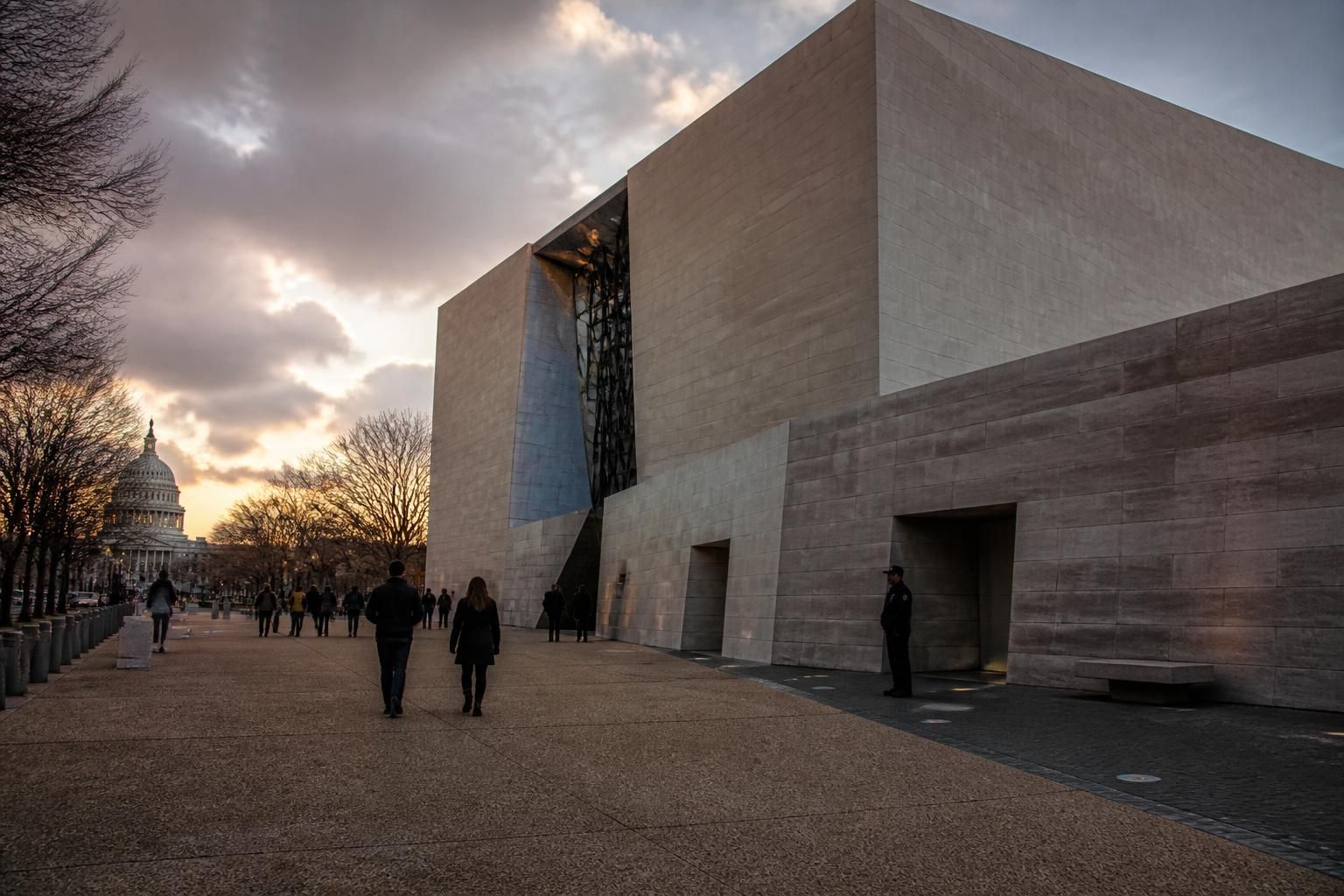
Why Historical Accuracy Matters in the Mamdani Holocaust Museum Controversy
Historical Accuracy is not a ceremonial requirement reserved for museums, universities, or memorial days. In a fast-moving political environment, it is a practical safeguard against misinformation, emotional escalation, and the misuse of collective trauma. The dispute involving Mamdani demonstrates how quickly an argument about present-day events can become a Historical Debate about the meaning of resistance, genocide, antisemitism, and national memory.
The Warsaw Ghetto Uprising is especially sensitive in this context. Beginning in April 1943, Jewish fighters in German-occupied Warsaw resisted Nazi forces as deportations to the Treblinka killing center continued. The uprising was an act of courage by people already trapped in a genocidal system. It was not a general metaphor for every modern conflict, nor is it a flexible rhetorical resource that can be detached from the Nazi campaign to murder Europe’s Jews.
Translation adds a genuine layer of complexity. A word may appear in one language as an equivalent for “uprising,” “resistance,” or “struggle,” while carrying a significantly different public association in another political setting. That reality does not mean every speaker intends harm. It does mean public officials should pause before using linguistic overlap as a defence for slogans whose contemporary reception is painful and alarming to many people.
Historical interpretation requires more than finding one word that appears in two contexts. It requires comparing the circumstances in which the word was used, the communities involved, the nature of the violence, and the purpose of the speaker. A museum’s role is to make those distinctions visible. This is precisely why curators rely on timelines, primary documents, survivor testimony, material evidence, and multiple layers of explanation rather than a single label.
A useful way to understand the issue is to separate three levels of communication:
| Level | What should be examined | Practical risk if ignored |
|---|---|---|
| 📖 Historical record | Dates, sources, perpetrators, victims, and documented intent | Misrepresenting an event or flattening its specificity |
| 🗣️ Public language | How a phrase is heard by affected communities today | Creating fear, confusion, or unnecessary polarization |
| 🏛️ Institutional interpretation | How museums explain evidence and contested terminology | Reducing education to political messaging |
For example, a visitor guide at a memorial museum might explain that the Holocaust is a historically specific genocide while also teaching the broader legal evolution of the term. Raphael Lemkin coined “genocide” during the Second World War, and the United Nations adopted the Genocide Convention in 1948. That framework matters, but legal terminology and political accusation are not identical. Legal determinations require evidence, procedures, and institutional authority; public debates often use the same language with far less precision.
In the Mamdani controversy, opponents argue that repeated use of the genocide label against Israel distorts the term and fuels hostility toward Jews. Mamdani’s supporters may frame his remarks as moral condemnation of civilian suffering in Gaza. A responsible account must recognize that these positions are not resolved simply by intensity of feeling. The disagreement turns on facts, legal standards, historical analogies, and the social effect of speech.
This is where museums can offer something political platforms often cannot: disciplined pacing. A visitor moves from one verified piece of evidence to another. They encounter individual names, family photographs, transport records, laws, eyewitness accounts, and the physical traces of destroyed communities. The experience does not eliminate disagreement about current affairs, but it establishes a standard for how grave claims should be considered.
The educational value is not abstract. Consider a fictional municipal guide, Maya, who is preparing a civic group visit. Rather than repeating a viral phrase, she provides participants with a short chronology, defines key terms, explains why the Warsaw Ghetto Uprising is historically distinct, and creates space for questions. This approach does not silence debate. It makes debate more informed and less likely to turn human suffering into a slogan.
When history becomes a tool for winning an argument, accuracy is the first protection against turning remembrance into propaganda.
How Holocaust Education Can Address Genocide Claims Without Political Simplification
Holocaust Education has a demanding task: it must preserve the singular history of the Holocaust while helping learners understand why genocide, persecution, racism, and antisemitism remain urgent subjects. The Mamdani dispute shows why this work cannot be reduced to a ceremonial visit or a single dramatic exhibition label. Visitors need guidance that distinguishes historical evidence from political analogy and empathy from rhetorical escalation.
The United States Holocaust Memorial Museum is designed around documented history. Its exhibitions show how exclusion develops through laws, propaganda, bureaucracy, confiscation, forced displacement, ghettos, deportations, mass shootings, and industrialized murder. This progression is essential because it corrects a common misconception: genocide is not merely a synonym for very high civilian casualties or extreme suffering. It refers to specific acts tied to an intent to destroy, in whole or in part, a national, ethnic, racial, or religious group.
That definition does not make civilian suffering less serious. It makes language more accountable. There are many grave terms available in public and legal discourse, including war crimes, crimes against humanity, forced displacement, collective punishment, unlawful attacks, and persecution. Each has its own evidentiary and legal context. Using one term carefully is not an attempt to minimize harm; it is an attempt to describe harm correctly.
For cultural institutions, this distinction should influence how tours, educational workshops, and digital resources are built. A well-designed program does not instruct visitors what political conclusion to reach. It gives them reliable tools: how to identify a primary source, how to distinguish testimony from commentary, how to recognize propaganda, and how to ask what a comparison leaves out.
Building a visitor pathway from evidence to reflection
An effective learning pathway can begin with individual stories rather than broad labels. A photograph of a family, a letter from a deported person, or an oral testimony can help visitors understand what was lost. The next step is to place that story inside the machinery of persecution: discriminatory laws, police orders, transport lists, and the institutions that enabled destruction.
Only after that foundation should a guide invite discussion of modern terminology. This sequencing matters because visitors are less likely to treat genocide as an interchangeable political insult when they have encountered the historical processes behind it. They can also see why Jewish communities react strongly when Holocaust memory is mobilized casually in disputes about Israel.
Digital tools can support this process when they are used with restraint. Smartphone-based audio guidance, for example, can deliver clear content in several languages, offer transcripts for deaf and hard-of-hearing visitors, and allow people to revisit evidence at their own pace. The objective is not to replace a human educator. It is to ensure that every visitor can hear the relevant context clearly, even in a crowded gallery or on a large public tour.
A museum team could create short audio stops around four questions: What happened? Who documented it? Which term is being used? What evidence supports that term? Such prompts turn passive listening into active historical reasoning. They are particularly useful for school groups, civic delegations, and international visitors who may arrive with different vocabularies and assumptions.
Practical standards for educators and guides include:
- 🎧 Define historically charged terms before using them in discussion.
- 📚 Pair broad claims with primary sources or credible institutional research.
- 🧩 Explain what an analogy clarifies and what it obscures.
- 🕯️ Give survivor testimony proper context rather than using it as emotional decoration.
- 🤝 Set clear ground rules so disagreement does not become hostility toward a community.
The debate has also renewed attention on how museums present difficult history in a polarized information environment. Resources discussing the Holocaust Museum and Mamdani dispute underline the need for cultural institutions to communicate with precision while making room for public questions. Accessibility and accuracy should work together: plain language is valuable, but oversimplification is not.
For Maya’s fictional civic group, the most productive outcome is not unanimous agreement on every contemporary issue. It is a shared understanding that historic terms carry obligations. Participants leave able to say, “This is what the evidence establishes,” “This is where a legal question remains,” and “This is why a comparison may cause harm.” That is the practical purpose of Holocaust Education: informed judgment, not manufactured consensus.
Memory and History: The Museum Response to Language, Antisemitism, and Public Trust
The museum’s intervention rests on a wider principle: Memory and History are public responsibilities, not private symbols that can be deployed without consequence. A Holocaust Museum holds a particular obligation because its collections and educational programs concern an event that shaped international human-rights law, Jewish identity, European history, and the moral vocabulary of the postwar world.
When museum leaders respond to elected officials, their statements can be interpreted as political. Yet silence can also be read politically, especially when an institution believes its history is being used in a misleading way. The Museum Response to Mamdani therefore reflects an institutional choice to defend interpretive boundaries. It is not a claim that museums should decide elections or control every public argument. It is a claim that evidence-based memory should not be repurposed to sanitize language that communities experience as hostile.
This issue is especially important in New York, where Jewish life is deeply woven into the city’s neighborhoods, schools, synagogues, cultural organizations, and civic institutions. Reports of hate-crime investigations, including incidents involving alleged anti-Jewish targeting, influence how residents hear political rhetoric. A phrase that one speaker treats as an abstract expression of solidarity may be heard by another resident through the experience of threats, harassment, or historical persecution.
That does not mean public officials should avoid discussing Gaza, Israeli policy, Palestinian rights, or international law. Avoidance is not responsible leadership. The key is to speak with enough precision to separate governments from peoples, military actions from ethnic identity, and factual criticism from collective blame. Miller’s message made this distinction explicitly: an elected leader may criticize the Israeli government, but criticism becomes dangerous when it demonizes the world’s only Jewish state in ways that may normalize animosity toward Jews.
Designing public communication that reduces harm
Museums, city agencies, tour operators, and public institutions can learn from this moment. Communication should be built around verified information and audience awareness. Before publishing a statement, institutions can ask whether the wording risks collapsing Jewish identity into Israeli state policy, or Palestinian identity into the actions of armed groups. Both errors make genuine dialogue harder.
Public trust also depends on transparency. If a museum updates a translation, adjusts wording, or clarifies an exhibition label, it should explain why. Visitors are more likely to accept careful revisions when the institution shows its source base and interpretive logic. In a digital environment where screenshots circulate without context, a short explanation can prevent a minor terminology issue from becoming a major Controversy.
Accessible audio communication is relevant here. During a museum visit, visitors may process emotionally difficult material at different speeds. Optional audio tracks can offer plain-language explanations, content warnings, translations, and quiet opportunities for reflection. Such tools are not cosmetic enhancements. They can reduce confusion, support inclusion, and prevent emotionally charged claims from being absorbed without context.
For example, a digital guide could distinguish between a historical quotation and the museum’s own interpretive voice. It could label archival language that includes hateful terminology, explain why it is being shown, and offer an alternative transcript for visitors who need a slower or more accessible format. This approach protects the integrity of evidence while respecting the needs of varied audiences.
Strong public communication also requires restraint in visual design. A memorial site should not imitate the urgency of social media feeds. Notifications, dramatic graphics, and overly compressed headlines can flatten a complex historical record. A better model is clear navigation, brief but sourced interpretation, and opportunities to explore more deeply. Visitors should feel guided, not pushed.
For institutions reviewing their practices, the following checklist is useful:
- 🔎 Verify historical claims against primary sources and established scholarship.
- 🧠 Separate legal definitions from political rhetoric in exhibition and web copy.
- 🗺️ Provide cultural and linguistic context for translated terms.
- 🧏 Offer transcripts, multilingual audio, and clear content framing.
- 🛡️ Address antisemitism and all forms of group-based hatred directly, without euphemism.
The public consequences of language cannot always be measured immediately, but that is not an excuse to disregard them. A museum’s credibility comes from its willingness to explain complexity without evasion. Public trust grows when institutions make difficult distinctions clear, accessible, and grounded in evidence.
What the Mamdani Formal Challenge Means for Museums and Cultural Mediators
The Formal Challenge directed at Mamdani is also a practical case study for museums, guides, visitor centers, and cultural organizations. These institutions increasingly operate in environments where historical topics are discussed through short clips, posts, protests, and headlines. Their role is no longer limited to displaying collections. They must help audiences understand what evidence means, why terminology matters, and how a respectful visitor experience can remain open to difficult questions.
For a Holocaust Museum, that responsibility is particularly acute. Visitors may arrive with personal family histories, political convictions, anxiety about antisemitism, concern for civilians in contemporary conflicts, or little prior knowledge of the Holocaust. A single tour must not assume that everyone has the same baseline. It should offer a factual route through the material without turning victims’ history into a backdrop for current political messaging.
This is where professional mediation becomes essential. Imagine Maya coordinating a group of municipal employees, students, and international visitors. Some want to discuss Gaza immediately; others feel that any comparison to the Holocaust is inappropriate. A poorly prepared visit might allow the loudest voices to define the experience. A well-prepared visit begins with the museum’s historical mission, establishes discussion expectations, and ensures that every participant has access to the same core evidence.
Modern visitor technology can help operationally. A smartphone audio system allows groups to hear the guide even in acoustically challenging spaces, supports multiple languages, and can provide curated content after the visit. For sites addressing traumatic history, it also gives visitors control over pace. Someone who needs time to pause after a testimony can do so without disengaging from the entire group.
However, technology must remain subordinate to interpretation. A polished audio track cannot correct an inaccurate claim, and a QR code cannot replace thoughtful facilitation. Institutions should first decide what visitors need to understand, then choose the simplest tools that make that understanding easier. The goal is clarity, not novelty.
Operational practices for high-sensitivity historical tours
Before a group arrives, staff should provide a concise preparation note. It can explain the subject matter, identify potentially distressing content, and clarify that the museum is a learning environment rather than a venue for slogans. This is not censorship. It is a visitor-care standard similar to accessibility planning, safety planning, or safeguarding.
During the visit, guides should use short, sourced explanations and leave space for questions. If a participant raises a contemporary comparison, the guide can acknowledge the question while returning to the museum’s documented record. A useful response is: “This site examines the Holocaust through its specific history. We can discuss how legal and historical terms are defined, but we should avoid treating distinct events as identical without evidence.”
Afterward, a digital follow-up can link visitors to timelines, glossaries, oral histories, and credible research. The approach is more durable than ending the experience with an emotional reaction alone. It gives visitors a path to continue learning and reduces reliance on fragmented social-media claims.
Relevant guidance on preserving institutional standards can also be found in discussions of how Holocaust museums protect the meaning of “Never Again”. The central point is not that museums must avoid present-day relevance. On the contrary, they remain relevant because they model how evidence, empathy, and ethical communication can coexist.
The public dispute surrounding Mamdani shows why such preparation matters. A museum invitation can be read as a rebuke, but it can also be read as a serious educational offer. Accepting that offer would not require any public official to abandon political views. It would require engaging with the historical basis of the language used in public.
For cultural professionals, the actionable priority is clear: audit one high-sensitivity tour or digital pathway today. Check the terminology, source links, translation choices, accessibility options, and moderator guidance. A credible museum experience begins when historical evidence is presented clearly enough that visitors can think deeply without being pushed toward distortion.
What was the Holocaust Museum’s Formal Challenge to Mamdani?
Jeff Miller, chair of the United States Holocaust Memorial Council, invited Mayor Zohran Mamdani to visit the U.S. Holocaust Memorial Museum in Washington, D.C. The invitation followed Mamdani’s repeated use of the word genocide when discussing Gaza and was framed as an opportunity to examine the historical meaning of genocide.
Why did the Warsaw Ghetto Uprising become part of the controversy?
Mamdani referred to Arabic terminology associated with the Warsaw Ghetto Uprising while discussing the phrase globalize the intifada. The Holocaust Museum objected to using the uprising or museum translations to make that contemporary slogan appear less threatening or less politically charged.
Does criticism of Israel automatically constitute antisemitism?
No. Criticism of Israeli government policy is part of legitimate public debate. The concern raised by museum leaders is that rhetoric can become antisemitic when it assigns collective blame to Jews, demonizes the Jewish state in ways that target Jewish identity, or normalizes hostility toward Jewish people.
How can museums discuss contemporary conflicts while protecting Historical Accuracy?
Museums can distinguish verified historical evidence from political claims, define legally and historically charged terms, provide context for translations and analogies, and use trained facilitators or accessible audio guides to support respectful discussion.
