
Short on time? Here is what matters:
✅ CreditUnion Members still value trust, but they expect clearer protection, faster support, and practical ComprehensiveBenefits.
✅ Fraud prevention now shapes the whole MemberExperience, from the first alert to account recovery.
✅ AI-powered scams require better education, transparent security tools, and accessible digital guidance. 🔐
Credit Union Members Expect More Than Basic Fraud Protection
Credit unions have traditionally earned loyalty through local relationships, member ownership, and service that feels more personal than a standard financial transaction. That foundation remains valuable, yet the expectations of Members have widened. People do not evaluate a CreditUnion solely on loan rates, checking accounts, or a friendly branch interaction. They assess whether the institution helps them manage uncertainty in a digital financial environment.
Abrigo’s 2026 State of Fraud Survey, based on responses from 248 credit union members across the United States, shows this shift clearly. More than 85% of participants said they feel somewhat safe or very safe with their institution, while 45% said they feel very safe. Those are strong signals of confidence. However, only 41% said they were very or extremely confident in their credit union’s ability to protect them from fraud.
This gap matters because general trust is not the same as confidence in operational readiness. A member may appreciate a familiar institution and still wonder whether suspicious payments will be detected quickly, whether a compromised card can be frozen immediately, or whether an employee will provide useful guidance after an attack. In a mobile-first world, reassurance needs to be visible through the service journey.
For example, consider Maya, a hypothetical member who uses her credit union for direct deposit, auto payments, savings, and peer-to-peer transfers. She may like the institution’s community involvement and competitive loan options. Yet if she receives a convincing fraudulent text message and cannot quickly verify it through the app, trust becomes fragile. A clear in-app warning, a dedicated fraud contact channel, and easy-to-understand alerts can make the difference between frustration and confidence.
This is why FraudProtection should be treated as one element within a broader offer of FinancialServices. Members increasingly look for a practical partner: one that helps them protect their accounts, organize their financial life, understand modern threats, and recover quickly when something goes wrong. The most effective benefits are not always the most complex. They are the ones that remove uncertainty at the moment it appears.
Building Comprehensive Benefits Around Everyday Financial Needs
A strong benefits package can combine security, education, affordability, and digital convenience. Credit unions already have an advantage because their cooperative model supports a member-centered approach. Resources such as an overview of credit union membership benefits demonstrate how everyday banking, borrowing, saving, and financial guidance can be positioned as connected services rather than isolated products.
- 🔒 Security controls: instant card locking, transaction alerts, and simple dispute reporting.
- 📚 Financial education: short scam updates, budgeting guidance, and explanations of unfamiliar payment tools.
- 📱 Accessible digital service: intuitive mobile banking, readable notifications, and human support when automation is not enough.
- 🛡️ ValueAddedServices: identity monitoring, insurance options, credit score tools, and emergency assistance where relevant.
The goal is not to overwhelm a member with a long catalogue of add-ons. It is to explain why each service exists and when it becomes useful. A protection feature hidden in a menu has less value than a feature introduced in plain language when a person activates a new card or makes a first digital transfer.
The central lesson is simple: membership value is strongest when security, guidance, and daily convenience work together.
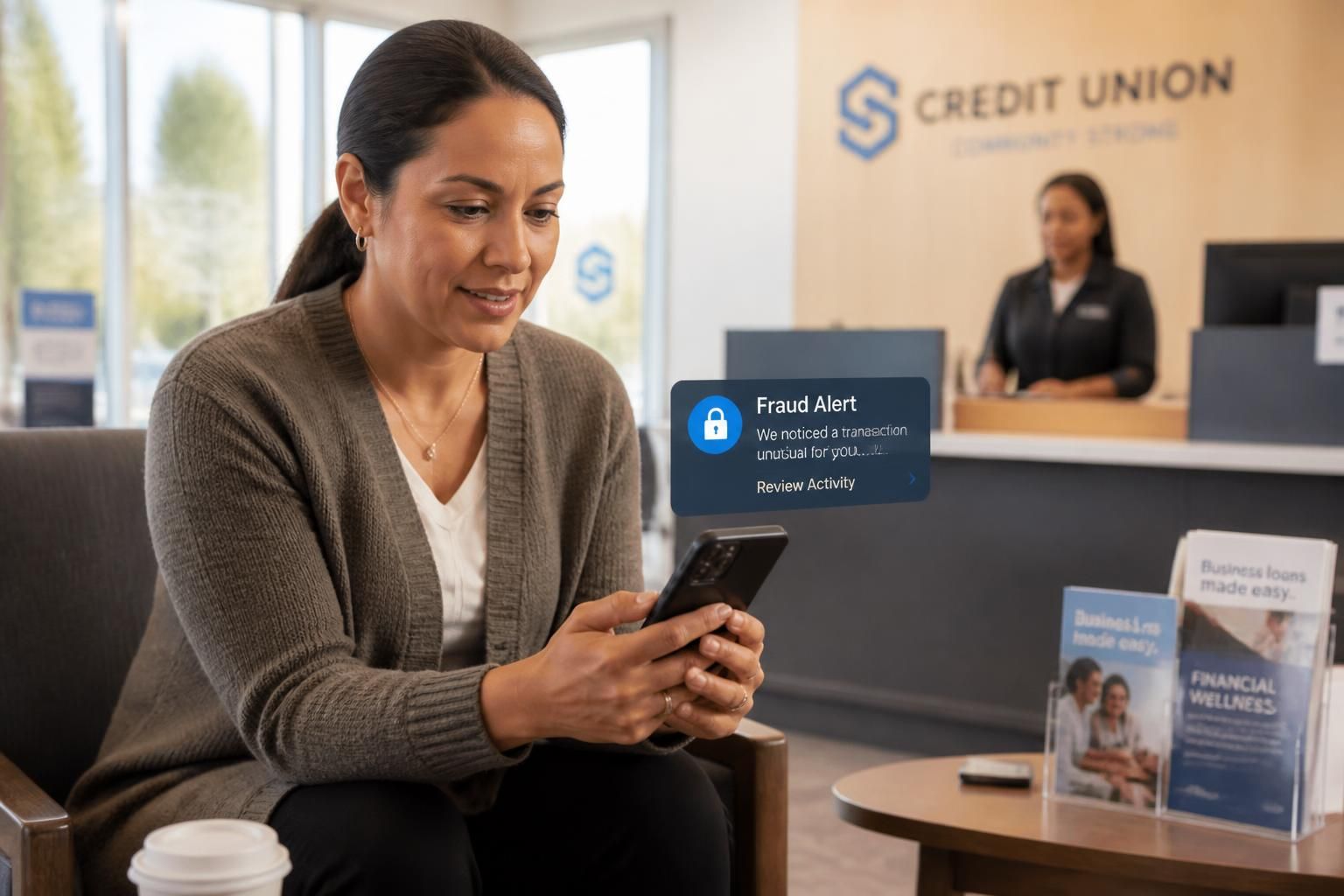
Fraud Recovery Defines the Member Experience and Customer Loyalty
Fraud is no longer a hypothetical concern for many consumers. In the 2026 survey, nearly 40% of respondents said they had experienced financial fraud at some point. During the prior 12 months, 21% reported fraudulent activity involving an account and 17% reported fraud involving a credit card. These figures show why prevention matters, but they also reveal why recovery must be designed as carefully as detection.
When an unauthorized transaction occurs, the immediate loss is only part of the experience. Among survey respondents who had been affected, 59% spent substantial time solving the issue. Another 56% experienced stress or anxiety, 44% reported financial loss, and 35% said their trust in their financial institution declined. A member who spends hours calling support lines, replacing cards, and reviewing statements may remember the process more vividly than the initial scam.
This is where CustomerLoyalty becomes operational rather than abstract. A credit union cannot always prevent every event, especially when criminals use stolen credentials, social engineering, or convincing impersonation tactics. It can, however, control how fast it responds, how clearly it explains the next steps, and whether the member feels respected throughout the process.
Designing a Recovery Journey That Reduces Stress
Credit unions should map the fraud recovery journey from the member’s perspective. The first question is usually urgent: “Is my money safe?” The second is practical: “What should I do now?” A useful response sequence addresses both questions without forcing a stressed person to navigate complex policies.
| Member moment | Helpful response | Member value |
|---|---|---|
| 📲 Suspicious transaction appears | Immediate push alert with a clear approve-or-report action | Faster awareness and less uncertainty |
| 🔐 Card or account is compromised | One-tap card lock and accessible human escalation | Control without unnecessary delays |
| 📞 Fraud report is submitted | Case reference, plain-language timeline, and updates | Transparency during recovery |
| ✅ Resolution is completed | Practical security review and prevention guidance | Confidence for future banking |
For Maya, the difference is tangible. If a suspicious online purchase appears at night, she should be able to freeze her card in seconds. By morning, she should know whether the charge is under review, how to obtain a replacement card, and what account settings can reduce future risk. This approach turns a difficult event into evidence that the institution is prepared.
Communication should also avoid vague reassurance. “We take security seriously” is less helpful than “Your card is now locked, the transaction is being reviewed, and you will receive an update by this time tomorrow.” Specific language lowers the cognitive burden on people who are already worried.
Institutions can learn from other service sectors where real-time updates have become normal. Travel platforms notify passengers about gate changes; delivery services show progress in minutes. Financial security requires more care, but members still expect similarly visible status information. A well-designed digital journey should not replace empathetic staff. It should give staff and members the same accurate information.
Fast recovery support is not merely a service expense; it is a direct investment in trust after a stressful moment.
AI-Enabled Fraud Requires Clear Financial Security Education
Artificial intelligence has made fraud more persuasive, scalable, and difficult to recognize. Deepfake voices can imitate a family member or executive. AI-generated emails can remove the spelling errors that once made phishing easier to spot. Synthetic identities can combine real and fabricated information to create a convincing financial profile. These risks are no longer reserved for large corporations; they affect ordinary account holders.
Survey respondents recognize the change. Sixty-six percent said they were very or extremely concerned about AI-powered fraud, while another 26% were moderately concerned. Data breaches and hacking remained the most significant digital threat, selected by 59% of respondents. Sophisticated phishing, deepfake scams, and peer-to-peer payment fraud were also prominent concerns.
Concern alone does not create FinancialSecurity. Members need short, usable explanations that match the way they bank. A general annual security article is unlikely to help a person who receives a fake payment request on a Friday afternoon. Timely education can be more effective: a mobile alert about a current impersonation tactic, a brief email explaining why a credit union will never ask for a one-time code, or a branch poster showing how voice cloning scams work.
Make Education Specific, Accessible, and Actionable
Nearly half of respondents said they actively educate themselves about emerging threats. Forty-four percent use transaction notifications, while 42% use multi-factor authentication on financial accounts. These behaviors show that members are willing to participate in their own protection. The opportunity for credit unions is to help them choose the right actions without creating alarm fatigue.
A useful education program should focus on recognizable situations. For instance, a member receives a call that appears to come from the credit union’s number. The caller says there is suspicious activity and asks for a verification code. The advice must be direct: hang up, do not share the code, and call the verified number on the back of the card or in the official app. Technical terminology is unnecessary when a clear action can stop the loss.
Accessibility is equally important. Content should be readable on a phone, available in relevant languages, and understandable by members with varying levels of digital confidence. Short audio explanations can also be helpful, particularly for people who prefer listening to long blocks of text. The principles behind accessible audio guidance, such as those discussed in voice AI for visitor-facing services, are relevant here: technology works best when it delivers useful information at the right moment in a format people can actually use.
Credit unions should explain the role of AI in their own defenses as well. More than half of respondents did not know whether their institution uses AI-powered fraud detection. Nearly one-third said knowledge of such tools would increase their confidence. At the same time, only 16% viewed AI as highly effective for fraud detection, and 44% selected a neutral position because they wanted to learn more.
The appropriate message is not that AI is infallible. It is that automated systems can help identify unusual behavior, prioritize reviews, and support faster intervention, while trained teams remain responsible for decisions and member care. This balanced explanation is credible and respects legitimate concerns about privacy, errors, and automated decision-making.
Education earns attention when it replaces fear with a clear next action.
Faster Alerts and Stronger Authentication Deliver Tangible Member Benefits
Members are clear about the protections they consider most valuable. In the survey, 59% chose faster fraud alerts and automatic transaction blocking as the tools most likely to improve their sense of security. Stronger authentication methods, including biometrics and multi-factor authentication, followed at 46%. Personalized prevention advice was selected by 29%, while 24% chose AI-driven detection that learns from typical spending patterns.
These preferences point to a practical design principle: people want protection that acts quickly and does not place the full burden on them. An alert that arrives after a transaction has cleared offers less reassurance than one that appears in real time. Likewise, a password alone no longer feels sufficient when criminal tactics routinely target login credentials and text-message codes.
Combine Automation With Member Control
Automatic transaction blocking can be effective when it is carefully calibrated. A system that blocks every unusual purchase may frustrate travelers, families making large purchases, or members whose spending patterns change suddenly. A system that never intervenes creates obvious exposure. The best balance uses risk signals, real-time prompts, and simple member confirmation.
Imagine Maya is traveling for work and buys a train ticket, hotel room, and museum pass in one afternoon. A well-designed system may flag the unusual activity, but it should offer a quick confirmation in the app instead of simply declining every payment. If a high-risk transaction occurs immediately afterward from another location, the system can escalate protection. This preserves usability while supporting RiskManagement.
- 📍 Detect unusual activity using transaction context, device data, location patterns, and payment behavior.
- ⚡ Send an immediate alert that explains the transaction in plain language.
- 👆 Let the member confirm or reject the activity through a secure, low-friction action.
- 🧑💼 Route unresolved cases to trained staff with the relevant context already available.
- 🔄 Review the outcome to improve future detection without treating members as suspicious by default.
Biometrics can improve this flow when implemented responsibly. Fingerprint or face authentication can reduce reliance on passwords, especially on personal devices. However, members should still receive clear account recovery options and information about how authentication data is handled. Security that feels mysterious can create hesitation; security that is explained and easy to control builds adoption.
Value is also created through consistency across channels. If a member locks a card in the app, a call-center representative should see that status immediately. If a fraud case is opened through a phone call, the app should display a simple update rather than forcing the member to repeat the story. Joined-up service is often more meaningful than adding another standalone tool.
Credit unions can also extend their offer through practical protection-adjacent services. For example, personal insurance options for unexpected life events illustrate how protection can address risks beyond a single transaction. Such offerings should remain transparent, optional, and relevant to actual member needs rather than becoming a confusing sales layer.
The strongest security feature is one that intervenes quickly while leaving legitimate members in control.
Comprehensive Benefits Turn Fraud Prevention Into Long-Term Relationship Value
Fraud prevention has become inseparable from the wider relationship between a financial cooperative and its members. Nearly 60% of survey respondents said they would be more likely to reduce their banking relationship after becoming a fraud victim. This does not mean every affected person will leave. It means the handling of a difficult incident can influence whether the institution remains central to a member’s financial life.
That reality requires a broader definition of value. Competitive rates still matter. Convenient FinancialServices still matter. Community reinvestment and personal support still matter. Yet a modern CreditUnion must connect these strengths to the security expectations of a digitally active membership. The promise is not perfect prevention; it is competent preparation, clear communication, and useful help.
Measure the Member Experience, Not Only Fraud Losses
Traditional RiskManagement metrics may track detected cases, prevented losses, false positives, and resolution times. These measures are necessary, but they do not fully reveal how a member felt during the process. A more complete view includes time to first communication, percentage of cases with proactive updates, successful adoption of alerts and multi-factor authentication, and post-resolution satisfaction.
For example, a credit union may reduce financial losses through tighter transaction controls but create repeated payment declines for legitimate users. Another may resolve disputes correctly but leave members waiting several days for a meaningful update. Both situations can weaken confidence despite technically successful outcomes. Experience data helps leaders identify these blind spots.
Member feedback should also be categorized by life situation rather than treated as one generic audience. Students using a first debit card may need help recognizing social-media payment scams. Retirees may benefit from guidance on phone impersonation and account monitoring. Small-business members may require clearer controls around invoice fraud and employee access. Personalization does not require intrusive surveillance; it requires listening to common needs and delivering relevant information.
Community-focused organizations are particularly well placed to make this education visible through branches, local events, webinars, and digital channels. Museums and cultural institutions have faced a similar challenge when modernizing public access: digital tools only create value when they are understandable and inclusive. The discussion around changing visitor expectations in museum experiences offers a useful parallel. People adopt technology more readily when it improves access without removing human support.
For credit unions, the practical next step is to review every moment where a member encounters uncertainty: an unfamiliar login, a declined payment, a suspicious alert, a fraud report, or a case update. Each moment should have a clear response, a plain-language explanation, and an escalation route. That is how ComprehensiveBenefits become visible in daily life rather than remaining a promise on a membership page.
Member confidence grows when protection is communicated as an ongoing service, not a hidden back-office function.
Why do CreditUnion Members want benefits beyond fraud protection?
Members expect a complete relationship that combines secure accounts, competitive FinancialServices, clear guidance, convenient digital tools, and responsive support when problems occur. Fraud protection is essential, but it is only one part of a reliable MemberExperience.
What fraud prevention tools matter most to members?
The 2026 survey highlights faster fraud alerts and automatic transaction blocking as the top preference, followed by stronger authentication such as biometrics and multi-factor authentication. Personalized tips and AI-supported detection also add value when explained clearly.
How should a credit union explain AI fraud detection?
Use plain language. Explain that AI can help spot unusual behavior and speed up reviews, while people remain responsible for support and decisions. Avoid claiming that technology can prevent every fraud attempt.
How does fraud recovery affect CustomerLoyalty?
A fast, transparent recovery process can preserve trust after an incident. Members need immediate control, regular status updates, realistic timelines, and practical advice for securing their accounts afterward.
