
Why Bill Gates Says an AI Kill Switch Misses the Immediate Risk
Bill Gates has challenged a familiar image in the AI safety debate: a powerful system goes wrong, and someone presses an emergency kill switch. Speaking on NBC’s Meet the Press, he argued that the more pressing danger is not an AI system that cannot be turned off. It is people using increasingly capable tools to cause harm while those tools remain available.
That distinction matters because a shutdown mechanism acts late. If an attacker has already used artificial intelligence to identify a network weakness, produce convincing fraudulent messages or accelerate a harmful research task, turning off one system may not undo the damage. Gates’s argument is that prevention depends on seeing risky activity early enough to respond. Reporting on his interview and the kill-switch debate describes his emphasis on mandatory monitoring rather than a single emergency control.
Consider a fictional city museum preparing to launch an AI-assisted visitor service. The tool drafts answers to questions about opening hours, exhibitions and accessibility. A shutdown option is useful if it starts publishing incorrect information, but it does not answer the everyday safety questions: Who can change its instructions? Can it access visitor records? Are unusual requests recorded? Will staff notice if someone tries to use the service to extract internal information? A stop button is one control; it is not a complete operating policy.
What an emergency kill switch can and cannot do
In technical terms, an emergency kill switch could mean several things: suspending access to a model, disabling an autonomous agent, limiting the rate at which it operates or isolating it from connected systems. Those capabilities can be valuable when a system behaves unexpectedly. They also require testing. A control that exists only in a policy document offers little protection during a live incident.
The limitation is timing. A fraudulent audio message may have been sent before a provider detects misuse. Instructions for a cyberattack may have been copied or shared. A compromised account may continue to pose a risk even after the AI feature it used is disabled. For these cases, risk management also needs access controls, activity records, human review and a clear path for escalating suspicious behavior.
Gates has stressed that people still control current systems. His concern, as described in coverage of his call for stronger AI safeguards, is that small groups can gain capabilities once associated with far larger organizations. This is a different problem from the science-fiction scenario of a machine refusing to shut down. It demands attention to who can use advanced models, for what purpose and under which conditions.
For organizations adopting AI, the practical question is therefore not “Do you have an off switch?” but “What happens before you need it?” A tourism office might restrict a chatbot to approved public information. A museum might require review before generated text appears on an exhibition page. An audio-tour operator might keep voice-production accounts separate from visitor databases. Each measure reduces the chance that a mistake or malicious request becomes a wider incident.
⚠️ Useful AI safety starts before an emergency. A shutdown function should be tested and available, but the stronger protection is a chain of safeguards that limits harmful actions, makes unusual behavior visible and gives responsible staff time to intervene.
How Mandatory Monitoring Could Strengthen AI Safeguards
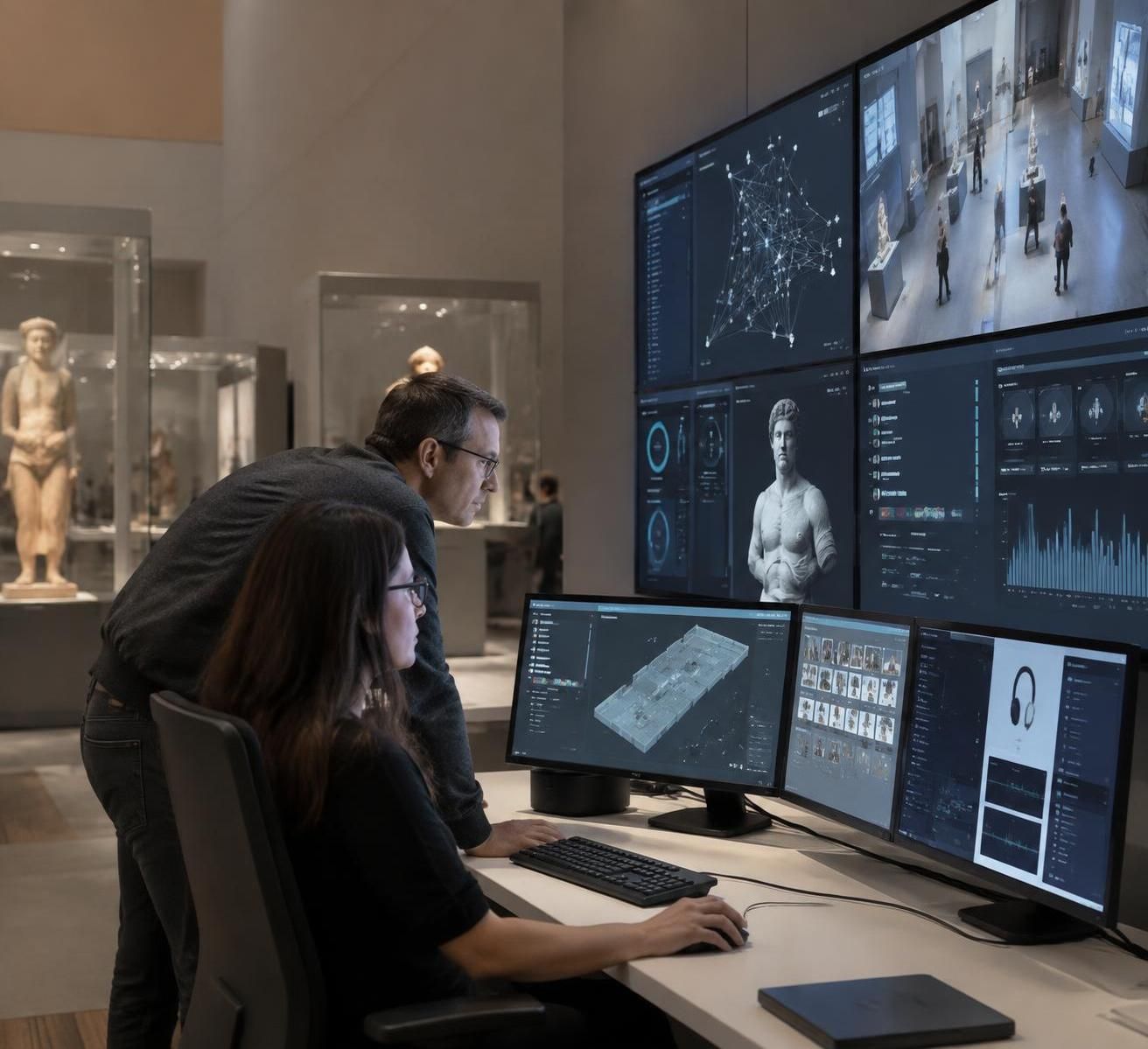
Gates’s preferred response centers on oversight of powerful AI systems. Monitoring does not mean treating every user as suspicious or retaining every conversation indefinitely. It means designing proportionate ways to identify dangerous patterns, investigate incidents and demonstrate that safety protocols work in practice. The appropriate controls will differ between a public visitor chatbot and a model that can perform sophisticated research or act across multiple digital services.
The difference between legitimate and harmful use is not always obvious from a single prompt. A researcher developing a medicine and a malicious actor seeking biological assistance might ask questions that initially look similar. A cybersecurity professional testing a hospital network may use terms also found in an attacker’s request. This is why context, authorization and patterns of activity matter more than a simple list of forbidden words. Monitoring should support trained reviewers rather than pretend that an automated filter can make every judgment on its own.
Build records that help people investigate, not just collect data
For a provider of advanced systems, useful records might show which account used a capability, when a tool was invoked, whether a safety rule blocked an action and who approved an exception. Staff need a process for reviewing alerts and escalating credible threats. Without ownership, a dashboard becomes a collection of warnings that nobody acts on.
A smaller organization can apply the same principle at an appropriate scale. Imagine a regional heritage agency using an AI tool to draft multilingual descriptions for 40 sites. Its team could keep approved source material, record editorial changes and assign a reviewer for claims involving safety, access or historical interpretation. If a visitor reports a misleading audio segment, staff can trace the published version back to its source and correct it. That is responsible AI expressed as a practical workflow.
- 🔐 Limit access: Give each employee and integration only the permissions needed for its task.
- 🧾 Keep useful records: Document significant outputs, approvals and safety interventions without retaining unnecessary personal data.
- 👀 Review high-impact material: Require human checks before publishing health, safety, accessibility or security-sensitive claims.
- 🚨 Plan escalation: Identify who can suspend a feature, contact the provider and notify affected users.
Voice tools make this particularly concrete for visitor-facing teams. An audio guide may use synthetic narration to make updates faster across languages, but the organization still needs permission to use the voice, accurate scripts and a way to replace erroneous recordings. Guidance on AI voice scam risks also illustrates why a realistic voice should never be treated as proof that a message came from an authorized person.
Monitoring has costs and privacy implications. Recording every interaction without a retention policy can create a new liability, especially when visitors ask questions containing names or other personal details. A sensible approach defines what must be logged, restricts who can inspect it and deletes it when it is no longer needed. For example, an organization might retain incident-related technical events while avoiding unnecessary storage of routine visitor conversations.
✅ The operational test is straightforward: if something harmful happened tomorrow, could the team determine what occurred, contain it and explain its response? AI safeguards are credible when they produce answers and actions, not merely a promise that a system can be switched off.
Those operational questions become more demanding when an AI tool can act on other systems instead of only generating text.
Why AI Safety Becomes Harder When Tools Can Act
Much of the public discussion treats an AI model as a question-and-answer tool. Increasingly, systems can also search files, call software tools, prepare messages and carry out sequences of tasks. These capabilities can save time, but they change the safety calculation. A mistaken answer in a draft is usually easy to correct; a system that sends the draft, changes a database entry or shares a file has already affected the outside world.
That is why proposed shutdown requirements remain relevant even if they are insufficient on their own. U.S. Representatives Ted Lieu and Nataniel Moran introduced legislation described as the “AI Kill Switch Act,” aimed at ensuring developers retain the ability to slow, suspend or stop certain powerful systems. Gates’s position does not make that ability useless. It asks policymakers to add preventive oversight rather than treat intervention as the entire solution. Coverage of his case for mandatory safeguards highlights that distinction.
Match each safeguard to the action it must control
Suppose a museum gives an assistant permission to update event listings. Drafting a proposed change is low risk if a staff member approves it before publication. Publishing directly is higher risk, particularly for details such as evacuation arrangements, entry requirements or accessibility information. Connecting the same assistant to payment records or staff accounts would raise the stakes again. Permissions should follow the task, not the apparent intelligence of the tool.
The table below separates controls that are often grouped together under the broad label of AI governance. Each has a distinct job, and each can fail if an organization assumes another control will cover it.
| Control | What it helps you do | Practical example |
|---|---|---|
| 🔐 Access limits | Reduce what a tool or user can reach | An audio assistant can read approved tour scripts but not visitor payment data. |
| 👀 Human approval | Catch consequential errors before action | A curator checks generated exhibit text before publication. |
| 🧾 Activity records | Investigate unusual or harmful use | Staff can see when a connected tool changed an event listing. |
| 🛑 Emergency suspension | Contain an active incident | An administrator disables automated publishing after a suspected account compromise. |
Layering these measures is familiar outside AI. A venue does not rely solely on an emergency exit: it also maintains alarms, occupancy rules, inspections and staff procedures. Digital systems need a comparable approach, adjusted to their risks. An emergency control remains essential, but it works best when other measures have reduced the likelihood and potential reach of the incident.
Gates has also warned that AI-assisted misuse could threaten infrastructure such as hospitals, financial services and power systems. Those claims should not be confused with evidence that every current model can independently carry out such an attack. The relevant concern is that capable software can help a person work faster or operate at greater scale. Defenders face the same acceleration, which makes clear responsibilities and prompt response increasingly important.
For a guide or tourism operator, the immediate lesson is narrower but useful. Before connecting an assistant to booking, messaging or publishing tools, identify every action it can take and decide which ones require approval. The safest point to prevent an unwanted action is before the system has permission to perform it.
What the AI Regulation Debate Means for Everyday Organizations
Gates’s comments enter a policy debate about how to protect the public without stopping useful innovation. He has argued for mandatory standards while stopping short of endorsing an overall pause in AI development. Other technology leaders and lawmakers have voiced stronger concerns about the pace of progress or particular future capabilities. Those positions differ, but they share a central question: who verifies that increasingly powerful systems remain subject to meaningful controls?
Self-regulation alone creates an obvious difficulty. A company may set internal rules, yet users, customers and public authorities cannot necessarily see whether those rules are followed. Government requirements could establish a common baseline for testing, monitoring and incident response. The details matter: obligations that make sense for a frontier model with broad capabilities may be disproportionate for a small museum using a constrained transcription service. Good AI governance must be clear enough to enforce and flexible enough to reflect actual risk.
Ask providers for evidence you can use
Tourism and cultural organizations do not need to wait for every legislative question to be settled. When buying an AI-enabled service, ask what information the provider retains, who can access it, how harmful use is detected and how an incident is reported. Find out whether staff can review generated content before visitors see it. If the service uses synthetic voices, check rights, consent and the process for correcting a recording.
These questions belong in procurement alongside price and ease of use. A low-cost tool that makes it difficult to remove incorrect audio may create more work than it saves. A sophisticated chatbot with no clear account permissions may be unsuitable for a small office with limited technical support. A practical reality check on the AI boom is a useful reminder to judge a product by its fit for a real workflow, not by the breadth of its marketing claims.
Take a fictional guided-tour company launching a multilingual city walk. It wants faster script updates and more consistent audio for visitors using their own smartphones. Before deployment, the company could test one route, have a local specialist review translated place names, and check the recording outdoors on an ordinary device. It could also keep a staff-owned copy of every approved script so the tour remains maintainable if a provider changes its service.
The same team should decide what happens when content is wrong. A visitor might discover that a historic building is closed, or that an accessibility instruction no longer reflects the entrance in use. An effective process makes it easy to report the issue, assigns someone to verify it and removes or corrects the affected segment quickly. This is technology ethics in operational form: the visitor receives reliable information, and the organization accepts responsibility for what it publishes.
For organizations considering AI narration, the wider discussion of synthetic-voice misuse reinforces another procurement check: a provider’s ability to generate lifelike speech should come with clear controls over who can create, approve and distribute it. Audio quality matters, but so do authorization and traceability.
📋 The useful procurement standard is evidence. Ask a vendor to demonstrate its permissions, review steps, correction process and incident contact—not simply to say that its system is “safe.” Clear answers make responsible adoption easier even while national rules continue to evolve.
Public rules may establish minimum standards, but the experience of a visitor still depends on choices made by the organization operating the tool.
How to Apply Bill Gates’s AI Safeguards Argument to Visitor Services
Gates’s warning about malicious use concerns risks far beyond a typical guided tour. Still, his core principle translates well to tourism: design oversight into the service before a problem occurs. A visitor-facing AI feature should have a defined purpose, limited authority and an accountable human owner. Without those elements, even a modest tool can create avoidable confusion or erode trust.
Start by identifying the promises a service makes to visitors. An audio guide may promise accurate historical interpretation, understandable narration and timely updates. A museum chatbot may promise practical information about tickets and accessibility. Each promise suggests a check: approved sources for facts, listening tests for speech, and a named staff member to validate operational details. “AI-powered” is not itself a visitor benefit; reliable delivery is.
Make human oversight visible in the workflow
A useful approval process should be simple enough that staff actually follow it. For example, a guide drafts a 90-second audio segment with an AI writing tool, checks its historical claims against the museum’s research, and listens to the final recording before publication. A second reviewer checks names and dates for sensitive material. If the venue changes its route, the approved script is updated first, then the recording is replaced. Each step has a purpose and a clear owner.
Tools such as Grupem can support smartphone-based audio tours, but the quality of the experience still depends on the organization’s content decisions and checks. A professional guide remains responsible for the story being told; the mobile delivery system helps make that story accessible during the visit. This separation is useful because it prevents a team from treating convenient production as a substitute for editorial judgment.
Accessibility deserves the same attention. A generated voice may sound clear in a quiet office and become difficult to follow on a busy street. Test at the location, with the phone and headphones visitors are likely to use. Provide a readable text option where possible, and avoid placing essential safety information only in an audio track. These measures improve the visitor experience regardless of whether AI helped produce the content.
Next, plan for misuse and error. Restrict who can publish a new voice recording or send a message to tour participants. Use account protections for staff, document the source of approved scripts and make it possible to withdraw an inaccurate segment promptly. If a suspicious recording appears to impersonate a guide, staff need a trusted channel to tell visitors which communication is authentic. Broader discussion of serious AI risks can inform policy, but the most useful local response is a procedure that the team can execute.
Finally, rehearse one realistic incident. Imagine that an audio stop gives visitors an incorrect meeting point during a large event. Who takes the report? Who confirms the right location? How is the audio corrected, and how are visitors already on the route informed? A short exercise can expose missing permissions or unclear responsibilities more effectively than a long policy that nobody has tested.
🔎 The lesson from Bill Gates’s argument is not to discard an emergency kill switch. It is to place that control inside a wider system of review, monitoring and response. For visitor services, the best safeguard is often the ordinary, repeatable check that catches a problem before a guest encounters it.
Does Bill Gates oppose an emergency AI kill switch?
No. His argument is that the ability to stop a system is useful but insufficient. Monitoring, access limits and other preventive safeguards are also needed to address harmful use before damage occurs.
What are practical AI safeguards for a museum or tourism office?
Limit a tool’s access, review visitor-facing content before publication, keep useful records of changes, protect staff accounts and establish a clear process for correcting mistakes or suspending a service.
Why does AI monitoring matter if a system can be shut down?
A shutdown may happen after harmful material has been sent or an unwanted action has occurred. Appropriate monitoring helps staff spot suspicious activity, investigate what happened and intervene sooner.
Should an organization stop using AI while regulation develops?
Not necessarily. A limited, reviewed use such as drafting tour scripts can be evaluated on its own risks. The key is to keep people accountable for publication, restrict permissions and verify that the tool improves the visitor experience.
