
Osceola County Deputies Impersonated in AI Voice-Cloning Scam Calls
The Osceola County Sheriff’s Office has warned that criminals are impersonating agency personnel to demand money from residents, using what officials describe as AI voice cloning. The callers claim that recipients missed jury duty or have outstanding arrest warrants, then present payment as a way to avoid detention or other legal consequences.
According to the agency’s account, at least 40 people received suspicious calls over the period covered by its warning. Sheriff Chris Blackmon also described the reports as numbering a few dozen; these descriptions concern reported contacts, not a confirmed total of victims who lost money.
FOX 35 Orlando’s coverage of the sheriff’s warning describes callers posing as real personnel and requesting funds, sometimes through cryptocurrency. At the time of that account, the department said it was not aware of anyone who had paid the perpetrators.
How the Captain Steve Moser impersonation creates credibility
One reported voicemail used the identity of Captain Steve Moser, a real member of the agency. Officials described the misuse of his voice alongside his publicly available photograph, creating a combination that could appear convincing to someone who searched his name while listening.
Moser is identified as a captain; Chris Blackmon is the sheriff named in the supplied reporting. Keeping those roles separate matters because an accurate name or recognizable photograph can make a fraudulent message appear more authoritative without making its demand legitimate.
The agency attributes the imitation to artificial intelligence. That attribution should not be confused with a published technical analysis establishing which software was used, how training material was obtained, or whether every reported call involved the same production method.
Why a real officer’s identity does not authenticate a payment demand
The deception exploits a simple mental shortcut: if the employee exists, the caller may seem genuine. Yet names, ranks, photographs, and public appearances can be copied without access to internal police systems.
Consider Maya, a fictional visitor-services coordinator in the Kissimmee area. Between answering guest questions, she receives a voicemail naming a captain and referring to a missed court obligation. A quick search confirms that the captain exists, but that search verifies only the person’s identity—not who recorded or delivered the message.
This distinction is central to the public safety alert. Residents do not need to determine whether a recording is synthetic before rejecting a demand to pay an alleged deputy over the telephone.
The sheriff’s stated guidance is straightforward: the office does not ask people to send money through these calls or move funds into cryptocurrency. A threatening caller cannot override that guidance by supplying an employee number, an impressive title, or a familiar-sounding voice.
The warning also deserves careful interpretation. An absence of known payments in the agency’s account does not establish that every recipient avoided harm, and the reported contact count does not measure all attempted calls.
For residents, the useful distinction is between what sounds credible and what can be verified independently. A real employee’s name is background information, not authorization to transfer money. Understanding how that credibility is manufactured makes the next part of the scheme—the pressure to act—easier to recognize.
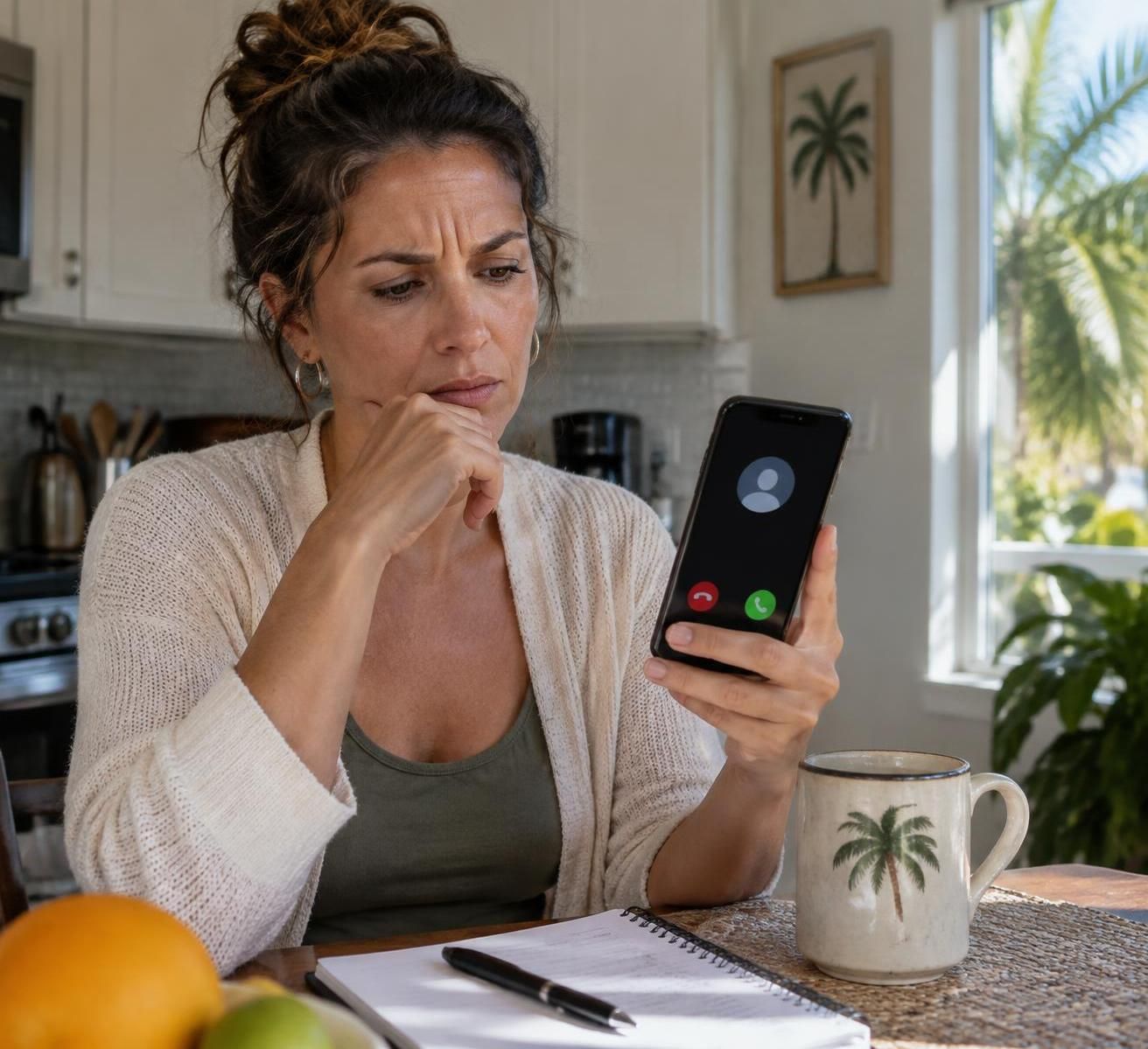
How AI Voice Impersonation Turns Legal Anxiety into Resident Extortion
A law enforcement scam does not depend on sophisticated audio alone. Its persuasive force usually comes from a sequence of claims: an authority figure identifies a supposed violation, describes an alarming consequence, and offers an immediate payment route that appears to resolve the problem.
Voice impersonation strengthens the opening claim. When a message sounds professional and names a real captain, the recipient may focus on avoiding trouble rather than checking whether the communication belongs to a legitimate legal process.
The alleged missed-jury-duty scenario is particularly effective because many people are unfamiliar with court administration. Someone who recently moved, changed addresses, or traveled may wonder whether an important notice went missing, creating an opening for manipulation.
Recognizing the pressure behind fake arrest-warrant calls
Urgency narrows the time available for judgment. A caller who insists that payment must happen immediately is trying to prevent the recipient from speaking with family, contacting a court, or finding the agency’s independently published contact information.
Requests for secrecy serve the same purpose. Instructions not to hang up, not to consult anyone, or to remain connected while visiting a bank should be treated as warning signs rather than evidence of a confidential investigation.
In Maya’s hypothetical situation, the caller might claim that her work schedule is irrelevant because an arrest will happen unless she pays before her next tour begins. That deadline exploits a genuine concern—leaving guests and colleagues unsupported—to make a fabricated emergency feel operationally urgent.
Such resident extortion attempts turn ordinary responsibility into leverage. The appropriate response is not to negotiate a longer deadline, but to stop using the caller’s communication channel.
Why voice quality cannot reliably distinguish phone fraud
Artificial intelligence can produce convincing speech, but an ordinary recording, an impersonator, or a mixture of techniques may also deceive listeners. The practical security problem is therefore broader than identifying one particular generation tool.
Some fabricated recordings contain unnatural pauses or pronunciation errors. However, mobile compression, weak reception, background noise, and speakerphone playback can create similar effects in legitimate conversations.
A voice that sounds natural is not proof of identity, and a distorted voice is not proof of fraud. Audio clues can justify caution, but they should never replace independent verification of the request.
404 Media’s reporting on the police account provides another reference point for the agency’s attribution. Separately, Grupem’s material on AI-enabled voice spoofing offers a related starting point for understanding impersonation risks.
Cryptocurrency requests add a further warning because transfers can be difficult to reverse and may offer limited recovery options. Gift cards, transfers to unfamiliar individuals, or instructions to withdraw cash should likewise trigger a stop-and-check response, even though not every method is documented in this particular case.
Why spend time debating whether the caller sounds authentic when the payment instruction itself is unsafe? The most dependable defense evaluates the requested action, not the apparent realism of the speaker. That principle leads to a verification routine that works even when the audio is persuasive.
Stop Phone Fraud with an Independent Verification Routine
The safest response to threatening scam calls is to break contact before making decisions. Hanging up prevents the caller from controlling the pace, coaching the next steps, or steering the recipient toward a counterfeit payment page.
The Osceola County Sheriff’s Office advises residents to contact the agency directly using the telephone number published on its official website. Do not use a number supplied by the suspicious caller, included in their message, or displayed as incoming caller identification.
Caller ID can be spoofed, so a familiar local number does not authenticate a conversation. Even an apparent match with a public agency’s number should not replace placing a fresh call through independently obtained contact details.
A practical checklist for suspicious deputy payment demands
The following sequence is designed to reduce decision-making under stress. It applies whether the communication arrives as a live conversation, voicemail, text follow-up, or a message containing a payment link.
- 🛑 End the exchange: do not negotiate, provide payment details, or follow instructions to remain connected.
- 🔎 Find the agency independently: navigate to its official website and check the published contact information.
- ☎️ Start a separate conversation: explain that someone used an employee’s name and demanded money.
- 🧾 Keep the original evidence: retain the voicemail, call time, messages, and any payment instructions already received.
- 🔐 Protect account access: do not share passwords, verification codes, banking credentials, or identity documents.
- 👥 Involve a trusted person: ask a colleague or relative to help verify the situation if pressure makes concentration difficult.
For Maya, this means stepping away from the visitor desk briefly, ending the conversation, and calling through a verified agency channel. She does not need to prove that the alleged warrant is fictional before refusing the proposed payment.
If the issue concerns jury service, the relevant court or clerk’s office can provide independent guidance through its own official channels. A caller’s insistence that no other department may be contacted is not a reason to surrender that option.
Match each warning sign with a safe response
Different details may require different follow-up, but none requires immediate compliance with an unsolicited financial demand. The table separates suspicious claims from practical actions without assuming that every contact follows an identical script.
| Warning sign | Why it matters | Safer response |
|---|---|---|
| 🚨 Arrest threatened unless you pay | Fear discourages independent checking. | Hang up and contact the agency yourself. |
| 🪙 Cryptocurrency requested | Transfers can be difficult to recover. | Do not purchase or send digital assets. |
| 🎙️ Familiar voice or official photograph | Public material can support an impersonation. | Verify the request outside the incoming channel. |
| 🔒 Secrecy or continuous-call instructions | Isolation blocks advice and verification. | End contact and involve a trusted person. |
For additional awareness material, Grupem’s guide to recognizing AI-assisted digital scams is a relevant companion resource. Training should emphasize actions that remain useful even when detection software fails or is unavailable.
A genuine administrative concern can be addressed through a verified process after the threatening call ends. Independent contact restores control over both the conversation and the decision. If information or money has already been shared, the priority shifts from verification to limiting further exposure.
Report Osceola County Scam Calls and Protect Exposed Accounts
Receiving a convincing impersonation attempt does not mean the recipient has done anything wrong. Criminals deliberately exploit authority, uncertainty, and time pressure; a useful response focuses on preserving evidence and limiting harm rather than assigning blame.
Start by distinguishing what happened. Listening to a voicemail, confirming a name, disclosing a password, authorizing a transfer, and installing remote-access software create different risks and call for different recovery steps.
If money was sent, contact the bank, payment provider, or relevant exchange immediately. Describe the transaction as fraud-related and ask whether a hold, recall, dispute, or account restriction is available; recovery depends on the payment method and circumstances.
Preserve evidence without extending contact with the impersonator
Useful records include the original voicemail, displayed telephone number, date and time, claimed employee identity, written messages, and transaction references. If cryptocurrency was involved, retain the destination address and transaction identifier already available in the payment history.
These details may help investigators connect separate reports. A displayed number can still be worth recording even when it was spoofed, provided it is treated as evidence from the interaction rather than proof of the caller’s actual location.
Do not call back to collect more material or attempt to trap the perpetrator. Further engagement can expose additional personal information and create opportunities for a second payment demand.
Publicly posting a threatening voicemail also deserves caution. Recordings and screenshots may contain a home address, telephone number, account information, or another person’s identifying details that should instead be shared through appropriate reporting channels.
In the fictional example, Maya saves the message and writes a brief factual note about the request before reporting it. She avoids embellishing the account with assumptions about the caller’s location or the exact technology used.
Choose recovery steps that match the information disclosed
If login credentials were shared, change them through the service’s official application or website, beginning with sensitive accounts and any accounts reusing the same password. Review active sessions and recovery settings, and enable multifactor authentication where available.
If a verification code was disclosed, contact the affected service promptly because the code may have authorized access or a transaction. Never give another code to someone who claims that it is needed to reverse the first incident.
When identity documents or sensitive identification numbers were exposed, consider the protections relevant to the jurisdiction and type of data involved. In the United States, this may include reviewing credit reports and using credit freezes when appropriate.
If remote-access software was installed, stop using the affected device for sensitive activity until it has been assessed. Contact financial institutions from a separate trusted device, and seek qualified technical assistance rather than accepting help from the original caller.
Reports can go to the impersonated agency and, where relevant, federal fraud-reporting channels such as the FTC or the FBI’s Internet Crime Complaint Center. Emergencies involving immediate danger require emergency services rather than routine online forms.
Be alert to follow-up messages promising guaranteed recovery for an advance fee. No legitimate recovery process should require blind trust in another unsolicited caller. Documenting the incident and securing affected services also gives workplaces useful material for improving their own response procedures.
Build Fraud Prevention into Tourism and Visitor-Service Operations
Tourism businesses, museums, guides, and cultural venues have a particular exposure to telephone-based impersonation. Their staff answer unfamiliar numbers routinely, work with changing schedules, and often need to resolve problems quickly while visitors are waiting.
A threatening call can therefore become more than a personal distraction. It may reach a shared reception telephone, interrupt a tour departure, or pressure an employee into using organizational funds to settle an invented legal issue.
Fraud prevention should be part of everyday operating procedures, not an audio-detection challenge assigned to individual employees. Clear boundaries make it easier to respond safely without requiring specialist knowledge of synthetic speech.
Give staff permission to pause suspicious financial requests
A useful policy states that unexpected demands involving police, courts, suppliers, or management must be verified through established contact records before payment. Staff should know that pausing a suspicious request will not be treated as poor customer service.
For a small guided-tour operator, this could mean requiring a second authorized person to approve unusual transfers. A museum reception team might instead use a named supervisor and a short written procedure stored beside the telephone.
Return to Maya’s visitor-services desk: the strongest protection is not her ability to recognize a cloned voice. It is a rule that no receptionist can make an urgent payment solely because a caller claims official authority.
Training can use a clearly fictional scenario in which someone alleges missed jury service and demands cryptocurrency. Ask employees to practice ending the conversation, locating a verified contact, and making an internal report without repeating sensitive information aloud.
Keep exercises proportionate and accessible. Written instructions, readable layouts, and alternative communication routes help staff with hearing differences, language needs, or limited technical confidence follow the same safe process.
Separate useful audio innovation from identity verification
Public-facing audio remains valuable for interpretation, accessibility, and visitor engagement. A smartphone-based audio-guide workflow, including tools such as Grupem, serves a different purpose from authenticating an employee or authorizing a financial transaction.
Organizations should preserve that distinction when adopting new technology. A recognizable narrator may improve a visitor experience, but their recorded voice should not become an informal security credential for internal decisions.
For public recordings, document permissions, intended uses, and ownership responsibilities. Review unnecessary exposure of personal contact details, while recognizing that removing every recording is neither realistic nor sufficient protection against impersonation.
A practical staff briefing can explain that names, photographs, and speech samples may be copied from legitimate public material. That explanation helps employees understand why accurate details in a message do not prove that its sender is authorized.
Communications teams should also avoid claiming that an app, watermark, or detection tool makes impersonation impossible. Such measures can support a broader process, but none replaces independently verified contact routes and controlled payment approvals.
Review procedures after a suspicious approach, even when nobody pays. Record which channel was used, where staff found reliable contact information, and whether workload or unclear responsibilities slowed the response.
Keep the review non-punitive so employees report attempts early rather than hiding embarrassing encounters. A resilient visitor operation makes verification routine, accessible, and supported by management. The practical questions below address the decisions residents and frontline teams are most likely to face during an attempted impersonation.
Do Osceola County deputies call residents to demand cryptocurrency payments?
The sheriff’s warning states that the agency does not demand money through these calls or instruct residents to move funds into cryptocurrency. End the conversation and contact the office using the number published on its official website.
Can a familiar voice prove that a deputy is really calling?
No. A familiar voice, official photograph, real employee name, or matching caller ID does not authenticate an incoming request. Verify the matter through a separate contact route that you obtain independently.
What should you do if a caller says you missed jury duty?
Do not pay or disclose sensitive information during the call. Hang up, locate the relevant court or clerk’s official contact information independently, and ask about the claimed obligation through that verified channel.
What evidence should you keep after an impersonation attempt?
Retain the original voicemail, call date and time, displayed number, messages, claimed identity, and any payment records. Share relevant material with investigators without calling the suspect back or publishing personal information.
What if you already sent money to the caller?
Contact your bank, payment provider, or exchange immediately and ask about available fraud-response options. Preserve transaction details, report the incident, secure any exposed accounts, and reject unsolicited offers guaranteeing recovery for an advance fee.
