
Revolt Bus Brings Shawnee County AI Data Center Opposition Into Public View
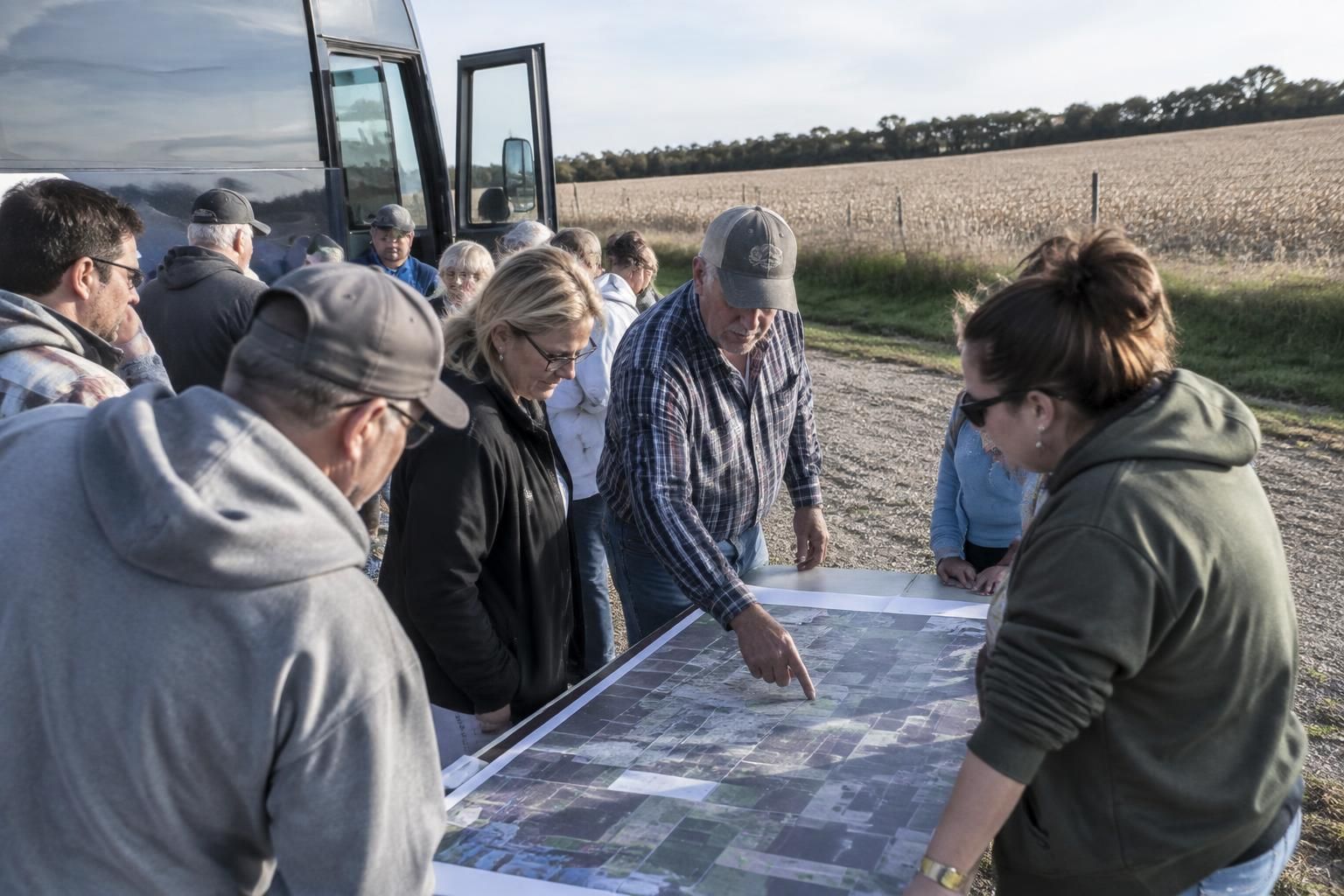
The Revolt Bus visit put a local land-use dispute on a national route. Humans First chair Amy Kremer brought the group’s campaign to Shawnee County, Kansas, where proposed AI data center plans had already prompted residents to question how large facilities would affect their communities.
Kremer’s position is not that artificial intelligence will disappear. She argues that residents should be able to examine a project’s likely effects and influence where it is built. That distinction matters: a person can use AI tools at work and still ask whether a particular industrial site belongs near farms, homes or wildlife habitat.
Humans First describes its campaign as an AI Data Center Revolt bus tour. The bus gives campaigners a recognizable meeting point, but its most useful function is practical. A stop can bring neighbors into the same conversation, connect them with local organizers and direct their attention to the public decisions that remain open.
🚌 A bus stop does not itself decide a permit. County procedures, submitted plans and public hearings determine what residents can formally challenge. For someone who encounters the campaign for the first time, the essential next step is to identify the proposed parcel, the decision-making authority and the deadline for written comments.
The national framing can also obscure differences between places. A large computing campus in one state may face different water, power and zoning questions from a proposal in Kansas. Useful local activism therefore starts with documents rather than slogans: a site map, a project description and any applications available through the county.
Reports on the tour have differed in how they characterize its turnout. One account questioned the size of crowds at some stops, while coverage of a Shawnee County commission meeting described substantial local opposition. Those observations concern different gatherings; neither, on its own, measures countywide opinion.
For residents, that distinction is consequential. A national campaign may attract cameras, but sustained participation usually depends on people who can attend a weekday hearing, read a technical filing or ask a precise question about their own road. Community protest gains force when visibility is matched by evidence that officials can address.
One such question is whether the proposed site can be understood without technical training. Organizers could publish a plain-language route map showing where the bus meets residents and where the land under discussion lies. A short audio explanation, playable on a phone, could help visitors follow the issue while standing at a meeting point; it should clearly separate documented facts from campaign arguments.
Accessible communication is not a substitute for scrutiny. It makes scrutiny possible for people who cannot spend hours working through planning files. The bus can draw attention; a clear account of the actual proposal gives that attention somewhere useful to go.
Shawnee County Data Center Plans Raise Specific Land and Wildlife Questions
Residents’ objections are closely tied to place. The project discussed during the Revolt Bus visit was described as involving approximately 607 acres, a scale large enough to make its location and design central questions. An acreage figure alone does not show how much land would be built over, preserved or used for buffers; those details require a site plan.
Longtime resident Chris Tyler voiced concern that construction could remove habitat for native Kansas species. Colleen Campbell, a Shawnee County resident and co-founder of Protect Kansas, focused on the potential loss of farmland. Their statements express community concerns, not a completed environmental assessment, but they identify impacts a credible assessment should examine.
🌾 “What happens to the land?” is more useful when divided into testable questions. Which fields are within the proposed footprint? What vegetation would be cleared? How would stormwater move after construction? Would fencing interrupt wildlife movement, and what setbacks would separate the facility from neighboring properties?
The answers may vary across a large tract. A data center can include buildings, electrical equipment, access roads and open areas, each with a different effect on the ground. Residents should ask for a drawing that distinguishes those uses rather than treating every acre as either untouched habitat or concrete.
A similar approach applies to water and electricity. Data centers can have substantial energy requirements, but their demands depend on design and operation. Instead of accepting a generic claim about AI infrastructure, a review should seek project-specific estimates: expected peak electrical load, proposed sources of supply, cooling method and anticipated water use.
Imagine a neighbor whose property borders the proposed tract. A broad assurance that development will be screened may sound reassuring at a meeting, yet it gives that neighbor little to evaluate. A plan showing the buffer’s width, planting schedule, equipment location and expected noise levels would allow a much more informed response.
This is also where timing matters. If those details become available only after a key approval, the public may have fewer meaningful options to request changes. Asking officials when supporting studies will be posted is therefore as important as asking what the studies say.
Protect Kansas seeks to give residents a collective voice in that process. Campbell’s comments reflect a familiar difficulty in local disputes: individuals may hesitate to speak when they believe they are alone. A shared question list can lower that barrier without requiring every participant to hold the same view about artificial intelligence.
One resident warned that the decision could affect more than the southwest corner of the county. That broader claim deserves examination through evidence about roads, utilities, public spending and environmental effects. Land-use debate becomes more productive when a large figure on a map is translated into specific, reviewable impacts.
To see what those questions look like at a public meeting, readers can look for local coverage and recordings alongside the written planning record.
Conditional Use Permits Give Shawnee County Residents a Defined Review Point
Shawnee County’s response to public pressure includes a zoning change that requires conditional use permits for data centers and energy storage systems in specified zoning districts. According to reporting on the county resolution, the requirement applies in RA1, RR1, I1 and I2 zones and provides for public hearings and site-specific conditions.
A conditional use permit is not an automatic approval or an automatic ban. It creates a process for reviewing a proposed use at a particular location. That difference explains why some residents welcomed an opportunity to be heard while others continued to call for a moratorium or prohibition.
For a resident following the Shawnee County data center plans, the first task is to establish which decision is pending. Is the county considering a zoning rule, a permit for a particular parcel, or a related utility or road matter? Comments aimed at the wrong decision may be heartfelt yet difficult for officials to act upon.
The next task is to match each concern with a requested response. Someone worried about nighttime equipment noise could ask for a sound study and enforceable limits at nearby property lines. Someone concerned about habitat could request a site survey, construction boundaries and a documented restoration plan.
📝 The following checklist can help turn public resistance into comments that are easier to evaluate:
- 📍 Identify the parcel: Confirm its location, zoning district and proposed use from county records.
- 🗓️ Check the hearing notice: Record the meeting date, submission deadline and available ways to comment.
- ⚡ Request project-specific figures: Ask for expected power demand, cooling approach and water estimates.
- 🌿 Describe a local impact: State how a road, field, drainage route or neighboring property could be affected.
- 🔎 Ask for a verifiable condition: Propose a measurable limit, a monitoring requirement or a document that must be supplied.
These steps do not require residents to become engineers. They help ensure that an expert’s eventual findings address the questions people actually have. They also give officials a clearer record of what the public requested before a decision was made.
| Issue | Document to seek | Useful public question |
|---|---|---|
| 🌾 Land conversion | Site plan and acreage breakdown | Which areas would be built on or retained? |
| ⚡ Electricity | Project load estimate | What infrastructure would serve the site? |
| 💧 Water | Cooling and water-use description | What demand is expected during operation? |
| 🔊 Neighboring homes | Noise study and equipment layout | How would impacts be measured at property lines? |
Public hearings can feel compressed, particularly when speakers have only a few minutes. A written submission allows a resident to attach a map, cite a page in an application and preserve the exact question in the record. During oral comments, one focused concern often works better than a rapid list of unsupported claims.
The county’s permit process gives community protest a formal destination. Its value depends on timely access to documents, clear questions and conditions that can be checked after approval.
Clear Audio and Digital Guides Can Make the Data Center Debate More Accessible
The Shawnee County dispute also reveals a communication problem familiar to organizers of public tours and civic events. Important information may be scattered across meeting notices, maps, lengthy documents and social posts. A resident can support or oppose a project and still struggle to find the latest authoritative version of a plan.
A mobile listening guide could help at a Revolt Bus stop or a locally organized site visit. Rather than delivering a long speech, it could offer brief, location-based segments: what is proposed, which facts are documented, which points remain disputed and where residents can submit comments. Participants could listen at their own pace without gathering tightly around one speaker.
That format calls for editorial discipline. An audio segment about a proposed parcel should identify its source and date. If a figure comes from an applicant, it should be attributed; if an environmental effect has not yet been assessed, the recording should say so plainly.
🎧 Good audio access means more than turning up the volume. Outdoor wind, passing traffic and varied hearing needs can make a live explanation difficult to follow. Clear narration, short chapters and matching written text let visitors revisit a detail after the group has moved on.
Grupem, which turns a smartphone into an audio-guide device, is one option for structuring a guided listening experience without requiring a dedicated handset for every attendee. For a civic walk, the most useful design would be modest: a few stops, a map, concise narration and links back to primary documents. The tool should support informed participation, not present an advocacy script as an official county account.
A museum or tourism office has a related responsibility when it explains a contested local landscape. A route past farmland and industrial infrastructure can show how land uses change over time, provided the guide distinguishes present conditions from proposals. That distinction protects both visitor trust and the people whose properties are being discussed.
Local organizers can borrow the same method without producing a polished tour. Start with a two-minute recording answering three questions: Where is the proposed site? What decision comes next? Where can the underlying documents be read? Test it with someone unfamiliar with the issue; if they cannot repeat those answers, revise it.
As discussed in Grupem’s coverage of community voices in AI debates, the way people receive information shapes whether they can take part meaningfully. In Shawnee County, a phone-friendly explanation can be especially helpful to residents unable to attend every meeting, though it must never replace the official notice or record.
Organizers should also plan for correction. A permit date may change, an updated site drawing may appear, or a statement made at a rally may need clarification. A dated recording with a visible update point is more trustworthy than an evergreen message that quietly becomes inaccurate.
The practical standard is straightforward: a listener should finish knowing both what the campaign argues and what the available evidence establishes. Accessible audio makes a complicated process easier to follow only when accuracy travels with convenience.
Video coverage can add the voices and setting that a written application cannot convey, while the application remains the source for technical details.
Local Activism Tests Whether National AI Arguments Fit Shawnee County
The Revolt Bus connects Shawnee County to a wider argument over who benefits from artificial intelligence infrastructure and who bears its local costs. That argument can attract people with very different politics. It can also become less useful if national talking points crowd out the specific questions a county has authority to decide.
A resident concerned about farmland, for example, need not resolve the entire future of AI before speaking at a hearing. The relevant question may be whether the proposed site layout preserves a particular drainage route or whether another parcel would create fewer conflicts. Keeping the discussion grounded in such choices gives officials something they can examine.
The national campaign has drawn attention partly because of Kremer’s political background, a feature noted in coverage of her nationwide tour. Her prominence can bring an audience to local organizers. It does not mean every Shawnee County resident shares her politics, or that every local objection should be interpreted through a national party debate.
Conversely, a project’s association with new technology does not settle its merits. An AI data center may support services people use daily, while its proposed location may still warrant strict scrutiny. Treating those statements as compatible makes space for more useful questions about trade-offs, alternatives and enforceable safeguards.
For Protect Kansas and other residents, coalition-building is most durable when it allows different reasons for participation. A farmer may focus on productive land; a neighbor may focus on sound; another resident may want clearer financial information. A shared document can record those concerns separately without pretending they are identical.
Public resistance is also stronger when it leaves room for answers. If an applicant supplies a credible study, organizers can examine its assumptions rather than dismissing it without reading it. If the study omits a nearby home or seasonal water conditions, that omission can become a precise request for additional analysis.
Consider a volunteer preparing neighbors for the next hearing. A useful one-page handout would identify the decision under consideration, link to the county record, show the parcel and list unresolved questions. It would avoid stating that a predicted effect is certain before supporting evidence exists. Such restraint makes a campaign more credible, not less committed.
The tour was reported as heading to Colorado Springs on September 27. For Shawnee County, however, the departure of a national bus does not end the matter. Residents still need to follow local notices, review revisions to any application and attend the points in the process where comments can influence conditions or decisions.
Grupem’s reporting on conservative-led protests over AI development reflects how widely these disputes now travel. The lesson from a county-level stop is narrower and more actionable: broad attention should help people find the relevant local record, not pull them away from it.
The measure of effective local activism is not the distance a bus travels, but whether residents can understand a proposal and participate before its terms are fixed.
What is the Revolt Bus campaigning about in Shawnee County?
The Humans First tour is drawing attention to proposed AI data center development and arguing that residents should have a meaningful say in where facilities are located and how local impacts are reviewed.
Does Shawnee County require a permit for a proposed data center?
The county adopted a conditional-use-permit requirement for data centers in specified zoning districts. Residents should check the zoning and current application status of any particular parcel.
What concerns have local residents raised?
Residents have raised questions about farmland, wildlife habitat and effects beyond the immediate proposed site. Project-specific plans and studies are needed to evaluate those concerns.
How can a resident contribute a useful public comment?
Identify the parcel and pending decision, consult the available documents, describe a specific local impact and ask for a study, clarification or measurable condition before the stated deadline.
