
⏱️ Short on time? Here is what matters:
- ✅ The Missouri History Museum is expected to adopt the name St. Louis History Museum after a unanimous governance decision.
- ✅ The Renaming aligns the public identity of the institution with the city-focused History, collections, and visitor expectations it already serves.
- ✅ For cultural venues, a Name Change is not only a branding task: it affects signage, maps, audio guides, websites, staff language, and accessibility.
- 📱 Smart visitor tools can make a transition clearer by giving guests consistent information before, during, and after a Museum visit.
Missouri History Museum Renaming Signals a More Explicit St. Louis Identity
The Missouri History Museum is set for a Renaming that will see the Forest Park institution become the St. Louis History Museum. The decision, announced across regional Local News outlets and reported by the St. Louis Business Journal, brings the official title closer to the language many residents and visitors have already used informally for years.
The shift is significant because names frame expectations before a visitor enters a building. “Missouri” suggests a statewide scope, while “St. Louis” immediately places the institution in a specific urban story: the city’s neighborhoods, migrations, industries, communities, civic struggles, architecture, and cultural landmarks. Both perspectives matter, but the new public-facing identity clarifies where the museum’s strongest interpretive focus lies.
According to coverage of the decision, the Missouri Historical Society Board of Trustees voted unanimously for the change. The museum is expected to transition to its new name in the following year. Readers can review the organization’s own explanation in its announcement of the St. Louis History Museum identity, which positions the move as a clearer reflection of its commitment to the region.
This is not a dismissal of Missouri History. St. Louis has always been inseparable from the state’s larger narrative. It was shaped by the Mississippi River, westward expansion, railroads, immigration, the 1904 World’s Fair, manufacturing, civil rights activism, music, sports, and changing patterns of urban development. A city-centered title can still hold those statewide and national connections in view; it simply gives visitors a more precise entry point.
Why a Museum name carries operational value
For cultural organizations, a Name Change is often described as a communication matter. In practice, it is also an operational decision. Visitors encounter a museum name through online searches, GPS directions, ticket platforms, school worksheets, tourism brochures, accessibility materials, event listings, and social media. If each channel uses slightly different wording, audiences can reasonably wonder whether they are looking at the same place.
A direct title reduces that friction. A family visiting Forest Park may search “St. Louis history museum” before arriving in the city. A teacher planning a field trip may use the same terms while comparing local learning options. A convention attendee may ask a hotel concierge for historical attractions near downtown. When the official name mirrors common search behavior, the institution becomes easier to find and easier to explain.
The change also gives staff a sharper verbal tool. Imagine a visitor-services employee helping an out-of-town guest who has heard about the 1904 World’s Fair galleries. “The St. Louis History Museum is in Forest Park” is immediately understandable. It names the place, its subject, and its geographic relevance in one concise sentence.
That simplicity has value in audio interpretation as well. A welcome message should not require an extended clarification about whether the museum covers the whole state, the metropolitan area, or the city. Clear naming leaves more time for meaningful stories and less time resolving basic orientation questions.
🔎 The key point: a strong cultural name does not narrow History; it gives people a clear doorway into it.
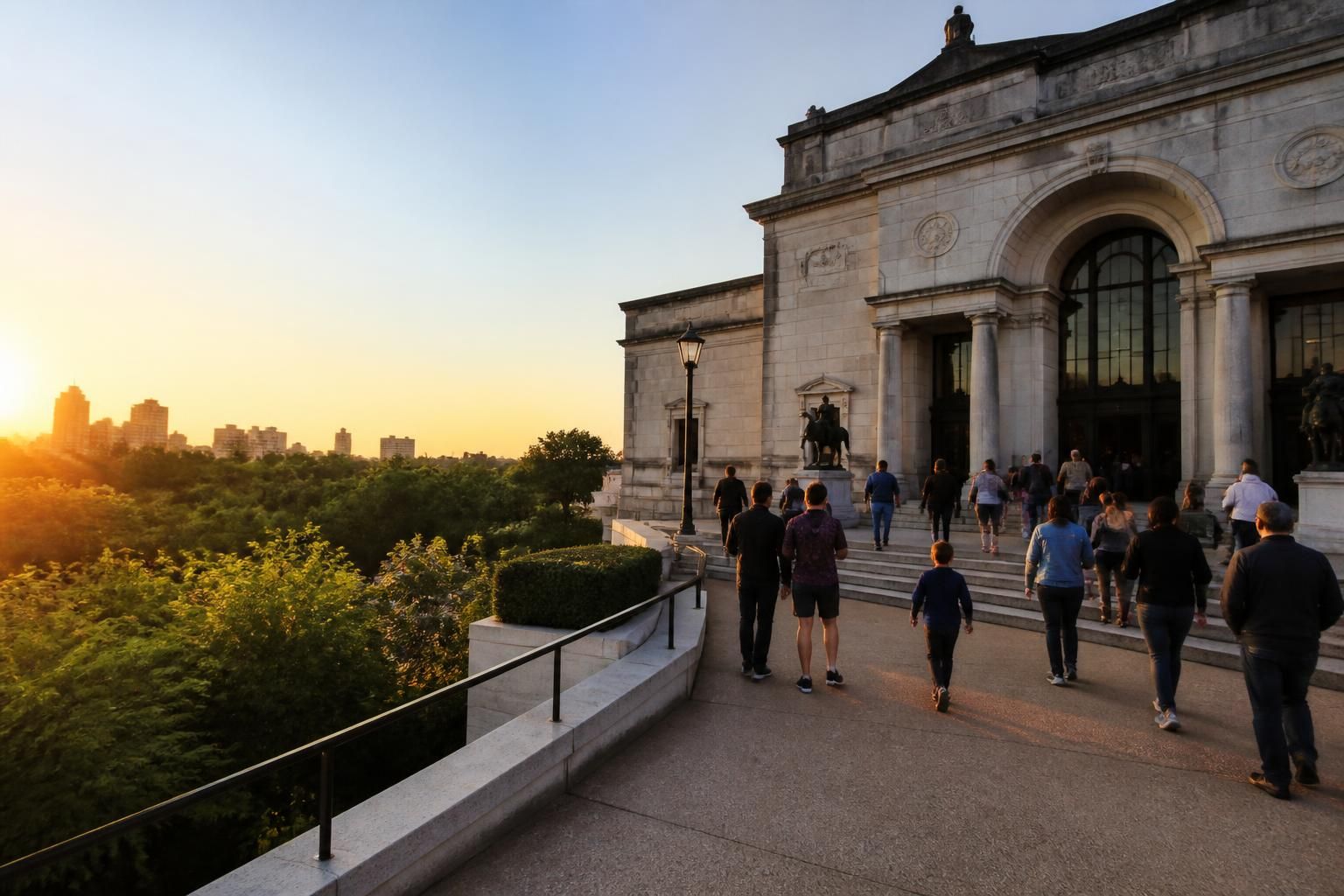
How the St. Louis Business Journal Report Frames the Museum Name Change
The St. Louis Business Journal’s report places the museum decision within a wider civic and institutional context. A major Museum in Forest Park is more than an exhibition venue. It is part of the visitor economy, the educational network, the cultural infrastructure, and the public image of St. Louis. That makes the Renaming relevant not only to historians and regular patrons, but also to tourism professionals, local businesses, event organizers, and city stakeholders.
Coverage from the St. Louis Business Journal report on the planned renaming emphasizes the institutional transition from Missouri History Museum to St. Louis History Museum. The reporting matters because it documents a formal decision rather than treating the new title as a casual marketing adjustment.
Public names influence how organizations fit into a destination ecosystem. Forest Park already presents visitors with a cluster of major attractions, green space, cultural sites, and seasonal events. In that environment, a title with “St. Louis” can improve immediate recognition for people building an itinerary on a phone, browsing a hotel guide, or asking an AI travel assistant for local recommendations.
For destination managers, the useful question is not whether a new name alone will increase attendance. It will not. Attendance depends on programming, relevance, access, service quality, trust, transportation, and the overall visitor experience. Instead, the useful question is whether the title reduces confusion and reinforces the institution’s actual promise. In this case, the answer is practical: the new title identifies the museum with the city whose past it interprets every day.
What changes for tourism and cultural partners
A successful public transition requires coordinated updates across every visitor touchpoint. Tourism offices, hotels, local guides, schools, ride-share destinations, event calendars, and neighborhood businesses should receive a concise explanation of the new title and implementation date. Without this coordination, outdated listings can persist for years and create avoidable friction.
| Visitor touchpoint | Required Name Change action | Practical benefit |
|---|---|---|
| 🗺️ Maps and GPS listings | Update the official venue name and preserve the former name as a searchable reference. | Fewer wrong searches and clearer arrival guidance. |
| 🎧 Audio tours | Revise welcome scripts, route names, and spoken directions. | Consistent storytelling from the first minute. |
| 📚 School materials | Refresh worksheets, booking forms, and teacher guides. | Students encounter one reliable identity. |
| 📣 Tourism marketing | Align brochures, itineraries, partner pages, and event listings. | Stronger destination recognition for St. Louis. |
| ♿ Accessibility information | Confirm names in captions, transcripts, visual guides, and screen-reader labels. | More equitable access to visitor information. |
Consider a hypothetical local operator, Gateway Neighborhood Walks. Its guide might begin a downtown route at the Old Courthouse, move through the riverfront story, and recommend the museum for a deeper look at regional collections. If its booking page says Missouri History Museum, its printed map says St. Louis History Museum, and its audio handout uses an abbreviated label, the visitor receives mixed signals. One approved name, used consistently, protects trust.
The same principle applies to media coverage. Regional broadcasters have also noted that the change will happen after board approval, including local video reporting on the museum’s new name. Multiple credible references make it easier for partners to communicate the transition accurately rather than relying on rumors or incomplete posts.
📌 For cultural partners, the actionable lesson is simple: treat the official name as shared visitor infrastructure, not as a detail to update later.
Preserving Cultural Heritage While Updating the Missouri History Museum Brand
Some audiences approach a museum Renaming with understandable caution. A longstanding name may hold decades of personal memory: a first school trip, a family afternoon in Forest Park, a favorite exhibition, or a volunteer experience. The transition from Missouri History Museum to St. Louis History Museum should therefore preserve continuity as carefully as it introduces change.
The strongest approach is not to pretend that the former name never existed. It is to explain why the new title better serves the present mission while acknowledging the institution’s established legacy. Cultural Heritage is built through memory, and institutional memory includes the words people have used to describe a place.
In practice, this means maintaining helpful references to the former name during the transition. Search engines, archive descriptions, old school materials, and personal photographs will continue to use “Missouri History Museum.” A thoughtful website can recognize that language in FAQs and metadata while presenting the new identity clearly. This helps returning audiences find current information without making them feel corrected or excluded.
Interpretation should connect the name to the stories inside
A Museum name is most effective when it aligns with the visitor journey. Once guests hear “St. Louis History Museum,” they should quickly encounter galleries and digital content that demonstrate what St. Louis History means in rich, inclusive terms. That includes well-known milestones, but it must also include the stories that have too often been treated as peripheral.
For example, an audio route could connect a gallery object to the lived experience of a neighborhood. A 90-second stop might introduce the artifact, identify whose voices shaped its meaning, and offer a map point for further exploration. A visitor looking at material related to the World’s Fair could also learn how the event affected labor, housing, international representation, and the city’s changing image.
Audio technology is especially effective here because it can serve different needs without overcrowding the gallery. One visitor may select a five-minute overview. Another may choose a detailed thematic trail on Black St. Louis, immigration, civic architecture, or the city’s musical traditions. Families can follow a shorter child-friendly version, while educators can access curriculum-aligned material.
A mobile tool such as Grupem allows museums and guides to use visitors’ own smartphones as a practical audio-guide channel. That reduces the need to distribute shared devices, supports paced listening, and makes it easier to update content when a gallery label, route, or institutional name changes. The method is straightforward: participants join a guided audio experience using a simple link or code, then listen through their personal headphones.
This flexibility is valuable during a public transition. A welcome message can explain that the venue is now the St. Louis History Museum, note its previous name for returning visitors, and make the rationale clear in ordinary language. The goal is not to turn a naming decision into a long announcement. It is to provide orientation at the exact moment people need it.
A recent overview of the Missouri History Museum renaming also highlights why the change is relevant to museums thinking about visitor communication. The most useful takeaway is practical: every change in identity must be visible in every layer of the experience, including the spoken layer.
🎧 Cultural Heritage remains credible when the institution protects old memories while making new interpretation easier to access.
Making the St. Louis History Museum Transition Clear Across Digital Visitor Journeys
For a visitor, the Name Change begins long before the building entrance. It may start with a Google search, a social post, a calendar listing, a hotel recommendation, or an audio tour shared by a guide. The museum’s digital ecosystem must therefore tell one coherent story: the Missouri History Museum is becoming the St. Louis History Museum, and the visitor is in the correct place.
Digital consistency is a visitor-experience issue, not merely a brand-management exercise. An incorrect title on a ticket email can trigger doubt. An outdated museum name in a screen-reader heading can cause confusion for a blind visitor navigating independently. A broken map pin can make a family late for a timed program. Small mismatches accumulate into a poor experience.
At the same time, a major cultural institution should not rush updates without a clear sequence. The former name has search value, public recognition, and archival relevance. A careful rollout preserves those connections while steadily establishing the new title as the primary reference.
A practical checklist for accessible digital implementation
The transition should be managed as a cross-functional project involving communications, visitor services, education, exhibitions, IT, external partners, and front-line teams. A simple shared tracker can show what has been changed, who owns each task, and whether a live test has been completed. This is less glamorous than a public reveal, but it prevents gaps that visitors notice immediately.
- 🧭 Set a single official wording. Confirm whether all public materials will use “St. Louis History Museum” and define the approved transitional reference to the previous name.
- 🔍 Audit search and map results. Check major search engines, map platforms, transit tools, tourism sites, and local event calendars for duplicate or inaccurate entries.
- 🎙️ Update spoken content. Review audio guides, recorded phone messages, videos, captions, staff scripts, and partner tour narration.
- ♿ Test accessibility formats. Ensure the updated name appears correctly in alt-related descriptive workflows, transcripts, captions, downloadable guides, and screen-reader navigation.
- 🤝 Equip partners with a short briefing. Provide hotels, guides, schools, and cultural partners with the official wording, timing, map location, and a useful explanation.
- 📊 Monitor visitor questions. Track recurring confusion at the desk, in emails, and in site-search queries during the first months of implementation.
Consider “Maya,” a fictional visitor arriving in St. Louis for a weekend. She sees an older recommendation for the Missouri History Museum in a travel blog, then searches for it on her phone and finds the St. Louis History Museum. If the website briefly notes the new identity and confirms the Forest Park location, her uncertainty disappears. If the digital trail is inconsistent, she may assume she has found a different organization.
The same scenario applies to international visitors. They often depend more heavily on map results, translated snippets, short-form video, and mobile navigation than local guests do. Clear naming and concise explanations reduce cognitive load, especially for people traveling with limited time or limited familiarity with American civic geography.
Technology can help teams react quickly. A cloud-based audio platform enables staff to replace an outdated welcome recording without reprinting devices or collecting hardware. A QR code can lead to a mobile page that confirms the new name, offers route choices, and shares current exhibition information. These are not flashy additions; they are reliable service tools when they are tested, accessible, and easy to maintain.
📱 The visitor should never need to solve the institution’s naming transition alone; every digital touchpoint should provide the answer.
What the Missouri Museum Name Change Can Teach Cultural Institutions
The planned transformation of the Missouri History Museum into the St. Louis History Museum offers a useful case study for any cultural institution reviewing its public identity. A name may need to evolve because the mission has become more specific, the community has changed, a governance decision has clarified direction, or public usage has already moved ahead of the formal brand.
Still, Renaming is not automatically the right answer. It works when the new identity is truthful, meaningful to the communities served, easy to use, and supported by operational follow-through. Institutions should avoid changing a name merely to appear contemporary. Visitors can recognize cosmetic changes that are not backed by better access, clearer interpretation, or a stronger relationship with place.
For St. Louis, the city-focused title has a clear rationale. The museum’s work is deeply connected to the metropolitan story and the residents who shape it. The change gives that relationship greater visibility while retaining links to the wider History of Missouri and the nation.
Use a name change to improve service, not just signage
Before adopting a new public name, cultural leaders should ask several direct questions. Can a first-time visitor understand the organization’s focus? Will residents see their experiences reflected in the change? Can staff explain it in one or two sentences? Have accessibility and multilingual needs been considered? Are there adequate resources to update every digital and physical environment?
These questions turn branding into a service design exercise. The difference is important. Branding focuses on recognition; service design focuses on what a person can actually do, understand, and enjoy. The best projects manage both.
One useful comparison comes from museums that have refreshed their identities while expanding educational access. The story of a museum’s leadership and visitor-facing evolution, such as this discussion of a Portland Art Museum leadership transition, illustrates that public-facing institutional change works best when communication supports the mission rather than distracting from it.
For smaller organizations, the practical lessons are scalable. A local historical society may not have a large communications department or a major capital campaign. It can still create an approved naming guide, refresh map pins, prepare a two-sentence staff script, update recorded tours, and invite community feedback. Those actions are achievable and directly improve trust.
For larger venues, the opportunity is broader. The new identity can be accompanied by refreshed route planning, clearer online ticket information, improved language access, and mobile audio content that serves both independent visitors and guided groups. A Museum need not replace every system at once. It should prioritize the moments when visitors are most likely to feel uncertainty: discovery, arrival, orientation, and follow-up.
The St. Louis Business Journal announcement has drawn attention because the institution is prominent, but the underlying lesson applies far beyond one city. Cultural organizations succeed when their external language matches the experience they deliver. A public name is a promise; the building, staff, collections, technology, and interpretation must make that promise believable.
🏛️ The most durable Name Change is one that gives visitors a clearer sense of place and gives staff better tools to welcome them.
What will the Missouri History Museum be called after the renaming?
The institution is set to become the St. Louis History Museum, a title intended to reflect its strong focus on the history and communities of St. Louis.
Why is the Missouri History Museum changing its name?
The new name aligns the public identity of the museum with its city-centered mission, collections, programming, and the way many visitors already describe the institution.
Will the name change erase Missouri history from the museum?
No. St. Louis history remains closely connected to Missouri, regional, and national history. The new title clarifies the museum’s primary geographic focus rather than limiting the scope of its interpretation.
What should tourism professionals update when the St. Louis History Museum name becomes official?
They should update websites, maps, booking pages, printed itineraries, staff scripts, audio tours, accessibility materials, and event listings, while retaining a temporary reference to the former name where useful for search and visitor orientation.
