
Little time? Here is what matters:
- 🏛️ The Trump Administration has indicated a Potential Halt in Agency Collaborations with the Smithsonian, including artifact loans, procurement support, and discretionary grants.
- 📚 The dispute reaches beyond museum displays: it may affect Public Research, touring exhibitions, visitor services, and partnerships involving Federal Agencies.
- 🎧 Cultural Institutions should document their dependencies, protect editorial standards, and maintain accessible visitor information during periods of political uncertainty.
Trump Administration Signals a Potential Halt in Smithsonian Agency Collaborations
The Trump Administration has escalated its pressure campaign against the Smithsonian Institution by indicating that executive-branch partners could reduce or end selected forms of cooperation. In an August 28 letter to the Smithsonian’s governing body, Interior Secretary Doug Burgum and White House Domestic Policy Council Director Vince Haley argued that federal bodies could no longer “in good conscience” support the institution unless its leadership and institutional direction changed.
The language matters because it moves the dispute from public criticism into operational leverage. The letter raised the prospect of Federal Agencies stopping artifact loans, limiting procurement assistance, and withholding discretionary grants. These are not minor administrative details. For a museum network that works across science, history, art, archives, conservation, and education, such relationships can shape what reaches the public and how quickly projects can be delivered.
The administration’s position was tied to a White House report released on July 4 that accused the National Museum of American History of putting ideological activism ahead of history. Officials also asserted that they had found evidence of possible violations of federal antidiscrimination law, although the public letter did not provide specific examples supporting that allegation. This absence of detail is significant for museum professionals: claims about compliance, interpretation, and governance have very different implications and require different evidence.
The Smithsonian, founded 179 years ago, is not a standard executive agency. It is a distinctive public-private trust governed by a Board of Regents, yet roughly two-thirds of its budget comes from federal appropriations. Its practical work also depends on ongoing public-sector cooperation. This hybrid status is central to the current Political Impact: financial support, shared collections, research capacity, and institutional independence overlap without being identical.
For visitors, the issue may appear abstract until it affects a visible experience. A delayed loan can alter an exhibition schedule. A paused procurement process can slow the replacement of accessibility equipment, display technology, or conservation materials. A reduced grant may limit school programs, digitization, or free public events. Museums are complex service organizations, and their resilience depends on many less-visible systems functioning together.
The controversy also follows earlier steps by the White House. In March 2025, President Donald Trump signed an executive order directing Vice President JD Vance to seek public appointments to the Board of Regents aligned with the administration’s priorities. The Smithsonian later faced an extensive review of exhibition and operating documents. Temporary signs ordered near the National Museum of American History warned visitors about what the administration described as inaccurate material in exhibits.
Andrea Hartig, director of the National Museum of American History, responded during a July congressional hearing that the White House report did not accurately represent the museum’s full work. She said the museum does not take sides in political debates and instead preserves evidence from American life so visitors can interpret the past. That distinction captures the core professional question: can a museum document difficult history without being treated as an advocate for one contemporary political position?
Coverage of the threatened withdrawal of agency support has emphasized that the warning is a further escalation rather than a completed shutdown of all relationships. Readers can review the reported details of the letter concerning federal agency cooperation and the broader account of the administration’s stated position in this report on potential federal support cuts.
The immediate lesson is practical: a Potential Halt does not need to become a total closure to disrupt cultural delivery. Even selective restrictions can change timelines, staffing decisions, collection access, and visitor expectations.
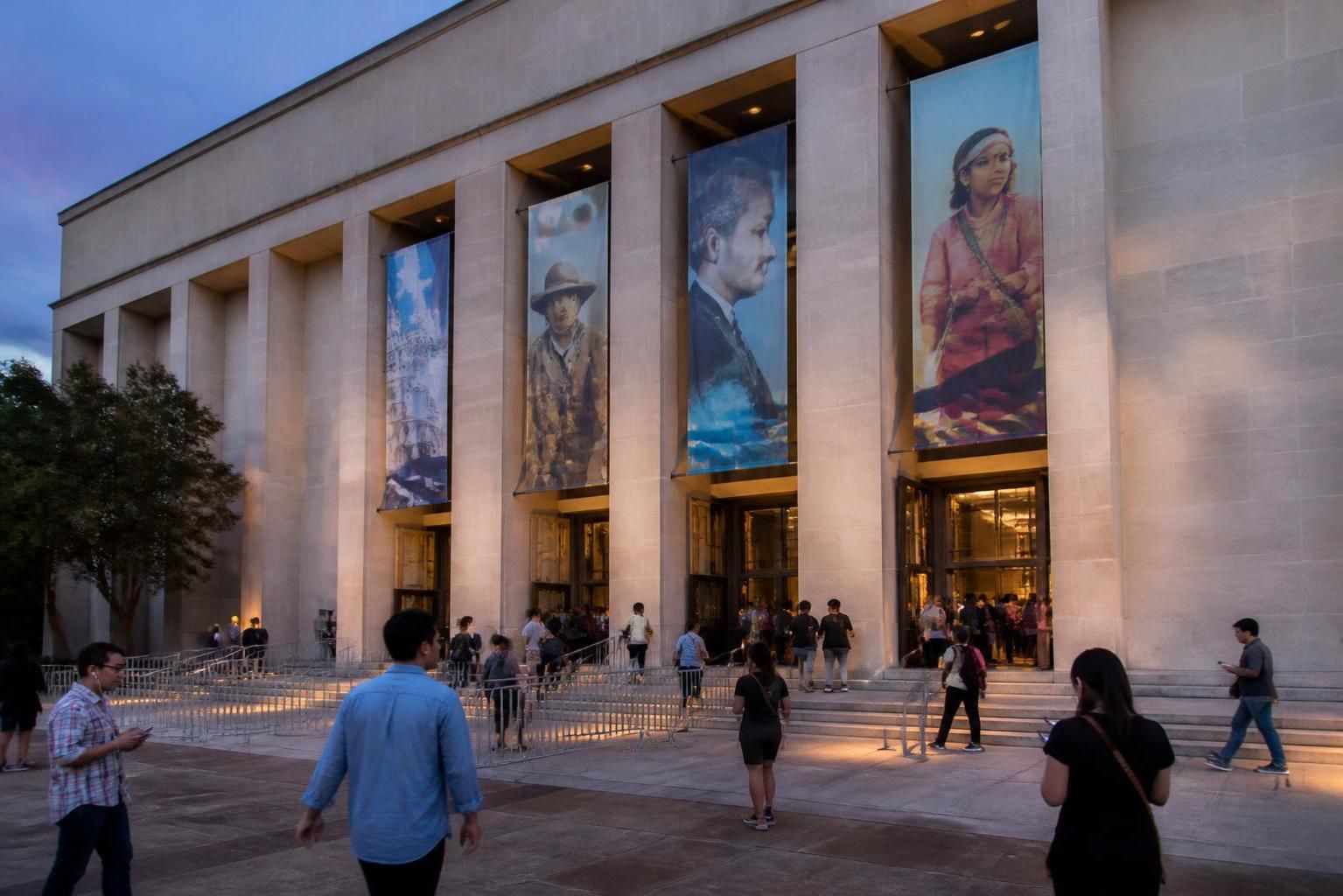
How Federal Agencies Support Smithsonian Exhibitions, Research, and Public Access
Agency Collaborations are often misunderstood as a single budget line or a simple grant arrangement. In reality, cooperation can include loan agreements, scientific expertise, logistical support, conservation resources, records access, procurement channels, and jointly delivered educational programs. When a national museum system works with multiple departments, each relationship may follow its own legal authority, schedule, and purpose.
Artifact loans are one obvious example. An exhibition on military history, aviation, diplomacy, civil rights, public health, or environmental change may require material held by a federal department or an agency-supported archive. If loans are paused, curators must either redesign the narrative, substitute objects, extend negotiations, or postpone the opening. None of these outcomes automatically destroys an exhibition, but each can affect its historical depth and production cost.
Procurement can be just as consequential. Museums acquire highly specialized materials: climate-control components, archival storage products, digitization hardware, software licenses, security systems, interpretive panels, and accessible media tools. A museum may have money approved for a project while still facing delays if a procurement partnership is restricted. The visitor sees a closed gallery or an incomplete display; behind it may be a procurement bottleneck rather than a curatorial choice.
Public Research is another area where a reduction in cooperation could carry lasting effects. Smithsonian scholars and collections professionals contribute to work on biodiversity, climate observation, anthropology, cultural heritage, and American history. Their research often involves data exchanges and fieldwork arrangements with public bodies. Restricting collaboration may not only affect one museum season; it can interrupt long-term datasets and reduce the value of collections for future study.
Operational effects that cultural teams should monitor
A useful way to assess risk is to separate core operations from optional enhancements. For example, a public museum might retain its building, staff, and baseline collection care while losing a partner-funded digitization project or a planned loan. Yet optional projects are frequently where new audiences, educational innovation, and accessibility improvements take place.
| Collaboration area | Possible effect of a pause | Visitor-facing consequence |
|---|---|---|
| 🏺 Artifact loans | Exhibits may need substitutions or revised timelines. | Visitors may encounter a narrower selection of original objects. |
| 🧪 Scientific cooperation | Shared studies and field projects can slow down. | Public programming may contain fewer current research findings. |
| 💼 Procurement support | Equipment and specialist services may arrive later. | Accessibility, maintenance, or digital interpretation can be delayed. |
| 🎓 Discretionary grants | Education and outreach budgets may be reduced. | Schools and local communities may lose free programming. |
Consider a fictional example: Maya, a program manager at a regional museum, is preparing an exhibition with a Smithsonian loan, a federal archive partnership, and an audio-guided route for school groups. If the loan becomes uncertain, she should not wait for final confirmation before planning alternatives. She can identify replacement objects, prepare an adjusted storyline, update the digital route in modular segments, and clearly train staff on what remains confirmed.
This is where smart audio tools are useful. A well-designed mobile guide can update individual stops without requiring an entire physical display to be reprinted. If a loaned object is removed or arrives late, visitors can receive an accurate explanation at the relevant point in the route. The purpose is not to conceal disruption, but to maintain clarity and quality while curatorial teams adapt.
Government Policy can shape museum work indirectly through operational channels. Understanding those channels helps institutions communicate honestly with staff, funders, guides, and audiences before a disruption becomes visible on the gallery floor.
Funding Cuts and Governance Pressure: Why the Smithsonian’s Structure Matters
The Smithsonian’s governance model explains why the current dispute is legally and politically complex. The institution receives substantial federal funding, but it is not simply an office inside the executive branch. It operates as a public-private trust with a Board of Regents that includes the Chief Justice of the United States, members of Congress from both major parties, and public members. This structure was designed to support national stewardship while providing a degree of institutional continuity across administrations.
That continuity is under pressure when funding discussions are linked directly to demands about leadership, exhibition content, or institutional culture. The August letter stated that concerns arose from executive leadership and ideology and should therefore be addressed at that level. The administration requested an in-person meeting with the Board of Regents to discuss the findings of its review.
Board composition may become especially important. Two of the nine public regents’ terms had expired, and two additional vacancies were expected by early October. New public members are appointed through congressional joint resolutions that require presidential approval. This does not mean a single administration can immediately control the board, but appointments can influence the range of experience, priorities, and governance debates inside a nationally important institution.
Lonnie Bunch III, the Smithsonian’s secretary since 2019, has publicly emphasized that scholarship should direct historical work rather than partisan considerations. He said the institution complied with requests for information while seeking to preserve its autonomy. That approach reflects a challenge familiar to many Cultural Institutions: cooperating with public oversight does not require abandoning professional methods, collection standards, or evidence-based interpretation.
Funding Cuts can also be more targeted than an annual appropriations reduction. A discretionary grant can disappear while core operating funds remain. A project partnership can be stopped without an immediate change to staffing. A federal department can withdraw its participation from a research initiative. For museum directors, the practical response should be based on specific scenarios, not generalized alarm.
- 📌 Map every public-sector dependency: identify funds, loans, data access, technical assistance, and partner staff tied to each project.
- 📌 Separate confirmed commitments from informal expectations: a verbal indication is not the same as a signed agreement.
- 📌 Prepare audience-facing updates: explain changes in plain language without turning a visitor notice into a political statement.
- 📌 Protect collection records: keep loan documentation, provenance files, and object-condition reports current and accessible.
- 📌 Build alternative routes: local lenders, university partners, foundations, and digital interpretation can reduce dependence on one channel.
These measures are not reserved for national museums. Small heritage sites and city museums often face similar vulnerabilities when a single grant, lender, or supplier becomes unavailable. The difference is scale, not principle. A museum that knows its operational dependencies can make calmer decisions and avoid confusing visitors with last-minute cancellations.
Broader concerns over public support have affected museum organizations beyond Washington. For comparison, cultural managers can examine how institutions respond to a federal funding halt affecting museums, particularly when they need to preserve public access while revising programs and budgets.
Governance is not an abstract boardroom issue. It determines who can make decisions, how quickly decisions are made, and whether a museum can preserve its mission when political expectations and financial leverage collide.
Political Impact on Historical Interpretation and Visitor Trust at the Smithsonian
The Political Impact of this dispute extends to a central public expectation: that museums will present history with evidence, context, and room for reflection. Visitors do not require every exhibition to confirm their existing beliefs. They do expect labels, objects, archives, and interpretation to be handled responsibly. When public leaders characterize an institution as ideologically biased, audiences may begin to question whether any curatorial decision is independent.
This pressure is especially sharp at the National Museum of American History, where displays address presidents, wars, voting rights, immigration, labor, technology, consumer culture, protest movements, and civic institutions. American history includes pride, achievement, conflict, injustice, and change. Removing context to avoid controversy can be as misleading as imposing a single political reading on an exhibition.
The temporary signage ordered by President Trump near the museum is a useful example of how external messaging can alter a visit. Signage does more than provide information. It frames the visitor’s expectations before they encounter an object or label. A family arriving to see presidential artifacts may first be told that the museum contains inaccuracies. A school group may then ask educators whether the museum or the government is the more reliable narrator.
For guides and visitor-services teams, this requires preparation rather than improvisation. Staff should not be asked to defend political positions. They should be equipped to explain the institution’s method: objects are collected, sources are assessed, specialists review materials, and galleries are periodically updated as scholarship develops. That response is factual, calm, and appropriate for a diverse audience.
Designing visitor communication that remains clear and accessible
Accessible communication becomes vital when a dispute dominates headlines. Museums should audit their audio content, website alerts, front-desk scripts, and group-tour briefings. Are dates clear? Are changes to an exhibit announced? Can a visitor distinguish an official museum label from an external notice? Clear information reduces unnecessary confusion without requiring staff to enter an argument.
A smartphone-based audio guide can help by delivering structured context at the moment a visitor reaches a gallery. Rather than leaving people to interpret a short notice alone, an audio stop can explain what is on display, where the evidence comes from, and why historians debate a particular topic. The most effective format uses plain language, concise segments, transcripts, and adjustable listening options.
Imagine a teacher bringing thirty students to a presidential-history gallery. If the group is met with conflicting public messages, the teacher needs a reliable route: ten stops, verified sources, discussion prompts, and an accessible transcript. The technology should serve the teaching plan, not overwhelm it. A good digital guide gives educators control over pacing while allowing students to engage with historical material directly.
Visitor trust also depends on acknowledging change. Museums revise labels when new scholarship, new objects, or stronger documentation becomes available. This is a feature of serious historical practice, not proof of failure. A transparent update note can explain what changed and why, demonstrating that the institution treats accuracy as an ongoing responsibility.
Other museum controversies show that public confidence is protected through operational discipline: consistent messaging, trained staff, accessible resources, and well-maintained records. Institutions exploring this approach may find useful context in reporting on civil-rights interpretation and museum engagement, where historical subjects require both precision and thoughtful public mediation.
A museum visit works best when the visitor can encounter evidence before encountering noise. That is why interpretive independence and clear, accessible communication must be treated as connected responsibilities.
Practical Planning for Cultural Institutions Facing Shifts in Government Policy
The Smithsonian case offers a practical planning model for museums, tourism offices, heritage sites, and event organizers that depend on public partners. The first task is not to predict every political development. It is to identify what could change, who must be informed, and how public access will continue if a partner pauses its involvement.
A robust plan begins with a project inventory. List every exhibition, research program, tour route, school activity, and digital initiative. For each item, note whether it relies on a federal loan, a grant, a public data source, shared procurement, a specialized contractor, or a government-owned venue. This gives management a usable view of exposure instead of a vague sense of risk.
Next, create tiers of response. A low-impact change might require only a revised web page. A moderate change might involve replacing an object, revising an audio stop, and briefing front-of-house staff. A high-impact change could delay an exhibition or reduce opening hours, requiring communication with ticket holders, schools, donors, local tourism partners, and the media. The response should match the operational reality.
For visitor experiences, continuity is often more achievable than teams assume. If an object is unavailable, a high-resolution image, oral-history clip, archival document, or expert audio interpretation can preserve much of the educational value. It is not identical to displaying an original artifact, and museums should never claim that it is. Yet thoughtful digital mediation allows a story to remain coherent while the physical plan is adjusted.
Grupem-style smartphone audio delivery is relevant because it can be deployed without issuing dedicated hardware to every guest. A guide, museum educator, or tourism coordinator can prepare structured stops, send access information before arrival, and update content when a schedule changes. Transcripts and multilingual options also support visitors who may need written content, quieter interaction, or a self-paced route.
There is also a reputational advantage in disciplined communication. Institutions should avoid announcing hypothetical losses as confirmed facts. At the same time, they should not hide material changes. A clear update can state that an item is no longer on view, explain the practical reason, identify the alternative interpretation available, and invite visitors to explore related objects. This respects the audience and protects staff from avoidable confrontations.
The Smithsonian’s current situation demonstrates that debates about Government Policy can arrive in the gallery through funding, loans, governance, and public messaging. Cultural leaders should therefore connect policy monitoring with daily operations. The person responsible for exhibits, the person managing visitor communications, and the person maintaining digital content need a shared process.
The strongest immediate action is simple: review one upcoming public program today, identify its external dependencies, and prepare one clear alternative for visitors. Resilience begins with a plan that is specific enough to use.
What did the Trump Administration say it could halt with the Smithsonian?
Administration officials indicated that Federal Agencies could reconsider artifact loans, procurement support, and discretionary grants if Smithsonian leadership did not address the White House’s concerns. The letter described possible limits on cooperation, rather than announcing an immediate end to every relationship.
Is the Smithsonian a federal executive agency?
No. The Smithsonian is a unique public-private trust governed by a Board of Regents. It receives substantial federal funding and works closely with government bodies, but it does not define itself as an executive-branch agency.
How could a pause in agency collaborations affect museum visitors?
A pause could delay object loans, research projects, digital upgrades, education programs, or specialist procurement. Visitors might see revised exhibitions, changed schedules, or fewer public programs, depending on the affected partnership.
What can museums do if public funding or partnerships become uncertain?
Museums can map dependencies, document agreements, identify alternative lenders and funders, prepare accurate visitor updates, and use flexible digital interpretation such as mobile audio guides to maintain continuity when displays change.
