
Former AWS Scientist Alex Smola Brings a Bold Strategy to Voice AI
Key takeaway: Boson AI is entering a crowded market with a clear proposition: make sophisticated speech-to-speech systems dramatically less expensive to build, adapt, and run. 🎙️
Alex Smola, a former scientist at AWS and a widely recognised machine learning researcher, is positioning Boson AI around a practical observation: people do not naturally interact through text boxes. They speak, interrupt, change their minds, express urgency, and move rapidly between topics. A voice AI system that cannot handle those behaviours may be technically impressive, yet still feel unusable in a real customer conversation.
Based in Santa Clara, Boson AI has prepared its first speech-to-speech product, Higgs RealTime, for a market that is moving beyond conventional chatbots. The startup’s premise is that artificial intelligence becomes more useful when it can listen, reason, and respond through voice with the pace expected in a human dialogue. This does not mean replacing every human exchange. It means automating repetitive, structured interactions while preserving a natural spoken experience.
That approach gives Boson a direct route to challenge OpenAI, Meta, Microsoft, and other companies investing heavily in conversational systems. Rather than claiming that one new model will immediately outclass all competitors, Smola’s bold strategy focuses on the economics of deployment. Boson states that its technology can be offered at roughly one-tenth of the cost of alternatives while remaining capable enough for enterprise use. For organisations handling thousands of calls each day, this difference is not a minor technical detail; it can determine whether a pilot becomes an operational product.
Voice recognition has long been available in consumer devices, call-routing systems, and transcription platforms. The change now lies in real-time reasoning. Traditional voice recognition turns audio into text and waits for a system to analyse it. A modern full-duplex model is designed to listen while speaking, detect an interruption, understand that the user has changed direction, and reply without the awkward pauses that make automated conversations feel rigid.
For tourism, cultural venues, and visitor services, this shift is particularly relevant. Consider a fictional city museum called Harbor Museum, which receives calls from travellers asking whether tickets are available, whether a lift is operational, or whether guided tours are accessible in another language. A simple FAQ bot can provide fixed answers. A well-designed voice agent can identify the visitor’s need, clarify the date, understand a rushed tone, and hand off sensitive requests to a staff member. The quality of that interaction depends on latency, context, and sound clarity—not solely on the intelligence of the underlying language model.
Boson’s business focus is initially more concentrated on finance, telecommunications, healthcare, and insurance. These sectors have large call volumes, regulated information, and clear incentives to improve response speed. Yet their operational lessons apply across public-facing services. A tourism office, transport operator, or museum does not need to copy a bank’s workflow. It can adopt the same discipline: define the conversations that can be safely automated, retain human escalation paths, and measure whether users actually obtain the information they need.
The startup is not entering the field without resources. Boson AI, founded around three years ago, has raised $70 million, with backing that includes Chinese entrepreneur Su Hua and Temasek’s venture arm. Funding does not guarantee adoption, but it supports costly research in live audio, custom infrastructure, and enterprise integration. Those are essential areas because voice AI requires more than a model demo; it requires dependable processing, security controls, monitoring, and a deployment model that customers can trust.
The central idea is straightforward: the next phase of human-machine interaction will be shaped as much by cost, speed, and operational control as by headline model performance. That practical emphasis explains why Boson AI deserves attention in the voice AI arena.
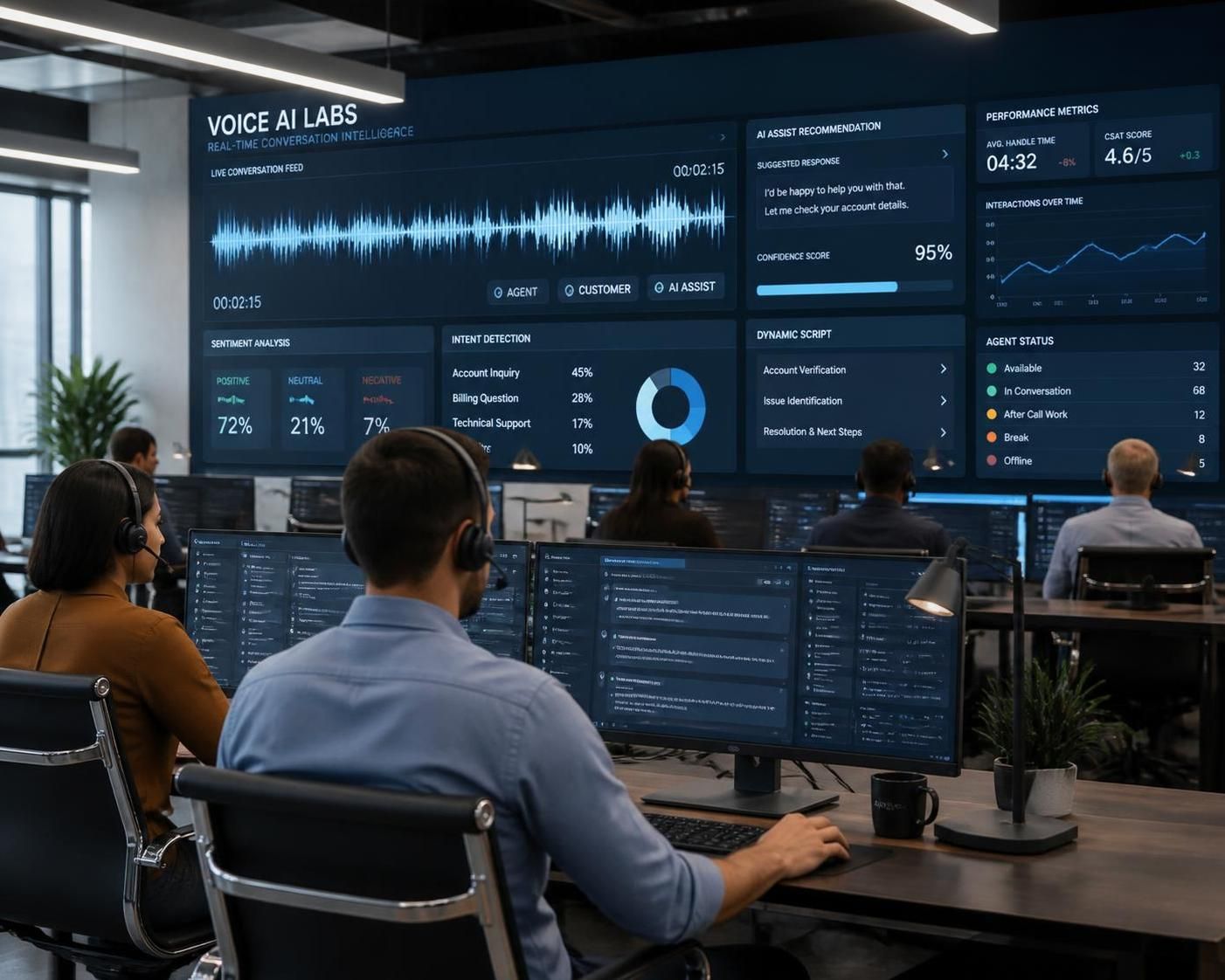
Why Full-Duplex Voice AI Is Becoming the New Competitive Standard
The term full-duplex voice AI describes systems that can process incoming speech while generating an answer. This matters because ordinary spoken conversation is not turn-based in the strict way that text chat is. People often respond before a sentence has finished, add a correction, laugh, hesitate, or ask a second question before receiving an answer to the first. A system that waits for complete silence after every phrase does not feel conversational. It feels like an outdated telephone menu.
OpenAI, Meta, Microsoft, and Boson AI are all placing attention on this interaction model, although their commercial priorities differ. OpenAI’s GPT-Live family reflects the company’s effort to make its platform a default foundation for developers building interactive applications. Meta is linking voice capabilities to its broader ecosystem, particularly wearable devices and hardware experiences. Microsoft is focusing on workplace productivity, where spoken input can accelerate meetings, documentation, and workflow execution. Boson’s route is enterprise deployment with an emphasis on lower operational cost and customer control.
Public interest in voice interfaces has also changed. Sam Altman has noted that he now speaks with ChatGPT more often than he texts with it, arguing that newer voice technology has passed an important usability threshold. The statement captures a wider behavioural trend: when audio interaction is immediate and reliable, users can choose it for tasks that would feel slow or inconvenient on a keyboard. Asking for directions while walking, drafting a note while driving, or resolving a service request while carrying equipment all illustrate situations where voice may be the more suitable interface.
Still, an effective spoken assistant is not simply a text chatbot with a synthetic voice attached. It must manage several tasks at the same time:
- 🎧 Speech understanding: recognising accents, background noise, rapid delivery, and incomplete sentences.
- ⚡ Low latency: responding fast enough that the exchange does not become uncomfortable.
- 🗣️ Interruption handling: stopping or adapting when the caller changes the request.
- 🧠 Conversation memory: retaining relevant details without forcing users to repeat themselves.
- 🔒 Safe escalation: transferring high-stakes, unclear, or sensitive cases to a qualified person.
Latency is often the decisive factor. In a text interface, a response that takes a second may be perfectly acceptable because the user is reading or typing. In spoken communication, even a brief silent delay can make the assistant appear confused. When delays repeat, people start speaking over the system or abandon the call. That is why full-duplex architecture increases technical difficulty: it requires ongoing audio processing, continuous prediction, and substantial graphics-processing capacity.
For an example, imagine a visitor calling a regional tourism office while standing outside a train station. The caller asks whether the last guided visit of the day is still available, then immediately adds that they need step-free access and prefer English. A rigid voice recognition process might treat those statements as separate requests. A real-time system should understand the combined intent: time availability, accessibility, and language preference. It should then either provide a verified answer or transfer the person to a staff member with the context already captured.
Voice interfaces also need emotional awareness, but this should be interpreted carefully. Detecting that a caller sounds impatient or cheerful can help the system select a clearer pace or more direct wording. It should not become a tool for making speculative claims about a person’s mental state, intent, or identity. Responsible design means using signals to improve communication, not to profile users without a clear reason and transparent policy.
Organisations considering conversational automation can learn from the emerging market without rushing to deploy every new feature. A focused pilot should begin with a limited set of common questions, a defined escalation rule, and recorded quality checks. Resources discussing voice AI for customer calls show why memory, call flow, and continuity matter more than a flashy demo. In practice, a natural voice is useful only when the system also gives accurate and actionable help.
Full-duplex technology changes the rhythm of digital service: it turns voice from an input method into a live interaction layer that must be engineered with the same care as any frontline customer experience.
Boson AI’s Lower-Cost Model Could Challenge OpenAI and Meta for Enterprise Adoption
Boson AI’s main differentiator is not presented as a claim that larger competitors lack advanced research. OpenAI, Meta, and Microsoft have major engineering teams, broad developer ecosystems, and enormous computing resources. Instead, Boson is framing the contest around affordability. Smola has stated that Boson’s systems are approximately an order of magnitude cheaper than competing products. Put simply, the company argues that customers could access capable live-audio technology at about one-tenth of prevailing costs.
This claim matters because voice systems can be expensive in ways that text chat is not. Every live interaction involves continuous audio ingestion, speech processing, reasoning, output generation, and streaming. Full-duplex operation can raise compute demand further because the system must maintain awareness while speaking. A business may be impressed by a prototype that handles ten demonstration calls. The real test arrives when it must support ten thousand calls, across multiple languages, with secure logs and a predictable monthly bill.
Boson’s proposed answer is a full-stack approach. The company says enterprise clients can run deployments in their own data centres and train custom voice and video models from the ground up. This model is attractive for organisations that cannot simply send all customer interactions to an external cloud service. Healthcare providers, insurers, banks, public authorities, and telecommunications firms commonly face requirements around data residency, auditability, and internal security controls.
The difference can be clarified through a practical comparison:
| Approach | Operational advantage | Potential constraint |
|---|---|---|
| ☁️ Centralised hosted model | Fast implementation and managed infrastructure | Less direct control over data location and unit costs |
| 🏢 Enterprise self-hosted model | Greater control over execution, security, and customisation | Requires technical capacity and governance |
| 🎙️ Full-duplex live audio | More natural interruptions and real-time exchanges | Higher compute demand and stronger latency requirements |
| 🧩 Task-specific voice agent | Clearer scope, easier measurement, lower operational risk | Cannot safely answer every possible question |
For a museum network or destination-management organisation, a self-hosted architecture may not always be necessary. Many smaller teams will prefer a managed platform that reduces technical complexity. The useful lesson is not that every organisation should operate its own models. It is that procurement teams should ask where recordings are processed, how long they are retained, whether the system can be adapted to local terminology, and what happens when a service provider changes pricing.
Cost discipline is also a matter of accessibility. A voice service is only genuinely inclusive if it can be sustained beyond a short innovation grant. If each visitor interaction becomes prohibitively expensive, the project will be restricted to a limited campaign rather than integrated into daily service. Lower-cost infrastructure can enable more languages, extended service hours, and better testing with diverse users. It can also free budgets for human review, accessibility improvements, and content verification.
Smola’s perspective is shaped by experience in large-scale cloud and machine learning environments. AWS has become a more visible artificial intelligence contender through significant investment in infrastructure, custom chips, and commercial partnerships. That background helps explain Boson’s attention to deployment economics. The voice AI market will not be decided solely by the most compelling product launch. It will also be shaped by whether companies can forecast usage, protect information, and adapt systems to specialised workflows.
For example, a tour operator could configure an agent to answer pre-booking questions about meeting points, cancellation conditions, language options, and mobility access. It should not autonomously resolve a dispute involving a refund or interpret a medical request from a visitor. Cost efficiency should never remove the boundary between straightforward automation and human responsibility.
A detailed report on Alex Smola’s plan for Boson AI highlights how pricing and deployment control are becoming central to the company’s market position. The relevant question for buyers is not merely “Which voice sounds best?” but “Which system can operate responsibly at the required scale?”
Voice Recognition, Emotion, and Context: The Hard Problems Behind Natural Conversations
Modern voice AI must solve a set of problems that are easy to overlook when hearing a polished demonstration. A demo usually takes place in a quiet room, with a cooperative speaker, a single language, and a narrow question. Real environments are much less controlled. A caller may be outdoors in wind, switching between languages, speaking with a regional accent, or sharing a request while children, traffic, or station announcements are audible in the background.
This is why voice recognition remains only one component of the system. The platform must convert sound into meaning, distinguish relevant words from noise, retain conversational context, and produce a response at an appropriate pace. Boson AI has indicated that its training includes the nuances of human communication, such as quick speech patterns and emotional cues including cheerfulness or passive-aggressiveness. These capabilities can make a conversation smoother, but they require careful boundaries.
Emotion-aware interaction should be used to improve service quality rather than infer hidden personal characteristics. If a caller repeats a question with rising frustration, a sensible system can slow down, give a shorter answer, or offer a human handoff. It should not label the person, make consequential decisions based on tone, or treat a cultural communication style as a risk signal. This distinction is crucial in sectors such as healthcare, insurance, public services, and travel.
Consider Harbor Museum again. A visitor calls after arriving late because a ferry was delayed. The visitor speaks quickly, says “I booked online, but the email is missing, and we have a child who needs the restroom.” A useful agent must not simply identify keywords such as “booking” and “email.” It must prioritise the immediate need, ask for a booking name only if necessary, provide practical directions, and avoid exposing personal reservation information before confirming identity. Natural interaction is therefore a mix of language capability, workflow design, and privacy protection.
Organisations can improve outcomes by mapping conversation types before selecting a vendor. The following process is more valuable than launching an unrestricted assistant:
- 📝 Identify the ten to twenty most frequent voice requests.
- 🔎 Separate factual questions from cases involving payments, personal data, or complaints.
- 🎧 Test recordings with realistic noise levels, accents, and interrupted speech.
- 👤 Define exactly when staff must take over the conversation.
- 📊 Review failure cases weekly and update knowledge sources before expanding scope.
Memory is another major issue. Users dislike repeating a reservation code, language preference, or earlier explanation every time a conversation moves to a different channel. Yet persistent memory can create privacy concerns if it is poorly governed. The best implementation uses limited, purpose-specific context. For instance, an agent may retain that a caller is asking about a 3 p.m. tour during the active session, but should not keep unrelated personal details indefinitely. Guidance on voice AI memory in service workflows is useful because it frames continuity as an operational design choice, not just a model feature.
Multilingual support must also be tested for accuracy, not merely advertised. In tourism, a visitor may begin in English, use a destination name in French, and mention an accessibility requirement in Spanish. The system should clarify when it does not understand rather than inventing an answer. Clear fallback phrasing—such as “I want to make sure this is correct; may I connect you with our team?”—is usually more effective than false confidence.
There is a cultural dimension as well. The fantasy of talking robots has existed for decades, from mid-century science fiction to films such as I, Robot. The practical reality is less theatrical and more useful: a well-configured audio system can reduce waiting time, surface the right information, and make services accessible when a screen is not convenient. It succeeds when users feel heard, not when they are impressed by an imitation of a human personality.
Natural conversation is not created by a realistic voice alone: it depends on context, consent, accurate information, rapid response, and a reliable route to human help.
From Customer Support to Embodied Artificial Intelligence: What Boson AI Signals for 2026
Boson AI’s immediate commercial focus is grounded in ordinary enterprise work: customer support, sales calls, service records, and contact-centre automation. Smola expects a substantial part of machine interaction in those areas to move toward voice agents. His argument is that, for defined tasks, these tools can outperform human teams in consistency, availability, and speed of documentation. That statement should be understood in context. A system can be superior at retrieving approved policy information or creating a call summary, while remaining unsuitable for sensitive judgment, nuanced negotiation, or compassionate crisis support.
One compelling enterprise use case is real-time documentation. A sales agent speaking with a prospective customer must listen, answer questions, identify needs, and record details. A voice AI layer can create a structured log in the background: product interest, objections, next steps, consent status, and follow-up timing. The employee remains responsible for the relationship, but repetitive administrative work decreases. This can be useful for tourism operators managing group requests, venue bookings, educational visits, and partner enquiries.
Another use case is guided service. A telecom caller may need help changing a plan, checking a technician appointment, or understanding an outage notice. An insurer may need to route a claim based on the type of incident. A visitor information service may need to explain opening hours, route changes, or event capacity. In each case, the agent should operate within verified data sources. It should never improvise availability, financial terms, safety guidance, or accessibility guarantees.
Meta’s broader push into voice-capable models and hardware illustrates a different route to market. Wearable devices could make spoken interfaces more continuous throughout daily life, particularly when screens are inconvenient. Reports about Meta’s new AI model strategy show that the competition extends beyond software features. It includes talent, devices, developer communities, data, and the ability to integrate artificial intelligence into existing consumer habits.
OpenAI faces a similarly broad opportunity. Its voice models can serve application developers, consumer experiences, and enterprise workflows. Meanwhile, Boson is seeking a more targeted position: proprietary, customisable technology that businesses can deploy with greater control and lower cost. This is not a simple battle between open and closed models. Smola has supported open-weight and customisable approaches in principle, while Boson is building proprietary products for commercial clients. The more relevant distinction is between generic capability and controlled implementation.
For cultural and travel professionals, the market’s rapid movement should lead to measured action rather than panic. A small organisation does not need to build a robot or train a model from scratch. It can start by improving the audio experience it already offers. Smartphone-based solutions such as Grupem can help guides, museums, and event organisers deliver clear live audio to participants using their own devices. This is a practical reminder that technology adoption should begin with the actual visitor journey, not with the most ambitious headline.
The longer-term ambition is embodied AI: systems that combine reasoning, vision, voice, and physical movement. Smola imagines robots with animated faces and advanced conversational capability becoming part of household life. That future remains technically demanding. A robot must safely interpret physical environments, understand speech, manage uncertainty, and interact without causing harm. The ultimate frontier is not merely making a machine speak; it is enabling it to act appropriately in the unpredictable real world.
Before that point, organisations have a more immediate responsibility. They should establish policies for recording calls, informing users when automation is involved, protecting personal information, checking answers against authoritative sources, and tracking when human intervention is necessary. These safeguards are not barriers to innovation. They are what make a voice service credible after the initial novelty fades.
For 2026, Boson AI’s signal is clear: the voice AI race will reward companies that combine human-quality interaction with affordable infrastructure, careful governance, and an unambiguous business purpose.
What is Boson AI’s main strategy in the voice AI market?
Boson AI is positioning its speech-to-speech technology around lower deployment costs, enterprise control, and customisable infrastructure. The company says its live-audio models can cost about one-tenth as much as competing systems while supporting advanced real-time conversations.
Why does full-duplex voice AI matter?
Full-duplex systems can listen and speak at the same time. This allows users to interrupt, correct a request, switch topics, and speak more naturally instead of waiting for a rigid turn-by-turn exchange.
Can voice AI replace human customer service teams?
It can automate repetitive and clearly defined tasks such as answering opening-hour questions, collecting booking details, creating call notes, or routing requests. Human teams remain essential for sensitive cases, complaints, complex judgment, and situations requiring empathy or accountability.
What should organisations test before launching a voice AI agent?
They should test latency, accuracy in noisy environments, multilingual understanding, interruption handling, data protection, escalation to staff, and the quality of answers against verified information sources.
