
Short on time? Here is what matters:
- 🚗 Volo Museum brings together more than 50 attractions, from classic vehicles and movie icons to military displays and family activities.
- 🎧 A well-planned visit works best when visitors choose a route, reserve time for narrated rides, and use clear audio support for the larger galleries.
- 👨👩👧👦 The strongest family days combine high-interest exhibits with hands-on breaks such as mini golf, playgrounds, and mining activities.
- 🎟️ Check current admission details before travelling: the FUN20 code has been promoted for 20% off regular admission through the museum’s official channels.
Explore Volo Museum Must-See Attractions for Every Type of Visitor
Volo Museum is not a conventional one-theme destination. Located on a 75-acre property in Illinois, it combines automotive heritage, screen culture, military history, family entertainment, and outdoor activities in one large-scale museum environment. This variety is exactly what makes the site useful for multi-generational groups: one visitor may arrive for classic cars, another for movie memorabilia, and a child may be most excited by a trolley ride or the playground.
The collection is organised around experiences rather than a single chronological story. Visitors can move from polished collector automobiles to pop-culture vehicles, historic artifacts, and themed rooms without needing specialist knowledge. That accessible design matters. A museum becomes easier to enjoy when labels, layouts, and routes help each person find an entry point instead of requiring everyone to follow the same pace.
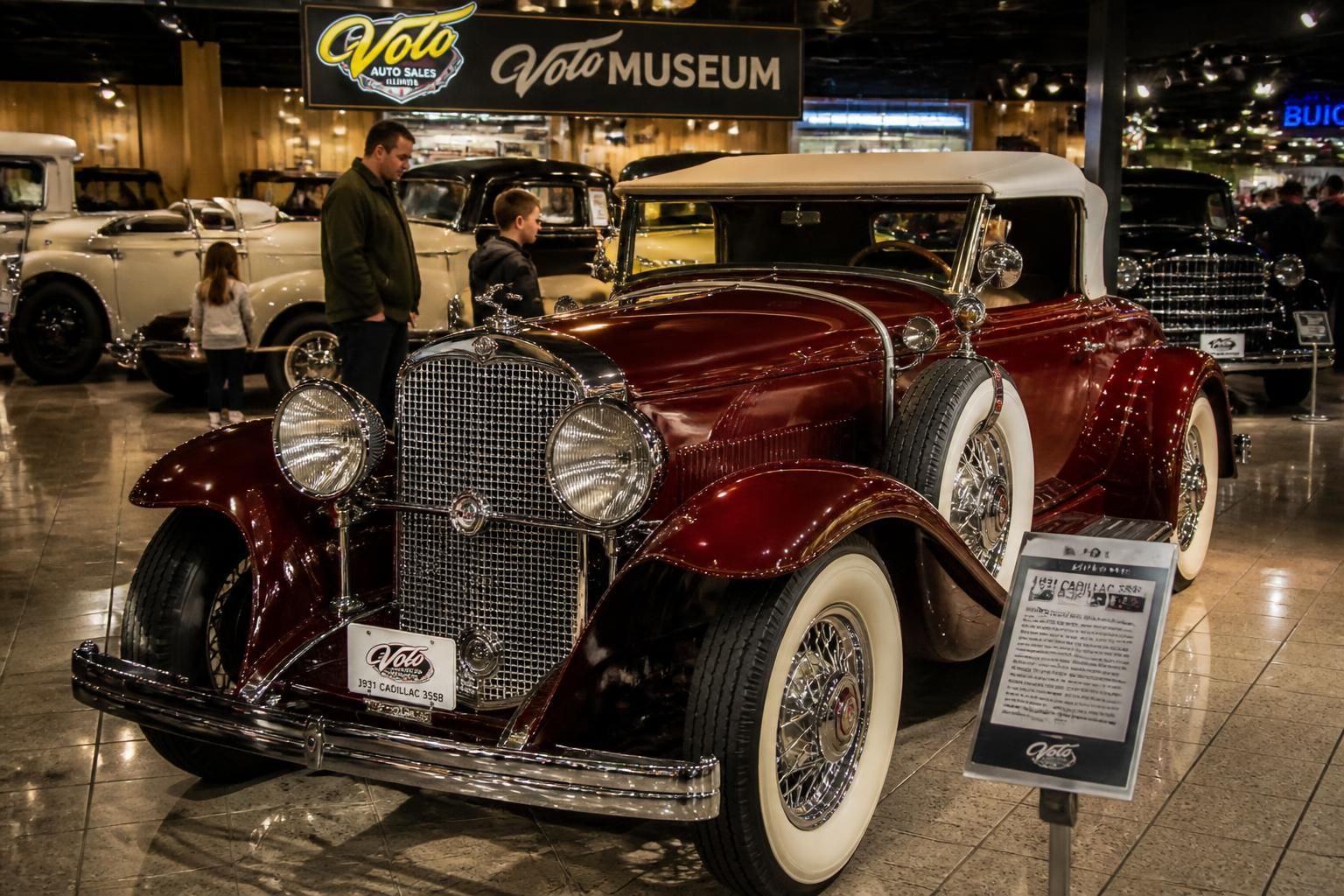
For visitors interested in vehicle history, the classic car collections are a major reason to plan a visit. They offer a tangible way to understand changes in engineering, design, comfort, advertising, and American everyday life. A pre-war touring car, a mid-century convertible, and a later performance model do more than show changing body shapes: together, they reveal how roads, families, leisure, and consumer expectations evolved.
Movie Icons Turn Vehicle Collections into Cultural Stories
Movie and television cars are among the most immediate attractions because they connect an object with a memory. A visitor does not need to be an automobile historian to recognise why a famous screen vehicle matters. These items create a bridge between entertainment and material culture, turning a garage-built machine into a story about costume design, special effects, celebrity, or a memorable scene.
This approach is particularly effective for families. Consider a group where a grandparent wants to examine mechanical details while teenagers are drawn to a recognizable movie prop. Both reactions are valid, and both can lead to useful conversations. Why was that car selected for a production? Was it altered for filming? What does its styling say about the era in which the film was made?
Visitors who enjoy unusual collections may also want to compare this experience with a wider selection of unique museums around the world. Volo Museum stands out because its appeal is not limited to a single rare object. The scale of the site supports repeat visits, changing priorities, and different itineraries depending on the age and interests of the group.
🎯 A practical approach is to identify three personal priorities before arrival: one vehicle gallery, one historic display, and one activity-based stop. This prevents the collection’s size from becoming overwhelming. It also gives the group permission to explore independently for a limited time and regroup at a clearly agreed meeting point.
For organisers, the lesson is equally clear. A broad museum succeeds when its wayfinding makes choice feel simple. Signage, maps, timed recommendations, and audio interpretation can convert a large property into a coherent visitor journey. The must-see experience is not only about what is displayed; it is about helping every visitor discover why it matters.
Discover Interactive Museum Experiences Beyond the Vehicle Galleries
A full day at Volo Museum can extend far beyond indoor displays. The property includes attractions designed to keep the visit active, especially for guests travelling with children or mixed-age groups. Rides, outdoor playgrounds, mining activities, mini golf, animatronic entertainment, and narrated transport options create natural pauses between more information-rich galleries.
This balance is valuable because museum fatigue is real. Even excellent exhibits can lose their impact when visitors are asked to read, stand, and concentrate continuously for several hours. A ten-minute outdoor activity can reset attention far more effectively than rushing through another gallery. Families should therefore treat play-based attractions as part of the itinerary, not as distractions from the cultural visit.
Use Narrated Rides to Understand the Scale of the Landmark
The narrated rides around the 75-acre site are a practical way to understand the property as a whole. Trackless trains, trolleys, and an authentic double-decker Disney World bus provide transport while giving visitors a chance to hear context. For people with limited mobility, young children, or guests who simply need a break from walking, this can be one of the most useful parts of the day.
Audio is especially effective in open-air or moving settings because it can deliver concise interpretation without forcing visitors to stop at every point. The best narration answers simple questions: what is ahead, why is it significant, and where should visitors look? It should also leave space for observation. Too much commentary turns a ride into background noise; too little leaves a valuable route unexplained.
🎧 Museums and tour operators can apply the same principle with smartphone-based audio. Clear, location-aware content gives groups flexibility while maintaining a shared story. A solution such as Grupem can help guides distribute professional-grade audio to participants’ own phones, reducing the need to pass around equipment and making it easier for visitors to hear in busy environments.
Rock-afire Explosion animatronic shows add another layer to the experience. These performances may feel playful, but they also represent a distinct chapter of entertainment technology. Animatronics combine mechanics, programming, sound, performance design, and nostalgia. For younger visitors, the show offers spectacle; for adults, it can prompt a discussion about how entertainment venues used technology before touchscreens and streaming became everyday tools.
- 🗺️ Begin with a property map and choose a realistic route rather than attempting every gallery at once.
- 🚋 Schedule a narrated ride early if the group needs an overview or has mobility considerations.
- ⛳ Place mini golf, mining, or playground time between major indoor displays to maintain attention.
- 🔊 Keep headphones available for any digital or guided tours content used during the visit.
- 📍 Set a meeting landmark before separating, particularly on busy summer days.
Parents can also use activities as rewards without framing history as a chore. For example, after viewing military artifacts, a family might pause for mini golf and then return for a movie-car gallery. The rhythm becomes discovery, rest, and discovery again. Interactive moments do not weaken a museum day; when planned well, they make the educational moments easier to remember.
Before selecting a route, it is worth recognising that different collections require different viewing habits. The military and Titanic-focused experiences reward slower observation, while vehicle galleries often work well through comparison and conversation.
See History Through Military Artifacts and Titanic Museum Exhibits
Volo Museum’s history-focused areas offer a different atmosphere from the vehicle and entertainment attractions. Military displays and Titanic-related exhibits encourage visitors to look beyond objects as collectibles and consider the circumstances in which they were used, preserved, or remembered. This shift in pace is important. A uniform, document, photograph, or personal item can carry human meaning that is not immediately obvious from its appearance.
Military museum experiences are strongest when visitors approach them with questions rather than assumptions. Who used this artifact? What practical purpose did it serve? What does it reveal about training, communication, logistics, or home-front life? These questions turn a display from a collection of equipment into a more responsible way of engaging with conflict and its consequences.
Read the Details Instead of Rushing Past Them
In a large museum, it is tempting to photograph an object and move on. Yet historic interpretation often sits in small details: a date on a letter, wear on a piece of equipment, a label identifying a maker, or a photograph that shows the item in use. Visitors should aim to spend a few minutes with a small number of meaningful displays rather than treating every case as a checklist.
The Titanic Museum experience adds another perspective on preservation and public memory. The sinking of RMS Titanic in 1912 remains a global reference point because it combines engineering ambition, class divisions, migration, media attention, personal loss, and maritime safety. Exhibits connected to the disaster can help visitors understand why a single event continues to generate research, films, books, and museum interpretation more than a century later.
A useful family technique is to give each person one question to answer after viewing a gallery. A child might choose the most surprising object. An adult might identify a design or safety lesson. Another visitor could look for evidence of daily life rather than dramatic events. This method encourages close looking without turning the visit into a test.
| Visitor priority | Suggested focus | Practical action |
|---|---|---|
| 📜 History enthusiasts | Military artifacts and Titanic interpretation | Allow time to read labels and compare personal stories. |
| 👨👩👧 Families | Short historic stops between active attractions | Choose two key displays and discuss one takeaway from each. |
| 🎧 Guided groups | Context-led storytelling | Use concise audio stops to avoid crowding around individual labels. |
| ♿ Accessibility-focused visitors | Seated and paced exploration | Combine galleries with transport rides and planned rest points. |
Large institutions face the same challenge of helping people prioritise. The British Museum’s guide to essential highlights demonstrates why curated pathways matter when a collection is too extensive to absorb in a single visit. The principle applies at Volo as well: select a route that suits the available time rather than measuring success by the number of rooms completed.
For group leaders, clear audio is particularly useful around emotionally significant displays. Participants can listen at a comfortable distance, reducing congestion and allowing more space for quiet reflection. History becomes more memorable when visitors are given enough context to connect an object with the people and decisions behind it.
Plan a Family Museum Day Around Rides, Playgrounds, and Timed Stops
The difference between a memorable family outing and a tiring one is often planning rather than distance travelled. Volo Museum offers enough variety to fill a day, but this makes time management essential. A group that tries to see every attraction in a rigid sequence may spend more energy negotiating choices than enjoying the site.
Start by matching the itinerary to the group’s attention span. Families with younger children may prefer a shorter gallery visit followed by a ride or playground break. Visitors with teenagers can usually spend longer in movie, military, or automotive areas if there is a specific hook: a recognizable vehicle, an unusual piece of technology, or a photographable landmark. Adults travelling without children may choose a slower collection-first route and add activities later.
Create a Simple Route That Leaves Room for Discovery
Imagine a family of four arriving on a summer afternoon. One parent is interested in classic cars, one child wants the animatronic show, and the other wants to try the mining activity. The most efficient plan is not to persuade everyone to share identical priorities. Instead, the family can begin with a shared narrated ride, choose one vehicle building together, schedule the child-focused activity, and reunite for a final gallery.
This structure avoids a common visitor mistake: treating every attraction as mandatory. Museums with broad offerings work best when people can make choices without feeling they have failed to “do it all.” A return visit is often more rewarding than a rushed first visit, especially when seasonal events or new displays may change the experience.
💡 Before arrival, review the official website for opening times, event programming, ticket conditions, and current discounts. The FUN20 promotional code has been advertised for 20% off regular admissions at VOLOFUN.COM, but offers can change. Checking the conditions on the day of booking protects visitors from planning around an expired promotion.
For tourism professionals, this is where digital visitor information becomes operationally useful. A mobile page or audio guide can share arrival instructions, parking notes, route suggestions, accessibility guidance, and event updates before the group enters the first gallery. It reduces repeated questions at the entrance and gives visitors confidence to navigate independently.
The broader museum sector is moving in this direction. A digital preview can help people decide what to see on site, while virtual collections help them continue exploring afterwards. Visitors looking for online cultural experiences can browse museums available to explore digitally and use those examples as inspiration for future trips.
Useful preparation is not about over-scheduling every minute. It is about removing friction: confirm the route, charge phones, bring headphones if using audio, pack water for outdoor elements, and establish a meeting location. If a group uses guided tours, the guide should repeat only the key logistics and provide the rest through a written or digital briefing.
Accessibility also deserves early consideration. Visitors may need places to rest, routes with fewer steps, audio at adjustable volume, or a way to follow commentary without standing close to a speaker. Smartphone audio can support this when content is paced clearly and delivered through a familiar device. A family museum day feels effortless when the practical details are solved before the first attraction begins.
Once the route is clear, the next opportunity is to turn passive viewing into a more connected, inclusive experience for every visitor in the group.
Improve Guided Tours with Clear Audio and Smart Museum Navigation
At a destination as varied as Volo Museum, guided tours need more than an enthusiastic presenter. They need a delivery method that works across open spaces, busy galleries, moving transport, and mixed-age audiences. Clear communication is essential because visitors cannot engage with a story they cannot hear. This is where smart audio technology has a practical role, rather than a decorative one.
Traditional group tours can struggle with background sound, distance, and crowd movement. A guide may be speaking beside a vehicle while part of the group is examining another display, taking photographs, or standing several metres away. Repeating the same information increases fatigue and slows the visit. A smartphone-based audio solution enables visitors to listen at their own volume while the guide retains control of the narrative.
Design Audio Stops Around Attention, Not Around Every Object
Effective audio interpretation is selective. It should highlight the objects that make a route distinctive: a car with a compelling production story, a military artifact that explains a wider historical moment, or a narrated ride that helps visitors understand the 75-acre landmark. Each stop should have one central point and a clear reason for being included.
A useful model is the three-part audio stop. First, identify what visitors are looking at. Second, explain why it is important. Third, offer one detail that creates a memorable connection. For a classic car, that detail might concern a design innovation or its screen appearance. For a Titanic display, it could explain how a personal object reveals an individual passenger’s story.
Grupem supports this kind of format by turning smartphones into accessible audio receivers for live visits. Rather than distributing dedicated listening hardware, a guide can stream their voice to participants’ devices. This approach can be especially useful for temporary events, school groups, heritage organisations, and cultural venues that need a flexible setup without a complex technical infrastructure.
It also supports visitor autonomy. A guest who needs a higher volume can adjust it without asking the guide to speak louder for everyone. A participant using a hearing aid or personal headphones may have a more comfortable experience. For organisers, the operational benefit is straightforward: less equipment handling, fewer hygiene concerns, and a clearer sound experience in spaces where conventional group guiding is difficult.
Professionals planning a car-focused visit can also review ideas from a museum expansion centred on automotive heritage. The key takeaway is that collection growth should be accompanied by better orientation, accessibility, and storytelling. More objects do not automatically create a better visit; the visitor needs a route through them.
Smart navigation can complement audio. A simple digital map with key stops, estimated walking times, rest locations, and activity markers helps guests decide what to prioritise. The map should not replace curiosity. It should make discovery less stressful by ensuring visitors know where they are and what is nearby.
📱 For a practical deployment, organisers can prepare a short welcome message, three to six essential stops, and a closing instruction that directs visitors toward their chosen next attraction. This keeps the guided format focused while preserving the freedom to explore independently afterward.
The most effective museum technology is nearly invisible: visitors remember the story, the artifact, and the shared experience—not the system that helped them hear it.
How many attractions can visitors expect at Volo Museum?
Volo Museum promotes more than 50 attractions and exhibits across its large property, including classic vehicles, movie-related displays, military history, rides, playgrounds, mini golf, mining activities, and animatronic entertainment.
Is Volo Museum suitable for children?
Yes. The mix of vehicle collections, outdoor playgrounds, narrated transport, mini golf, mining activities, and shows makes it suitable for families. A paced itinerary with breaks is the most effective approach.
What is the best way to plan a first visit?
Choose a few priority attractions, check current hours and event information, schedule breaks between indoor galleries, and use a narrated ride early in the visit to understand the layout of the property.
Can guided groups use smartphone audio during a museum visit?
Yes. Smartphone audio platforms can help guides deliver clearer commentary in large, noisy, or spread-out spaces while allowing participants to listen through their own headphones at a comfortable volume.
