
Peu de temps ? Voici l’essentiel à retenir :
- 🌟 Massillon Museum has installed a striking 30-foot neon sign to enhance visibility and attract visitors.
- 🔧 The signage pays homage to historical elements, marrying public art with modern branding.
- 🎯 The installation significantly improves the visitor experience by guiding visitors clearly to the museum entrance.
Boosting Tourism Through Strategic Neon Signage at Massillon Museum
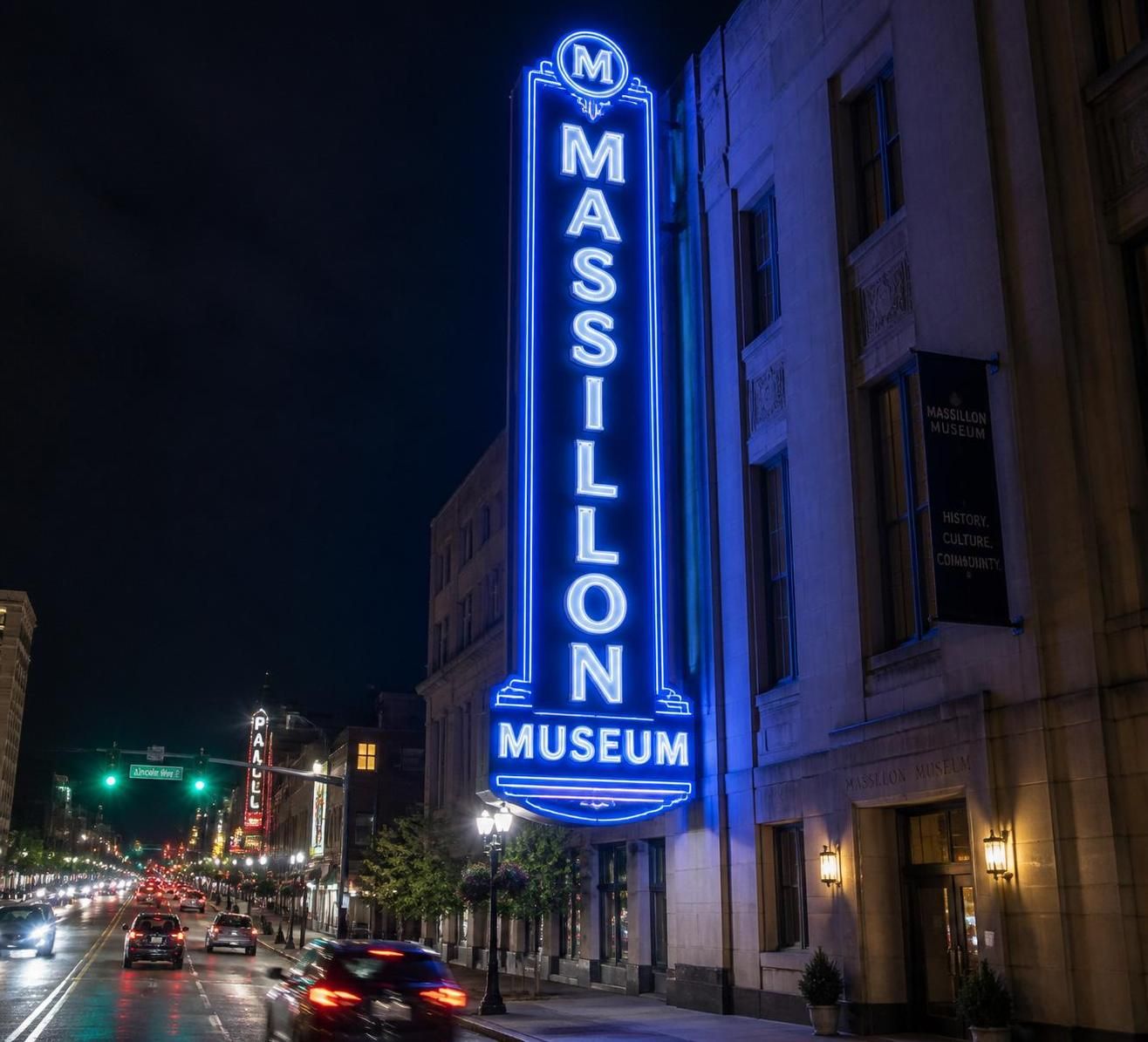
The Massillon Museum’s recent installation of a 30-foot neon sign along Lincoln Way exemplifies how thoughtful signage can play a critical role in boosting local tourism. Located on the side of the museum building, this eye-catching neon sign uses vibrant blue and white lighting to immediately draw attention from passing drivers and pedestrians alike. This is particularly important in a city like Massillon, where the museum had lacked any permanent exterior signage for years.
The initiative was propelled by an identified need: many visitors and even locals struggled to recognize the museum’s physical presence, impacting overall attendance and engagement. Executive Director Alexandra Nicholis Coon highlighted the problem succinctly, pointing out that travelers unfamiliar with the community would have little indication that a vibrant cultural institution awaited just beyond the city streets.
This approach is exemplary for public institutions aiming to increase foot traffic and visibility without relying solely on digital outreach. It demonstrates how combining heritage with modern technology ensures that a museum becomes a visible anchor in the urban landscape, encouraging spontaneous visits and supporting local economies.
Consultation with branding experts from Jackson Township’s Innis Maggiore was crucial in shaping the final design, fusing the museum’s modern brand colors with the nostalgic reference to the original Stark Dry Goods sign—a historical landmark that previously adorned the same wall during the building’s mid-20th century heyday.
Funding for the project was carefully orchestrated through a $48,000 arts enhancement grant provided by ArtsinStark in collaboration with Visit Canton, with a significant portion allocated specifically for the sign. Additional support came from The Robert and Nancy Gessner Charitable Fund, exemplifying how community partnerships can underwrite impactful cultural projects.
The sign’s role extends beyond a mere directional marker: it embodies the museum’s presence within Massillon’s heritage and urban identity, enhancing the visitor journey before entry even begins. This makes a tangible contribution to the public art scene and serves as a beacon guiding visitors to explore cultural and historical narratives.
For tourism professionals, this case illustrates the importance of integrating physical elements with overall strategy to create a more holistic and accessible visitor experience.
Designing Effective Signage: Lessons from the Massillon Museum Neon Sign
Designing an effective sign is more than creating visibility; it involves aligning aesthetics with purpose, history, and user experience. The Massillon Museum’s neon sign embodies this principle by reflecting the building’s past while employing modern branding elements to resonate with today’s visitors.
The original inspiration came from the historic Stark Dry Goods sign, once a landmark on the building’s facade. Although the new neon sign is not a replica, it pays respectful homage by adopting a minimalist yet bold approach. The simplicity of a single word—“Museum”—illuminated prominently makes the statement unmistakable and timeless.
Artist and Chief Development Officer Scot Phillips advocated for retaining this historical reference while modernizing the design palette. The sign’s colors—neon blue and white—faithfully echo the Mass Mu brand identity. This decision strengthens brand recognition and fosters a coherent narrative across all visitor touchpoints.
Functionally, neon offers several advantages over other lighting technologies, such as improved visibility in various weather conditions and a nostalgic yet contemporary appeal. Unlike rotating banners or temporary signs, the neon sign is a permanent installation that speaks to the museum’s stability and commitment to its community.
Moreover, the sign’s size and placement were calibrated to harmonize with the building’s scale without overwhelming the urban fabric. Slightly shorter than the original Stark Dry Goods sign, it strikes a balance by asserting a commanding presence that complements the downtown streetscape.
By commissioning a local manufacturer, Canton Sign Co., who also crafted the original sign decades ago, the project maintains an authentic connection to regional craftsmanship and history.
This thoughtful blending of form, function, and heritage serves as a model for other cultural institutions seeking impactful exterior branding solutions that simultaneously enhance wayfinding and celebrate legacy.
Essential Attributes in Museum Signage Design
- 🖌️ Historical Relevance: Incorporate elements that reference the museum’s architectural or cultural past.
- 🎨 Brand Cohesion: Use colors and fonts consistent with the museum’s broader identity.
- 💡 Visibility: Ensure legibility from multiple distances and lighting conditions.
- 🛠️ Durability: Opt for materials and technology suited for long-term outdoor use.
- 📍 Optimal Placement: Situate signage where it naturally guides prospective visitors toward entrances.
Comparing Neon with Other Signage Technologies
| 🌟 Feature | 💡 Neon Sign | 🔦 LED Sign | 📋 Banner |
|---|---|---|---|
| Visibility 🌙 | High, vibrant glow in various lighting | Bright, energy-efficient | Limited, depends on lighting |
| Longevity ⏳ | Long-lasting with periodic maintenance | Very durable with low maintenance | Temporary, prone to wear |
| Cost 💰 | Moderate initial investment | Higher initial cost, energy-saving | Low-cost but short-lived |
| Historical Appeal 🕰️ | Strong, retro aesthetic | Modern, versatile | None |
Enhancing Visitor Experience Using Visible and Informative Signage
Clear and compelling signage plays a pivotal role in shaping the initial visitor experience, especially in cultural institutions like museums. The Massillon Museum’s 30-foot neon sign has transformed the visitor journey by eliminating uncertainty about the location and accessibility of the museum.
Since the sign’s installation, staff report an immediate effect: visitors who notice the illuminated “Museum” sign often decide spontaneously to stop and explore. One recent visitor even recounted parking immediately upon spotting the sign and entering without prior planning. This improvement in foot traffic demonstrates how physical cues in the environment enhance decision-making and engagement.
Importantly, the sign reduces cognitive load for visitors arriving from outside Massillon or unfamiliar with the city’s layout. Providing visible, intuitive guidance to the museum entrance supports a smoother flow and helps avoid frustration that can otherwise negatively impact the perception of the institution.
The increased visibility also supports ongoing marketing efforts by complementing digital channels with prominent on-site branding—a critical step for institutions that aspire to grow their audience and deepen community engagement.
Furthermore, the sign acts as a form of public art, enriching downtown’s aesthetics and contributing to a vibrant urban atmosphere. It demonstrates how functional infrastructure can double as visual culture, capturing attention while guiding visitors practically.
For tourism managers, the lesson is clear: investing in well-designed physical signage is an indispensable strategy to improve onsite visitor orientation and boost overall satisfaction.
Funding Cultural Visibility: Grants and Partnerships Driving the Neon Sign Project
Securing adequate funding is often the most challenging aspect of upgrading museum signage and infrastructure. The Massillon Museum’s neon sign project illustrates how leveraging grants and community partnerships can overcome these obstacles effectively.
In 2022, the museum benefited from a major arts enhancement grant facilitated by ArtsinStark alongside Visit Canton. The $48,000 award was strategically divided, with half dedicated to the signage project and the remainder allocated to refurbishing the museum’s website and improving exhibition technology. This comprehensive approach signifies forward-looking investment in both physical presence and digital engagement.
The balance of the signage expenses was met through a matching grant from The Robert and Nancy Gessner Charitable Fund administered by the Stark Community Foundation. This collaboration underscores the importance of local philanthropy in supporting cultural infrastructure that benefits public access and education.
By pursuing multiple funding streams, the Massillon Museum ensured its commitment to the project without overreliance on a single source. This diversified financial strategy is pivotal for organizations aiming for sustainable improvements.
For cultural managers and event organizers, this case presents key tactical takeaways on funding:
- 🤝 Build partnerships with local foundations and grantmakers who prioritize arts and community enhancement.
- 📊 Present multifaceted proposals that link physical improvements to broader institutional goals, increasing the likelihood of funding.
- 🏛️ Collaborate with tourism agencies to align cultural promotion with regional visitor strategies.
- 🔍 Maintain transparency regarding budget allocation and project milestones to strengthen community trust.
- 🗓️ Plan long-term by integrating signage with future exhibitions and digital tools development.
These practices ensure that cultural visibility projects like the neon sign become sustainable community assets fostering engagement and pride.
Public Art and Urban Identity: The Neon Sign as a Cultural Landmark in Massillon
The Massillon Museum’s neon sign is more than a guide—it is becoming a symbol integral to the city’s urban identity and cultural expression. Public art such as this can transform everyday urban environments, contributing significantly to place-making and community belonging.
Neon signage carries a distinct aesthetic that recalls mid-20th century Americana, particularly in commercial signage, yet it retains a modern appeal through its adaptability and vibrancy. Massillon’s choice to revive the spirit of the original Stark Dry Goods sign aligns with a growing trend of reconnecting contemporary urban spaces with their historical narratives.
Such projects remind residents and visitors alike of the evolving nature of a city’s character. The sign’s prominent location on Lincoln Way ensures it functions as a landmark—an essential navigational and identity marker within downtown Massillon.
Institutional signage as public art also encourages dialogue about cultural heritage among the community, inspiring greater civic pride and tourism participation. It sets a standard for how cultural institutions can influence urban aesthetics positively.
Ultimately, the neon sign is positioned to become a lasting icon, representing a fusion of history, art, and modern cultural engagement. This fosters a multifaceted visitor experience that begins outside the museum walls and extends into the cityscape.
For institutions and urban planners aiming to integrate art and culture into their environment, the Massillon Museum neon sign serves as a benchmark project demonstrating how signage and public art can strengthen tourism and community identity simultaneously.
- 🌆 Acts as a signature landmark enhancing downtown Massillon’s cultural landscape.
- 🎨 Celebrates historical heritage while embracing contemporary design.
- 🚗 Improves visitor navigation and spontaneous visits, boosting museum attendance.
- 🤝 Builds partnerships reinforcing local philanthropic and cultural ecosystems.
- 💡 Demonstrates innovative use of lighting technology blending nostalgia and modernity.
Exploring local insights and further updates about the Massillon Museum’s initiatives can be found through official channels such as the Massillon Museum website and community news feeds, supporting stakeholders who prioritize enhancing visitor engagement and urban cultural vitality.
Why was the 30-foot neon sign necessary for the Massillon Museum?
The sign was essential to improve the museum’s visibility along Lincoln Way, guiding visitors who might otherwise miss its location, hence increasing foot traffic and awareness.
How does the neon sign connect to Massillon’s history?
It pays homage to the Stark Dry Goods sign that originally hung on the same building, blending historical reference with modern branding through colors and design.
What benefits does neon technology provide for museum signage?
Neon signs offer brilliant visibility in diverse lighting conditions, a nostalgic appeal, and durable long-term use, making them an ideal choice for outdoor cultural signage.
How was the neon sign project funded?
Funding combined a major arts enhancement grant from ArtsinStark and Visit Canton with a matching grant from The Robert and Nancy Gessner Charitable Fund, showcasing effective partnership strategies.
Can public art like this neon sign impact urban identity?
Yes, the sign acts as a cultural landmark contributing to Massillon’s urban aesthetic, visitor navigation, and community pride, enhancing downtown’s identity.
