
Short on time? Here’s the essential:
✅ ZAO/Standardarchitecture’s innovative use of concrete shapes an encircling courtyard that transforms visitor interaction.
✅ The design prioritizes seamless integration between architecture and natural landscape, enhancing cultural immersion.
✅ Avoid traditional museum layouts that isolate spaces; embrace fluid galleries that encourage continuous exploration.
✅ Bonus: Smart audio technology complements architectural innovation for rich visitor experiences.
Innovative Architectural Approaches in ZAO/Standardarchitecture’s Concrete Art Gallery
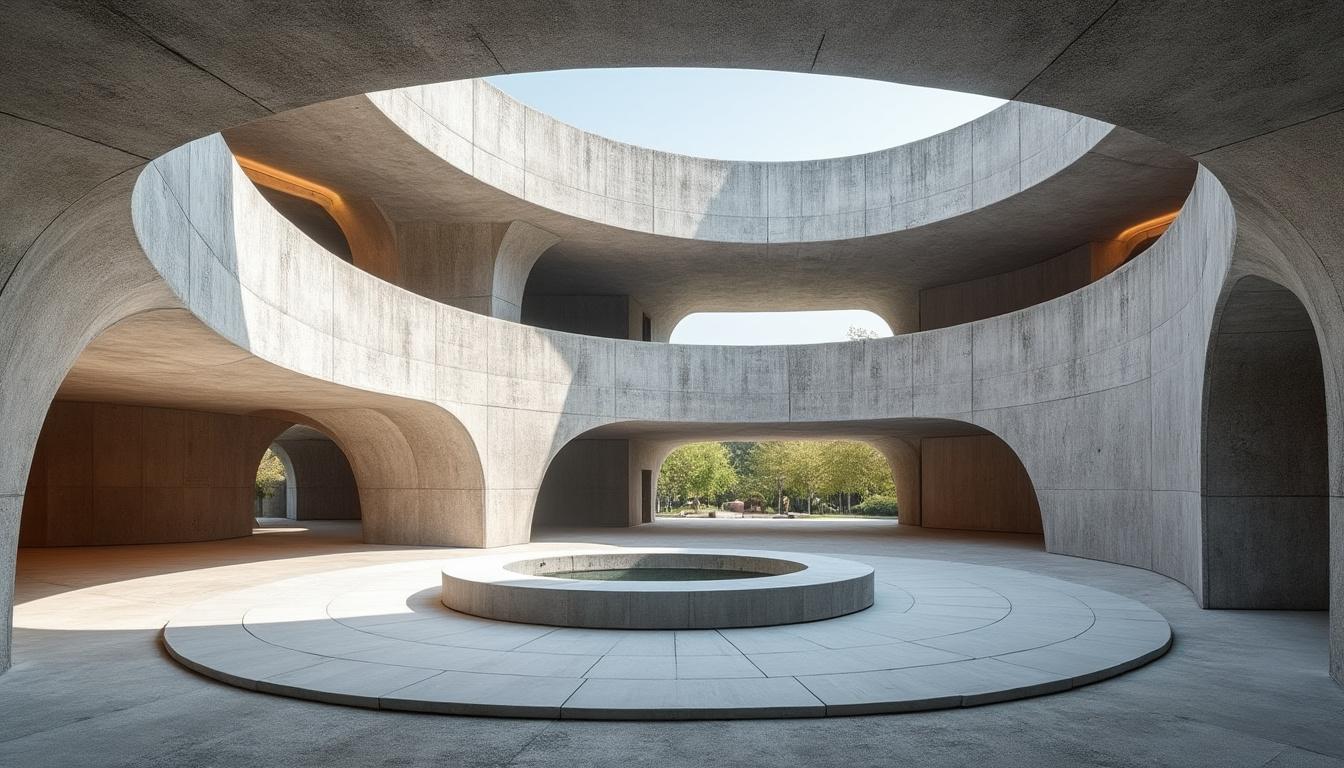
ZAO/Standardarchitecture, a prominent Beijing-based firm, has engineered a striking concrete art gallery in China that challenges conventional museum design paradigms. Situated at the foot of Daci Mountain in Hangzhou’s Xihu District, the project masterfully integrates a polygonal concrete structure that encircles a central courtyard, fostering connectivity both spatially and experientially. By employing a rigid yet fluid architectural language, the designers enable the gallery to guide visitors through interconnected spaces without visual interruption.
This architectural innovation translates into a gallery system that breaks away from compartmentalized rooms, instead presenting protruding concrete boxes with panoramic windows opening directly onto the courtyard. This allows natural light to suffuse interiors, merges indoor and outdoor realms, and frames views of the surrounding hilly landscape—a detail which significantly enriches the cultural and spatial narrative of the museum. The subtle mixture of concrete and traditional elements, such as dated brick walls reinforced with a special ink-infused technique, rejuvenates the courtyard’s aesthetic, offering visitors a contemporary yet contextually grounded environment.
One of the key technical achievements of this design lies in the employment of a special 9 cm thick casting concrete mixed with Chinese ink, which revitalizes the courtyard walls without losing their historic aura. This strategy simultaneously provides enclosure and unity to the space. ZAO/Standardarchitecture enhances the visitor journey by emphasizing the fluid relationship between built form and landscape, a method that ensures the absence of visual barriers while maintaining the functional diversity of gallery spaces. Such a solution exemplifies how modern architecture can respect heritage while injecting new life and purpose into public spaces.
These principles are well documented in specialized architectural platforms that detail the firm’s portfolio, including intricate material choices and innovative use of spatial volumes. This thoughtful approach reveals how the Chinese studio extends beyond simple exhibition spaces to create an immersive cultural sanctuary. For professionals in tourism and cultural heritage, the design offers insight into how architecture can actively shape visitor engagement beyond the static display of art, catalyzing a dynamic, emotionally resonant environment.
Discover more about this project’s unique design methodology through expert analyses on ArchDaily’s ZAO/Standardarchitecture collection and the Divisare architecture platform, which offer detailed discussions on how concrete massing and site integration collectively redefine art gallery experiences.
Design Strategies that Enhance Cultural Mediation and Visitor Experience
Modern museum design no longer confines itself to showcasing art—it constructs an experience that intertwines architectural innovation with cultural narratives. ZAO/Standardarchitecture’s project exemplifies this by strategically creating a co-living courtyard that serves as an active focal point for visitor interaction and reflection. Rather than passively traversing exhibition spaces, visitors can engage with a setting that echoes ancient Chinese gardens where philosophy and contemplation flourished.
The encircling layout nurtures social interaction by establishing a continuous visual corridor. Large panoramic windows and transparent gallery walls invite participants to glance through the structure, fostering a sense of openness and connection between exhibits and nature. This approach dismantles hierarchical museum layouts, instead promoting a horizontal flow between spaces conducive to discovery and dialogue. Beyond aesthetic innovation, this enhances wayfinding, crowd management, and the overall quality of visits.
Integration of such spatial devices directly supports cultural mediation—a vital component for museums and galleries adapting to 21st-century visitor expectations. The spatial openness is complemented by potential implementation of smart audio systems that deliver contextual information seamlessly throughout the galleries and courtyard. These digital guides enable individualized learning and enhance accessibility without disrupting the architectural ambiance. The layering of physical form and digital mediation creates hybrid experiences that modern audiences increasingly demand.
Efficient visitor flow is critical for institutions hosting diverse exhibitions and events. In this project, the courtyard functions as an intuitive anchor point, allowing visitors to orient themselves naturally while exploring distinct yet interlinked gallery pods. The architectural form transcends mere enclosure and instead becomes an active participant in storytelling and engagement, offering both solitude and communal space within a single cohesive environment.
Reference:* Explore further how co-living and open courtyards serve as catalysts for interaction at cultural sites in the Archello case studies, illustrating immersive strategies successfully applied by ZAO/Standardarchitecture.
Material Innovation and Sustainability Considerations in Concrete Architecture
The Xiao Feng Art Museum’s choice of material stands out notably in the domain of contemporary architecture for its experimental use of concrete mixed with ink, an approach championed by ZAO/Standardarchitecture. This fusion not only elevates the visual character of the surfaces with rich textures and deep hues but also embodies a sustainable mindset that aligns with local traditions and environmental awareness.
Concrete remains a predominant structural material globally due to its durability and versatility. However, adapting it for cultural spaces demands balancing robustness with aesthetic finesse. By integrating Chinese ink into the casting process, artists and architects achieve nuanced surface coloration without reliance on additional paints or coatings, thereby reducing chemical use and maintenance needs. This innovative technique exemplifies how contemporary architectural practices in China engage heritage materials while embracing modern production technologies.
Concrete’s thermal mass properties also contribute positively to the museum’s energy performance. The thick walls help maintain stable indoor temperatures, reducing dependence on heating and cooling systems. Such passive climate control methods are critical in light of contemporary sustainability goals, particularly for public buildings with high visitation.
The project’s reinforcement strategies maintain the original spatial identity of the courtyard, avoiding demolition while implementing structural upgrades that extend longevity. In doing so, ZAO/Standardarchitecture demonstrates that sustainability in architecture not only involves new materials but also extends to adaptive reuse and sensitive refurbishment.
For architects and cultural managers aiming to replicate sustainable approaches, examining this project’s material choices provides a tangible model of marrying aesthetic impact with environmental responsibility. A more in-depth technical breakdown can be found through ZAO/Standardarchitecture’s official resources and detailed case narratives on Archicasting’s feature.
| 🎨 Aspect | 🧱 Material/Method | 🌱 Sustainability Benefit | 🏛️ Cultural Impact |
|---|---|---|---|
| Wall Finishes | Concrete with Chinese Ink infusion | Reduces chemical paints, durable low-maintenance surface | Preserves historical wall texture & color harmony |
| Structural Reinforcement | Thick casting concrete, adaptive reuse of courtyard walls | Extends building lifecycle, avoids demolition waste | Maintains authentic spatial enclosure and atmosphere |
| Lighting Design | Panoramic windows and openings | Natural illumination minimizes electricity use | Connects interior with landscape views enhancing art context |
Implementation Challenges and Solutions in Encircling Courtyard Galleries
Designing a museum that encircles a courtyard presents an intricate balance between enclosure and openness. The interplay between concrete massing and the fluidity expected from contemporary art galleries creates a complex architectural puzzle tackled adeptly by ZAO/Standardarchitecture.
The polygonal building form needed precise articulation to reconcile structural integrity with flexible exhibition spaces. Protruding concrete volumes, while visually striking, demand thoughtful engineering to support cantilevered sections and large panoramic windows. The successful realization of these elements owes much to intensive modeling and material testing, ensuring that aesthetics do not compromise visitors’ comfort or safety.
Lighting posed another significant challenge. The requirement to flood galleries with natural light without causing glare or damage to artworks compelled the use of specialized glazing and window orientation. This technique highlights how modern architecture can respect conservation standards while maintaining an open, inviting atmosphere.
The courtyard’s role as the spatial and social heart required not only spatial clarity but also acoustic management, a factor critical to visitor experience especially when integrating smart audio guides. The firm’s strategies included deliberate material textures and carefully positioned openings to control sound movement and minimize noise pollution, showcasing a comprehensive approach to sensorial design.
This project’s detailed documentation on platforms like the Venice Biennale 2023 archive illustrates how such architectural challenges are resolved through an iterative process that merges creative vision with technical precision.
Enhancing Visitor Engagement through Architectural and Technological Synergies
In an era where visitor expectations transcend static displays, ZAO/Standardarchitecture’s concrete art gallery integrates architectural prowess with advanced technology to redefine gallery engagement. The encircling courtyard not only structures the journey but also supports the deployment of smart audio and digital mediation technologies, essential for enriching visitor interaction and knowledge retention.
For cultural institutions looking to modernize their offerings, this case illustrates how architectural design can create ideal conditions for implementing tools like Grupem’s mobile audio guides. These systems provide context-sensitive narration, accessible information layers, and personalized tour pathways, enhancing both accessibility and engagement. Visitors benefit from uninterrupted visual connections while accessing in-depth cultural insights directly on their smartphones.
Furthermore, the courtyard space serves multifunctional purposes, hosting community events, workshops, and reflective moments that resonate with the museum’s mission. Architecturally designed to encourage fluid circulation and sensory stimulation, this configuration supports diverse visitor profiles—from casual tourists to expert art enthusiasts—thereby maximizing public reach.
Practical implementation considerations for organizations include configuring audio signal coverage to ensure seamless reception in enclosed outdoor areas and optimizing app localization for multilingual accessibility. This integration of modern architecture and smart tourism technology profoundly elevates the art gallery experience, setting new standards for cultural institutions worldwide.
More insights on how technology complements innovative museum design can be explored in related projects such as the Smithsonian evaluation and Egyptian Museum grand opening.
How does the encircling courtyard influence visitor circulation?
The courtyard creates a continuous loop that naturally guides visitors through the galleries, promoting smooth navigation and visual connection to outdoor landscapes.
What makes the concrete material used in this gallery unique?
The concrete is infused with Chinese ink, adding depth and texture while reducing the need for additional finishes, enhancing durability and aesthetic quality.
How does the design support sustainability?
By reinforcing existing brick walls rather than demolishing, and utilizing passive thermal properties of concrete, the project reduces environmental impact and ensures long-term viability.
Can smart audio guides be integrated within this architectural space?
Yes, the design’s openness and acoustic management facilitate the deployment of smart audio systems, enabling enhanced visitor engagement without disrupting the space.
Where can I find detailed technical information about this project?
Several platforms including the official ZAO/Standardarchitecture website and architectural archives provide comprehensive documentation about the design and construction process.
