
Short on time? Here’s what you need to know:
✅ Pro-Iran factions utilize sophisticated AI-generated memes to influence public opinion and disrupt Western narratives.
✅ Understanding the integration of AI and social media in propaganda reveals crucial insights on modern disinformation tactics.
✅ Avoid underestimating the role of cyber influence campaigns in contemporary conflicts, as they can sway perceptions significantly. 🔍
Leveraging AI-Driven Memes for Strategic Cyber Influence
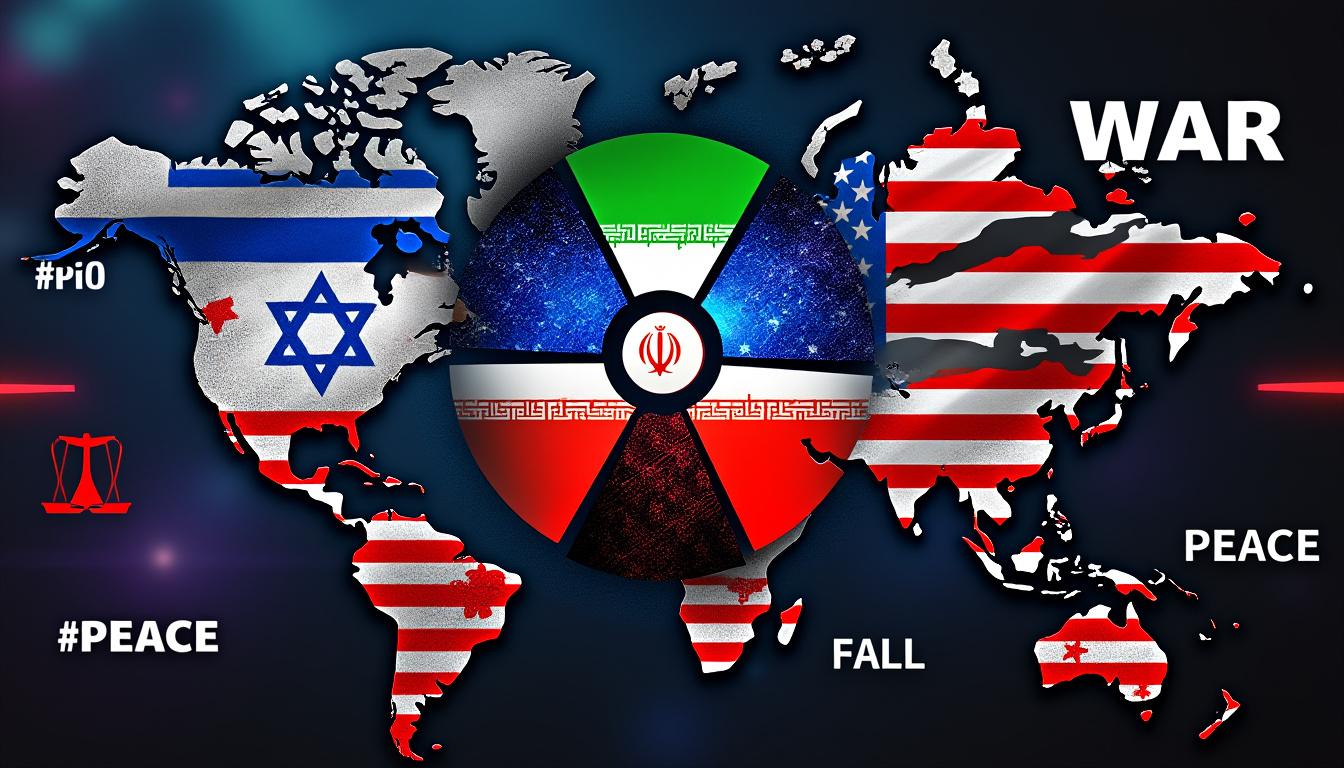
Pro-Iran factions have emerged as highly adaptive players in the realm of digital propaganda, deploying artificial intelligence to craft compelling internet memes aimed at shaping the war narrative against the United States and Israel. These groups, reportedly connected to the Iranian government, harness AI tools to produce polished, culturally resonant content in English that targets Western audiences. The objective is not only to sow discord but also to indirectly inflict damage on political adversaries.
This digital strategy is particularly effective since it conserves Iran’s limited conventional resources while maximizing psychological impact. For example, the control over critical geopolitical chokepoints such as the Strait of Hormuz pairs conventional coercion with cyber influence, amplifying Iran’s leverage over global economic flows. AI-generated memes serve as a parallel front in this ongoing conflict by discrediting U.S. political figures and fomenting divisions within American society.
The memes exhibit a remarkable fluency in American popular culture, incorporating references and humor that resonate deeply with Western Internet users. Notably, they portray former President Donald Trump as outmoded and isolated, highlight internal factionalism within his supporter base, and even comment on public controversies involving U.S. officials. This approach reflects a sophisticated understanding of social media dynamics and cultural nuances, allowing the memes to spread rapidly and generate engagement.
Analysts such as Neil Lavie-Driver from the University of Cambridge emphasize that this ongoing campaign is fundamentally a propaganda war. The goal is to foster sufficient public discontent with the conflict so the Western coalition may be pressured into concessions. This aligns with historical uses of propaganda but represents a new evolution made possible by AI enhancements and social media’s reach.
The technical sophistication of these memes reflects governmental-level involvement. High-bandwidth AI content generation and distribution capabilities suggest coordination with regime actors, despite denials from groups claiming independent status. Such digital campaigns illustrate how AI-driven social media tactics have become front-line tools in modern hybrid warfare.
Dissecting the Memes: Cultural Fluency Meets Propaganda
The pro-Iran memes are crafted not only in English but with deep immersion in American cultural symbols and trolling techniques. For example, some animations mimic the style of popular “Lego”-inspired movies, creating satirical narratives where Iranian figures wield symbolic power while Western antagonists are ridiculed. One viral meme depicted Trump falling into a bullseye labeled “Epstein files,” a sharp reference to ongoing intrigue around the U.S. political establishment.
This layer of cultural fluency enhances meme virality, allowing the messages to resonate on both emotional and intellectual levels. Such an approach enables factions to bypass the skepticism often directed at foreign propaganda by couching content within familiar formats and humor styles. The repertoires include:
- 🎯 Cartoons lampooning key U.S. political figures and events
- 📲 Viral video clips designed for rapid sharing and engagement
- 🔍 Insightful references to ongoing U.S. domestic political developments
- 🧩 Strategic use of irony and sarcasm to deepen audience connection
Indeed, this method exemplifies how AI-enhanced media production can expand traditional propaganda techniques. These memes do not merely transmit slogans but construct culturally nuanced narratives that shape perceptions subtly yet powerfully. The combination of AI with culturally aware content formulation marks a significant step forward in cyber influence capabilities.
Such sophisticated operations demand significant network infrastructure and technical expertise, thus pointing toward semi-official or official state collaboration. This is evidenced by the sharing of such content on government-affiliated social media accounts and through state media channels that amplify reach and legitimacy.
Impact of AI-Powered Disinformation on the War Narrative
In 2026, the battlefield extends well beyond physical frontlines to digital arenas where narratives are crucial. Pro-Iran factions’ use of AI to generate disinformation reflects an evolved strategy to mold international opinion during the ongoing conflict. The influence campaign involves not only vilifying opponents but promoting a broader anti-Western worldview by manipulating social media algorithms to boost engagement.
This approach affects multiple layers:
- ⚙️ Information Ecosystem Disruption: Overloading platforms with high volumes of memetic content to create noise and confusion among audiences.
- 🔗 Social Fragmentation: Polarizing public opinion within target states by exploiting existing fissures through tailored messaging.
- 📉 Legitimacy Undermining: Casting doubt on official narratives and government credibility by amplifying conspiracy theories and controversies.
Pro-Iran propaganda also challenges the West’s longstanding dominance of international media by proposing alternative frames and interpretations. This tactic complicates conflict resolution efforts, as competing narratives harden positions and reduce trust. The digital meme war serves as a strategic extension of conventional hostilities.
By comparison, the U.S. and Israel appear to deploy less coordinated AI-driven narratives against Iran. Their messaging is often more targeted domestically or focuses on encouraging Iranian opposition through traditional channels rather than broad, viral meme armies. For broader audiences, official entities like the White House rely on culturally attuned memes targeting American viewers, reflecting different strategic priorities.
The evolution of these tactics calls for enhanced media literacy among the public and stronger capabilities to recognize and neutralize AI-enhanced disinformation. Awareness of such digital influence strategies aids in preserving the integrity of communication channels amidst complex geopolitical struggles.
Technological Dimensions: AI Memes and Cyber Influence Mechanisms
The mechanics behind AI-generated memes involve advanced neural networks trained on vast datasets of cultural references, political events, and linguistic nuances. These systems enable near-instantaneous creation of visually or verbally impactful content, which is then strategically disseminated across social media platforms to maximize reach and impact.
In the context of the 2026 conflict, pro-Iran factions exploit this technology to:
- 🖥️ Generate high volumes of tailored content, including text, images, and short videos.
- 📊 Leverage algorithms to identify and target susceptible demographics and interest groups.
- 🔄 Amplify messages through coordinated bot networks and human-operated accounts to ensure widespread visibility.
- 🔐 Navigate censorship and internet restrictions within Iran to maintain continuous flow of propaganda.
This AI-driven cyber influence campaign requires substantial coordination and resources often accessible only through state support or affiliated entities. Analysts highlight that intermittent internet shutdowns and censorship do not fully prevent content creation inside Iran, as critical infrastructure is prioritized for regime-aligned digital operations.
| 🔑 Capability | 🛠️ Functionality | 🎯 Strategic Benefit |
|---|---|---|
| AI Meme Generation | Rapid production of culturally relevant visual/text content | Maximizes reach with minimal resource expenditure |
| Algorithmic Targeting | Identification of susceptible audience segments | Increases message effectiveness through precision targeting |
| Bot Networks | Artificial amplification of message dissemination | Ensures viral spread across social media |
| Internet Censorship Navigation | Maintaining propaganda flow despite restrictions | Preserves operational continuity within Iran |
These technological tools illustrate how AI reshapes the landscape of disinformation and social influence. For professionals managing digital communications and cultural mediation, understanding these mechanisms is critical to counteracting adversarial narratives and ensuring authentic engagement.
Balancing Digital Innovation with Authentic Narrative Control
In today’s digital age, the war for hearts and minds increasingly relies on AI-powered social media campaigns that blur the lines between genuine public sentiment and orchestrated propaganda. The sophistication of pro-Iran factions’ AI meme operations demonstrates the need for vigilance and adaptation among policymakers, media professionals, and cultural institutions.
Their use of AI to troll figures such as Donald Trump and shape international perceptions exemplifies how smart technological tools can be weaponized to challenge established power narratives. While these tactics complicate conflict moderation, they also underscore the importance of robust, accessible platforms for fact-based communication.
For entities engaged in cultural mediation and tourism, recognizing how digital storytelling tools can both enhance and distort narratives is essential. Leveraging innovations similar to those used by AI-driven propaganda, but in ethical and transparent ways, can help maintain authenticity and accessibility in content delivery. Resources like Grupem’s museum reopenings guide show how technology can enrich engagement without manipulation.
To stay effective, institutions must:
- 🔍 Monitor emerging AI and social media trends influencing public opinion.
- 🛡️ Implement strategies that prioritize truthful, inclusive narratives.
- 🔗 Collaborate with technology providers to integrate reliable voice AI and content management systems.
- 📈 Enhance audience literacy regarding digital content authenticity.
Adapting to this evolving propaganda landscape requires continuous learning and tactical agility. While digital tools might empower factions to troll and steer narratives, the responsibility to maintain accurate discourse lies with informed professionals across sectors.
Further advancements in AI voice assistants and cognition, such as those detailed in next-gen AI voice technologies, hold promise for transforming how narratives are generated and moderated. Leveraging these innovations ethically can help counterbalance the negative impacts of AI-powered disinformation.
How do pro-Iran factions use AI to influence the war narrative?
They utilize AI to create culturally resonant English-language memes and videos designed to discredit U.S. figures and promote anti-Western sentiment, amplifying their message across social media platforms.
What makes these AI memes particularly effective?
Their ability to deeply integrate American pop culture references and humor increases resonance and engagement, making them harder to dismiss as foreign propaganda.
Are Western governments employing similar AI-driven propaganda?
So far, U.S. and Israeli campaigns have been less reliant on viral AI memes and tend to focus more on traditional channels and targeted domestic messaging.
What technological methods support the propaganda campaigns?
The campaigns leverage AI content generation, targeted algorithmic distribution, bot amplification, and techniques to bypass censorship within Iran.
How can cultural and tourism professionals respond to AI-driven disinformation?
By staying informed of AI trends, prioritizing authenticity, adopting ethical technology solutions, and educating audiences on digital media literacy to preserve truthful narratives.
