
Short on time? Here is what matters:
- 🎸 Detroit Bass Day takes place at the Motown Museum on Saturday, August 15, from noon to 4 p.m.
- 🎶 The Free Event honors James Jamerson, celebrates Paul Riser Sr., and brings Detroit musicians together for a large-scale Psychedelic Soul Mega Jam.
- 📱 Visitors, museums, and cultural organizers can treat the day as a practical model for accessible, sound-led heritage programming.
Detroit Bass Day 2026 Brings a Free Music Celebration to the Motown Museum
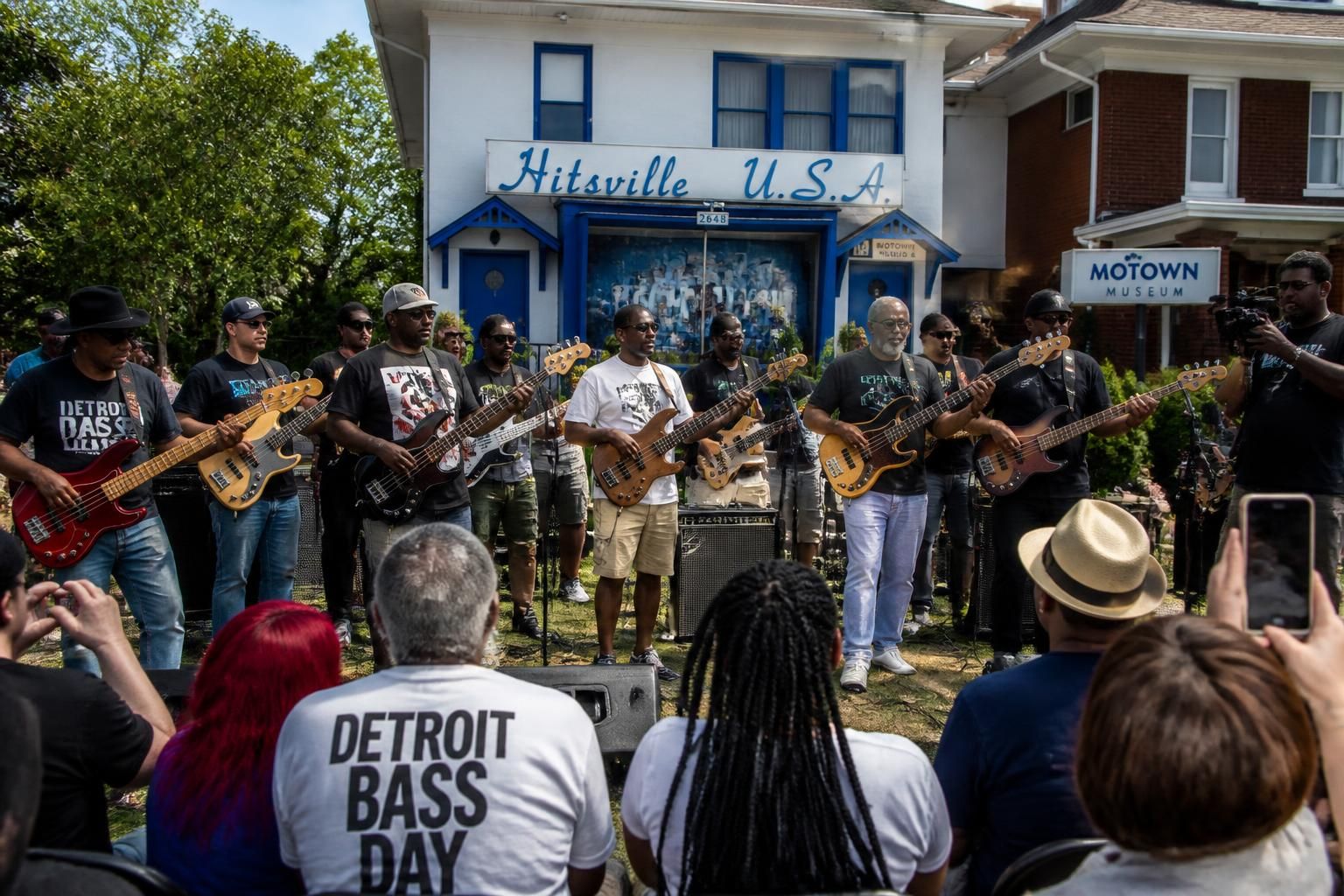
The Motown Museum will turn its Detroit campus into a live listening space on Saturday, August 15, 2026, with Detroit Bass Day running from 12 p.m. to 4 p.m.. Designed as a public celebration of the players and arrangements behind the city’s defining records, the program is open to attendees at no cost. This makes the event more than a concert: it is a cultural access point for residents, tourists, families, musicians, and anyone curious about the craft behind the Motown Sound.
Detroit Bass Day places the Bass Guitar at the center of the story. That focus is particularly meaningful in a city where rhythm sections created a musical language recognized far beyond Michigan. While lead singers often receive the public spotlight, the bass line is frequently the element that gives a song its movement, tension, and emotional depth. In classic Motown recordings, it did not merely support the melody. It helped drive it.
The event will be hosted at the Esther Gordy Edwards Centre for Excellence, part of the Motown Museum campus. The setting connects a modern Community Event with a heritage institution whose mission involves preserving, explaining, and activating Detroit Music history. Visitors will be able to experience music as something living and collective rather than as a distant archive behind glass.
A detailed Detroit Bass Day program announcement from the Motown Museum confirms the psychedelic soul focus of this edition. That theme gives performers an opportunity to explore a period when soul, funk, rock, jazz, and experimental studio techniques increasingly overlapped. For audiences, it provides useful context: Detroit’s musical identity has always been broader than a single genre label.
The fact that admission is free has practical value. Cultural organizations often speak about inclusion, but price remains one of the clearest barriers to participation. A Free Event can welcome the experienced player who brings a favorite instrument, the local teenager discovering James Jamerson’s work for the first time, and the visitor who has only encountered Motown through radio classics. Shared access gives the program its civic dimension.
| 🗓️ Event detail | 🎵 What visitors should expect |
|---|---|
| Date and time | Saturday, August 15, 2026, from 12 p.m. to 4 p.m. |
| Location | Motown Museum campus, including the Esther Gordy Edwards Centre for Excellence |
| Admission | 🎟️ Free public access |
| Music focus | 🎸 Bass Guitar, psychedelic soul, Detroit Music, and the Motown Sound |
| Featured recognition | 🏆 Tribute to James Jamerson and the Motown Museum ICON Award for Paul Riser Sr. |
For destination managers and visitor-facing teams, this format is also a reminder that music heritage works best when it is made participatory. A schedule alone does not create engagement. A clear purpose, a recognizable venue, live artists, and a welcoming ticket policy create the conditions for people to stay, listen, discuss, and return.
Consider the example of a first-time visitor arriving with a friend who knows little about the Motown Sound. The visitor may initially come for the Live Performance, then leave with a better understanding of why musicians such as Jamerson mattered. That progression—from entertainment to interpretation—is where a well-designed Music Celebration becomes meaningful cultural mediation.
The essential point is simple: Detroit Bass Day uses live sound to make Detroit’s music history immediately understandable, without placing a financial barrier in front of the audience.
Honoring James Jamerson and Paul Riser Sr. Through Detroit Music History
Detroit Bass Day is built around a deserved tribute to James Jamerson, the Motown bassist whose playing shaped a remarkable number of recordings associated with the label’s golden era. His work was not defined by simple repetition. Jamerson created melodic, agile, and often surprising lines that could make a familiar pop structure feel buoyant and alive. Many listeners recognize his musical decisions even if they do not know his name.
His contribution is especially important because it demonstrates how studio musicians can shape an entire cultural identity. Motown records were carefully crafted, but the results depended on players able to respond to a song with instinct, technique, and taste. Jamerson’s bass parts gave tracks a sense of forward motion that singers, arrangers, and producers could build upon. The instrument became a voice within the arrangement.
Detroit Bass Day also presents the Motown Museum ICON Award to Paul Riser Sr. His recognition adds another layer to the event’s educational value. Riser is celebrated for his work as an arranger, a role that is sometimes less visible to general audiences than that of a singer or bandleader. Yet arrangements determine how instruments converse, when energy rises, and how a recording earns its signature character.
Putting Jamerson and Riser in the same program creates a useful connection between rhythm and arrangement. The bass establishes the foundation, while the arrangement organizes the wider musical architecture. In practical terms, that means a listener can hear how one low-register phrase may interact with horns, strings, drums, backing vocals, and guitar. The Motown Sound was never the product of one person; it was a highly coordinated creative ecosystem.
Why the bass line remains central to the Motown Sound
The bass is sometimes treated as a technical subject for musicians only, but that overlooks its direct impact on audience experience. When people tap their feet, sway, or recognize a song within seconds, they are often reacting to the rhythm section. Jamerson’s style created hooks that were physical as well as musical. His work makes an ideal entry point for explaining studio artistry to audiences of all ages.
For museums, this is an opportunity to move beyond labels such as “legendary” and give visitors a way to listen actively. Instead of simply saying that a player was influential, an interpreter can invite guests to follow the low notes during a familiar song. What changes when the bass moves against the vocal melody? How does a bass line create anticipation before a chorus? These questions turn passive listening into discovery.
A short, well-selected video can extend that learning before or after a visit. However, audio content needs to be easy to hear in a busy museum or outdoor event environment. Cultural venues can support this with headphone-friendly mobile content, transcripts, volume controls, and concise explanations rather than long, unstructured commentary. Good interpretation should clarify the music without interrupting the pleasure of listening.
A hypothetical visitor named Marcus offers a useful example. He arrives because he plays Bass Guitar in a neighborhood group and expects a performance-focused afternoon. After hearing an explanation of Jamerson’s role and seeing Riser honored, he begins to identify how the bassist and arranger each influenced the finished record. He is not simply entertained; he gains language for what he hears.
This approach also benefits tourists who may be visiting Detroit for only one day. They do not need specialist knowledge before entering the event. The event itself can provide a gateway into broader museum content, local venues, record stores, music trails, and digital resources. A strong cultural program respects beginners while still offering depth for enthusiasts.
By celebrating both James Jamerson and Paul Riser Sr., the Motown Museum makes clear that Detroit Music was built through collaboration, arrangement, and exceptional listening.
Psychedelic Soul Mega Jam Turns the Bass Guitar into a Shared Live Performance
The centerpiece of Detroit Bass Day is expected to be a Psychedelic Soul Mega Jam, bringing together a large group of Detroit bassists for an ambitious collective Live Performance. Reports around the event indicate that approximately 40 bass players will converge for the jam. That scale matters because it turns an instrument often positioned in the background into the main visual and sonic focus.
A mega jam can be memorable, but it requires coordination. Multiple bass instruments occupy a similar frequency range, so performers need a shared structure, attentive monitoring, and an agreed musical direction. Without these elements, low frequencies can become indistinct. With strong preparation, the result can be powerful: a layered, rhythmic sound that highlights the range of styles present in Detroit’s bass-playing community.
The psychedelic soul framing is well suited to this format. Psychedelic soul expanded the vocabulary of traditional soul music through heavier grooves, adventurous textures, wah effects, rock-influenced energy, and a stronger sense of improvisation. It gives performers room to honor historic influences while adding contemporary personality. The goal is not to recreate a museum piece note for note, but to show how a local musical tradition continues to evolve.
For attendees, “Plug & Play” signals participation and visibility. It suggests a gathering where local players are not merely observers of heritage but active contributors. That distinction is crucial for a Community Event. When people can see peers, teachers, students, and working musicians on stage or in a shared performance area, the event feels connected to the present-day city.
How a large bass ensemble can stay clear and engaging
Sound design is a practical part of cultural access. A dense low-end performance should not be painful, muddy, or difficult to follow for visitors standing near the stage. Event teams can improve the experience by defining performance zones, checking levels before the audience arrives, assigning a musical director, and ensuring that spoken segments remain intelligible. Clear speech is particularly important when presenters explain the significance of the musicians being honored.
- 🔊 Balance the low end: keep individual bass signals distinct rather than maximizing every amplifier.
- 🎼 Set musical cues: agree on keys, endings, solo moments, and hand signals before the public performance.
- 📍 Improve visitor flow: clearly identify performance areas, rest zones, accessible routes, and information points.
- 📱 Offer digital context: provide QR-accessible schedules, artist notes, and short audio stories for visitors who want more detail.
- 👂 Protect listening comfort: monitor overall volume and make family-friendly listening conditions a priority.
Digital tools can support this type of event without taking attention away from the musicians. A mobile audio guide, for example, can provide short profiles of Jamerson and Riser, explain the meaning of psychedelic soul, and direct guests to different activities on campus. It can also offer text alternatives for people who prefer reading, helping organizers build a more inclusive visitor journey.
For a small museum or tourism office planning a similar event, the lesson is not that every program needs 40 performers. The useful principle is scalable participation. A three-player workshop, a local school ensemble, or a guided listening session can use the same approach: explain the cultural context, make the sound comfortable, and give audiences a clear role.
A great Live Performance is not defined by volume or scale alone; it works when musical energy, clear sound, and audience orientation are designed together.
For visitors planning their afternoon, the Bass Day listing from Connect Detroit is a useful additional reference for checking the core event details. Confirming schedules before travel is especially important for cultural events with multiple live elements, where arrival time can shape the overall experience.
Using Detroit Bass Day as a Model for Accessible Cultural Event Design
Detroit Bass Day offers practical lessons for organizations that want to create a relevant, accessible Music Celebration around local heritage. The format succeeds because it joins several elements that are often planned separately: historic storytelling, public recognition, live music, participation, and free access. When these elements reinforce one another, visitors understand both why the heritage matters and how it relates to the present.
Accessibility should begin before a guest reaches the Motown Museum. Clear online information helps people decide whether the event fits their schedule, transport needs, and interests. A basic page should state the time, venue, admission policy, expected sound environment, accessibility routes, and any participation guidance. These details are not administrative extras. They are part of the visitor experience.
Audio-led events particularly benefit from thoughtful communication. Some guests may be sensitive to loud sound, while others may need captions or text-based alternatives to follow historical commentary. A well-designed program can offer quiet zones, written artist information, accessible seating, and digital descriptions that do not depend exclusively on listening. These choices broaden participation without diluting the musical focus.
Smart tourism tools that add value without complicating the day
Smart tourism is most effective when technology solves an actual visitor problem. At a busy Community Event, people may need navigation, a quick explanation of unfamiliar names, updates to the running order, or a way to revisit what they learned afterwards. A smartphone-based platform can provide these functions in a format people already understand.
For example, a short audio stop near an event entrance could explain why James Jamerson’s legacy is central to the day. Another could introduce Paul Riser Sr. and describe the arranger’s role in producing a distinctive ensemble sound. A third could point listeners toward Detroit landmarks connected to the wider musical story. Each segment should be concise, optional, and available with readable text.
Platforms such as Grupem illustrate how smartphones can become practical professional audio-guide devices without requiring visitors to rent dedicated hardware. For museums, guides, and cultural organizers, the main benefit is operational flexibility. Content can be updated, multilingual information can be added, and participants can use personal headphones where appropriate.
The technology should never become the attraction at the expense of the event. A visitor watching musicians interact on stage does not need a screen full of distractions. The better approach is to use digital content before the performance, between sessions, or after the event. In that role, it extends learning while keeping the Live Performance at the center.
- 📌 Publish a simple event page with confirmed logistics and an easy-to-scan schedule.
- 🎧 Create three to five short audio stories that explain the people, music, and place.
- 📝 Provide matching text for every essential audio message.
- 🗺️ Add a clear campus map and note accessible entrances and facilities.
- 📊 Review visitor questions after the event to improve the next edition.
Imagine a local cultural center inspired by Detroit Bass Day but working with a modest budget. It might host a Saturday afternoon listening session with emerging musicians, invite a music educator to explain one classic bass line, and offer a QR code linking to a two-minute audio guide. The budget remains controlled, but the program feels organized, contemporary, and respectful of its audience.
The strongest technology is almost invisible: it helps visitors understand where to go, what they are hearing, and why the experience matters.
Planning a Useful Visit to the Motown Museum’s Detroit Bass Day Free Event
Visitors who want to make the most of Detroit Bass Day should plan around the four-hour format rather than treating it as a brief stop. Arriving close to the noon opening allows time to orientate, review the activities, and find a comfortable listening position before the day’s busiest moments. Because the event is free, interest may be high, especially among local music fans and visitors exploring Detroit Music heritage.
The Motown Museum campus adds value beyond the individual performances. The location itself helps audiences connect sound with place. Detroit’s music history is not only a sequence of famous songs; it is rooted in studios, neighborhoods, working musicians, creative teams, and a city that continually generates new artistic voices. A visit to Detroit Bass Day can become a wider cultural itinerary rather than a single event entry.
Travelers should also distinguish between an event schedule and a museum visit schedule. A public program may use specific campus spaces and have its own access flow. Checking official communications before departure remains the safest choice. The Michigan Public community calendar listing provides another event reference for visitors looking to confirm the date, location, and midday timing.
What to bring and how to listen well
Comfort matters at a music-focused outdoor or campus-based gathering. Visitors should wear weather-appropriate clothing, bring water if permitted, and consider ear protection for younger attendees or anyone sensitive to amplified sound. Ear protection does not reduce the value of music; it can make a long listening session more comfortable and preserve clarity in a dense performance environment.
Musicians attending a Plug & Play-style gathering should follow any official guidance on instruments, equipment, arrival times, and performance participation. Bringing a Bass Guitar without confirmed instructions can create avoidable logistics issues. Organized participation depends on clear coordination, particularly when many players share a stage or performance area.
For families, the event is a concrete way to discuss how songs are made. Children may recognize a rhythm before they recognize an artist’s name. Asking them to listen for the lowest instrument, the drum pattern, or the moment when a horn arrangement enters can make the day interactive without requiring formal music education.
Visitors can also use the event to support local cultural ecosystems. A conversation with a musician, a visit to another Detroit venue, or a stop at a neighborhood business helps connect heritage tourism with the working city around it. The most responsible cultural travel does not simply consume an experience; it pays attention to the communities that sustain it.
Detroit Bass Day makes that connection visible. It honors foundational figures such as James Jamerson, recognizes a living industry contributor in Paul Riser Sr., and gives current performers an opportunity to occupy the same cultural conversation. This is why the day has value for both specialists and casual visitors: it frames musical heritage as something ongoing.
For the best experience, arrive prepared to listen closely, use official information for practical planning, and allow the music to lead you into a deeper understanding of Detroit.
When is Detroit Bass Day 2026 at the Motown Museum?
Detroit Bass Day is scheduled for Saturday, August 15, 2026, from 12 p.m. to 4 p.m.
Is Detroit Bass Day a free event?
Yes. The Motown Museum event is presented as a free public music celebration. Visitors should still review official event information before traveling for any updated access guidance.
Who is being honored during Detroit Bass Day?
The event honors influential Motown bassist James Jamerson and presents the Motown Museum ICON Award to arranger Paul Riser Sr.
What is the Psychedelic Soul Mega Jam?
It is a large live performance bringing together Detroit bassists to celebrate psychedelic soul and the city’s bass-driven musical legacy.
