
Key points at a glance: 🎬 Martin Scorsese’s executive producer credit on Trees Are Watching has triggered visible discontent among fans because the festival film reportedly relies heavily on generative AI imagery. 🧩 The controversy is not simply about one movie release: it concerns authorship, craft, transparency, and the influence a renowned director has within the film industry. 👁️ The audience reaction also shows why visual technologies need clear creative rules before they reach public screens.
Martin Scorsese Fans React to the Latest Film Collaboration and AI Imagery
Martin Scorsese has spent decades being associated with cinema history, restoration, artistic collaboration, and the defence of films as an expressive medium. That legacy explains why the reaction to his latest film collaboration has been unusually intense. The renowned director is credited as an executive producer on Trees Are Watching, a psychological horror film directed by Kurdish-Iranian filmmaker Bahman Ghobadi and presented at the Toronto International Film Festival.
The film stars Eva Green as a writer who returns to southeastern Turkey with her daughter. Their stay becomes increasingly unsettling after supernatural events appear to be connected to a carved wooden chair. On paper, the premise brings together family drama, regional folklore, psychological tension, and horror. Yet the public conversation has focused far less on the plot than on reports that generative AI visuals appear in key passages of the film.
Festival commentary described AI-generated-looking material in transitions, forest environments, and mythological flashbacks. The criticism was not limited to whether a digital tool was used. Viewers and reviewers questioned the perceived finish of those images, arguing that some sequences looked closer to prompt-led experiments than fully integrated cinematic design. For a horror film, where atmosphere depends on texture, rhythm, lighting, and visual continuity, that perceived artificiality became a central issue.
That context shaped the audience reaction. On Reddit, comments ranged from disappointment to mockery, with one widely repeated line reframing the director’s famous crime-film legacy as “From Goodfellas to good prompts.” Other fans asked why an 83-year-old filmmaker with multiple active projects had become attached to such a large number of AI-related initiatives. The tone was sharp because many participants did not view the executive producer role as a distant administrative detail. They saw it as a public endorsement.
A report covering the online response noted that fans were especially frustrated by the contrast between Scorsese’s long-standing image as an advocate for preservation and the use of imagery that, in their view, sidelines human artists. The detailed account of the fan backlash around the AI-heavy festival film illustrates how quickly an executive credit can become part of a broader reputational debate.
It remains important to separate responsibility accurately. Scorsese did not direct Trees Are Watching, and available reporting does not establish that he personally created the disputed visuals. His connection to Ghobadi predates this release: he presented Ghobadi’s 2012 film Rhino Season, while the younger director also observed Scorsese’s work on productions including The Wolf of Wall Street and The Irishman. This is therefore not a sudden, invented association, but a creative relationship that has now been placed under a new technological spotlight.
Still, executive producer involvement has meaning. It can help independent films secure visibility, industry confidence, press interest, and festival attention. When a respected name is placed beside a project, audiences reasonably ask what degree of artistic confidence that credit communicates. In this case, the real dispute is less about who pressed a software button and more about what a high-profile association appears to validate.
- 🎥 Creative concern: viewers believe certain AI-led shots may weaken the film’s atmosphere and visual coherence.
- 🧑🎨 Labour concern: artists fear that automated image generation can reduce opportunities for concept artists, designers, and VFX specialists.
- 📣 Reputation concern: fans expect major filmmakers to be precise about how their names and credits are used.
- 🔍 Transparency concern: audiences want to know where generative tools were used and whether humans retained meaningful control.
The controversy is a useful reminder for every cultural producer: technology choices are now part of the story a work tells before audiences even enter the screening room. The next question is why this particular credit has landed so heavily with people who have followed Scorsese’s career for years.
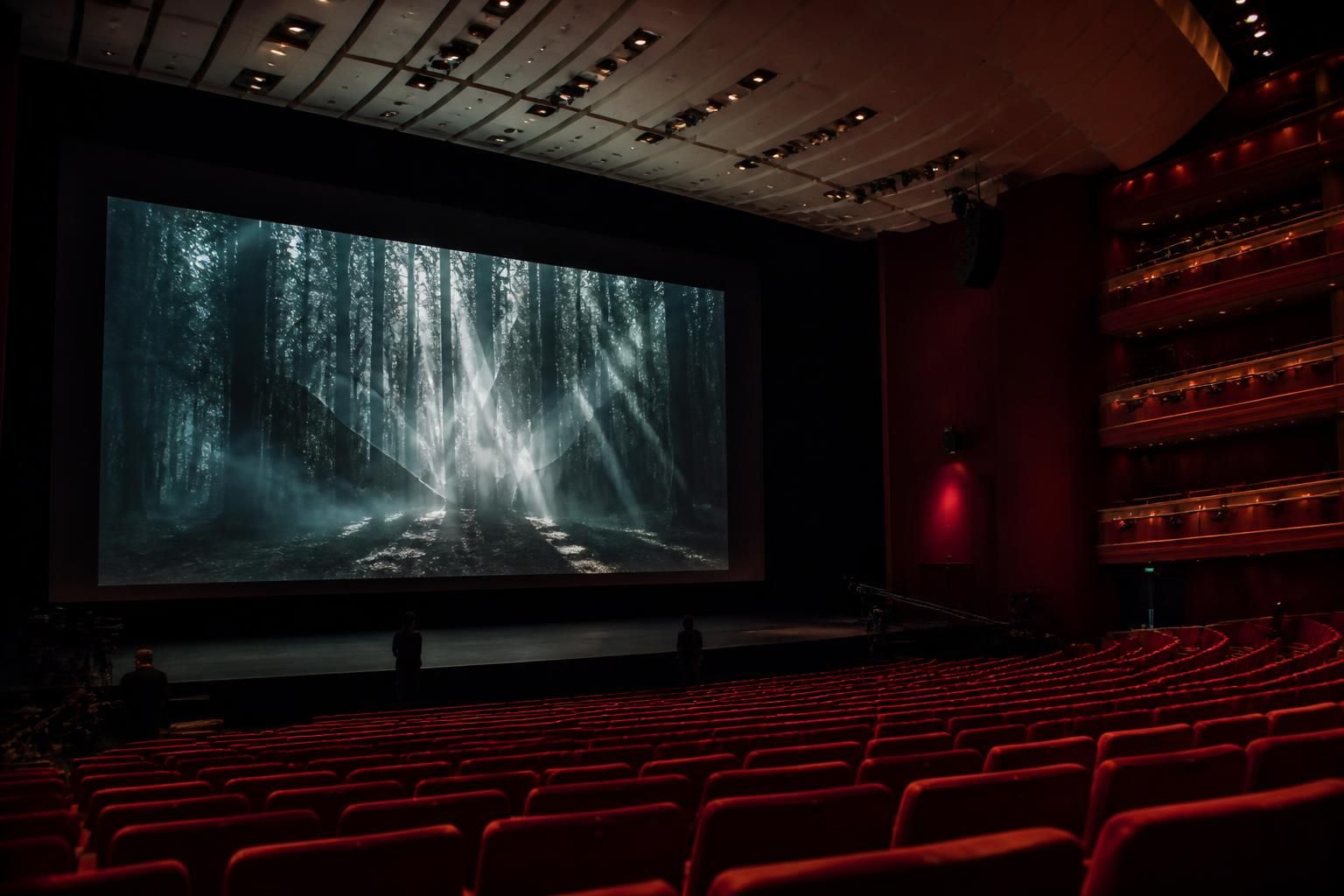
Why the Discontent Feels Personal to Martin Scorsese’s Long-Time Audience
The strength of the discontent cannot be understood only through one disputed movie release. Martin Scorsese represents a particular idea of cinema for many viewers: films made through demanding human collaboration, deep research, expressive editing, performance, sound, costume, production design, and deliberate visual composition. His name is tied not only to Goodfellas, Taxi Driver, and The Departed, but also to preservation initiatives that have helped defend fragile film heritage.
That history creates a high expectation. Fans do not necessarily assume that every project carrying an executive producer credit reflects Scorsese’s personal authorship. They do, however, assume that his involvement signals a level of care for the people who make movies. When generative AI becomes prominent in a project linked to him, the tension is immediate: can a filmmaker known for safeguarding cinema’s past also endorse tools that some workers believe threaten its future?
The issue became broader after Scorsese’s advisory role with Black Forest Labs, an AI company, entered public discussion. The Art Directors Guild publicly criticised that association, framing it as a serious departure from the collaborative values that support film production. Readers can review the guild-focused reporting on the Art Directors Guild’s response to the AI partnership, which captures why production designers and related craftspeople have reacted so forcefully.
For many people working in visual departments, the concern is practical rather than abstract. A storyboard is not merely an image of a scene. It can communicate camera direction, staging, architecture, costume logic, time of day, emotional rhythm, safety requirements, and budget implications. A production designer may use a rough sketch to identify materials, create build plans, and coordinate departments. If generative output replaces that process without adequate human review, errors can travel through the production pipeline.
Consider a fictional independent producer named Mara preparing a location-based horror shoot. She uses a generative image system to rapidly explore a haunted woodland, then sends the output to her art department without clear labelling. The location manager may assume the impossible landscape can be found locally. The lighting crew may prepare for shadows that do not correspond to the geography. The costume team may receive no reliable information about weather, terrain, or colour palette. What looked like a quick creative shortcut becomes expensive confusion.
That example helps explain why fans are responding with more than nostalgia. They are connecting AI-generated visuals to the working conditions behind the screen. Critics argue that a model trained on vast quantities of existing images can obscure original sources while delivering output that appears instantly usable. Supporters of the tools may point to ideation speed, lower barriers for small teams, and new ways to test visual concepts. Both claims can be discussed seriously, but the imbalance of power matters. A well-funded production that cuts skilled roles is not equivalent to a student using a draft image to clarify an idea.
Scorsese’s own past comments about cinema’s cultural value have sharpened the contrast. His critique of some franchise entertainment as resembling theme-park experiences was often interpreted as a defence of risk, personal vision, and emotional depth. Fans now ask whether synthetic visuals, when deployed without a convincing artistic purpose, create a new form of spectacle that is equally distant from human observation. That rhetorical question fuels much of the online frustration.
There is also a generational layer, although reducing the story to age would be unhelpful. Film professionals of all ages use digital tools, and many younger artists are among the strongest critics of unregulated AI. The real divide is between workflows that strengthen human judgement and workflows that treat human craft as optional. Fans expect a director with Scorsese’s stature to make that distinction visibly, especially when emerging technology is marketed as inevitable.
This pressure does not mean that every digital experiment should be rejected. It means that renowned figures are judged by the standards they helped establish. The debate around Trees Are Watching therefore leads directly to a more precise question: where should generative AI sit in a responsible filmmaking workflow?
Generative AI in the Film Industry: Useful Tool or Visible Creative Shortcut?
Generative AI is not one single production method. It can refer to systems used for brainstorming, text generation, image creation, voice synthesis, background expansion, previsualisation, editing assistance, or localisation. Treating all these uses as identical produces poor analysis. A filmmaker using software to organise research references is making a different choice from a production replacing designed environments with synthetic imagery in the final cut.
The Trees Are Watching debate is focused on audience-facing material. Reported uses include forest views, transitions, and mythological flashbacks. These are not invisible administrative tasks. They are visual moments intended to establish mood and communicate story information. If viewers notice that those sequences appear disconnected, generic, or unstable, the technique becomes part of the experience rather than a behind-the-scenes efficiency.
Horror is particularly sensitive to this problem. Effective horror often depends on specificity: an old chair with worn varnish, a forest path that feels geographically real, a face reacting to a sound from just outside the frame. Audiences do not need photorealism in every scene, but they need intention. Expressionist sets in The Cabinet of Dr. Caligari, practical transformations in The Thing, and the unnerving digital restraint of Under the Skin each work because form and feeling support one another.
Automated image systems can create strange and evocative material. However, they can also introduce inconsistent anatomy, shifting spatial logic, repetitive textures, and motion that lacks physical weight. In a fleeting dream sequence, these qualities may be purposeful. In a scene that needs viewers to understand where a character is standing, what she sees, and why she is frightened, they may undermine narrative clarity. The appropriate question is not “Was AI used?” but “Did the choice serve the scene better than an available human-led alternative?”
| 🎬 Production use | Potential value | ⚠️ Main risk | Responsible safeguard |
| Early mood exploration | Speeds up discussion of tone and colour | Generic references may replace research | Credit human art direction and retain source boards |
| Storyboarding | Helps communicate a rough camera idea | Can displace illustrators and create impractical shots | Use artist-led revisions before production planning |
| Final visual effects | May support experimental imagery | Inconsistent quality can pull audiences out of the story | Apply shot-by-shot creative supervision and testing |
| Marketing materials | Fast variations for internal concepts | Misleading public imagery and rights issues | Approve final campaigns through legal and creative teams |
The distinction between internal experimentation and public release is especially important. A small concept image can help a director describe a scene to collaborators. Once that image enters a finished film, it must meet the same standard as every other element on screen. Viewers do not experience a production’s budget spreadsheet; they experience the result. This is why terms such as “efficient” or “innovative” do not automatically answer criticism of a visually weak sequence.
There is a further issue: disclosure. An audience does not need a technical inventory before every screening, but productions should be ready to explain material AI use clearly when asked. Ambiguity invites speculation, while straightforward communication gives critics and supporters something concrete to assess. This is particularly relevant when a famous executive producer is involved, because the public will naturally attach symbolic meaning to that participation.
For museums, tour operators, and cultural venues, the parallel is easy to recognise. A synthetic image can assist with early planning for an exhibition or visitor route, but it should not quietly replace documented heritage visuals, expert narration, or accessible interpretation. In both tourism and cinema, technology performs best when it improves access without weakening trust. A tool becomes credible when audiences can still see the human judgement guiding it.
That principle brings the discussion away from abstract fear and toward accountable production practice. It also clarifies why the executive producer credit remains central to the public debate around this latest film.
Executive Producer Credits and the Public Meaning of a Renowned Director’s Collaboration
An executive producer credit can cover different forms of involvement. It may reflect financing, creative support, industry introductions, publicity value, strategic advice, or a long-standing professional relationship. It does not necessarily mean the credited person selected every shot, approved every effect, or controlled the final edit. In the case of Trees Are Watching, it would be inaccurate to state that Martin Scorsese directed the film’s AI imagery simply because his name appears as executive producer.
At the same time, it would be equally inaccurate to suggest that the credit has no meaning. In independent cinema, the name of a celebrated filmmaker can change a project’s trajectory. It can influence festival interest, distributor meetings, press coverage, and audience curiosity. That increased visibility is often valuable for directors working across borders or within politically complex production environments. Ghobadi’s career, shaped by stories connected to Kurdish and Iranian experience, has long depended on international artistic networks.
The relationship between Ghobadi and Scorsese helps explain the collaboration. Scorsese previously supported Rhino Season, while Ghobadi observed his production methods on major Hollywood films. Such mentorship and professional exchange are normal in cinema. The controversy arises because the current project has arrived during a period when generative AI is already a fault line in the film industry.
For audiences, credits function like signals. A director’s name on a poster, trailer, or festival programme does not offer a legal description of their duties; it communicates trust. That is why fans have treated the story as a perceived contradiction rather than a minor credit dispute. They expect a filmmaker whose reputation is built on human-centred cinema to ensure that associated projects handle new technology with unusual care.
Public scrutiny has become more intense because Scorsese’s involvement with AI has not been limited to one festival title. Reporting on his connection to Black Forest Labs helped establish a wider narrative that he is open to AI tools, including their use in planning or storyboarding. The industry criticism of the AI advisory role shows how professional organisations have interpreted that choice through the lens of artists’ livelihoods and authorship.
For any producer or cultural institution, the lesson is operational. A famous collaborator should not be added only for visibility. Before announcing the relationship, teams should align on creative values, technology policies, crediting practices, and public messaging. If a project uses generative systems, the agreement should establish what the collaborator has reviewed, what remains under the director’s control, and how the production will answer reasonable questions from workers and audiences.
- 🧭 Define the role precisely: distinguish advisory support, financing, mentorship, and final creative approval.
- 📝 Document AI use: record which stages use automated tools and who validates outputs.
- 👥 Protect credited crafts: ensure designers, editors, performers, and VFX teams retain clear authorship and fair recognition.
- 💬 Prepare a public explanation: communicate purpose and limits without vague claims about “innovation.”
- 🎞️ Test with real viewers: screen technically unusual sequences to assess whether they strengthen or distract from the story.
Imagine a regional film festival deciding whether to programme a work with AI-assisted visuals. The festival does not need to become a technology tribunal. It can ask practical questions: Was the work disclosed? Does the director articulate a creative reason for the method? Were contributors properly credited? Are the visuals artistically coherent? These questions are more useful than either automatic rejection or automatic celebration.
Scorsese’s situation demonstrates the higher standard attached to cultural authority. A credit can open doors, but it also carries responsibility for what those doors lead audiences toward. In an era of rapid synthetic-media adoption, reputation is no longer separate from workflow choices; it is shaped by them.
The pressure now moves beyond one filmmaker and one festival screening. It points to the standards that distributors, festivals, directors, and viewers can use when they encounter AI-assisted films in the years ahead.
How Film Festivals and Viewers Can Assess AI-Assisted Movie Releases Responsibly
The debate around Trees Are Watching does not require audiences to choose between technological enthusiasm and total refusal. A more useful approach is to assess each movie release through craft, transparency, labour impact, and narrative purpose. This framework respects both artistic experimentation and the legitimate concern that automation can be used to reduce creative work to inexpensive content generation.
For viewers, the first step is to look at the work itself. Does the image language support the characters and setting? Are AI-assisted passages visibly distinct in a way that feels intentional? Do they interrupt continuity, emotional engagement, or spatial understanding? These are ordinary film-viewing questions. They remain valid regardless of whether a scene was created with a camera, hand-drawn animation, miniatures, CGI, or generative software.
The second step is to examine the production context. A director may use an automated tool to visualise an impossible dream sequence while working closely with painters, animators, and compositors. Another production may use similar software to avoid hiring a department it could afford. The final images may look superficially alike, but the ethical and industrial consequences differ. Audiences should be allowed to ask where human work was expanded, redirected, or removed.
Film festivals have a particular role because they provide cultural legitimacy. TIFF and comparable events are not only exhibition spaces; they influence reviews, distribution prospects, and professional reputations. Festival programmers do not need to police every workflow, but they can encourage accurate disclosure in production notes and post-screening discussions. A director explaining why a technique was chosen is more constructive than a marketing campaign hiding behind novelty.
There is also an accessibility opportunity when digital tools are used responsibly. Technology can assist with descriptive audio, subtitling preparation, multilingual support, archive discovery, and sound clean-up. These applications can improve access without presenting synthetic output as a replacement for artistic authorship. Cultural organisations already understand this distinction. In guided visits, for example, a smartphone audio system can make speech clearer for a group, but it cannot replace the guide’s expertise, local knowledge, and ability to respond to visitors in real time.
The same principle applies to cinema. A production should design technology around the experience of the audience and the dignity of its contributors. If the tool saves time, where is that time reinvested? In more careful editing? Better sound? More inclusive post-production? Stronger working conditions? These questions move the conversation from slogans to measurable decisions.
For producers facing similar scrutiny, a short policy can prevent confusion. It should state whether generative systems were used in development, promotional work, or final imagery; identify human leads responsible for approval; outline how source material and rights were managed; and confirm how credits reflect actual contributions. Clear policies are not a public-relations trick. They reduce misunderstandings among crew members, partners, press, and viewers.
For fans, strong criticism can be valuable when it remains specific. Saying that a sequence looks unfinished, undermines a performance, or obscures the work of artists gives filmmakers something they can address. Personal attacks do not. The most constructive audience reaction asks for evidence, clearer standards, and respect for the crafts that make cinema durable.
Martin Scorsese’s current controversy has become a high-profile case because of the gap fans perceive between a celebrated artistic legacy and a rapidly changing production culture. Whether one sees the collaboration as experimentation, misjudgement, or both, the underlying issue will continue across the film industry. The durable standard is simple: innovation deserves attention when it serves the story, credits the people involved, and leaves audiences with more trust rather than less.
What is Martin Scorsese’s role in Trees Are Watching?
Martin Scorsese is credited as an executive producer. He did not direct the film, and his credit does not mean he personally created its reported AI-generated imagery.
Why are Martin Scorsese fans upset about the latest film collaboration?
Many fans object to reports that the film uses generative AI in visible sequences, especially because Scorsese is closely associated with film preservation, traditional craft, and support for human artists.
What is Trees Are Watching about?
The psychological horror film follows a writer, played by Eva Green, who returns to southeastern Turkey with her daughter and encounters disturbing supernatural events linked to a carved wooden chair.
Does using AI automatically make a film artistically weak?
No. The key questions are whether the technology serves the narrative, whether skilled human supervision remains central, whether contributors are credited fairly, and whether the finished images meet the film’s creative standard.
