
Short on time? Here’s what to remember:
✅ Veteran Bruins announcer Jack Edwards leverages AI technology to recover his distinctive broadcasting voice. 🎙️
✅ Combining speech therapy and innovative voice-clone apps enables Edwards to express himself vividly despite a speech condition. 🤖
✅ Understanding the ethical and practical dimensions of AI in sports commentary is essential for future voice talent. ⚖️
Jack Edwards’s Journey: From Legendary Bruins Voice to Rediscovering His Signature Voice
Jack Edwards, the veteran Bruins announcer known for his passionate and distinctive sports commentary, has been a cornerstone in broadcasting hockey for nearly two decades. His tenure on NESN spanned 19 years, where his voice defined the Boston Bruins experience for a passionate fanbase. However, after the 2023-24 season, Edwards made the difficult decision to retire due to a rare medical condition called apraxia, which affects speech articulation. His eloquent and emphatic delivery, once a hallmark of Bruins games, slowed noticeably and included occasional slurring, creating challenges that ultimately influenced his retirement.
Apraxia, which Edwards first noticed in 2022, disrupts the brain’s ability to coordinate speech muscle movements, leading to halting and slower speech. Yet, despite the condition’s progression, Edwards remains in remarkable physical health and mentally sharp, maintaining his iconic status among sports commentators. Unable to express himself verbally as effectively as before, Edwards began resorting to text communication, highlighting how the profound impact of speech difficulties can reshape a broadcaster’s career.
Edwards’s approach exemplifies resilience and adaptability. Rather than withdrawing completely, he has embraced advanced technologies to regain control over his expressive abilities. His efforts resonate deeply within the sports community and offer meaningful insights into the intersection between traditional voice talent and modern AI-assisted communication techniques. More on his inspiring path can be explored in the detailed account by The Boston Globe.
Harnessing AI to Restore and Enhance Broadcasting Voices
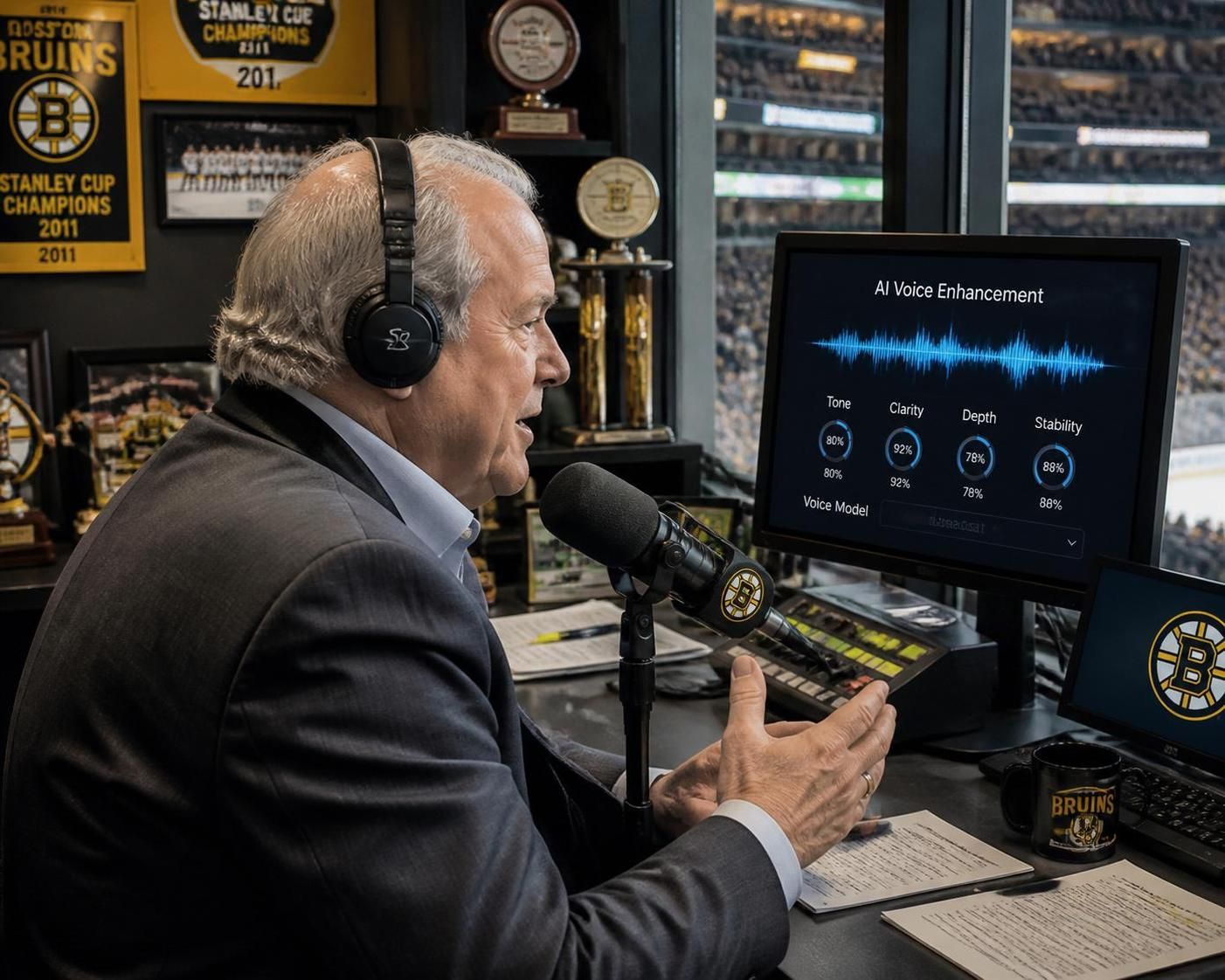
The integration of artificial intelligence in restoring Jack Edwards’s broadcasting voice represents a cutting-edge development in voice and speech technology. Edwards has partnered with speech therapist Michelle Ganann at Spaulding Rehabilitation Hospital to employ an AI-powered voice-clone application developed by ElevenLabs. This tool uses extensive audio archives of Edwards’s iconic calls and spirited commentary during Bruins games to reconstruct and emulate his unique voice qualities. In doing so, it helps replicate his voice’s expressive range and memorable tone, characteristics defining his broadcasting legacy.
This AI app functions interactively; Edwards types phrases and commands into an interface on his iPad or smartphone, which then vocalizes the text using the synthesized version of his voice—carefully adjusted for pace and emotional tone. The ability to save preset phrases allows seamless use during conversations or public appearances, including his speech at the Massachusetts Broadcasters Hall of Fame induction.
The success of this technology hinges on detailed audio data. NESN meticulously provided five hours of pure Edwards audio, rich with various expressions—from promotion narrations to passionate game critiques, including his celebrated postgame rant after the 2011 Game 7 victory against Montreal. The app’s sophisticated AI parses this range to ensure that even the nuances of Edwards’s famous enthusiastic intonations are preserved.
Such technological innovation is gradually transforming the landscape of voice talent rehabilitation: it offers sports commentators like Edwards a way to communicate effectively even in the face of debilitating conditions. This blend of voice therapy and AI holds promise beyond sports media, impacting accessibility tools and professional audio narration worldwide.
Real-life Applications of AI Voice Cloning in Sports Media
The approach used by Edwards mirrors developments in other sports and media domains where AI has been adopted to help figures overcome speech impairments. For example, former sports reporter Alice Cook has utilized similar AI apps following a diagnosis of ALS, which severely compromised her natural speech. Such cases emphasize how AI-based voice reconstruction not only preserves professional identity but also empowers continued engagement with audiences.
In addition, broadcasters and organizations may soon integrate AI voice assistants to maintain continuity in live sports coverage or augment commentary. Innovations like these create new opportunities while raising questions about authenticity and user experience. For professionals involved in sports media, like voice talents and broadcasters, early adoption of these technologies could become a crucial asset.
The Role of Voice Technology in Supporting Legacy Broadcasters and Emerging Talent
Voice technology, particularly AI-driven solutions, is increasingly becoming a vital support mechanism for veteran broadcasters aiming to preserve their signature voice amidst health challenges. The example of Jack Edwards highlights the dual function of these tools: maintaining professional presence and aiding patients with speech-affecting conditions.
Moreover, this technology fosters inclusivity within sports broadcasting by facilitating smoother transitions for announcers facing health-related limitations. It also opens new pathways for mentorship and archival voice usage, allowing upcoming voice talent to study and adapt seasoned styles seamlessly. Applying these innovations could benefit diverse environments, from broadcast studios to digital narration platforms used in guided tours and cultural mediation.
The smart use of AI and audio technology complements traditional speech therapy. Edwards remains actively engaged in clinical trials involving transcranial magnetic stimulation at Mass General Brigham, a promising intervention targeting neural speech pathways to support recovery. This medical dedication paired with AI applications illustrates a comprehensive strategy to rebuild capabilities while respecting natural human expression.
Key Benefits of Integrating AI Voice Technology in Broadcasting
- 🎙️ Personalized voice replication maintains unique speaker identity.
- 🧠 Enhanced communication aids individuals with speech impairment.
- 🌐 Expanded accessibility in sports commentary and media production.
- ⏳ Extending career longevity for veteran broadcasters.
- ⚙️ Flexible presets and adjustable voice parameters for user control.
The Intersection of Artificial Intelligence and Ethical Considerations in Sports Commentary
While the technology empowering Edwards strikes a powerful chord, it surfaces key ethical questions regarding AI’s role in broadcasting and voice reproduction. Edwards himself remains cautiously optimistic, acknowledging the benefits but wary of AI’s broader societal impact. His words reflect a shared concern among many professionals about the potential misuse and overreach of AI technologies in creative and communicative fields.
Issues of authenticity, consent, and intellectual property arise as voice cloning becomes more accessible. The broadcasting community must navigate these complexities, ensuring respect for personal voice ownership and safeguarding against impersonation risks. From a user experience perspective, transparency about AI usage is crucial in maintaining listener trust.
These discussions are critical as AI voice assistants gain prevalence and influence. Organizations involved in sports commentary and media should proactively adopt responsible practices, balancing innovative applications with respect for identity and ethical standards. Jack Edwards’s example, harnessing AI for good, offers a balanced vision of technology’s potential without succumbing to unregulated deployment.
Framework for Ethical AI Usage in Voice Talent Management
| 🔎 Aspect | 🔐 Ethical Principle | 🛠️ Implementation Strategy |
|---|---|---|
| Voice Ownership | Consent and control over voice replication | Secure agreements with voice talents before AI cloning |
| Authenticity | Disclosure of AI-generated speech | Label AI voice clearly during broadcasts or recordings |
| Privacy | Protection of audio data | Encrypt storage and limit access to voice data |
| Integrity | Avoid misuse or deceptive impersonations | Monitor and audit AI voice usage regularly |
| Accessibility | Use AI to enhance inclusivity and communication | Integrate AI tools alongside human oversight |
Expanding the Legacy: How Jack Edwards’s Experience Inspires Future Sports Broadcasters
Jack Edwards’s journey unmistakably influences the sports broadcasting industry’s approach to voice health and technology. His pioneering use of AI-assisted voice tools sets a precedent for supporting broadcasters facing health obstacles while maintaining connection with fans and the broadcasting community. It also encourages open discussions about the importance of voice care and adaptability in high-performance commentary careers.
The path Edwards has taken underscores a broader trend where smart audio technologies intersect meaningfully with traditional broadcasting, raising awareness about the fragility of voice as a professional tool. It encourages emerging broadcasters and established pros alike to consider how innovation can complement skills and extend career lifespans in a rapidly evolving media landscape.
For entities involved in cultural or event tourism, akin to the capabilities offered by platforms such as Scotrail Digital Announcer, Edwards’s story exemplifies how AI voice synthesis can revolutionize accessibility and engagement. These technologies democratize voice interaction, allowing rich, authentic, and accessible experiences whether in sports, tourism, or beyond.
What is apraxia and how has it affected Jack Edwards’s career?
Apraxia is a neurological condition that impairs the brain’s ability to coordinate speech muscle movements. For Jack Edwards, it caused slower, halting speech and slurring, which impacted his ability to perform live sports commentary, leading to his retirement in 2024.
How does the AI voice-clone app help Jack Edwards rediscover his signature voice?
The app, developed by ElevenLabs, uses archived audio from Edwards’s broadcasting career to recreate his voice. Edwards types text into the app, which then vocalizes it in his replicated voice, allowing him to communicate expressively despite his speech condition.
What are the ethical considerations surrounding AI voice technology in sports commentary?
Key concerns include consent for voice replication, transparency about AI use, data privacy, and preventing misuse or deceptive impersonation. Broadcasters and organizations need responsible frameworks to maintain authenticity and trust.
Can AI voice technology extend the careers of veteran broadcasters?
Yes, AI-assisted voice tools help broadcasters facing speech impairments maintain their unique voice identity and continue engaging with audiences, potentially prolonging their broadcasting careers.
Where can I learn more about Jack Edwards’s journey with AI and voice recovery?
In-depth information is available through detailed reports such as those found at The Boston Globe and the Massachusetts Broadcasters Hall of Fame induction ceremony coverage.
