
Gradium’s $100 Million Seed Funding: A Leap Forward in AI Voice Innovation
Gradium, a Paris-based AI voice technology startup, has recently reached a significant milestone by securing $100 million in its seed funding round. This impressive capital influx, notably supported by industry giant Nvidia, marks a pivotal moment for the company as it intensifies its efforts to transform voice AI applications across multiple sectors. Founded by Neil Zeghidour, an expert with experience at Google Brain, DeepMind, and Facebook, Gradium emerged from the French AI lab Kyutai and swiftly captured the attention of top-tier investors.
The seed round expansion reflects confidence in Gradium’s approach to ultra-low latency voice AI models—technology designed to ensure near-instantaneous, natural-sounding interactions. Unlike previous voice AI solutions plagued by noticeable delays, Gradium’s models prioritize responsiveness, enhancing user experience in real-time conversations. This capability directly addresses one of the most critical challenges in voice-enabled applications, from virtual assistants to interactive guided tours.
To capitalize on their recent funding, Gradium has announced plans to open a new office in the San Francisco Bay Area. This expansion is strategic; it positions the company at the heart of the global AI ecosystem, facilitating access to premier talent and partnerships within Silicon Valley, while maintaining its roots in Paris, a major European hub for artificial intelligence research and development.
The addition of Nvidia as a strategic investor strengthens Gradium’s market stature and technological edge. Nvidia’s leadership in AI hardware and software frameworks provides unique opportunities for Gradium to optimize its voice AI engines, leveraging cutting-edge GPUs and AI infrastructure to deliver smooth, scalable voice solutions suitable for enterprise and consumer markets alike.
In a competitive landscape that includes heavyweights like Google’s Gemini and emerging innovators such as ElevenLabs, Gradium’s rapid traction with major clients like Renault demonstrates its growing influence and practical application of voice AI in industry settings. The company’s investor roster, which includes FirstMark Capital, Eurazeo, DST Global Partners, and prominent individuals like Eric Schmidt and Xavier Niel, further validates the startup’s vision and potential for impact.
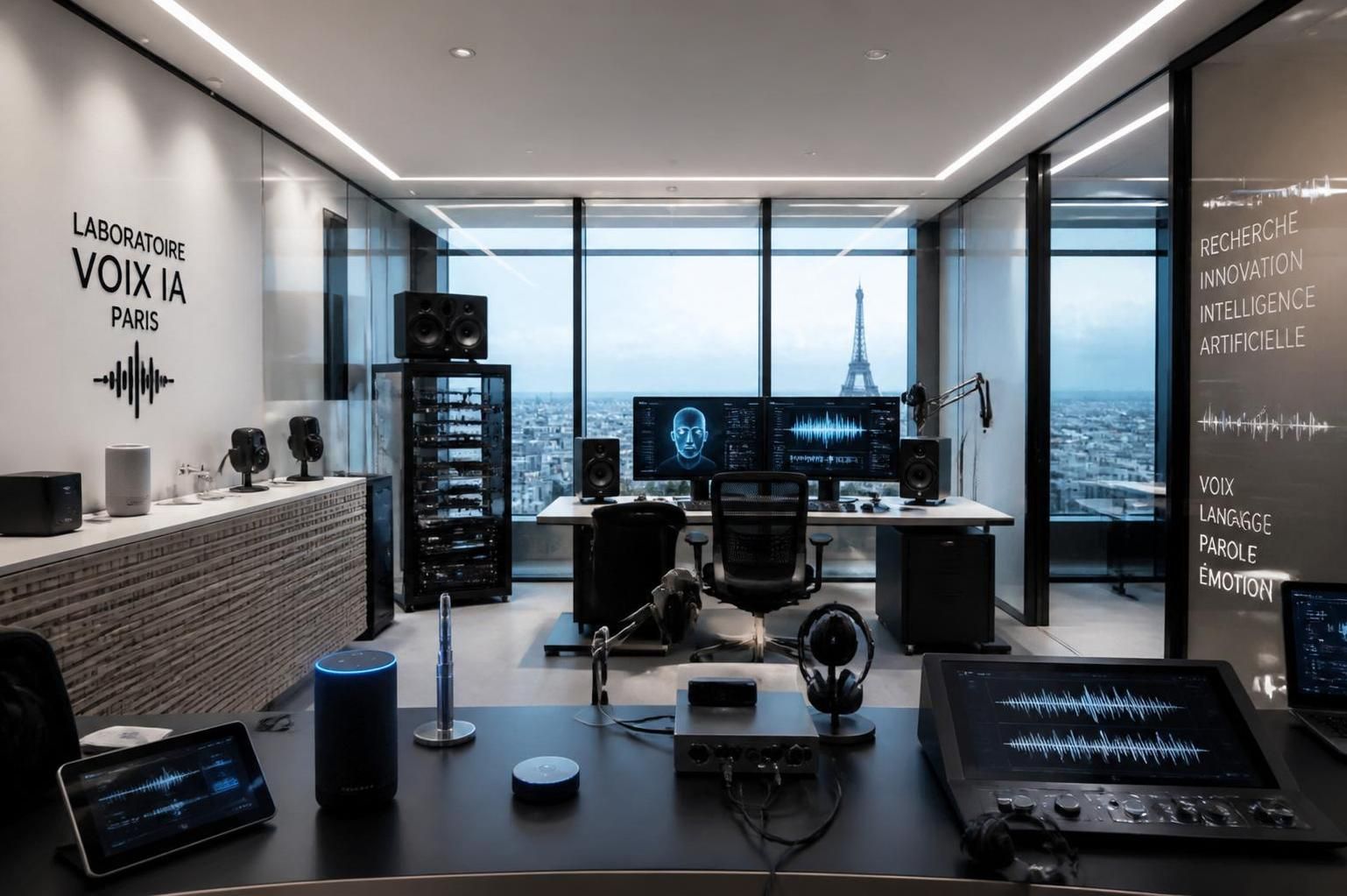
How Ultra-Low Latency Voice AI Enhances Smart Tourism and Digital Experiences
One of the most promising applications of Gradium’s advanced ultra-low latency voice AI models lies in smart tourism, a rapidly evolving sector where real-time, immersive audio experiences are paramount. Voice AI that responds instantly allows tourists to interact with digital guides, museum exhibits, or personalized city tours without the interruptions caused by processing delays.
Consider traditional audio guide systems: they often lack interactivity and spontaneity, relying on pre-recorded tracks that cannot adapt to user queries or environmental changes. Now, imagine a system powered by Gradium’s technology that can dynamically answer questions, translate languages on the fly, or narrate historical anecdotes triggered by visitor location—all with no discernible delay. This capability significantly improves accessibility, engagement, and satisfaction among users of cultural heritage sites and guided tours.
For example, museums and cultural centers can integrate real-time AI voice assistants that respond smoothly to visitor inquiries, reducing the need for staff intervention and broadening the reach of personalized storytelling. In parallel, event organizers can deploy conversational AI to manage crowd queries and guide visitors through complex schedules, enhancing the overall event experience with a smart, invisible layer of assistance.
Moreover, ultra-low latency voice AI also addresses accessibility concerns by supporting clear, instantaneous spoken content for visitors with visual impairments or language barriers. Such solutions align perfectly with the growing demand for inclusive tourism, helping institutions meet regulatory requirements and social commitments while elevating experience quality.
Implementing this type of voice AI technology requires a deep understanding of both AI engineering and user experience design. Gradium’s roots in rigorous research at Kyutai lab and partnership with Nvidia’s infrastructure provide a solid foundation for creating models that are not only fast but also adaptable, scalable, and reliable in diverse environments.
Strategies for AI Startups to Leverage Seed Funding and Scale Efficiently
Raising $100 million in seed funding is a rare accomplishment, especially within the AI voice sector, demonstrating not only investor confidence but also the readiness of the market for advanced AI solutions. For startups in artificial intelligence and voice innovation, such capital must be deployed with strategic precision to ensure sustainable growth and competitive advantage.
Gradium’s decision to open an office in the San Francisco Bay Area is one example of a deliberate move to tap into the richest talent pool worldwide. Silicon Valley offers access to engineers, researchers, AI experts, and potential partners that can rapidly accelerate product development cycles and business expansion efforts.
Furthermore, startups must focus on strengthening partnerships with technology leaders like Nvidia. These alliances yield access to cutting-edge hardware accelerators, software tooling, and technical expertise, reducing time-to-market for complex AI models and enhancing their performance. Such collaborations often translate into tailored solutions specifically optimized for startup needs.
Aside from geographical expansion and partnerships, AI startups should leverage seed funding to:
- 🚀 Develop scalable infrastructure capable of handling enterprise-grade workloads
- 🔍 Invest in talent acquisition, particularly in machine learning, voice processing, and UX design
- ⚙️ Enhance model robustness by incorporating multilingual capabilities and diverse dialects
- 🌍 Pursue pilot projects with strategic clients in industries like automotive, tourism, and media
- 🔐 Address ethical, security, and privacy considerations through advanced AI governance frameworks
Effective communication of these advancements to potential clients and partners is also essential, particularly to differentiate in a crowded voice AI market. Demonstrating real-world impact, such as Gradium’s partnership with French auto manufacturer Renault, strengthens credibility and opens doors for long-term contracts and industry adoption.
Market Positioning and Competition in the Voice AI Sector in 2026
The voice artificial intelligence industry has become one of the most fiercely contested fields within AI. Gradium’s emergence, combined with the backing of heavyweight investors and strategic players like Nvidia, highlights the intense competition and the vital importance of technological leadership.
Established giants such as Google leverage immense resources to push their own voice AI models through initiatives like Gemini, while startups like ElevenLabs are rapidly gaining valuation traction, reflecting market openness to specialized voice applications. For Gradium, differentiating through ultra-low latency and real-time processing capabilities constitutes a clear competitive edge.
In practical terms, Gradium’s models enable enterprises to deploy voice interface products that feel seamless and natural, eliminating one of the critical user experience barriers—response delay. This makes the technology highly attractive for sectors requiring high interactivity, including customer service centers, automotive voice assistants, and interactive media.
The combination of Parisian innovation grounded in academic research, and Silicon Valley entrepreneurial spirit fosters an environment that can quickly adapt to evolving market demands. Moreover, Europe’s regulatory landscape often emphasizes data privacy and ethical AI use, areas where Gradium’s compliance and governance could serve as further differentiators.
Broadly, the voice AI market in 2026 is expected to continue expanding, driven by:
- Growing adoption of voice interfaces in smart home and IoT devices
- The rise of conversational AI in enterprise customer workflows
- Increased investment in multilingual and accessible AI voice models
- Integration of voice AI with augmented reality (AR) and virtual reality (VR) platforms for immersive experiences
- Rising demand for personalized voice agents capable of maintaining context over long interactions
Positioning against these trends requires agility, sustained research investment, and solid infrastructure partnerships—all elements strongly reflected in Gradium’s current strategy.
Real-World Applications of Gradium’s Voice AI: Case Studies and Use Cases
Beyond theoretical advancements, the practical deployment of Gradium’s AI voice technology provides valuable insights into its transformative potential. Since its launch, Gradium has secured notable clients such as Renault, showcasing how ultra-low latency voice AI can be integrated into complex industry environments.
Automotive manufacturers utilize advanced voice systems to enhance driver and passenger experiences by offering natural, responsive voice controls for navigation, entertainment, and vehicle diagnostics. Gradium’s low-latency models allow commands and feedback to occur seamlessly, minimizing cognitive load and improving safety conditions.
In the domain of smart tourism, digital platforms can embed Gradium’s technology into mobile applications, enabling dynamic audio guides that adapt to user needs in real time. Visitors can interact more naturally with their surroundings, receiving context-aware information that transforms passive listening into an engaging conversation.
Additional use cases include:
- 🎧 Real-time language translation services for global travelers
- 👥 AI-driven customer support agents that handle voice inquiries across multiple channels
- 🏢 Enterprise workflow automation using voice commands for increased productivity
- 🎭 Interactive storytelling platforms in museums and cultural institutions
- 🛠️ Voice-enabled maintenance and troubleshooting systems in industrial settings
This diversity underscores the scalability and flexibility of Gradium’s platform, which can be tailored to address sector-specific challenges while maintaining superior audio quality and responsiveness.
| Feature 🌟 | Benefit 🚀 | Industry Example 🏭 |
|---|---|---|
| Ultra-low latency | Instant voice response improves user engagement | Automotive voice assistants |
| Multilingual support | Enables global accessibility and inclusiveness | Smart tourism apps |
| Scalable cloud infrastructure | Supports enterprise workloads with reliability | Customer support centers |
| Customizable voice models | Brands create unique audio identities | Interactive museums |
| AI-driven contextual awareness | Enhances conversation naturalness and relevance | Virtual assistants |
Witnessing Gradium’s AI voice technology in action provides a clear understanding of how real-time voice interaction shapes the future of communication. The video showcases how prompt responses can redefine digital user interfaces across various platforms.
This second video delves into Nvidia’s role in accelerating AI voice innovation, highlighting the benefits of their GPU technologies and strategic investments in startups like Gradium, which are driving industry transformation.
What distinguishes Gradium’s voice AI from other providers?
Gradium’s core advantage lies in its ultra-low latency voice models that deliver near-instantaneous responses, ensuring seamless and natural conversations without delays common in traditional voice AI.
Why is Nvidia’s investment significant for Gradium?
Nvidia’s backing provides Gradium with access to world-class AI hardware, software tools, and strategic guidance, enabling the startup to optimize performance and scale efficiently in the competitive AI voice market.
How can smart tourism benefit from Gradium’s voice technology?
Smart tourism applications benefit through real-time interactive audio guides that offer responsive, personalized, and accessible visitor experiences, enhancing engagement and inclusivity.
What industries are prime candidates for implementing low-latency voice AI?
Key sectors include automotive, customer service, cultural institutions, enterprise automation, and smart home technologies, where instant voice interaction improves usability and operational efficiency.
How does Gradium’s Paris base influence its growth?
Being rooted in Paris provides access to Europe’s vibrant AI research scene and regulatory framework, balancing innovation with ethical and privacy considerations critical for global-scale AI deployment.
