
⏱️ Key points at a glance:
- 🎬 George Lucas chose a long-term Cultural Project over directing three additional Star Wars films.
- 🏛️ The new LA Museum brings together more than 40,000 works across film, illustration, comics, photography, and popular visual culture.
- 🎧 Its scale makes visitor flow, clear interpretation, and accessible audio mediation essential—not optional—for a satisfying Movie Exhibition.
George Lucas chose the LA Museum over three more Star Wars films
George Lucas has explained that the decision to build the Lucas Museum of Narrative Art required a significant personal trade-off: stepping away from filmmaking while he still had plans for three further Star Wars films. Speaking around the Los Angeles opening, Lucas described time as the decisive factor. Rather than developing another trilogy, he chose to dedicate his energy to a permanent institution designed to protect and interpret visual storytelling.
This choice reframes the museum as more than a high-profile private collection. It is the result of a filmmaker deciding that preserving stories, images, characters, and artistic processes could create a broader legacy than producing another series of blockbusters. The director had already transformed popular cinema through Star Wars, Indiana Jones, and Lucasfilm. The LA Museum now shifts that influence from production into cultural access.
For visitors, this context matters. A screen-used vehicle or a concept drawing is not presented only as memorabilia. It becomes evidence of how an idea moves from sketchbook to screen, and how visual culture shapes the public imagination. The museum’s purpose therefore goes beyond nostalgia. It positions narrative art—including forms sometimes excluded from traditional fine-art institutions—as a serious subject for exhibition, research, and education.
Why the decision changes the meaning of the museum
The first Star Wars film arrived in 1977 and became a defining work of modern popular culture. Carrie Fisher, Harrison Ford, and Mark Hamill introduced characters that still attract new generations of viewers. The original trilogy was followed by the prequels in the late 1990s and 2000s, which allowed Lucas to tell the earlier history of the galaxy. After Disney acquired Lucasfilm, the franchise expanded further through theatrical releases and streaming series.
Against that history, the decision to leave three planned films unrealised will naturally interest fans. Yet the stronger cultural question is not what those hypothetical films might have contained. It is what a museum can preserve that a new release cannot. A film has a release window, promotional cycle, and commercial timetable. A museum supports sustained encounters: visitors can compare original illustrations, posters, photography, animation, comic art, and film objects at their own pace.
A recent report on Lucas’s decision to retire from directing highlights how closely the museum timeline and his personal priorities were connected. For cultural professionals, it is a useful reminder that major institutions often depend on choices that are both strategic and deeply human. Legacy projects require years of attention, governance, financing, conservation work, and public programming.
Imagine a guide named Maya leading a group of mixed-age visitors through a gallery. Some arrive for Star Wars props; others are interested in graphic design, comics, or American illustration. Her challenge is to create one coherent route without reducing the experience to fan service. The museum’s cross-disciplinary approach gives her the material to do that: a film poster can lead to a discussion about composition, a comic strip can open a conversation about visual pacing, and a costume can demonstrate how character design communicates instantly.
💡 The key point is simple: Lucas did not merely exchange three potential films for a building. He redirected creative influence toward a public platform where many forms of storytelling can be encountered together.
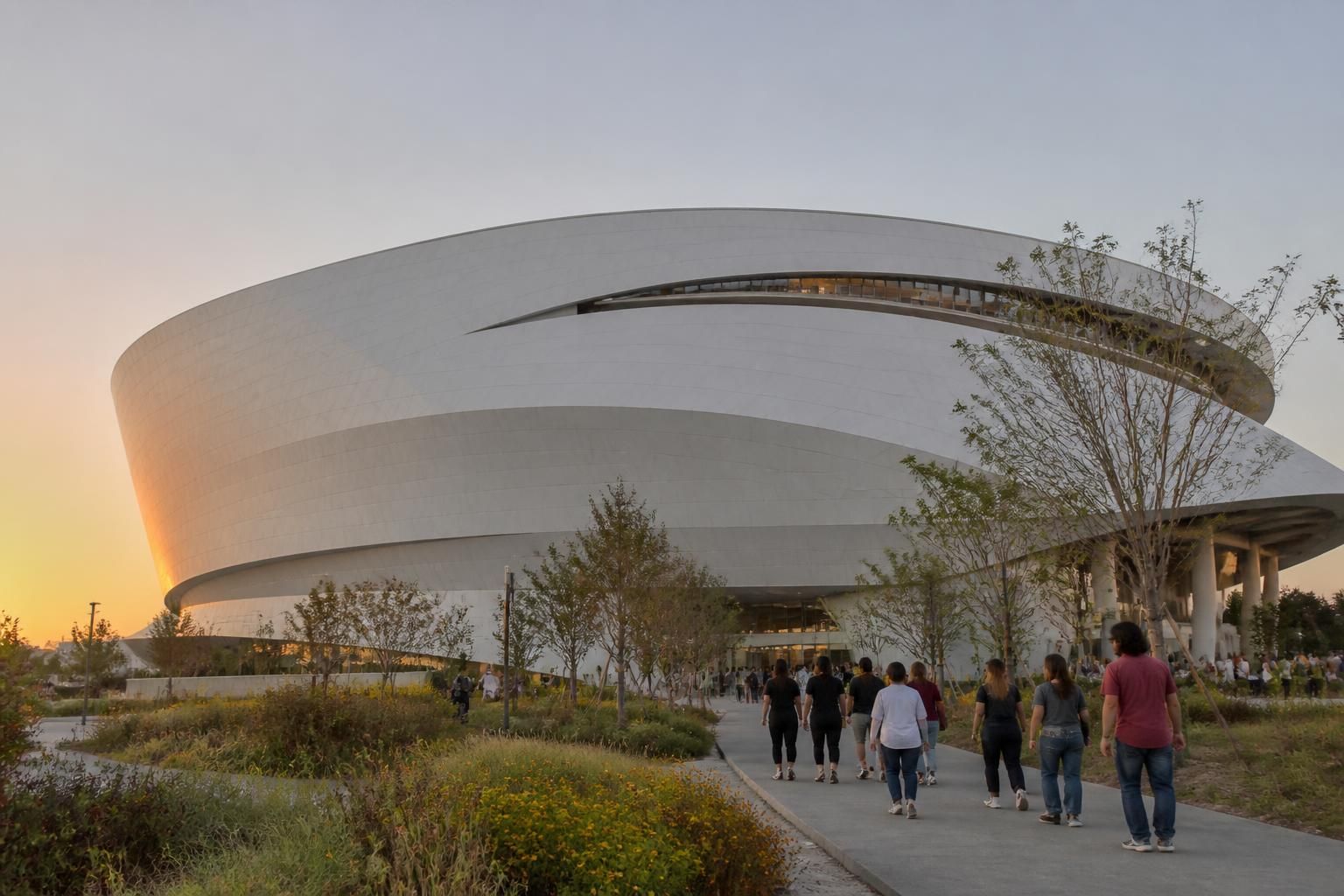
Inside the Lucas Museum: a Cinema Collection built beyond Star Wars
The Lucas Museum of Narrative Art formally opened in Los Angeles on Tuesday, September 22, 2026. Its collection includes more than 40,000 works, displayed across approximately 9,000 square metres of gallery space within a total complex of nearly 28,000 square metres. These figures indicate an institution designed for repeat visits rather than a single, narrowly focused Film Archive.
Star Wars remains an obvious draw, but it is only one route into the collection. Visitors can expect objects associated with the saga, including Luke Skywalker’s weathered landspeeder, Anakin Skywalker’s podracer, and a life-size version of General Grievous’ wheel bike. These pieces offer a direct connection to Sci-Fi Films and practical filmmaking. They show how physical objects help build belief in fictional worlds, even when digital effects complete the final image.
However, the museum’s curatorial scope is substantially wider. Works associated with Frida Kahlo, Diego Rivera, Maxfield Parrish, and Norman Rockwell appear alongside comics, manga, film posters, murals, and illustration. The range includes familiar characters and series such as Asterix, Tintin, Garfield, and Snoopy. This selection makes a clear argument: visual narratives deserve consideration regardless of whether they appear in a gallery painting, newspaper strip, animated frame, pulp cover, or cinema screen.
A visitor route should connect objects instead of separating audiences
A successful visit should avoid treating every visitor as either an art specialist or a franchise fan. The most productive route connects works by their visual language. A museum educator might pair a Norman Rockwell scene with a comic panel to examine facial expression and storytelling. A guide could then connect that discussion to a Star Wars storyboard, showing how the same techniques—framing, gesture, colour, rhythm, and point of view—inform large-scale cinematic narratives.
This is where a modern audio guide becomes especially valuable. Large collections can overwhelm visitors when labels offer only basic facts. A smartphone-based experience can provide short thematic tracks: “How a hero enters the frame,” “From illustration to production design,” or “Why a poster must tell a story in three seconds.” Visitors can select a route aligned with their interests while remaining part of the same overall cultural experience.
| Visitor interest | Relevant museum content | Useful mediation approach |
|---|---|---|
| 🚀 Sci-Fi Films | Star Wars vehicles, concept art, production objects | 🎧 Short audio stops explaining design and practical effects |
| 🖼️ Fine art | Kahlo, Rivera, Parrish, Rockwell | 🔎 Context on technique, period, and visual storytelling |
| 💬 Comics and manga | Tintin, Asterix, Garfield, Snoopy, manga drawings | 📱 Interactive comparisons between panels and film framing |
| 🎞️ Film history | Posters, archival imagery, cinema-related works | 🗺️ Chronological or theme-based route through the Cinema Collection |
The museum also reportedly received unexpected works from Banksy, including a variation on Girl With Balloon. Such additions reinforce the value of flexible interpretation. The institution is not presenting a sealed canon. It is creating a living collection where popular art, street art, cinema, and illustration can remain in conversation.
For visitors planning an itinerary, practical information on opening-day tickets and access provides a useful starting point. The essential insight is that the LA Museum works best when approached as an ecosystem of narrative media, not simply as a Star Wars attraction.
🎯 A strong visit begins by choosing a theme, not by trying to see every object.
How the LA Museum turns a Film Archive into an accessible public experience
A large-scale Film Archive and Movie Exhibition can quickly become difficult to navigate. Visitors often arrive with different levels of knowledge, different time budgets, and different accessibility needs. Some will have ninety minutes before another Los Angeles appointment. Others may spend an entire afternoon exploring the galleries, restaurant, terrace, and park. A practical visitor experience must support both without making either audience feel rushed or excluded.
The Lucas Museum has two cinemas, a library, event areas, a café, a restaurant called Skywalker Grill, a rooftop terrace, and a museum shop. These amenities extend the visit beyond the galleries, but they also create operational complexity. Where should groups meet? How can families keep moving without missing key interpretation? Which locations are quiet enough for audio playback? These are not minor logistical matters; they directly influence visitor satisfaction.
Clear audio makes complex cultural spaces easier to understand
For museum teams and tour operators, the opportunity is to use visitors’ own smartphones as an accessible listening tool. A solution such as Grupem can help guides distribute clear live audio to a group without forcing everyone to gather tightly around an object. This is useful beside delicate displays, in busy public circulation areas, or outdoors where ambient noise can disrupt explanation.
Consider Maya’s group again. At the landspeeder display, ten people may have clear sightlines while another ten stand behind them. With a smartphone audio system, the guide can explain the object’s weathered surface, its role in the original film, and its relationship to production design while the group remains safely spaced. Visitors who use hearing aids, prefer headphones, or need to stand slightly apart can still follow the commentary.
Audio should be concise and spatially relevant. A three-minute recording about the entire Star Wars saga may be less effective than a ninety-second explanation of what visitors can see directly in front of them. The strongest content answers immediate questions: Why does this object look used rather than polished? How did its physical construction influence the camera? What does it reveal about the visual identity of the film?
Digital interpretation also helps institutions offer multilingual access without multiplying printed materials. A visitor can select English, Spanish, French, or another available language before entering a gallery. This improves inclusion, particularly in a global city such as Los Angeles. It also gives museum teams the ability to update content when an artwork changes location, a loan expires, or a new acquisition appears.
Practical principles for a high-quality audio route
- 🎧 Keep each stop focused: one object, one story, and one clear takeaway are easier to remember than a dense lecture.
- 📍 Use visible landmarks: tell visitors precisely where to stand or what detail to look for before delivering interpretation.
- ♿ Offer transcript options: written support improves access for deaf and hard-of-hearing visitors, as well as international guests.
- 👨👩👧 Create different routes: families, film enthusiasts, school groups, and art audiences do not need the same depth or pace.
- 🔋 Prepare for real conditions: include Wi-Fi guidance, charging points, and a simple offline-access plan where possible.
These measures are not technological decoration. They help cultural institutions move from information delivery to genuine mediation. Visitors should not need specialist knowledge to understand why a drawing, a comic strip, or a movie prop belongs in the same museum.
For professionals following the institution’s development, this overview of the Lucas Museum and its narrative-art approach offers further context. 🔊 In a venue of this size, listening quality becomes part of the exhibition design.
The Cultural Project extends from galleries to Los Angeles public space
The museum’s significance is not limited to what happens inside its exhibition halls. It occupies a 4.5-hectare park developed specifically for the site, with hundreds of native plants and more than 200 trees. A hanging garden above an amphitheatre and a waterfall-like fountain contribute to a setting intended to cool the building and make the surrounding landscape an active part of the visitor experience.
This matters in Los Angeles, where cultural venues are often reached by car and where public space can determine whether a museum feels connected to its neighbourhood or isolated from it. The Lucas Museum sits within Exposition Park, a major cultural district. Its outdoor areas provide a transition between city activity and gallery attention. Rather than moving immediately from pavement to ticket desk, visitors can arrive, orient themselves, meet a group, rest, or discuss what they have seen.
Landscape supports visitor flow and cultural participation
Outdoor design can improve a museum visit in practical ways. Families may use the park before entering, which reduces pressure to make every gallery stop entertaining for younger children. School groups can gather outside for a briefing. Visitors waiting for timed admission can access shade and seating rather than crowding an entrance. Evening programming can use event spaces and the amphitheatre to connect film screenings, talks, and community activity.
For event organisers, the combination of cinemas, park areas, and indoor spaces enables formats that a conventional museum cannot easily deliver. A programme on the history of science fiction, for example, could combine a short screening, a curator talk, a guided object-based tour, and an outdoor discussion. This links the material culture of Sci-Fi Films with public learning rather than limiting it to display cases.
Environmental choices should also be explained to visitors. Native planting, shade, water design, and cooling strategies are tangible elements of the Cultural Project. A short audio stop in the landscape can reveal why particular plants were selected, how the garden relates to local climate, and how visitor comfort affects the amount of time people choose to spend on site. This is useful interpretation, especially when museums seek to demonstrate sustainability through actual operations rather than broad claims.
A well-designed digital route can connect indoor and outdoor content. A visitor might begin with a five-minute park introduction, receive directions to the entrance, and then unlock gallery tracks after admission. On departure, the route could suggest the rooftop terrace, café, or a related exhibition in the surrounding district. The technology should make navigation calmer, not place more screens between visitors and artworks.
The project also has an economic and tourism dimension. A high-profile LA Museum encourages cultural visitors to extend their stay in the district, use nearby transport, and combine several institutions in one day. Museums, tourism offices, and local guides should respond by designing coordinated visitor information rather than competing for attention in isolation.
🌿 The park is not a decorative extra: it is part of how the museum welcomes people, distributes crowds, and supports longer cultural visits.
What museum and tourism professionals can learn from the Lucas Museum model
The Lucas Museum offers useful lessons for museums, guides, destination managers, and cultural-event organisers. Its most relevant contribution is not simply its scale or the celebrity of George Lucas. It is the way it brings together assets that are too often separated: collections, architecture, landscape, education, cinema, visitor services, and popular culture.
Many institutions hold excellent objects but struggle to show visitors why they matter. Others invest in impressive technology that does not solve a real visitor problem. The Lucas Museum model suggests a more balanced approach: start with strong stories, then use design and digital tools to make those stories understandable, accessible, and memorable.
From Film Donation to durable public access
Whether an institution receives a Film Donation, acquires a private Cinema Collection, or develops a new Movie Exhibition, the key task is interpretation. A donated prop without context can become a photo opportunity. The same object, supported by a clear narrative, can explain labour, craftsmanship, industrial design, film history, or the evolution of visual effects.
Collections connected to popular franchises require particular care. A Star Wars object may attract visitors immediately, but the institution should avoid assuming that recognition equals understanding. Explain its production story. Compare it with earlier science-fiction imagery. Show how its materials communicate age, technology, danger, or character. This makes the experience meaningful for both devoted fans and visitors with no connection to the franchise.
For tourism professionals, a practical action plan can be built around five operational questions:
- 🧭 Which three stories should every first-time visitor understand?
- 🎙️ Where does ambient noise prevent guides from being heard clearly?
- 📱 Can visitors access essential information through their own phones without creating friction?
- ♿ Are routes usable by people with different mobility, language, and hearing needs?
- 📊 What feedback will show whether visitors actually understood and enjoyed the experience?
These questions keep innovation grounded in use. A guided tour does not become modern simply because it includes QR codes. It becomes more effective when technology removes common barriers: poor sound, crowded viewing positions, language gaps, confusing routes, and lack of flexibility.
The Lucas Museum also demonstrates the value of giving popular visual culture a serious curatorial framework. Comics, posters, commercial illustration, murals, and screen objects are often highly accessible entry points. They can help visitors who might feel distant from traditional museums develop confidence, curiosity, and visual literacy. This is especially valuable for school groups and first-time museum audiences.
For organisations considering a new cultural venue or expanding an existing one, the wider lesson is durable. Build the experience around clear stories, reliable access, and respectful visitor pacing. The tools may change, but the need for intelligible mediation does not. A museum succeeds when people leave able to explain not just what they saw, but why it mattered.
✅ The most useful next step is to audit one existing visitor route today: identify where guests stop listening, lose orientation, or cannot hear, then solve that one friction point before adding anything new.
Why did George Lucas stop making three more Star Wars films?
George Lucas said he chose retirement from directing because he wanted to devote his remaining time and energy to creating the Lucas Museum of Narrative Art in Los Angeles.
What can visitors see at the Lucas Museum of Narrative Art?
The museum presents more than 40,000 works, including paintings, comics, manga, film posters, murals, illustration, photography, and Star Wars objects such as Luke Skywalker’s landspeeder and Anakin Skywalker’s podracer.
How much are Lucas Museum tickets?
Adult admission costs $25, tickets for visitors aged 65 and over cost $21, and entry is free for visitors under 18.
Why is audio technology useful in a large movie exhibition?
Clear smartphone-based audio helps guides reach dispersed groups, supports accessibility, reduces the impact of ambient noise, and lets visitors choose thematic or multilingual routes at their own pace.
