
Ericsson is spearheading the integration of AI voice technology to enhance fraud prevention, scam detection, and deepfake protection within telecommunications networks. This initiative not only bolsters cybersecurity but also unlocks new service opportunities, catering to both consumer and enterprise demands in an increasingly digital world.
Peu de temps ? Voici l’essentiel à retenir :
- ✅ Ericsson’s AI services enable real-time voice authentication, protecting users from deepfake voice fraud.
- ✅ Advanced scam detection analyzes conversation content to alert users of potential social engineering attacks.
- ✅ Enterprise-focused AI avatars streamline customer interactions while mitigating fraud risks.
- ✅ Low latency AI integration in telecom networks supports secure and trusted voice communications globally.
How Ericsson’s AI Voice Technology Enhances Fraud Prevention in Telecommunications
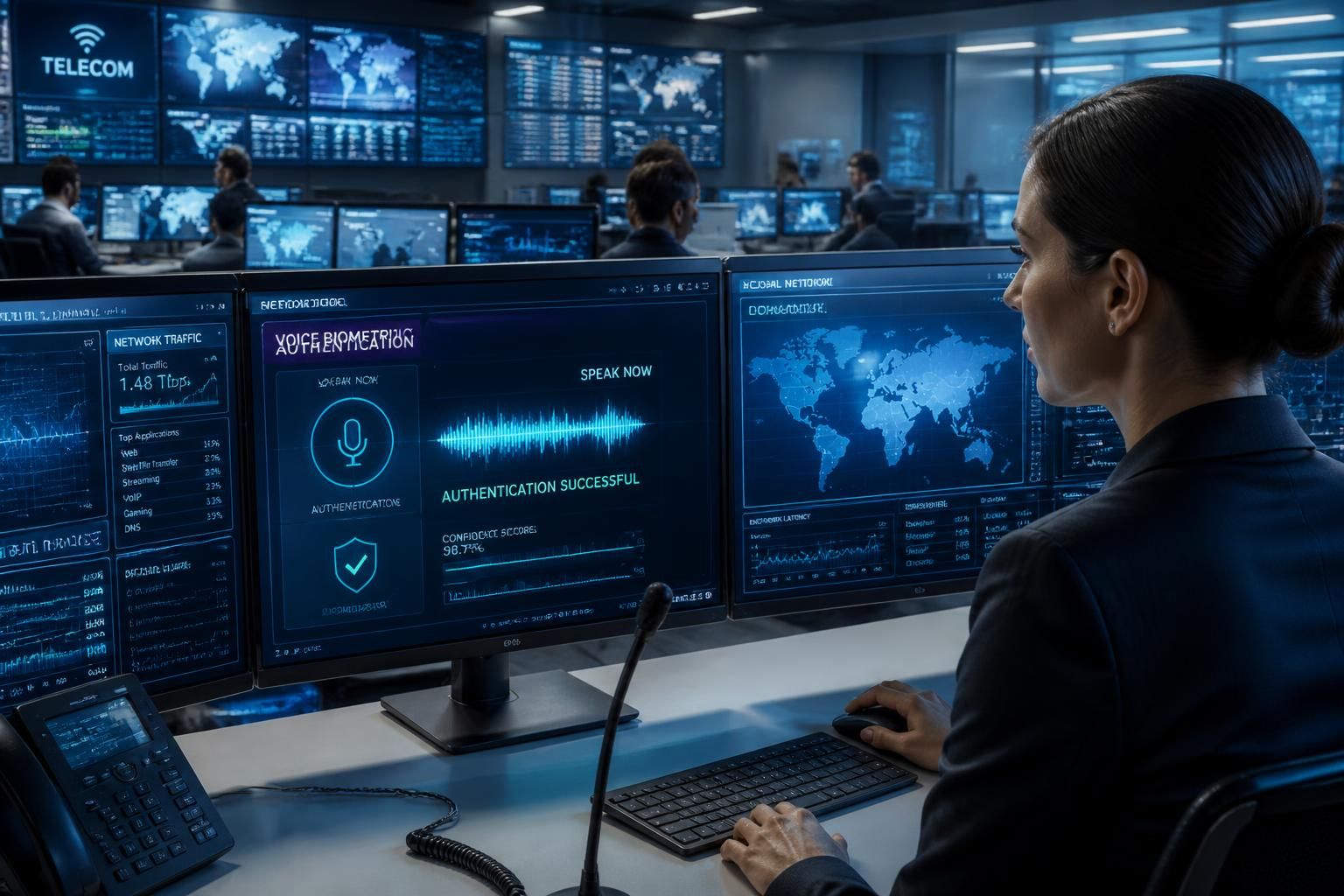
In the telecommunications sector, safeguarding voice communications has become a critical challenge as cybercriminals exploit AI-generated deepfake voices and automated phishing techniques. Ericsson’s latest AI voice technology aims to address this challenge by embedding sophisticated voice authentication systems directly into network infrastructure.
This approach allows for real-time verification of a caller’s identity by matching voice signals to trusted voiceprints. For instance, when a family member calls, the subscriber can instantly confirm the legitimacy through a visual cue on their device, easily differentiating between genuine and fraudulent calls. This method is especially vital as voice cloning fraud escalates, impacting millions of users globally and costing billions annually.
The technology also tackles fraudulent attempts by analyzing call content dynamically. If suspicious phrases related to financial scams or social engineering tactics arise during a conversation, the system instantly alerts the recipient, preventing losses before they happen. This fraud mitigation transforms reactive security into a proactive defense mechanism.
Moreover, this solution supports operators by helping reduce churn caused by trust breakdowns with customers and opens pathways to offer premium secured voice bundles. Such innovation aligns with the growing need for robust cybersecurity in telecommunications and reflects on the broader industry trend where AI-driven methods are reshaping traditional call security paradigms.
The combination of voice authentication with intelligent conversation monitoring places Ericsson at the forefront of the fight against deepfake-enabled scams, enhancing trust across telecom networks worldwide.
AI-Powered Scam Detection: Protecting End Users from Evolving Social Engineering Tactics
The sophistication of AI-generated scams is on the rise, with fraudsters deploying deepfake voices and scripts that mimic legitimate callers to deceive victims. Ericsson’s AI voice technology incorporates advanced scam detection features designed to counter these escalating threats by analyzing both voice characteristics and the semantic content of conversations.
For example, in scenarios where a caller alleges suspicious credit card transactions or urgent financial issues, the system identifies patterns commonly associated with social engineering attacks. The AI then provides immediate warnings to users, empowering them to make informed decisions rather than falling prey to manipulative tactics.
This convergence of voice biometrics with natural language processing marks a significant evolution in cybersecurity. It transforms the traditional defensive perimeter into an intelligent, interactive shield capable of understanding and interpreting scam narratives in real time. By alerting users mid-call, this technology substantially reduces the success rate of phishing attempts and other fraud schemes.
Such functionality not only benefits private consumers but also enterprises that interact with numerous clients daily, opening doors to enhanced customer service protocols. The voice AI’s continuous learning capabilities enable it to adapt rapidly to emerging scam strategies, ensuring persistent protection despite the evolving threat landscape.
In an era where telecom operators face losses exceeding billions yearly due to AI-enabled fraud, deploying real-time scam detection is vital. Ericsson’s system addresses this gap efficiently, upholding both telecommunications integrity and user safety.
Meanwhile, enterprises gain from reducing fraud-related disruptions and enhancing customer trust, which is critical to long-term retention and revenue growth.
Enterprise AI Avatars: Revolutionizing Customer Interaction with Fraud-Resistant Support
Beyond consumer protection, Ericsson leverages AI voice technology in the enterprise segment to provide intelligent avatar assistance. These AI-powered agents manage inbound calls, offering 24/7 service while simultaneously incorporating robust anti-fraud mechanisms.
“Corina,” Ericsson’s avatar trained on the entire IMS portfolio, illustrates this capacity by responding to customer inquiries about telecom services without human intervention, all while ensuring that the caller’s identity is verified in real time. These avatars can be customized by enterprises to respond to service-specific queries, adapt speech synthesis technologies, and operate within virtual collaboration environments.
This technology reduces operational costs by automating routine customer interactions and significantly enhances fraud protection by integrating voice authentication and scam mitigation at the call level. The avatars act as gatekeepers, effectively filtering fraudulent attempts and providing a consistent customer experience even during high-demand periods.
Collaboration with companies like Tavus, Cartesia, and Pipecat further strengthens the ecosystem for AI-driven voice support. Ericsson’s investments in text-to-speech and virtual interaction platforms underline a strategic push towards intelligent communication that is both seamless and secure.
Enterprises adopting these technologies benefit from reduced churn, heightened customer satisfaction, and novel opportunities for monetization through premium AI-powered services—key differentiators in today’s competitive market.
Integrating Low-Latency AI in Telecom Networks for Trusted and Secure Voice Communication
One of the critical enablers for Ericsson’s AI voice services is the deployment of ultra low-latency artificial intelligence models integrated at the core of telecom networks. This ensures that voice authentication and fraud detection occur with minimal delay, maintaining natural conversation flow and user experience while providing maximum security.
Embedding AI directly into the network’s IP Multimedia Subsystem (IMS) allows service providers to offer trusted calling services, where AI-driven analytics operate natively alongside voice traffic. This reduces reliance on external systems, enhancing data privacy and cybersecurity.
Such architecture permits real-time screening for deepfake voices and scam indicators without interrupting calls, offering a level of protection unattainable through traditional methods. Operators can package these capabilities into secure premium voice bundles, providing an added value proposition to consumers concerned about voice fraud.
Additionally, network-level AI facilitates rapid adaptation to emerging threats by updating models dynamically based on traffic patterns and new fraud techniques observed across telecom ecosystems. This proactive stance elevates the telecommunications industry’s defense posture, benefiting millions of users worldwide.
Ultimately, embedding artificial intelligence deeply within telecom infrastructure not only mitigates fraud but also elevates voice communications into programmable, highly trusted platforms. This shift is fundamental to the next generation of telecom services focused on security and innovation.
| 🛡️ Feature | 🌍 Application | 🚀 Benefit |
|---|---|---|
| Voice Authentication | Consumer & Enterprise Voice Calls | Prevents identity fraud and builds trust |
| Real-Time Scam Detection | Live conversation analysis | Reduces financial losses from phishing |
| AI Avatar Assistance | Enterprise customer engagement | Enhances service efficiency and security |
| Low-Latency AI Integration | Network core embedding | Ensures secure and seamless communication |
Practical Guidelines for Organizations to Implement AI Voice Fraud Mitigation Solutions
Organizations seeking to leverage Ericsson’s AI voice technology for fraud mitigation should focus on strategic integration and user education to maximize impact. Here are essential steps and best practices that can guide successful adoption:
- 🔑 Subscription and User Consent: Ensure end-users willingly subscribe to voice authentication services, establishing transparency and control.
- 🔑 Training AI Avatars: Customize AI avatars explicitly with enterprise product and service information for accurate customer interactions.
- 🔑 Continuous Model Updates: Regularly update AI fraud detection models to adapt to advancing scam techniques.
- 🔑 Multi-Layered Security: Combine voice authentication with network-level cybersecurity measures for enhanced defense.
- 🔑 User Awareness Campaigns: Educate customers and employees about recognizing AI-generated scam attempts.
Embracing these principles will equip organizations to exploit the full potential of AI voice technologies in fraud prevention without overwhelming users or compromising usability.
For professionals interested in exploring advanced AI voice solutions in tourism or customer engagement, platforms like Grupem’s voice-to-voice AI technology provide remarkable examples of how conversational intelligence can transform experiences securely.
Similarly, ongoing industry coverage such as Ericsson’s detailed analysis on AI voice in telecom offers valuable insights into the evolving landscape of voice security and service innovation.
How does AI voice authentication work to prevent fraud?
AI voice authentication uses advanced algorithms to match incoming voice signals with stored trusted voiceprints, allowing instant recognition of legitimate callers and flagging suspicious ones.
What measures are implemented to detect AI-generated deepfake scams?
Real-time conversation analysis is used to identify suspicious content and patterns typical of scams, complemented by voice biometric verification to detect impersonation attempts.
Can enterprises customize AI avatars for specific customer service needs?
Yes, AI avatars like Ericsson’s ‘Corina’ can be trained with enterprise-specific information to handle targeted inquiries efficiently and securely.
What benefits does embedding AI at the network core provide?
Embedding AI in the telecom network core reduces latency, enhances data privacy, and allows seamless real-time monitoring for fraud and scam detection.
Are these AI voice technologies accessible to regular consumers?
Many services, particularly those related to voice authentication and scam detection, are offered directly to consumers through subscription models, empowering protection at an individual level.
