
Short on time? Here is what you need to know about the new Bruce Springsteen Museum:
- ✅ Discover an innovative cultural space that merges museum, archive, and concert venue functions
- ✅ Explore a vast interactive scrapbook showcasing Bruce Springsteen’s impact on American music history
- ✅ Access unique archival materials with an emphasis on inclusivity and broad cultural context
- ✅ Benefit from cutting-edge architecture and technology designed to enhance visitor experience
State-of-the-Art Museum Design Embracing Bruce Springsteen’s Legacy and New Jersey Roots
The Bruce Springsteen Center for American Music stands on Monmouth University’s campus in West Long Branch, just four miles north of Springsteen’s formative Asbury Park stomping grounds. Officially opening in June 2026, this 32,000-square-foot facility transcends traditional museum concepts by integrating exhibition spaces, archival preservation, and live performance venues into a unified cultural landmark. This pioneering approach reflects the multifaceted career of the American singer-songwriter and cultural icon Bruce Springsteen, intertwining his personal history with the broader trajectory of American music.
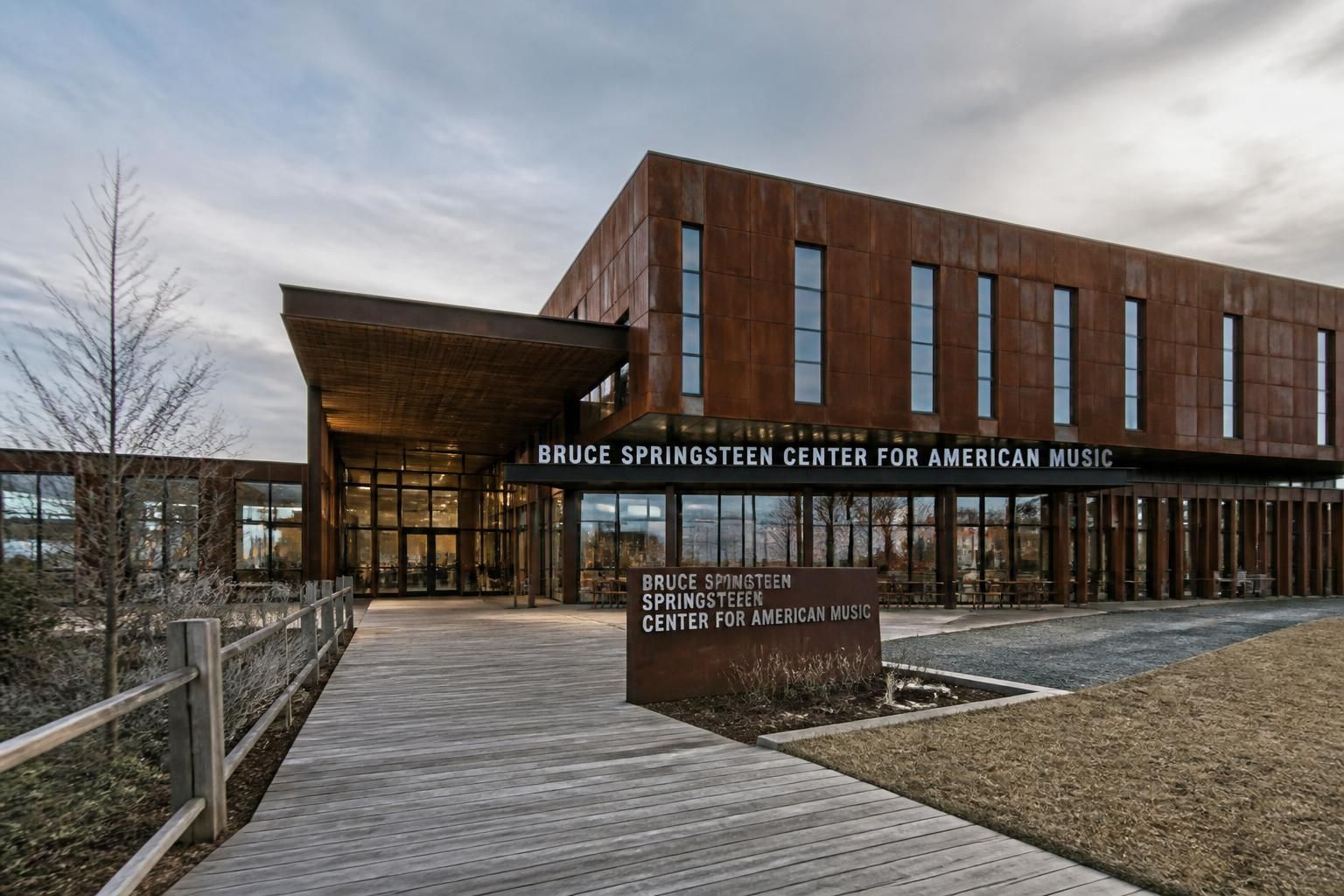
The building’s architecture, crafted by New York-based CookFox Architects, embodies the spirit of Springsteen through its materiality and form. Weathering steel panels clad the exterior with a rusted patina reminiscent of the industrial factories that framed Springsteen’s upbringing in Freehold, New Jersey. Vertical slats alternate to capture sunlight and shadow, metaphorically evoking themes from Springsteen’s celebrated album “Born in the U.S.A.,” which mourns the decline of manufacturing towns and working-class struggles. Inside, sustainable engineered wood beams and end-grain wood flooring recall the robust factory equipment floors, creating an environment that celebrates craft and durability—qualities synonymous with Springsteen’s music and storytelling.
The entrance ramp, styled like a boardwalk, guides visitors past a “memory tree” installation, echoing the tree from Springsteen’s childhood home. This sensory architecture connects patrons physically and emotionally to the local cultural landscape. Natural light and organic materials permeate the interior, advancing a biophilic design philosophy that harmonizes visitor wellbeing with environmental sustainability. With a Gold certification from the U.S. Green Building Council, the center reflects modern commitments to ecological responsibility while serving as a physical testament to the state’s musical heritage.
Interactive Exhibits and Archival Access Elevate the Museum Experience
The Bruce Springsteen Center is marketed not just as a museum but as an immense scrapbook and archive open to the public, offering a rich, immersive exploration of American music’s evolution. This institution notably rejects the common model of restricting archival materials solely to scholars; instead, it democratizes access, welcoming fans, researchers, and casual visitors alike to engage with the creative process behind Springsteen’s work.
The archive includes Springsteen’s personal collections, donated directly by the artist, who was insistent that the museum’s focus extend beyond his own story and encompass the diverse heritage of American music. This expansive vision positions Springsteen within a continuum that spans indigenous drumming rituals through to the hip-hop era — highlighting musical genres and artists that have collectively shaped the country’s soundscape. This deliberate contextualization sets the center apart from museums dedicated exclusively to a single figure.
Visitors can immerse themselves in interactive zones such as a room equipped with Springsteen’s instruments alongside headphones playing tutorials replicating his style. Exhibits include original written works, concert posters, photographs, and multimedia presentations that convey his artistic journey and cultural impact. The center’s first special exhibition, titled “Chimes of Freedom: Protest, Politics, and the Power of Song,” celebrates protest music traditions, underscoring Springsteen’s commitment to social justice through his art.
Engaging technologies enhance visitor experience without overwhelming it. For example, subtle sound design enriches the theater performances while maintaining acoustic clarity, prioritizing accessibility. The auditorium features floor-to-ceiling glass to invite natural light and outdoor views, breaking with conventional performance venue design by fostering openness and inclusivity. This environment reinforces the center’s mission to combine entertainment, education, and community engagement seamlessly.
Bruce Springsteen Museum as a Cultural Beacon for New Jersey and Beyond
The Bruce Springsteen Center for American Music is not just a monument to an individual artist but a symbol of New Jersey’s vital contributions to music history. The Jersey Shore, known for nurturing talents like Count Basie and Jon Bon Jovi, has long been a hub for musical innovation. Yet, until now, no dedicated institution has fully acknowledged its role on the national stage. This center fills that void, celebrating the region’s legacy through a lens influenced profoundly by its most famous native son.
Situated within reach of key Springsteen-related sites such as the Long Branch house where he composed “Born to Run” and several iconic Asbury Park venues, the museum invites visitors to embark on a cultural pilgrimage. It reaffirms the Boss’s deep connection to New Jersey’s social fabric and local communities, creating a potent narrative that ties place, music, and identity.
Beyond static displays, the center supports educational initiatives, concerts, and scholarly research, solidifying Monmouth University’s status as an academic destination for American music studies. The museum’s rich programmatic offerings foster active dialogue on music history, songwriting, cultural studies, and media arts, ensuring that its impact extends beyond mere preservation of artifacts to forming a vibrant, living cultural institution.
This dynamic approach to heritage management highlights modern smart tourism principles, emphasizing accessibility and engagement through technology and thoughtful design. Professionals working in museums, tour guiding, and cultural event planning can draw valuable lessons on creating participatory, digitally enhanced visitor experiences that honor authenticity and user comfort.
Innovations in Visitor Experience Through Architecture and Technology
One of the center’s standout features is its integration of advanced architectural and audio technologies designed to enhance visitor immersion. The 240-seat auditorium stands as an architectural marvel, outfitted with state-of-the-art acoustics and assistive technologies. Unlike traditional theaters that tend to isolate audiences in dark, sealed boxes, this venue’s glass walls open to lush outdoor landscapes, creating a sensory bridge between indoor performance and the natural world.
The use of denim upholstery on every seat forms a subtle but meaningful nod to Springsteen’s iconic working-class image. Accessibility was prioritized, with a completely step-free stage allowing performers using wheelchairs full participation, demonstrating the center’s commitment to inclusivity.
Inside the galleries, digital interactives complement physical artifacts. Visitors can navigate curated playlists, explore digitized archives, and engage with content tailored to varying knowledge levels. This aligns with Grupem’s vision of smart tourism, where technology is a facilitator rather than a distraction, enabling visitors to personalize their experience and deepen understanding on their terms.
Moreover, the building’s environmental credentials underline an emerging trend in cultural infrastructure: sustainable design as both ethical imperative and visitor attraction. The surrounding biodiverse meadow, designed by LaGuardia Design Group, not only beautifies the site but fosters habitat restoration, demonstrating how cultural tourism can synergize with ecological stewardship.
| 🛠 Feature | 🌟 Benefit | 🎯 Visitor Impact |
|---|---|---|
| Weathering Steel Facade | Reflects local industrial heritage | Creates authentic emotional connection |
| Biophilic Interior Design | Enhances visitor wellbeing with natural light and wood | Promotes calm, immersive experience |
| Accessible Auditorium | Step-free stage and acoustics optimized for clarity | Inclusive performances and user enjoyment |
| Interactive Digital Archives | Personalized exploration of materials | Improved engagement across audience types |
| Sustainable Meadow Landscape | Supports biodiversity and aesthetics | Enhances outdoor experience and education |
How this museum model informs smart tourism and cultural mediation
By combining state-of-the-art facilities with an inclusive, interactive approach, the center exemplifies how smart tourism strategies can revolutionize cultural heritage sites. Visitors are not passive receivers of information but active participants whose experience is enriched through personalized content and environmental design. This reflects a broader shift in museum practice advocated by experts in audio and digital mediation technologies, ensuring that heritage remains relevant and accessible for diverse audiences.
Planning Your Visit: Practical Information and Tips for an Engaging Experience
The Bruce Springsteen Center for American Music officially opened to the public in June 2026, making it a newly accessible destination on the Jersey Shore cultural map. Tickets can be booked in advance to guarantee access, especially during peak tourist seasons. The center offers a suite of resources via its official website, including details on current exhibitions, educational programming, and special events, ensuring visitors can plan effectively.
On site, the experience begins with a 25-minute original film narrated by Springsteen himself, which introduces the artist’s personal narrative while situating him within the larger American music tradition. The blend of multimedia and physical artifacts allows visitors to customize their engagement according to interests and schedules.
The museum is well-suited for visitors ranging from casual fans to researchers. Groups such as school tours, professional organizations, and local communities benefit from guided tour options enhanced by mobile audio technologies that offer layered storytelling experiences. Given the center’s location on a university campus, it is well integrated with public transit and has ample parking facilities.
Last but not least, the vicinity includes several notable sites that add depth to a visit—like the places where Bruce Springsteen composed iconic songs, or historic venues linked to the Jersey Shore rock and roll scene. Integrating these stops into a comprehensive itinerary will provide a richer cultural context, fulfilling the promise of smart tourism by leveraging place-based storytelling and technology-enabled exploration.
For more information on visiting hours and ticketing, readers can consult reliable sources such as the official museum site or thorough articles highlighting the center’s features, like those found on NJ 101.5.
What makes the Bruce Springsteen Center unique among music museums?
It integrates archival access, interactive exhibits, and a live concert venue, breaking the mold of traditional single-purpose museums.
Is the center accessible for all visitors?
Yes, the building features universal accessibility, including step-free stages and optimized acoustics for a welcoming experience for all.
How does the museum connect Bruce Springsteen’s work to broader American music history?
The museum situates Springsteen within a larger narrative that spans from indigenous music traditions to contemporary genres like hip-hop.
Can visitors explore Springsteen’s creative process at the center?
Absolutely, the archive is open to the public with interactive exhibits that detail his songwriting and artistic development.
What role does sustainability play in the museum design?
The building has received a Gold certification for green design and is surrounded by a biodiverse meadow, showcasing a commitment to environmental responsibility.
