
Bill Gates Breaks Silence on AI: Why the Tech Industry’s Quiet Matters
⚠️ Key point: Bill Gates’ warning is not simply about faster software or better chatbots. It focuses on the incentives that shape what the people financing and building Artificial Intelligence are willing to say publicly.
In a long GatesNotes essay and subsequent media discussions, Bill Gates argued that many leaders within the AI sector understand the scale of the risks but soften their public language. His central claim is direct: an executive who openly stresses that a product could undermine employment, widen security threats, or harm children may be seen as less committed to growth. In a funding environment where confidence determines access to capital, caution can be treated as weakness.
This is why the moment has attracted attention beyond the Tech Industry. Gates has spent decades associated with software development, philanthropy, and Innovation. He has often described technology as an effective way to improve productivity, health, and education. When a figure with that background says he would prefer the current pace of advancement to slow down, the statement deserves practical examination rather than dramatic interpretation.
The phrase “Breaks Silence” matters because it describes a governance problem. AI companies may publish safety principles, commission research, and participate in regulatory debates. Yet the most uncomfortable questions can remain outside ordinary product announcements: What happens when a system eliminates junior jobs faster than workers can retrain? Who is responsible when synthetic voices deceive customers? How should children be protected when conversational systems are designed to be constantly available, agreeable, and emotionally engaging?
For organisations working with visitors, museums, guides, cities, or cultural venues, this debate is not abstract. AI is already used to translate content, answer questions, prepare routes, improve audio accessibility, and automate routine communication. These applications can save time and expand access. However, responsible deployment starts with recognising that useful technology and risk management must operate together.
A fictional city museum, Northgate Heritage Centre, illustrates the tension. Its team introduces an AI tool to draft multilingual exhibit descriptions and reduce response time for visitor enquiries. The pilot is useful, especially during peak school-holiday periods. But the museum still needs staff to verify historical claims, approve tone, handle sensitive heritage topics, and make sure automated answers do not replace a visitor’s ability to speak to a real person. The issue is not whether the tool is impressive. The issue is whether its role has been defined honestly.
Financial pressure can discourage transparent AI leadership
Gates’ argument is that silence is structural, rather than merely personal. Startup founders depend on investors. Larger platforms depend on market confidence, partnerships, computing capacity, and continued access to talent. A chief executive who says, “This system should not be deployed in certain settings yet,” may lose ground to a competitor making fewer qualifications.
That dynamic can distort public discussion. A polished demonstration of Future Technology is easy to share; an explanation of failure rates, safeguards, appeal processes, or workforce effects is harder to condense. The result is an information gap between what executives may discuss privately and what customers, workers, schools, and public institutions hear publicly.
Reporting around Gates’ comments has highlighted his view that senior technology figures privately recognise substantial dangers but avoid challenging the momentum behind the market. Readers can compare this perspective with coverage of why Gates says he raised the alarm. The practical value of the debate lies in moving from vague fear to clear accountability.
- 🔎 For buyers: ask what data the system uses, where it fails, and who reviews high-impact outputs.
- 🧭 For managers: define tasks that remain human-led before automation is introduced.
- 🔐 For developers: communicate limitations in product language that non-specialists can understand.
- 🏛️ For public organisations: make accessibility, privacy, and public trust part of procurement criteria.
Silence does not make a risk disappear; it simply shifts the cost of discovering it onto workers, users, and communities. That is the leadership standard at the centre of Gates’ intervention.
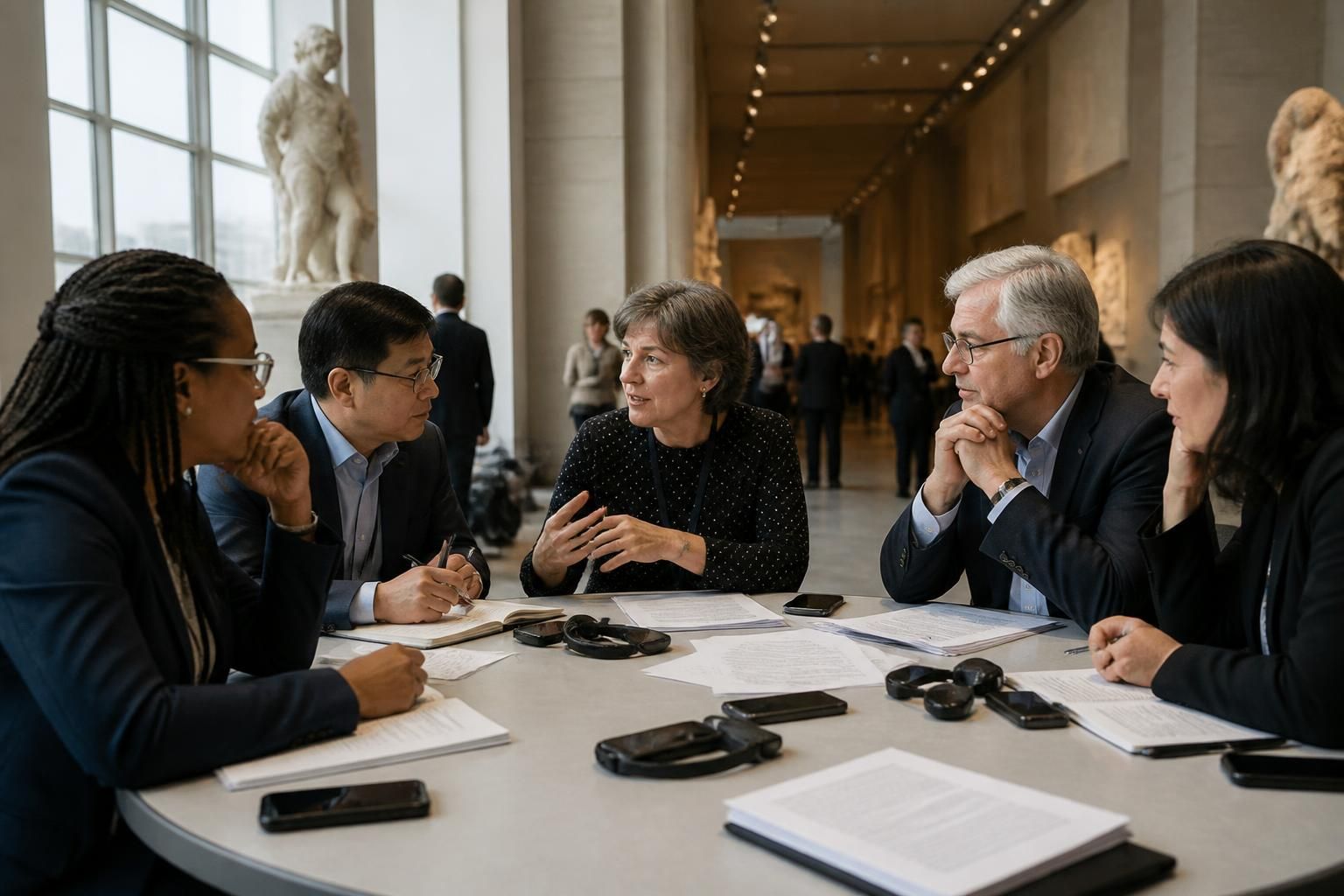
Bill Gates on AI Jobs: Measuring Economic Disruption Before It Becomes Permanent
Gates identifies employment as the first major area requiring action. His concern is not limited to familiar predictions that automation will alter work over decades. He argues that AI may remove entry-level and mid-level positions early, weakening the normal route by which people acquire experience, professional judgment, and financial stability.
This distinction is essential. A young customer-support employee may once have learned product knowledge by resolving simple requests before moving into complex account management. If automated agents absorb the basic work, the company may gain speed while removing the first rung of its own talent ladder. Similar patterns could affect junior software roles, legal research, sales preparation, administration, and routine medical documentation.
The warning has some early empirical support. A Stanford Digital Economy Lab analysis based on millions of payroll records from ADP, a major US payroll processor, found that employment among workers aged 22 to 25 declined by about 11% in the two occupation groups most exposed to AI. In the three least-exposed groups, employment for the same age range increased by roughly 10%. These figures do not prove that every change was caused by automation alone. They do show why employment effects should be monitored by age, role, region, and sector rather than discussed only in national averages.
In 2026, the practical question for employers is no longer whether AI can perform a task. It is whether the organisation has a credible plan for the people whose tasks are being redesigned. Gates has described the absence of a plan for social, political, and economic upheaval as a serious failure. Reporting on Gates’ concerns about economic upheaval puts that criticism in the context of rapid adoption across knowledge work.
Designing AI adoption without removing the learning pathway
Tourism provides a useful example because it combines human interaction, logistics, storytelling, and seasonal work. A destination management office could use AI to produce a first draft of a visitor itinerary. That may reduce administrative pressure. Yet the adviser still needs to interpret accessibility needs, local disruptions, visitor priorities, and cultural sensitivities that standard prompts cannot reliably capture.
Rather than cutting junior staff, the office could redefine entry-level work. New hires may review automated itineraries for factual accuracy, compare outputs against local partner information, flag inaccessible routes, and learn how to communicate with visitors. The tool becomes a training environment with supervision, not a replacement for professional development.
| AI-affected activity | Potential benefit | Human safeguard | Practical signal to track |
|---|---|---|---|
| 💬 Visitor support replies | Faster answers to routine questions | Staff escalation for disputes, emergencies, and complex requests | Response accuracy and unresolved cases |
| 🗺️ Route planning | Quick draft itineraries | Local review for closures, mobility, and cultural context | Visitor complaints and route changes |
| 🎧 Audio content preparation | Faster transcription and translation drafts | Editorial review, consent checks, and pronunciation validation | Correction rate before publication |
| 📊 Reporting | Quicker pattern detection in feedback | Managerial interpretation of causes and actions | Decisions improved by the analysis |
There is also a wider policy issue. Retraining cannot be a slogan offered after jobs have vanished. It requires paid time, recognised credentials, access to devices, and training that relates to actual local vacancies. A retail worker displaced by automated support software does not benefit from a generic online course if employers are not prepared to hire for the skills it teaches.
✅ The strongest workforce strategy is not “replace or resist.” It is to map tasks, protect junior learning, and measure who gains or loses access to opportunity. This approach makes the next concern—AI-enabled harm—easier to address because it places oversight at the centre of deployment.
Artificial Intelligence Security Risks: Why Capability Access Requires Real Safeguards
The second danger identified by Bill Gates concerns the wider availability of harmful capabilities. AI systems can lower the expertise needed to write persuasive scams, automate reconnaissance for cyberattacks, generate malicious code, or develop misleading communications at scale. Gates also warns that biological threats, once associated primarily with state-level resources, could become more accessible to smaller groups with fewer specialist skills.
This does not mean every AI tool creates a threat. The problem is the combination of accessibility, speed, and replication. A fraudulent email created manually may reach a limited audience. A system that rapidly adapts wording to different languages, professions, and local events can make the same deception more convincing and much easier to scale. Voice synthesis adds another layer when callers hear what appears to be a familiar manager, family member, or public official.
For cultural and tourism professionals, the immediate risk is often impersonation. A heritage site may receive a message that appears to come from a supplier requesting banking changes. A guide’s voice may be copied from online clips and used to promote a fake booking service. A visitor could receive a realistic message claiming that a tour has been cancelled and directing them to an unverified payment page.
These are operational risks, not distant science-fiction scenarios. The best defence combines technical controls with staff habits. A payment-change request should be verified through a known contact channel. Public-facing audio should be released from a controlled account. Staff should know that a familiar voice is not proof of identity. For a closer look at this issue, see this practical discussion of AI voice cloning and its implications for authentic audio.
Security by design is more effective than a warning after an incident
A useful model is the “human checkpoint” approach. Automation may sort messages, identify likely fraud, or translate content. It should not independently approve financial transfers, publish emergency alerts, alter visitor access information, or provide sensitive medical or legal advice. High-impact actions require a named person who can assess context and document a decision.
Consider Northgate Heritage Centre again. Its booking team uses AI to classify incoming requests, which reduces time spent sorting emails. The organisation does not allow the system to amend bookings or issue refunds automatically. Every change involving money, personal data, or an access arrangement is checked by a staff member. This may appear slower than full automation, but it prevents small errors from becoming costly public failures.
- 🛡️ Identify decisions involving money, identity, access, health, or safety.
- 🔒 Require verified human approval for those decisions.
- 📁 Keep a record of the system output, reviewer action, and final result.
- 📣 Train staff to report suspicious content without fear of blame.
- 🔄 Review incidents monthly and update procedures rather than repeating generic warnings.
AI governance also depends on suppliers. Before selecting a tool, organisations should ask whether data is retained, whether inputs are used for further model training, how incidents are reported, and whether the provider can explain its content moderation process. These questions are particularly important when visitor data, staff recordings, or cultural archives are involved.
🔐 Ethics becomes practical when a system’s limits are matched to the consequences of being wrong. This same principle is vital when the users are children, whose interaction with conversational technology can be emotionally intense.
Bill Gates Warns About AI Companions and Children’s Mental Health
The third area highlighted by Gates is psychological harm to children. He is concerned about AI companions that are increasingly fluent, available at any hour, and designed to respond with attention and affirmation. An always-agreeable digital companion may feel safer than a complicated friendship, a teacher’s feedback, or a parent’s rules. That is precisely why it can create unhealthy dependency.
Children and teenagers are not simply smaller versions of adult users. They are developing social skills, self-regulation, identity, and the ability to handle disagreement. A system that adapts perfectly to a user’s preferences can reduce productive friction. Real relationships involve compromise, waiting, misunderstanding, repair, and boundaries. A conversational agent built to retain attention may minimise all of those experiences.
The issue is not that educational technology should be rejected. Well-designed tools can support language practice, reading confidence, accessibility, and curiosity. A guided learning assistant that explains vocabulary, asks a student to reason through an answer, and encourages them to consult a teacher has a very different purpose from a companion that frames itself as a child’s primary emotional relationship.
Parents, schools, and providers need clear distinctions. A tool should state whether it is educational, transactional, entertainment-focused, or companion-oriented. It should not blur those categories through human-like claims of attachment or exclusivity. It should also offer age-appropriate controls, time limits, visible reporting options, and escalation pathways when a conversation suggests distress or risk.
Building healthier audio and conversational experiences
Audio interfaces deserve particular attention because voice can feel intimate. A calm, responsive voice may help a nervous learner practise a presentation or follow a museum visit. But the same design quality can create dependence when it is paired with endless availability, emotional flattery, or pressure to keep talking.
For creators of visitor experiences, the relevant design lesson is straightforward: use voice to clarify and guide, not to simulate a personal bond. A family audio tour, for example, can invite children to observe a painting, choose between two historical clues, or discuss an object with their group. It should not encourage them to isolate themselves from the adults and peers around them.
Professionals working with young audiences can apply the following safeguards:
- 👧 Make the intended age group visible before use, not hidden in legal text.
- ⏱️ Build natural stopping points rather than encouraging endless interaction.
- 🧑🏫 Provide adult-facing guidance for schools, parents, and youth leaders.
- 🗣️ Avoid language suggesting the tool “needs,” “misses,” or exclusively understands the user.
- 🚩 Create a clear route for reporting harmful, manipulative, or inappropriate responses.
Accessible design remains important. Children with reading difficulties, sensory needs, or language barriers may benefit greatly from responsive audio support. The answer is not to remove support, but to ensure that helpful assistance does not become emotional substitution. Resources discussing a voice AI tutor for children are most useful when evaluated through this lens: learning goals, transparent boundaries, adult oversight, and data protection.
🧠 A child-centred AI experience should strengthen real-world learning and relationships, never compete with them. That standard leads directly to the governance choices organisations can make today.
Tech Leader Accountability: Turning Bill Gates’ AI Warning into Responsible Innovation
Gates’ message ultimately tests Leadership. It asks whether technology executives, public officials, funders, and buyers are prepared to describe risks before a scandal, breach, or wave of layoffs forces them to do so. Responsible Innovation is not a communications campaign added after a product launch. It is a set of operating decisions made before systems reach people.
For organisations outside Silicon Valley, this principle is empowering. A small museum, independent guide, tourism office, or event organiser may not build foundational models. It still decides which tools are used, what information enters them, how outputs are checked, and where visitors can reach a human being. Procurement is therefore a form of AI governance.
Northgate Heritage Centre can adopt a simple policy. It keeps an inventory of every AI-enabled service, from transcription to customer messaging. Each service has an owner, a defined purpose, a data rule, a review process, and a date for reassessment. Staff can see where automation is active, rather than discovering it by accident after a visitor complaint.
Transparency should also be designed for users. If an audio guide uses AI translation, visitors should understand that the translation has been reviewed and know how to report a problem. If a chatbot helps with ticket information, it should identify itself clearly and offer an easy handover to staff. The objective is not to overwhelm people with technical detail. It is to prevent false impressions of certainty or human judgment.
A practical accountability framework for AI deployment
The following framework helps convert broad Ethics commitments into daily decisions. It applies equally to large platforms and local cultural organisations, although the controls should be proportionate to the impact of the service.
| Governance question | Action to take | Why it matters |
|---|---|---|
| 🎯 What problem is being solved? | Write one measurable service objective before purchase. | Prevents adoption driven only by hype. |
| 👥 Who could be harmed? | Assess effects on workers, children, visitors, and excluded groups. | Moves risk review beyond technical performance. |
| 🧾 Who checks the output? | Name a reviewer for factual, legal, and sensitive content. | Creates clear responsibility. |
| 🔁 How can users challenge a result? | Provide contact details and a correction route. | Protects trust and enables continuous improvement. |
| 📅 When is the tool reviewed? | Set regular audits for quality, bias, security, and value. | Recognises that AI behaviour and use cases change over time. |
Public debate can easily become polarised between unquestioning enthusiasm and blanket rejection. Gates’ intervention points to a more useful position: acknowledge capability, disclose downside, and build safeguards early enough to matter. The question is not whether Future Technology will influence tourism, learning, media, or public services. It already does. The question is whether those systems will be introduced with enough honesty to deserve trust.
Audio technology offers a practical example of this balance. Smartphone-based solutions can make guided visits more accessible, reduce equipment logistics, and help groups listen clearly at a distance. Yet the quality of the experience still depends on accurate content, consent for recordings, reliable connectivity, and a guide or institution that remains accountable. Tools such as this overview of Bill Gates’ AI risks can help teams frame internal discussions before choosing a provider or expanding an existing pilot.
✅ The immediate action is simple: list every AI tool currently used by your organisation and assign a human owner to each one. Accountability begins when no system is treated as too convenient, too technical, or too profitable to question.
What are the three AI risks highlighted by Bill Gates?
Bill Gates focuses on job displacement, wider access to cyber, fraud, and biological threats, and potential psychological harm to children using highly engaging AI companions.
Does Bill Gates oppose Artificial Intelligence innovation?
No. His position is not a rejection of innovation. He argues that the pace of deployment should be matched by stronger safeguards, transparent discussion, and practical plans for social consequences.
How can tourism organisations use AI responsibly?
They can define clear use cases, protect visitor data, review generated content, maintain a human escalation route, and audit tools regularly for accuracy, accessibility, and security.
Why are younger workers especially relevant to the AI employment debate?
Entry-level roles often provide the first practical experience needed for career progression. If automation removes these roles without creating supervised alternatives, younger workers may lose access to professional pathways.
What should parents check before allowing children to use an AI companion?
Parents should check age suitability, data practices, conversation limits, reporting options, adult guidance, and whether the product encourages healthy learning rather than emotional dependency.
