
Hurricane Helene Museum Damage: What Remains Visible in Pass-a-Grille
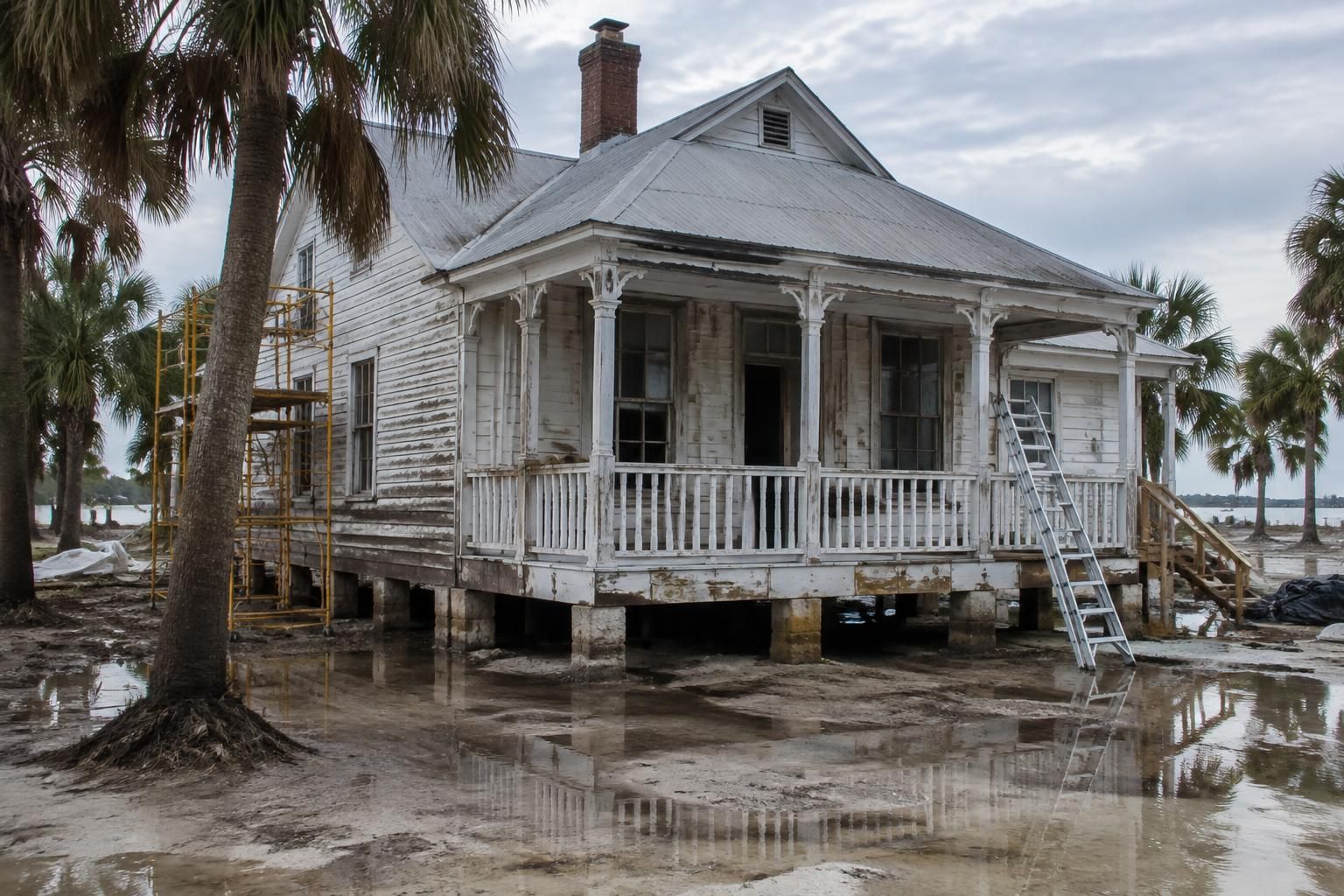
Nearly two years after Hurricane Helene flooded Pass-a-Grille in September 2024, the Gulf Beaches Historical Museum still shows the effects of the storm. Reports put the water inside the building at approximately 4.5 feet—enough to affect exhibits, collections, furnishings and parts of the historic structure.
The building dates to 1917, so its recovery involves more than replacing damaged materials. For a museum housed in an older coastal landmark, crews must determine what can be cleaned, what must be repaired and which features require a historic preservation approach. Early reporting on the barrier island museum documented the scale of the losses after Helene.
Pass-a-Grille Museum is the name many visitors use for the Gulf Beaches Historical Museum. Its small scale is part of its value: objects and photographs connect the beach community’s changing streets, businesses and families to a place visitors can still walk through today. When that setting is damaged, the loss is not measured only in square feet. It also interrupts the everyday work of showing people how the area became what it is.
Why visible storm damage does not tell the whole story
A visitor can spot a waterline or a stripped interior, but collection recovery is less obvious. Paper records may need controlled drying and assessment. Photographs, labels and artifacts require individual decisions about cleaning and storage. A piece that survives the flood can still be unsafe to display until its condition has been documented.
Reports in 2026 indicate that about 70% of the museum’s belongings have been salvaged. That is meaningful progress, but “salvaged” does not mean every item is already restored or ready to return to an exhibition. It means a substantial share was saved from loss; conservation, cataloging and decisions about future display can continue well after the initial rescue.
For museum teams, the distinction changes how progress should be communicated. A notice saying “most objects were saved” answers one question, while an update on structural repairs answers another. Combining the two can create the mistaken impression that the building is ready for normal visits. Clear labels—collections, building and public access—help residents and travelers understand each part of recovery.
Consider a guide planning a walking tour for a small group. The museum may be a valuable stop for explaining the neighborhood, even when interior access is restricted. The guide can use an exterior photograph, a short account of the 1917 building and a carefully worded update about its condition. That approach keeps local history in the itinerary without implying that visitors can enter an active recovery site.
The storm also changed what the museum may eventually interpret. Helene is now part of the history of this coastal community, alongside the older stories the institution was created to preserve. Residents’ photographs and recollections could help document how the neighborhood responded, provided contributors understand how their material will be stored, credited and used.
That work calls for care. A photograph of a flooded street may be historically useful but personally distressing to the person who took it. Museum staff collecting storm memories should offer a simple consent process and give contributors a way to describe the date, location and circumstances. Good documentation protects both the record and the people behind it.
🔎 The key distinction is straightforward: visible museum damage shows where recovery started, while the condition of the building and collections determines what can safely happen next.
Pass-a-Grille Museum Recovery Efforts: Separating a Special Opening From Full Reopening
Public access is one of the most confusing parts of the Pass-a-Grille Museum story. A museum may welcome visitors for a limited event while remaining closed for regular exhibitions and tours. In September 2026, coverage of the museum’s first public opening since Helene described just such a return, nearly two years after the storm.
That event matters. It gives residents an opportunity to reconnect with the institution and allows the museum to share what happened. Yet a special opening should not be read as confirmation that restoration is finished, that every room is available or that normal operating hours have resumed. Other reporting on the museum’s reopening describes the building as still awaiting a full return to the public.
Three different milestones for rebuilding progress
For visitors and tourism professionals, it helps to treat recovery as three separate milestones. The first is stabilization: removing immediate hazards and preventing additional damage. The second is limited interpretation: sharing collections, stories or supervised access in ways that fit current conditions. The third is regular reopening, when the building can reliably support ordinary visits.
A single venue can reach the second milestone while still working toward the third. Think of a temporary event where a small group enters an approved area, sees selected displays and leaves at a scheduled time. That is a genuine public program, not a rehearsal. It is also different from turning up on a Tuesday and expecting the complete museum experience.
Reports have cited 2029 as a projected full reopening, with design work among the steps still ahead. A projection is a planning reference, not a guaranteed date. Historic building repairs, funding decisions, contractor availability and the findings of detailed assessments can all change a schedule. Coverage of the projected reopening provides context for that longer timeline.
Why does precise wording matter? A family that drives to Pass-a-Grille after reading “museum open” may expect indoor galleries, restrooms and a full-length visit. A guide may build a timed itinerary around those assumptions. If access is limited to a single event, both groups need to know before they travel. Accuracy is a practical visitor service, not a matter of cautious phrasing alone.
Museum and destination teams can reduce confusion with a short status notice displayed in the same places visitors check opening hours. It should identify whether entry is available, whether reservations are needed and which areas are accessible. The update also needs a date: an undated announcement can circulate long after the event it describes.
- 📍 State the access level: closed, event-only, partially open or open for regular visits.
- 🗓️ Date every update: include the event date or the date the status was last checked.
- ♿ Describe practical conditions: note approved entry routes and accessibility information when confirmed.
- ☎️ Offer a verification point: direct visitors to the museum or responsible public agency before they make plans.
A guide discussing Helene on a beach walk can apply the same standard. Instead of saying that the museum “has reopened,” the guide can explain that it has held a limited public opening while broader restoration continues. That one sentence respects both the milestone and the work still ahead.
🧭 Public programming and full reopening are different achievements; visitors benefit when each is named accurately.
Video coverage can help teams compare how the site was described soon after the flood with later updates on public access. Check the publication date of any clip before using it to describe current visiting conditions.
Historic Preservation After Helene: Why a 1917 Coastal Museum Takes Time to Repair
Restoring a century-old building after a flood is not the same as fitting out a new gallery. The Gulf Beaches Historical Museum occupies a 1917 landmark in a barrier island setting, where saltwater, humidity and repeated exposure to coastal weather complicate decisions. Background on the Pass-a-Grille museum helps place the building within the neighborhood’s longer history.
Storm surge can affect materials in different ways. Water may mark plaster, reach electrical components and carry sediment into cavities that are not visible during a walk-through. Historic woodwork can require a different assessment from modern replacement panels. Repairs that look simple from the sidewalk may depend on inspections behind walls or beneath floors.
Protecting the building without losing what makes it historic
Historic preservation asks two questions at once: how can a place be made safe, and which original features should be retained? Replacing everything damaged by saltwater may appear faster, but it can erase details that give the building its significance. Keeping every affected material without testing it, on the other hand, may create future maintenance or safety problems.
The workable path is a documented assessment. Teams identify significant features, record their condition and decide where conservation is feasible. Where replacement is necessary, they can distinguish new work from surviving historic fabric in project records. The process is careful because an irreversible choice made during cleanup can shape the museum for decades.
Collection needs add another layer. A building can be structurally ready before its artifacts are ready to return. Conversely, preserved objects may remain in safe storage while work on the building continues. If an exhibition room is redesigned, staff must also determine how cases, lighting and visitor movement will protect items that survived the flood.
The table below separates common recovery tasks. It is a planning guide, not a claim that every listed intervention is required at this museum. Its value is in showing why one visible repair rarely represents the entire project.
| Recovery area | What teams need to establish | Visitor-facing implication |
|---|---|---|
| 🏛️ Historic structure | Which original materials can be safely retained or repaired | A finished-looking exterior may not mean interiors are ready |
| 📦 Collections | Which saved items need treatment, documentation or new storage | Some exhibits may return later than the building itself |
| ⚡ Building systems | Whether affected utilities meet requirements for public use | Access depends on more than clean walls and floors |
| ♿ Visitor routes | How people can enter and move through approved areas | Special-event access may differ from regular operations |
Funding and design decisions influence the order of that work. Once an assessment defines the scope, designers can prepare repair plans and public agencies can evaluate costs. If new conditions are uncovered during construction, a plan may need revision. This is why a projected date for regular opening remains provisional even when initial cleanup has been completed.
For a coastal community, preserving the museum has a benefit beyond its own walls. It maintains a place where residents can point to material evidence of local change: photographs, objects and the building itself. That value does not eliminate the need for modern safety standards. It explains why recovery must account for both.
🏛️ The strongest rebuilding progress is not always the most visible work: assessment and conservation decisions determine whether the restored museum will remain useful and recognizable.
Hurricane Recovery and Local Stories: Keeping the Museum Useful While Repairs Continue
A damaged building does not have to mean an absence of public history. While regular access is limited, the Gulf Beaches Historical Museum can still be a point of reference for guides, educators and residents discussing Pass-a-Grille. The essential condition is honesty about what visitors can experience now and what remains in recovery.
Helene created records as well as damage. Photographs of streets before and after the surge, accounts of cleanup and recollections from local businesses can help future visitors understand the event’s impact. The museum’s work to preserve storm memories belongs beside its older collections, not as a replacement for them. Both show how a barrier island changes over time.
Turning disaster recovery records into responsible interpretation
Collecting recent history requires a method. A resident submitting a phone photograph should be asked when and where it was taken, who holds permission to share it and whether identifiable people appear in the image. A recorded recollection should include consent for future use. Those details make material more useful to researchers while reducing the risk of publishing something its contributor intended to keep private.
The same care applies to tone. A dramatic image of storm damage may attract attention, but it cannot explain how long repairs took or what a neighbor lost. Pairing an image with a short, verified account gives audiences more context. It also avoids treating the coastal community as a backdrop for disaster imagery.
For example, a guide might describe a pre-storm photograph of a familiar street, then invite a resident-approved audio account explaining how access to that street changed after Helene. Visitors would hear both a physical change and a human experience. The guide should make clear when an account is a personal memory rather than an official measurement of the storm.
Audio can help when objects cannot yet be displayed. A short clip of a curator explaining why a particular photograph was saved allows audiences to encounter a collection item without entering a closed room. Transcripts and captions should accompany recordings so visitors who cannot or prefer not to listen can access the same information.
A smartphone-based guide can organize these stops without requiring permanent equipment at a damaged site. With an app such as Grupem, a guide or museum team could prepare short audio segments for a supervised neighborhood walk, then update the script when access conditions change. The technology is useful only if its content is maintained: an outdated message about entry would be worse than a clearly written sign.
Location also matters. Audio stops should be placed on publicly accessible routes that do not obstruct residents, repair crews or businesses. A guide should not invite groups to gather at a closed entrance simply because it offers a good view. A nearby public viewpoint may tell the same story with less disruption.
One workable sequence is three brief stops: the building’s history from an approved exterior viewpoint, an account of Helene’s effects on the surrounding neighborhood and a final stop focused on preservation work. Each recording should answer a specific question. What stood here? What changed? What is being protected? That structure gives visitors a coherent experience without pretending the damaged museum is fully open.
The strongest interpretation leaves room for residents who experienced the storm differently. One person’s account of reopening a shop and another’s account of losing family records can both be valuable, even when they do not tell the same story. Thoughtful selection, consent and accurate dates matter more than collecting the largest possible number of clips.
🎧 A closed gallery can still support public learning when local voices are presented with permission, context and up-to-date access information.
Visual reporting offers another way to follow hurricane recovery, but footage of a special event should not be mistaken for proof of regular museum hours. Verify current conditions with the venue before directing a group to the site.
Planning a Pass-a-Grille Museum Visit During Ongoing Rebuilding Progress
For tourism offices, guides and visitors, the practical question is not simply whether the museum exists on an itinerary. It is what kind of experience is possible on the day of the visit. With restoration ongoing and a full reopening projected for a later date, plans should be built around confirmed access rather than assumptions drawn from past event coverage.
Start with the date on any announcement. A story about the museum opening its doors for a September 2026 event describes that event; it does not establish its hours for a later weekend. Check current information from the museum or the responsible public agency before selling tickets, publishing a route or promising an indoor stop.
A practical checklist for guides, museums and destination teams
A reliable visitor notice should be short enough to read on a phone but specific enough to prevent a wasted journey. It can state whether an interior program is taking place, if registration is required and where guests should meet. If no public entry is available, it should say so plainly while identifying any suitable exterior interpretation.
- 📅 Confirm the visit date. Match the planned trip to a current, dated access update rather than a previous special opening.
- 🚪 Verify the format. Ask whether visitors can enter, join a supervised event or only view the building from public space.
- ♿ Check individual needs. Confirm the route and facilities relevant to your group instead of assuming a historic site can offer its usual arrangements during repairs.
- 🎧 Prepare a useful alternative. Offer a concise exterior story, accessible audio with a transcript or another local-history stop if entry is unavailable.
- 🔄 Review wording before departure. Update tour scripts, booking emails and visitor-facing pages when the museum’s status changes.
Imagine a group of twelve arriving for a heritage walk. The itinerary promises “a museum tour,” but the guide learns on the morning of departure that the only public opening was a one-day event weeks earlier. An avoidable disappointment now affects the group, the guide’s credibility and the site’s staff, who may have to redirect visitors away from ongoing work.
With a better plan, the booking confirmation says that the walk covers the museum’s history from an accessible public route and that interior entry depends on a separately confirmed program. The guide carries two versions of the stop: one for approved access and one for exterior interpretation. The experience remains worthwhile without placing pressure on a building that is not ready for normal foot traffic.
Digital tools can make that flexibility manageable. A tour organizer using Grupem could keep an audio segment about the museum’s historical role separate from a short, frequently updated message about visiting conditions. That reduces the need to rerecord an entire tour whenever a date changes. It also makes it easier to supply text alongside audio for guests who need it.
Simple maintenance rules are as important as the platform. Assign one person to check the access message before each scheduled tour, record the source of the update and remove expired event notices. If an opening date remains a projection, label it as such. Clear information helps visitors plan and gives the recovery team space to complete its work.
Pass-a-Grille offers many ways to discuss its past without treating the museum as a finished attraction. A responsible itinerary can connect the 1917 landmark to the surrounding streets, explain Helene’s effects and acknowledge ongoing repairs. Visitors receive an accurate account of the place as it is, while the community retains control over how its recovery is presented.
✅ The most useful plan is the one that still works when access changes: verify the status, describe the experience precisely and prepare an alternative that respects the site.
Is the Pass-a-Grille Museum fully open after Hurricane Helene?
The Gulf Beaches Historical Museum held a limited public opening in September 2026, but that event should not be confused with a return to regular operations. Confirm current access with the museum or the responsible public agency before visiting.
How much water entered the museum during Helene?
Reports put floodwater inside the building at approximately 4.5 feet. The surge affected the historic structure and its collections.
Were the museum’s collections saved?
Reports in 2026 indicate that about 70% of the museum’s belongings were salvaged. Saved objects may still need conservation, documentation or appropriate storage before display.
When is the Gulf Beaches Historical Museum expected to reopen fully?
A full reopening has been projected for 2029. That is a planning estimate rather than a guaranteed date, so check for updated announcements before arranging a visit.
