
Melania Trump and Peng Liyuan’s Museum Visit Put Cultural Exchange in View
Melania Trump and Peng Liyuan toured the Smithsonian’s National Museum of Asian Art in Washington during a high-profile diplomatic visit. While their husbands held talks at the White House, the two first ladies spent time in a setting where objects, interpretation, and shared attention could carry a different kind of public message. The Associated Press account of the outing describes the visit as a display of cultural ties between the United States and China.
That setting matters. A museum does not negotiate trade terms or settle security disputes, but it can make a relationship visible without reducing it to a press conference. For China’s first lady and her host, walking through galleries offered a way to acknowledge artistic connections while avoiding claims about the outcome of private talks. 📍 A cultural encounter is a public gesture, not proof of a policy shift.
Why the Smithsonian setting mattered for Melania Trump and China’s first lady
The National Museum of Asian Art provided more than an attractive backdrop. Its collections and institutional work place Asian art before an international audience, making it a credible location for a conversation about heritage and interpretation. Coverage of the visit noted the museum’s Chinese art and longstanding connections with China; those features helped make the stop relevant to the guests rather than interchangeable with any Washington landmark.
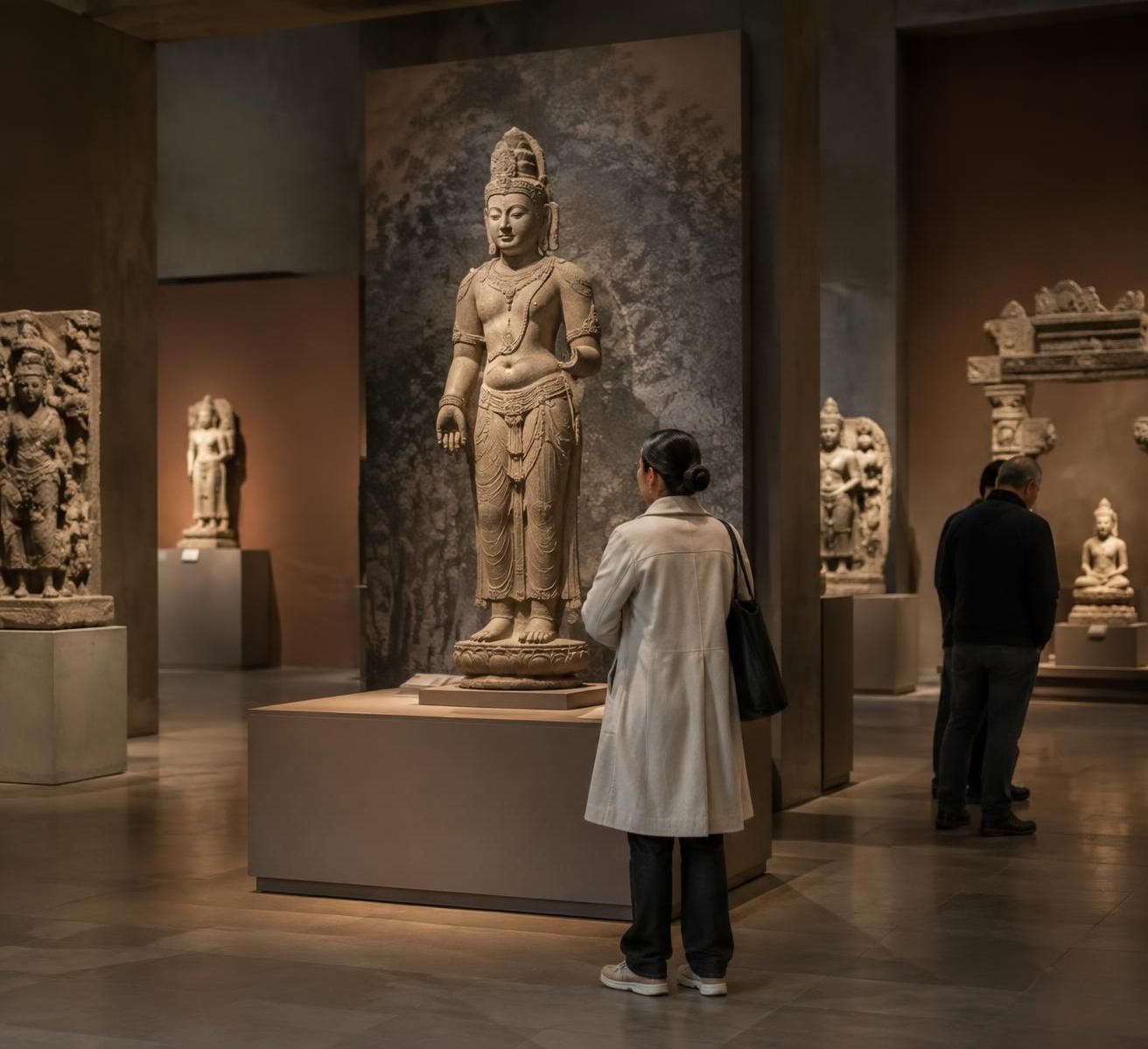
Consider the difference between posing beside an artwork and hearing why it was made, collected, or displayed. The first creates an image; the second allows visitors to encounter another culture through evidence and context. A photograph of the two women together can circulate widely, but the museum’s interpretive role gives that photograph substance. It signals that the visit centered on cultural material, not merely on the building’s prestige.
The tour also drew attention because first-lady programs are often read alongside formal negotiations. Diplomats, journalists, and the public may look for signs of warmth in where guests are welcomed and how much time is given to them. Those observations can describe the atmosphere of a state visit, but they should not be presented as a direct measure of U.S.-China relations. A courteous exchange can coexist with significant disagreements between governments.
For museum professionals, this distinction is practical. Imagine a gallery coordinator preparing for a delegation visit while ordinary visitors and press teams are also on site. The coordinator must protect objects, keep routes workable, and provide accurate interpretation in a compressed schedule. The diplomatic value of the tour depends partly on those routine decisions: whether guests can hear a guide, whether labels support the conversation, and whether the route gives them enough time to engage.
That is why cultural exchange works best when the institution remains more than scenery. A useful tour draws on collection knowledge and gives guests opportunities to ask questions. It does not need to imply that everyone interprets history identically. On the contrary, careful explanation allows different perspectives to be acknowledged without turning a gallery stop into a political declaration.
The White House account of the museum visit presents the occasion through artwork, culture, and the next generation. That framing reflects the host’s stated emphasis; independent reporting helps readers see how the event was received beyond the official program. Both are useful, provided their different roles remain clear. The museum gave the encounter meaning through its collections; any effect on bilateral relations must be judged separately.
What Diplomats Can—and Cannot—Read Into the Smithsonian Outing
When prominent visitors appear together in a gallery, every visible detail can attract interpretation: the welcome, the pace of the tour, the choice of collection, and the conversations captured on camera. Such details help explain why the Melania Trump and Peng Liyuan museum visit drew attention from people watching for closer ties. They are also easy to overread.
Diplomatic signaling operates on several levels. A government communicates through formal statements and agreements, while hosts also communicate through hospitality and the selection of public events. A museum outing falls into the second category. It shows that the visitors were given an opportunity to spend time together around a shared cultural subject. It does not establish that negotiators reached common ground elsewhere.
Separating a warm public image from a change in U.S.-China relations
Suppose photographs show the first ladies smiling beside a display. The evidence supports a modest description: they took part in a cordial public program. It cannot support a stronger claim that trade differences have narrowed or that bilateral relations have entered a new phase. Those questions require statements, negotiated outcomes, and subsequent actions from the governments involved.
That separation is especially important during international diplomacy, when symbolic moments travel faster than detailed policy reporting. A short video clip may reach audiences who never see the museum interpretation or the official readouts. If the clip is described as a breakthrough, expectations can outpace the facts. If it is dismissed as meaningless, the real purpose of cultural hospitality is lost. 🔎 The soundest reading is specific: the outing made cultural engagement visible during a wider diplomatic visit.
The venue also shapes the signal. Meeting in a museum invites attention to collections, scholarship, and the people responsible for preserving them. A reception hall might emphasize protocol; a gallery can support a conversation grounded in objects. For example, discussing how an artwork moved between patrons, makers, and audiences offers more substance than a generic assertion that two countries value culture. It gives participants something concrete to examine, even if they approach its history from different perspectives.
For the gallery coordinator, that distinction changes the preparation. The most useful briefing does not instruct guides to deliver political slogans. It identifies a few objects with reliable documentation, explains why each is relevant, and prepares concise answers to likely questions. If an object’s provenance or interpretation is complex, the guide should state that complexity plainly. Credibility is more valuable than a perfectly smooth narrative.
Public coverage can help readers compare what happened with how it was framed. The report on the outing and its diplomatic attention places the cultural program within the wider visit. Reading such reporting alongside institutional statements helps distinguish observed events from the meanings attached to them.
This does not make the visit trivial. Personal encounters can create space for respectful contact, particularly when formal negotiations are demanding. Their value lies in the contact itself and in the public recognition of cultural work. Whether they contribute to closer ties becomes clearer only through what follows. A gallery visit can open a conversation; it cannot stand in for the decisions that sustain one.
How Museums Can Prepare a High-Profile Visit Without Losing the Visitor Experience
A visit involving Melania Trump and China’s first lady creates demands that most museum tours never face. Security, media access, protocol, and a fixed timetable must fit around collection care and interpretation. Yet the underlying service challenge is familiar to museum teams: how can guests understand what they are seeing without being hurried, distracted, or overwhelmed?
The gallery coordinator’s first task is to define the route around learning objectives rather than cameras. A short itinerary should have a small number of meaningful stops, with a clear reason for each selection. If the route moves too quickly, objects become backdrops. If it tries to cover too much, delays at one point can undermine everything that follows. A realistic schedule includes time for walking, questions, and a pause when an artwork warrants closer attention.
Practical preparation for a diplomatic museum visit
Interpretation should be accurate and adaptable. A guide might prepare a brief core explanation for each stop, followed by optional detail if the guests show interest. This approach respects a tight timetable without assuming that the visitors want only a superficial presentation. It also gives staff a way to recover gracefully if security arrangements or media activity change the pace.
- 🗺️ Choose a purposeful route: Select a few stops that support the stated cultural focus, and confirm that movement between them is practical.
- 🎧 Test audibility: Walk the route at the expected group size and check whether interpretation can be heard without raising voices across galleries.
- 📝 Prepare layered explanations: Write a short, verified account for each object, with further detail available for questions.
- ♿ Check access: Review step-free movement, sightlines, seating needs, and the placement of any temporary equipment.
- 📷 Coordinate media positions: Establish where photography can occur without blocking objects, staff, or other visitors.
Audio planning deserves particular care. A guide speaking clearly in an empty gallery may be difficult to hear once staff, photographers, and guests fill the space. Portable audio can help in some circumstances, but equipment should be chosen for the actual group and setting. The aim is not to add technology for its own sake; it is to keep the explanation intelligible while respecting the gallery’s atmosphere.
For less restricted tours, a smartphone-based guide such as Grupem can help teams deliver consistent audio without building an entirely new hardware system. That does not replace a knowledgeable human guide during a diplomatic program. It offers a practical option for public visitors who want to explore related works before or after a high-profile event. Teams weighing narration formats can use this comparison of AI voices and human speech in audio guides to decide where recorded interpretation genuinely improves access.
The approach must also protect ordinary visitors. A major event may require temporary closures, but clear notices and an alternative route reduce frustration. If an affected gallery contains a highlight, staff can direct visitors to related objects or a digital interpretation. That small operational step supports the museum’s public mission while accommodating the special program.
Finally, rehearsal should focus on failure points. What happens if a stop runs long? Where can a group pause without blocking a doorway? Who can answer a collection question if the principal guide is interrupted? Each answer reduces avoidable friction. 🤝 A successful diplomatic tour is measured not only by its images, but by the quality and accessibility of the encounter.
Why Clear Audio and Careful Interpretation Matter in Cultural Diplomacy
A museum visit can be seen around the world while remaining difficult for people inside the room to hear. Cameras capture proximity and expression; they rarely show whether an explanation reached every guest. In cultural diplomacy, that gap matters because interpretation is the bridge between an impressive object and an informed conversation about it.
Consider a guide describing a work with connections to several places and periods. If guests miss the opening context, they may hear a date or name without understanding its importance. Repeating the entire account slows a short itinerary. A better method is to design explanations in clear layers: identify the object, explain the relevant connection, then offer detail when the group is ready for it.
Matching interpretation tools to the Smithsonian-style museum experience
No single delivery method fits every audience. A small delegation may benefit from a live specialist who can respond immediately. Larger public groups may need audio support so visitors at the back can hear without crowding an object. A self-guided visitor may prefer a recorded stop that can be replayed. The decision should follow the listening conditions, not the novelty of the tool.
| Visit setting | Useful approach | Point to check |
|---|---|---|
| 🤝 Small diplomatic group | Live curator or specialist-led interpretation | Leave room for questions and changes in pace |
| 🎧 Larger guided group | Live guide with suitable audio support | Test clarity and volume in the gallery |
| 📱 Independent museum visitor | Optional smartphone audio guide | Make playback and language choices easy to find |
| ♿ Visitor needing an alternative format | Audio paired with readable text or captions | Ensure the same essential information is available |
Accessibility is central to this choice. Audio helps visitors who would rather listen than read small labels, but it should not become the only route to essential information. Text supports visitors who cannot use audio, and straightforward navigation helps anyone moving through unfamiliar galleries. Where languages are offered, teams should check the translation of object names and historical terms with the same care given to the original script.
Human delivery also has strengths that a recording cannot reproduce. A skilled guide can notice that a visitor has stopped at a detail, answer an unexpected question, or acknowledge a difficult historical point without rushing past it. Recorded material offers other advantages: consistency, replay, and independent pacing. Museums can combine these strengths rather than treating them as competing philosophies.
The gallery coordinator can test the plan with a simple walk-through. Ask someone unfamiliar with the route to listen at each stop, then describe the main point in one sentence. If the listener cannot do so, the problem may be noise, length, terminology, or an unclear connection between the object and the theme. Revising the explanation is often more effective than adding equipment.
The same test applies when a museum visit becomes a public story about U.S.-China relations. Interpretation should explain what the collection reveals without suggesting that a single artwork resolves a complex relationship. Clear audio makes that nuance easier to hear; careful wording makes it worth hearing. Good technology serves the explanation, and good explanation respects both the object and its audience.
What the Melania Trump–Peng Liyuan Visit Means for Future Cultural Exchange
The lasting significance of the outing cannot be determined from photographs alone. Those images record a public meeting between Melania Trump and Peng Liyuan in a major museum. They do not tell readers what was decided in private talks or predict the direction of bilateral relations. The more useful question is how institutions can turn the attention generated by such a visit into better understanding of the collections and the people connected to them.
For the National Museum of Asian Art, a high-profile program brings viewers who may not previously have considered visiting or exploring the collection online. That attention creates an interpretive opportunity. A person who arrives after seeing an image of the first ladies might reasonably ask what they viewed, why those works are in the museum, and where to learn more. Clear collection pages, accessible labels, and thoughtfully designed tours can answer those questions without requiring visitors to follow diplomatic news closely.
Turning attention from a state visit into sustained museum engagement
A practical response begins with a modest promise: provide reliable context, not a grand claim about diplomacy. A museum could make relevant collection information easy to locate and direct visitors toward existing educational resources. Guides could prepare a short route connecting works to broader artistic traditions, while explaining where scholarship continues to develop. Each step offers a way to move from curiosity about famous guests to curiosity about the art itself.
For a tourism office or cultural organizer, the lesson is transferable even without a state visit. When an event draws attention to a site, visitors need a next step that fits their circumstances. Someone with 20 minutes may want a short audio route; a family may need accessible language and flexible pacing; a specialist may want provenance and further reading. Designing those options in advance makes public interest easier to serve.
The gallery coordinator’s work therefore extends beyond the departure of the delegation. Staff can review where guests paused, which explanations prompted questions, and where movement or sound caused difficulty. Those observations are operational evidence, not diplomatic predictions. They can inform better routes for future school groups, international visitors, and public tours.
There is also a useful boundary to preserve. Cultural exchange should invite learning about people and objects without asking a museum to speak for an entire nation or settle political disagreements. A collection may reveal histories of travel, patronage, and changing interpretation; it cannot represent every experience within China or the United States. Acknowledging that limit strengthens the museum’s credibility.
As coverage of the visit circulates, readers can apply the same discipline. Look for what an account actually reports: the venue, the participants, the activities, and any statements attributed to them. Treat predictions about closer ties as interpretations to be tested against later actions. That approach leaves room to appreciate the encounter without assigning it an outcome it cannot demonstrate.
For cultural institutions, the most durable result is practical: make the works easier to encounter, the interpretation easier to hear, and the context easier to verify. Those improvements benefit visitors long after the cameras leave. 🌏 A public museum moment gains depth when interest in the guests becomes engagement with the culture on display.
Which museum did Melania Trump and China’s first lady visit?
Melania Trump and Peng Liyuan visited the Smithsonian’s National Museum of Asian Art in Washington during a high-profile diplomatic visit.
Did the museum visit signal closer U.S.-China ties?
The outing made cultural exchange visible, but a cordial public event does not establish a change in bilateral policy. Formal statements and subsequent actions provide stronger evidence.
Why is a museum useful for a diplomatic outing?
A museum offers a setting where guests can engage with artworks and their histories. Its collections give a public meeting cultural substance without replacing formal negotiations.
How can museums make high-profile visits more accessible?
Museums can plan a clear route, test audibility, provide accurate interpretation in flexible formats, check physical access, and communicate any temporary changes to ordinary visitors.
