
How Massapequa Singer John Torra Won Quiet Riot’s Frontman Search
John Torra, a 23-year-old singer from Massapequa, was named Quiet Riot’s new lead vocalist after an open call that drew more than 700 submissions. The band announced its choice on September 21, 2026, turning a competitive online search into a career-changing opportunity for a young heavy metal performer from Long Island.
The scale of that search matters. An open audition gives musicians beyond established industry circles a way to be heard, but it also gives the hiring band a demanding task: finding someone who can deliver familiar songs, work with the existing players and hold an audience’s attention night after night. According to coverage of Quiet Riot’s 700-plus-applicant search, Torra emerged from that unusually large field.
What made John Torra’s online audition stand out?
Torra’s campaign gained visibility before the appointment. He shared three performance videos on Instagram in mid-July, and supporters circulated them within the metal community. Those posts made it easier for listeners to encounter his voice and for fans to signal their interest to the band. They did not, by themselves, settle the decision: management indicated that the selection ultimately came down to his audition and vocal performance.
That distinction is worth keeping clear. Online attention can bring an artist to the right people, while the job still requires the skills to perform it. A clip may attract a comment or a share because of one striking note. A frontman, however, has to reproduce that result across full songs, rehearsals and live sets. Visibility opened the door; singing had to carry Torra through it.
Reports describe a particularly strong reaction to his rendition of Quiet Riot’s best-known hit, “Cum On Feel the Noize.” The song gives listeners an immediate reference point: it is recognizable, physically energetic and closely tied to the band’s identity. A singer attempting it cannot rely only on reaching the notes. The phrasing, stamina and sense of momentum all affect whether the performance feels ready for a stage rather than merely impressive in a short video.
The appointment also followed Jizzy Pearl’s time as lead singer. That makes the change more than a discovery story. Quiet Riot was filling a working role in a long-running rock act, not launching a new group built around an unknown vocalist. Torra had to enter an established musical framework while bringing enough of his own presence to make the next performances credible.
Consider the experience from an audience member’s perspective. Someone who has seen Quiet Riot before may arrive with precise expectations about the choruses. Someone discovering the band through Torra’s clips may be listening for the voice that first caught their attention online. The same show must serve both listeners without turning into a vocal imitation exercise. That is a practical challenge for any replacement singer, and especially for one selected in such a public process.
For musicians watching the search, the useful lesson is specific rather than romantic. Publish recordings that make your ability easy to assess, choose material relevant to the role and be prepared for scrutiny after a video travels beyond your usual audience. Torra’s path demonstrates how a public submission can connect local talent with a major opportunity, while the final decision remains grounded in performance. The real achievement was not simply being seen; it was being chosen from a substantial field.
Why Quiet Riot’s Heavy Metal Legacy Raises the Stakes for a 23-Year-Old Lead Singer
Quiet Riot’s place in heavy metal history gives its new vocalist an unusual assignment. The band’s breakthrough came in the 1980s, well before Torra was born, and songs such as “Cum On Feel the Noize” remain central to how many listeners recognize its sound. At 23, he is stepping into material that has lived in clubs, on radio and at live shows for decades.
That age gap is not a weakness on its own. It does, however, shape the performance brief. Fans know what the songs feel like when a chorus lands; they notice when the pace drags or a familiar line loses its force. A younger singer must study those expectations without treating the recordings as a script that permits no individual interpretation. The goal is continuity that still sounds alive.
Preserving familiar songs without copying the past
A legacy-band vocalist works with two kinds of memory. There is the recorded version, which listeners can replay at any time, and there is the collective memory of concerts, previous lineups and personal moments attached to the music. Neither can be reproduced exactly. What a new frontman can do is identify the essentials: the entry into a verse, the lift into a chorus and the moments when the audience should be invited to sing.
“Cum On Feel the Noize” provides a clear example. Its appeal is not limited to vocal power. The song depends on rhythmic confidence and a direct connection with the crowd. If the singer pushes every line at maximum intensity, the chorus has less room to grow. If the delivery is too restrained, the track can lose its communal energy. Control, not constant volume, is what makes a familiar anthem work live.
That is also where collaboration becomes visible. A lead singer needs to hear the musicians around him, not just the monitors carrying his own voice. A guitarist’s cue, a drummer’s accent or an extended audience response can change the timing of the next phrase. The more familiar a song is, the more noticeable those small adjustments become. Good stagecraft keeps the band together while leaving space for a crowd to participate.
Torra’s appointment places him in a line of singers who have performed with Quiet Riot across different periods. Describing him as the band’s ninth frontman, Newsday’s reporting on the North Massapequa vocalist underlines how much history the role carries. Lineup changes are part of the life of many long-running rock groups, but audiences still judge the current show on what they hear in the room.
For a new listener, that history can be a useful entry point rather than homework. Hearing a recent performance beside an earlier recording reveals how arrangements survive changes in personnel. For an organizer presenting a heritage act, it also suggests a straightforward communication practice: identify the current lineup accurately, then let the live performance speak for itself. Fans should not have to guess who is onstage.
The generational contrast makes Torra’s story compelling, but it should not eclipse the work. He is taking on songs that require vocal endurance and a clear understanding of why the audience came. His opportunity is to respect that established sound while giving people a reason to hear Quiet Riot in the present. A legendary band stays relevant when its history remains audible without freezing its performers in the past.
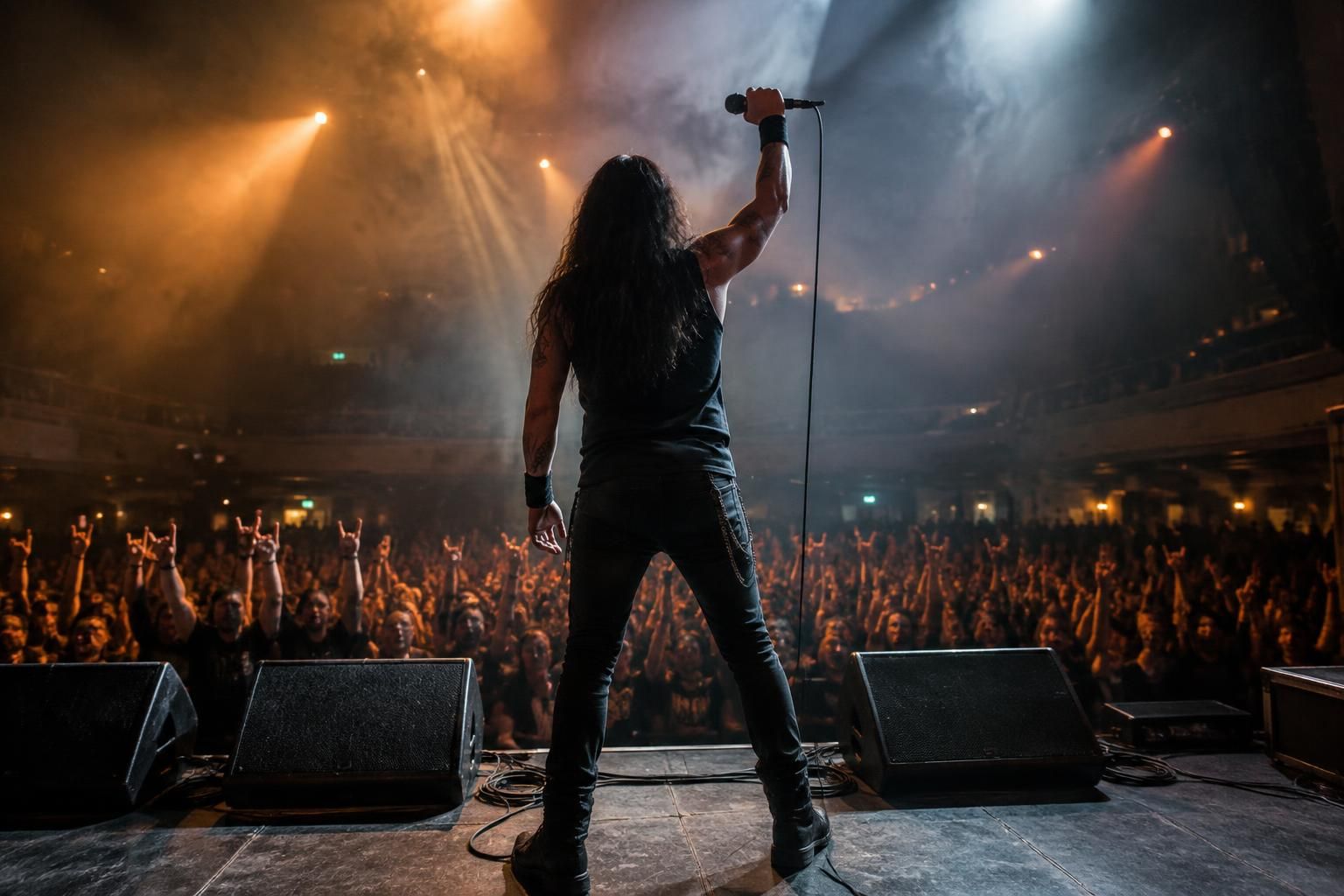
How Instagram Videos Helped the Massapequa Metalhead Reach a Wider Audience
Torra’s rise shows how an audition can develop in public before the official result arrives. His three mid-July Instagram videos were easy for supporters to watch, share and discuss. As those posts moved through metalhead circles, they gave a local singer reach beyond the people who could attend a Massapequa-area show. The format did not replace the audition; it helped bring attention to it.
That distinction matters because social platforms reward quick reactions, while bands need evidence of repeatable ability. A short performance clip may capture a strong chorus, but it does not necessarily show how the vocalist handles an entire set or responds to other players. For Torra, the videos were effective because they directed attention toward a relevant performance at the moment Quiet Riot was seeking a lead singer.
What a public music audition can—and cannot—show
Think of an online audition as a clear first sample rather than a complete concert. Viewers need to hear the vocal without fighting poor recording levels. They also need enough context to judge phrasing, timing and stage presence. Heavy editing may create excitement, but it can make the core skill harder to assess. A simple recording with intelligible sound often tells a more useful story than an elaborate montage.
There is a practical audio point here for artists and event teams alike. A smartphone can document a performance, but placement matters. If it sits directly beside a loudspeaker, the recording may distort; if it is too far back, crowd noise can bury the singer. Testing a brief sample, checking playback on ordinary headphones and keeping the full performance available can make a public submission easier to evaluate.
Fans have a role, too, although it has limits. Comments and tags told Quiet Riot that people wanted the band to consider Torra. They created a visible signal of enthusiasm, not a substitute for professional judgment. Reporting on the Massapequa metalhead’s viral clips captures how strongly the videos resonated online. Management’s emphasis on his audition helps explain why that response became part of the story without being the whole story.
Anyone sharing a rising performer’s work can help most by making the source easy to verify. Link to the musician’s original post, identify the song and avoid presenting a clipped moment as evidence of an entire set. This is particularly important when a video sounds unexpectedly polished. Online audiences may speculate about how a recording was made; a complete, clearly attributed performance gives them a better basis for judgment than rumor.
- 🎤 For singers: choose a song that demonstrates the demands of the actual role, not only your highest note.
- 🎧 For listeners: use decent headphones and compare more than one clip before forming an opinion about vocal consistency.
- 📱 For supporters: share the original performance so the artist receives the attention and viewers retain the context.
- ✅ For organizers: keep application instructions and selection criteria distinct from public popularity metrics.
These habits apply well beyond one rock audition. Festivals scouting regional acts, venues reviewing submissions and cultural organizations presenting live music all benefit when digital material is easy to find and easy to assess. Torra’s videos illustrate the value of that visibility, while the 700-plus-submission search shows why a band must still make a careful choice. A shareable clip can start a conversation; a convincing performance gives it somewhere to go.
What John Torra’s First Quiet Riot Shows Will Need to Deliver
Selection is one milestone; performing with Quiet Riot is the next. Reports surrounding Torra’s appointment pointed to an October tour opening, giving the new frontman a near-term opportunity to meet audiences in person. Concertgoers who followed the online search will be listening for the voice they heard in his clips, but they will also judge how naturally he fits into a full evening of music.
A live show tests different skills from a recorded audition. The singer must manage energy across a set, make transitions feel deliberate and recover smoothly when an audience reacts in an unexpected way. In heavy metal, the physical demands are easy to hear. Singing with force at the start is straightforward compared with preserving clarity and control through the final numbers.
Why sound quality matters when a new frontman meets longtime fans
Audio can shape that first impression before a listener consciously notices it. If vocals are buried beneath guitars, a strong performance may sound indistinct. If the microphone is pushed too far forward, the balance that makes a rock band exciting can disappear. A useful soundcheck therefore looks beyond whether each channel works: it checks whether lyrics, key cues and choruses remain clear from different positions in the venue.
For example, a concertgoer near the back may hear a very different mix from someone close to the stage. A production team can walk the room during soundcheck, listen for vocal intelligibility and adjust with the venue’s acoustics in mind. Torra, meanwhile, needs a monitor mix that helps him hear pitch and timing without encouraging him to sing harder than necessary. These are routine decisions, but they directly affect how audiences experience a newly appointed vocalist.
There is also a storytelling challenge for promoters. An event listing should plainly name Quiet Riot and its current singer; it should not imply that a new lineup is identical to one from the band’s breakthrough era. That clarity serves longtime fans and first-time attendees. It also gives Torra room to be assessed for the show he performs, rather than for a misleading promise made on a ticket page.
| Live-show focus | Why it matters | Useful check |
|---|---|---|
| 🎤 Vocal clarity | Fans need to follow familiar lyrics and hear the new singer’s phrasing. | Listen from the rear and sides of the venue. |
| 🎸 Band balance | The voice should connect with the guitars and rhythm section, not sit apart from them. | Review the loudest chorus at performance level. |
| 📣 Crowd connection | Recognizable songs leave room for audience participation. | Plan cues without scripting every response. |
| ✅ Accurate promotion | Clear lineup information helps set fair expectations. | Check listings and venue announcements before doors open. |
Consider two people standing in the same crowd. One has known the band’s hits for decades; the other discovered Torra through a phone screen a few weeks earlier. Both should be able to follow the show, hear the songs clearly and understand who is performing. That shared experience is more important than trying to recreate one exact recording.
Live footage will also circulate after the first dates, extending the audition story into a public record of the new lineup. Viewers should remember that a phone video reflects its position in a room and its microphone limits; it is not always a faithful capture of the house mix. Still, consistent performances across multiple shows will reveal more than any single viral moment. The stage is where Torra’s new role becomes an ongoing working relationship with the band and its audience.
What the Massapequa-to-Quiet Riot Story Means for Local Rock Communities
Torra’s appointment has a strong local dimension. National headlines identify him as a Long Island singer; more precise reporting connects him with Massapequa or North Massapequa. Both descriptions place his breakthrough within a community that can recognize the distance between a local performer’s videos and the lead-singer position in a widely known band.
That connection is valuable without turning the story into a claim that every aspiring musician can follow the same route. Quiet Riot had an opening, Torra submitted material at the right time, fans helped draw attention to it and the band selected him after assessing his performance. Those circumstances are particular. What local music communities can take from them is a more grounded idea: talent needs opportunities to be heard, and those opportunities work best when the performance is documented clearly.
Turning a hometown breakthrough into useful support for emerging artists
Local venues, rehearsal spaces and music educators can support that process in ordinary ways. A venue that gives an emerging vocalist a well-mixed opening set provides experience that cannot be gained from bedroom recordings alone. A rehearsal space with a simple recording setup lets performers listen back to their timing and stamina. A teacher who helps a singer select contrasting songs can make an audition more informative than a single dramatic chorus.
Those steps are not guarantees of a major job. They do help musicians build a body of work that shows what they can do under different conditions. For a singer pursuing heavy metal, that might mean recording one energetic anthem and another song with more dynamic control. For a group, it could mean preserving footage of a complete live number rather than only its most exciting few seconds.
There is a useful role for local media as well. Coverage should identify the artist, explain the selection process and distinguish verified details from fan reaction. Regional reporting on Torra’s appointment gives audiences a way to follow the story beyond reposted clips. Accurate coverage helps a hometown celebrate a musician without obscuring the work that secured the position.
For fans, support can remain practical after the announcement. Following official band and venue channels provides reliable show information. Buying a ticket where a performance is accessible supports live music directly. Sharing a well-recorded performance with its original attribution helps others hear the artist while preserving the context. Each action is modest, but each contributes more than repeating an exaggerated claim.
The story also offers an instructive contrast between scale and place. More than 700 people sought the Quiet Riot role, yet the chosen vocalist can still be identified with a specific Long Island community. Digital auditions widen the field; they do not erase where performers develop their skills. The clubs, collaborators and listeners around an artist often remain important long before a national announcement—and after it.
As Torra takes the microphone, the most useful way to follow his progress is to pay attention to the performances themselves: how he handles the band’s established songs, how the musicians work together and how audiences respond across multiple shows. The Massapequa metalhead’s breakthrough is a notable hiring decision; the music that follows will define what he brings to Quiet Riot.
Who is Quiet Riot’s new lead singer?
Quiet Riot announced 23-year-old John Torra, a singer from the Massapequa area of Long Island, as its new lead vocalist on September 21, 2026.
How many singers applied for the Quiet Riot frontman role?
The band’s open call drew more than 700 submissions from singers. Torra was selected after his audition and vocal performance were assessed.
Did social media choose John Torra for Quiet Riot?
No. Torra’s Instagram videos attracted fan attention and encouraged people to bring him to the band’s notice, but management said the final choice was based on his audition and singing.
Which Quiet Riot song featured prominently in reports about Torra’s audition?
Reports highlighted his rendition of “Cum On Feel the Noize,” one of the band’s most recognizable songs.
