
Discover the New Minnesota Military & Veterans Museum Near Little Falls
⏱️ Short on time? Here is what matters:
- ✅ The New Museum offers a 40,000-square-foot public facility on a 32-acre campus near Camp Ripley, north of Little Falls.
- ✅ Its larger galleries make Minnesota military History easier to explore through artifacts, personal accounts, vehicles, and branch-specific interpretation.
- ✅ For visitors and cultural professionals alike, the opening shows how physical collections can become more accessible when clear visitor journeys and digital audio tools support the experience.
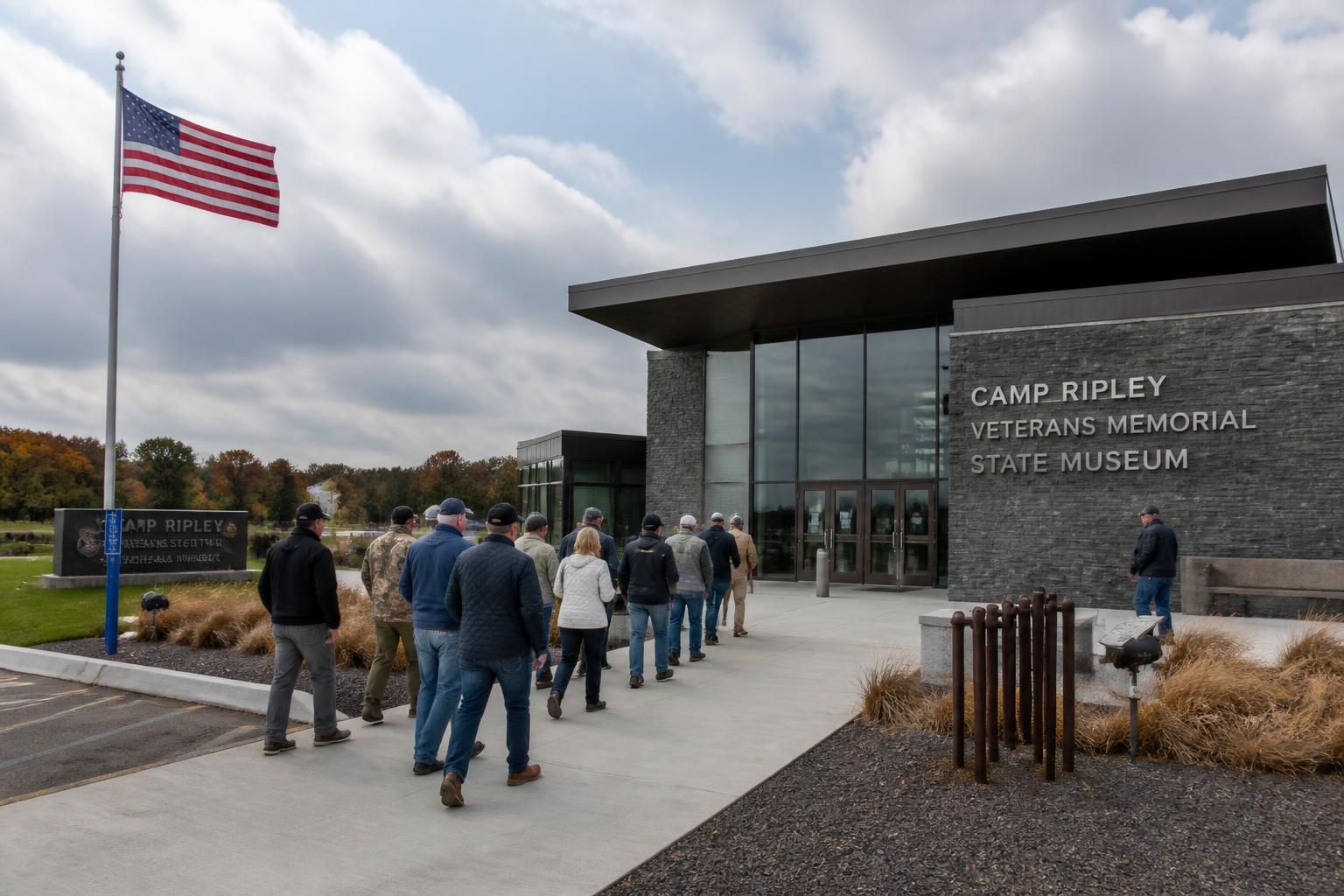
The Minnesota Military & Veterans Museum has opened in a new location beyond the controlled-access gates of Camp Ripley, creating a more practical and welcoming route for the public. Positioned near Little Falls, the site gives Minnesota residents, military families, school groups, and travellers a dedicated place to encounter stories of service without needing to enter an active military installation.
The move is significant because the museum is not simply displaying objects on a larger floor. It is making a major part of the state’s Heritage more visible. Minnesota’s relationship with the Armed Forces spans local militia traditions, Civil War service, two world wars, Cold War readiness, overseas deployments, National Guard operations, and the lived experiences of Veterans returning to communities across the state.
At 40,000 square feet, the new facility is described as roughly eight times larger than its earlier public display space. This scale changes what visitors can realistically see in one visit. Larger artifacts can sit within their historical context, while smaller documents, uniforms, photographs, and field equipment can be interpreted alongside the human stories that give them meaning.
The museum’s opening also responds to a practical challenge long familiar to cultural sites located on military grounds: access. A destination can have extraordinary collections, but barriers at the gate can discourage spontaneous visitors, coaches managing school schedules, and families travelling with young children or older relatives. By operating near Highway 371 and outside Camp Ripley’s main security perimeter, the museum becomes easier to include in a Central Minnesota itinerary.
For a visitor such as “Mark,” a fictional grandson of a Korean War Veteran from Brainerd, this location matters. Instead of arranging base access in advance, he can plan a weekend stop with his family, combine it with a Little Falls meal or local attraction, and take the time needed to connect the objects on display with the stories passed down at family gatherings. That practical convenience supports deeper historical engagement.
The new campus is also designed to accommodate a broader range of experiences. A museum visit may begin in the welcome hall, continue through permanent exhibitions, and expand outdoors through land, sea, and air-focused displays or special event programming. This variety gives repeat visitors reasons to return rather than treating the site as a one-time stop.
📍 The key change is simple: Minnesota’s military story now has a public-facing home with the space and access needed to serve a wider audience. The next step for visitors is understanding what this expanded setting can reveal about individual service and statewide history.
Explore Minnesota Military History Through Artifacts and Personal Stories
A strong Military Museum does more than organize weapons, uniforms, or vehicles by date. It helps visitors understand why an object existed, who used it, where it travelled, and how its meaning changed after service. The Minnesota Military & Veterans Museum has the capacity to do that work at a much broader scale, with a collection reported to include more than 25,000 artifacts.
Those holdings can tell stories across generations. A worn pair of boots may lead to a conversation about training and deployment. A letter sent home can illuminate separation, uncertainty, and resilience. A vehicle can explain logistical decisions that are difficult to grasp through a textbook alone. When objects are paired with clear labels, maps, archival images, and recorded testimony, visitors can connect the large timeline of conflict with the lives of Minnesotans.
The distinction matters for school groups. A student may recognize the name of a major battle but struggle to understand the scale of individual participation. Seeing a locally connected uniform, unit insignia, or personal photograph turns an abstract subject into a question: who was this person, and what happened after the war? That question supports historical thinking rather than passive viewing.
The museum’s expanded galleries can also offer a more coherent path through the History of Minnesota service. Rather than concentrating solely on one campaign or branch, the experience can place the Army, Navy, Marine Corps, Air Force, Coast Guard, National Guard, Reserve components, and Merchant Marine stories into a shared statewide narrative. That balance is especially important in a museum whose name explicitly includes Veterans, not only military technology.
Making military collections understandable for non-specialist visitors
Visitors do not need prior military knowledge to benefit from an Exhibition. However, they do need context. Acronyms, ranks, unit names, and equipment classifications can become obstacles when labels assume familiarity. The most effective galleries answer basic questions quickly: what is this item, when was it used, who used it, and why should a visitor care?
For example, a display about a National Guard mobilization can begin with a local map and a short overview before introducing more detailed operational material. A visitor who understands the connection between a Minnesota community and a unit’s deployment is more likely to engage with the finer details of equipment, command structure, and mission history.
Digital interpretation can extend this clarity without filling every wall with text. A QR code, smartphone audio stop, or optional mobile guide can provide layers for different audiences. Families might select a concise, plain-language route. Researchers can access longer testimony and source notes. Veterans may prefer a route centred on branch identity or a particular period of service.
That layered model protects the physical experience. The gallery remains visually calm, while visitors who want more depth can access it through their own device and headphones. It also helps staff update content over time, whether they are adding a newly donated oral history or creating a temporary route for a commemorative program.
A useful comparison can be found in broader guidance on exploring U.S. military museums, where interpretation succeeds when visitors are offered both factual structure and space for reflection. Objects carry authority, but the visitor experience depends on the pathway built around them.
🎖️ A collection becomes memorable when each artifact is treated as evidence of a person, place, and moment—not merely as an object behind glass.
Why the Little Falls Location Improves Public Access to the New Museum
The location outside Camp Ripley’s security gates is one of the most consequential elements of the museum’s new chapter. Camp Ripley remains an important training centre for Minnesota’s military community, but an active installation necessarily has rules that affect public movement. Separating museum access from base access makes the cultural destination easier to use while respecting the operational needs of the installation.
This is not a minor logistical detail. Accessibility begins before a visitor reads the first panel. It includes finding the site, understanding parking, anticipating entry procedures, locating restrooms, planning a group arrival, and knowing whether a visit can fit within a wider day trip. The new campus near Little Falls gives tourism offices and group coordinators a clearer product to promote.
For coaches organizing a student visit, predictability is essential. A bus timetable requires manageable arrival windows, suitable parking, staff coordination, and a clear estimate of visit duration. For a multigenerational family, access affects whether a Veteran with limited mobility can participate without unnecessary fatigue. A public museum campus can support these needs more directly than a gallery located behind a military checkpoint.
The site also strengthens regional tourism. Little Falls has long been associated with river landscapes, historic sites, and the wider Camp Ripley area. Adding a substantial Veterans museum creates an additional reason to stop, stay longer, and connect military Heritage with restaurants, lodging, and local commerce. Rather than treating the museum as separate from the town, visitors can make it part of a fuller Central Minnesota journey.
| Visitor group | Practical benefit at the Little Falls museum campus | Useful planning action |
|---|---|---|
| 🎒 School groups | More straightforward public arrival and exhibition circulation | Book an education-focused time slot and prepare one inquiry question per gallery |
| 👨👩👧 Military families | Space to connect service records, memories, and objects at an unhurried pace | Bring names, dates, and unit details to guide conversations |
| ♿ Older visitors | A modern public facility can support clearer wayfinding and a more comfortable route | Confirm mobility, seating, and assistance needs before travel |
| 🧭 Tourism planners | A strong cultural stop near Highway 371 and Camp Ripley | Pair the museum with a Little Falls itinerary and local dining stop |
Planning a visit without losing the reflective dimension
Convenience should not turn a military history visit into a rushed checklist. The best itineraries create enough time for visitors to pause at the stories that affect them most. A family with a Vietnam-era connection may spend longer in one gallery than another. A school group studying the Second World War may focus on primary sources and ask students to identify what an artifact can reveal that a textbook cannot.
The museum’s official visitor information and collection updates are the best starting point for checking hours, current programming, admission guidance, and event details before travelling. This is especially valuable when a trip coincides with ceremonies, holiday schedules, or special demonstrations.
Public access is also an inclusion issue. Visitors who do not have a personal military connection should still feel that the museum speaks to them. Clear orientation material can establish that the site explores a shared Minnesota history: the service members, the families who supported them, the industries that supplied them, and the communities shaped by their return.
🗺️ Good access is not only about reaching the building. It is about making every visitor feel able to navigate the story once inside. With that foundation established, the quality of interpretation becomes the next measure of the museum experience.
Design a Better Exhibition Experience with Smart Audio and Clear Interpretation
The new museum’s physical expansion creates a valuable opportunity for digital interpretation. Larger galleries can hold more material, but they can also create a common visitor problem: people do not know where to begin, what they can skip, or how long a meaningful route should take. Smart audio can solve this issue when it is designed as guidance rather than distraction.
A smartphone-based audio route lets visitors choose their own pace. Instead of assembling around a guide or relying on printed text alone, they can listen through personal headphones as they move. This is particularly useful in military history spaces, where audio can add oral testimony, radio transmissions, letters read aloud, historical music, or expert commentary without overwhelming the visual environment.
The important principle is restraint. A digital guide should not repeat every exhibition label word for word. It should add value. If a display shows a flight jacket, the audio might feature a short excerpt from a pilot’s recollection and explain what the jacket represented in extreme conditions. If a vehicle is displayed outdoors, the track can describe its role, the terrain it operated in, and the Minnesota connections that make it relevant.
For museum teams, a platform such as Grupem provides a practical way to publish professional audio tours through visitors’ own phones. This avoids the cost and maintenance burden of a large dedicated device fleet. It also allows staff to build multiple routes: a 30-minute family route, a 60-minute Veterans stories route, a school route, or a detailed program tied to a temporary Exhibition.
Audio accessibility that respects different visitor needs
Audio content should be written for listening, not copied from a wall label. Short sentences, descriptive transitions, and clear navigation cues are essential. A visitor should hear where to look, what detail matters, and why it connects to the wider story. Tracks of one to two minutes often work well for general audiences, while optional longer content can serve enthusiasts and researchers.
Accessibility also means providing alternatives. Every audio element should have a readable transcript. Videos should include captions. Museum staff should avoid assuming that every visitor owns headphones, has mobile data, or is comfortable scanning codes. A simple welcome panel can explain how the audio route works, while printed routes remain available for people who prefer them.
The approach has particular relevance for military families. A visitor may want to listen privately to an emotional oral history rather than hear it broadcast in a busy gallery. Another visitor may need a slower, simpler explanation of unfamiliar terminology. Flexible smartphone audio gives both people control without separating them from their group.
There is a useful parallel in resources focused on museum access for military families. Thoughtful design recognizes that service history can be deeply personal. The visitor experience needs room for learning, remembrance, and quiet reflection.
For the fictional family of Mark, a simple audio route could include a “Minnesota Voices” stop. His teenage daughter might listen to a 90-second account from a local service member, then compare it with a photograph and a handwritten letter in the case. The technology does not replace the artifact; it creates a bridge between evidence and empathy.
🎧 The most effective digital layer is almost invisible: it gives visitors the right story at the right moment, then lets the objects speak for themselves. This approach can also make the museum more useful for schools, groups, and repeat visitors.
Use the Minnesota Military & Veterans Museum for Learning, Commemoration, and Heritage Tourism
The museum’s role reaches beyond leisure visits. It can operate as a learning resource, a place of commemoration, and a focal point for Heritage tourism. These functions are connected, but they require different forms of planning. A school programme needs learning outcomes. A Veterans gathering needs respect, accessibility, and time for conversation. A tourism itinerary needs reliable visitor information and a clear sense of what makes the stop distinctive.
The grand opening programming highlighted the importance of commemoration, with events connected to the September 11 anniversary and the approaching United States 250th anniversary. Those milestones place the museum within a wider national conversation, but its strongest contribution remains local: showing how Minnesotans experienced national and global events through service, deployment, support, loss, and return.
For teachers, the site can support inquiry-based learning. Rather than asking students to memorize a timeline, educators can assign a question such as, “What can one object tell us about the daily realities of military service?” Students might examine a ration item, uniform, field radio, or service photograph. They can identify what is known, what remains unknown, and what additional source would help them interpret the item responsibly.
For local history organizations, the museum can inspire community projects. A library might host an oral-history collection day. A genealogical society could help residents identify ancestors’ units and service periods. A tourism office could develop a route connecting the museum to Little Falls landmarks and regional Veterans memorials. These projects expand the value of the museum without asking its staff to carry every responsibility alone.
Practical ways organizations can build a respectful visit
- 📝 Set one clear purpose: decide whether the visit is focused on research, remembrance, education, or general discovery. A defined purpose helps groups avoid rushing through every gallery.
- 🎧 Offer choice in interpretation: provide a printed route, guided discussion prompts, and optional audio content so different ages and learning styles are accommodated.
- 🕯️ Allow reflection time: not every part of military History should be treated as entertainment. Build in pauses after emotionally significant displays or testimonies.
- 📚 Connect the visit to local evidence: invite participants to bring a family name, a photograph, or a question about Minnesota service history to make learning more specific.
- 📅 Check current programming: special events, speakers, and commemorative dates can add depth, but groups should confirm schedules before finalizing transport or accommodation.
The official state event listing provides useful context for the museum opening programming and commemorative events. Checking these details in advance helps visitors distinguish regular gallery access from timed public activities, demonstrations, or formal ceremonies.
For tourism professionals, the central lesson is that technology should support logistics and learning, not create complexity. A mobile audio guide can distribute instructions before arrival, provide bilingual or simplified content where needed, and gather optional visitor feedback afterward. At the same time, the museum’s physical staff, clear signs, and well-paced exhibition design remain indispensable.
The Minnesota Military & Veterans Museum near Little Falls offers an expanded platform for telling stories that are sometimes difficult, often personal, and always connected to the state’s civic life. 🇺🇸 Its long-term value will come from helping each visitor move from viewing military objects to understanding the people and communities behind them.
Where is the new Minnesota Military & Veterans Museum located?
The museum is located near Little Falls, Minnesota, on a 32-acre campus outside the gates of Camp Ripley. Its public-facing location makes access simpler than the former display area within the installation.
How large is the new Minnesota Military & Veterans Museum?
The new facility measures approximately 40,000 square feet and is substantially larger than the museum’s previous public display space. The larger footprint supports broader exhibitions, visitor services, and programming.
What can visitors expect to see at the museum?
Visitors can explore Minnesota military history through artifacts, uniforms, documents, personal stories, vehicles, and material related to multiple branches of the Armed Forces and generations of Veterans.
Is the museum suitable for school groups and families?
Yes. The public campus near Little Falls is well suited to planned school visits, multigenerational family trips, and heritage tourism itineraries. Groups should review current visitor information and programming before travel.
Can a museum visit include digital audio content?
A smartphone-based audio tour can complement gallery labels with oral histories, context, navigation cues, and accessible listening options. It works best when it adds interpretation rather than repeating every written panel.
