
Hollywood, Stars, unions, independent performers, and technology companies are now debating the Ethics and real-world Impact of AI Voice Cloning. For audiences, a synthetic voice may sound seamless. For the person whose identity, income, and reputation are attached to that sound, the consequences can be permanent.
Reporting discussed by the Jefferson City News-Tribune reflects a wider entertainment-industry conflict: authorized Celebrity Voices can expand access to stories and languages, while unapproved replicas can erase work, mislead listeners, and weaken trust in recorded media.
Hollywood Stars Debate AI Voice Cloning Ethics Beyond the Technology
Artificial Intelligence voice systems can now reproduce pacing, timbre, accent, and emotional inflection with striking accuracy. This technical progress has moved AI Voice Cloning out of laboratories and into audiobooks, advertising, film dubbing, games, virtual assistants, podcasts, and short-form online video.
The central Debate in Hollywood is therefore not simply whether the software should exist. It is whether a human voice can be treated as reusable production material after a single recording session, or whether it must remain a protected part of a performer’s identity, subject to ongoing approval.
High-profile licensing deals reveal why the issue is divisive. Sir Michael Caine’s licensed synthetic voice has been used to narrate an audiobook edition of “The Odyssey,” while Matthew McConaughey has used voice technology to make a Spanish-language version of his newsletter available. These examples show a legitimate commercial model: a known individual agrees to a defined use, a platform manages the reproduction, and compensation is provided.
Yet an authorized deal involving a famous actor does not automatically create an equitable model for everyone else. Established Stars can negotiate lawyers, usage limits, royalties, and approval rights. A freelancer asked to provide six hours of clean recordings for a modest fee may be handing over the raw material for thousands of future jobs without similar leverage.
The gap is particularly visible in lower-budget work. Social media advertisements, YouTube explainers, corporate training modules, independent audiobooks, and online lessons once created a broad entry market for working voice actors. Those assignments may not have carried celebrity fees, but they allowed performers to build portfolios, relationships, and steady income.
When a client can generate a usable narration instantly for a small subscription cost, that entry market narrows. The Impact is not limited to lost recordings. Fewer early commissions mean fewer performers gain enough experience to move into animation, dubbing, documentary narration, or major commercial work.
Why consent must cover more than the initial recording
A meaningful consent process needs to answer questions that are often omitted from short contracts. Can the clone appear in political content? Can it be used for gambling, medical promotion, adult material, or a campaign that conflicts with the performer’s values? Can another company sublicense it?
One Atlanta-based narrator who placed a “warm and pleasant” synthetic version of her voice on a marketplace described earning passive income while sleeping. That outcome can be attractive, especially after traditional bookings decline. She also later heard her voice in unexpected material, including advertising and a documentary context she had not personally selected.
This is the practical weakness of broad licensing. A voice is not a stock photograph with a single visual use. It carries personality, familiarity, and implied endorsement. Listeners frequently assume that a recognizable voice belongs to a real speaker who chose to take part.
- 🎙️ Specific permission: contracts should name the project, territory, language, and distribution channels.
- 🔒 Restricted categories: performers should be able to exclude sensitive or reputationally harmful uses.
- 💰 Fair payment: an upfront fee alone may not reflect recurring commercial value.
- 🧾 Audit access: creators need clear records showing where and how their replica was used.
- 🛑 Withdrawal mechanisms: a practical removal process matters when terms or circumstances change.
Useful guidance on consent frameworks and deepfake safeguards emphasizes that responsible use must be designed before deployment, not added after public harm occurs. This distinction matters because a voice can spread across platforms faster than a performer can discover misuse.
The ethical test is simple: a voice replica should never have broader rights than the person whose voice made it possible. That principle leads directly to the contractual and legal systems now taking shape across entertainment.
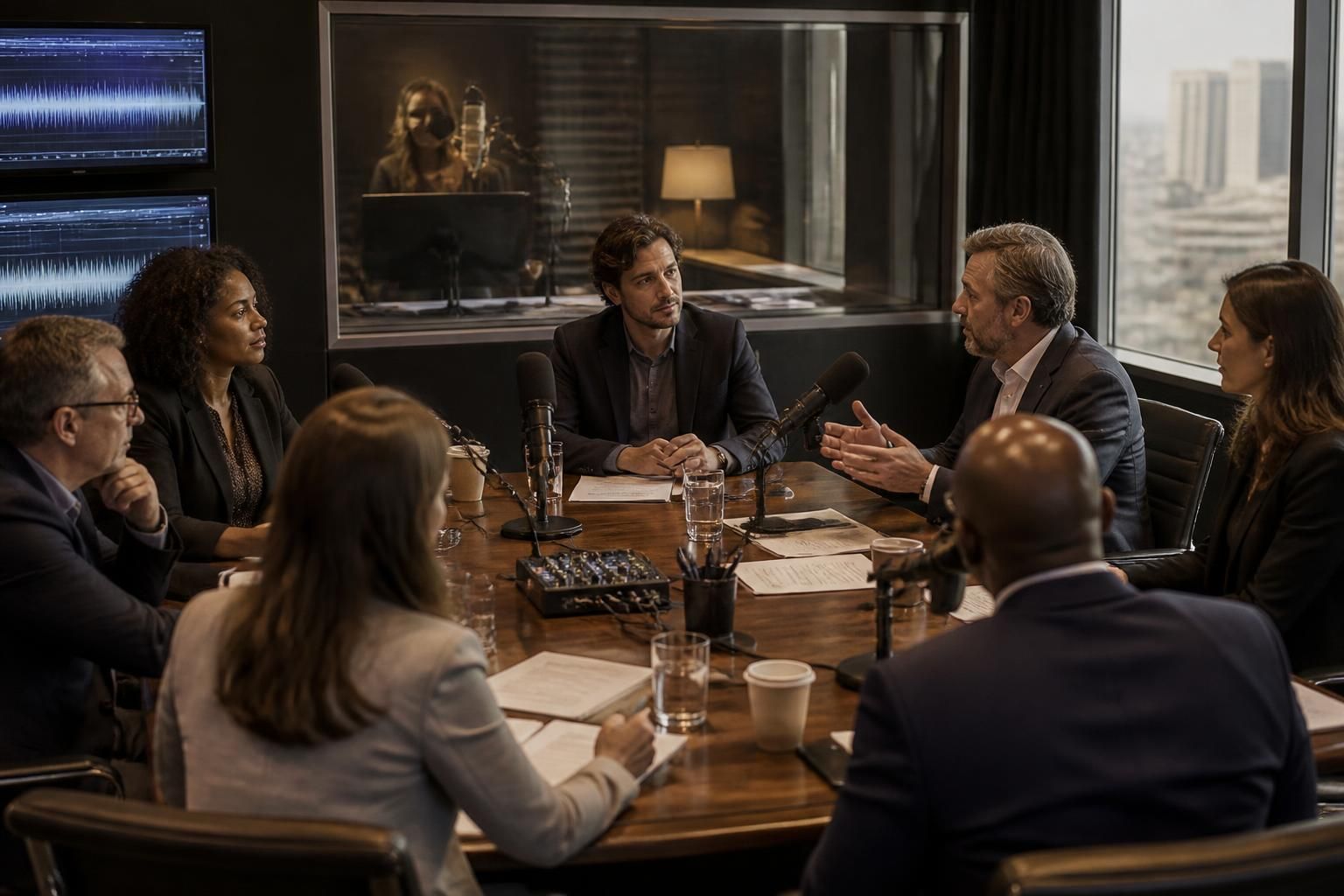
AI Voice Cloning Contracts Need Clear Rights, Payment, and Control
Hollywood’s 2023 writers’ and actors’ strikes made digital replicas a major bargaining issue, because performers understood that a recording could become a permanent asset for a studio. Subsequent SAG-AFTRA protections established important safeguards for covered productions, including notice before a voice is used to create a replica and consent for later uses.
Under the relevant agreement, a studio cannot simply return to an old project, generate additional dialogue from a digital double, and treat that output as free. The performer must approve the use and receive compensation equivalent to an in-person performance. Residuals also apply when replicas are used in reruns, and such replicas cannot be deployed to undermine a strike.
These provisions are significant because they recognize that synthetic performance remains performance. The process may involve a model rather than a recording booth, but the commercial value still derives from an individual’s recognizable work.
However, union protections do not reach every contract. The National Association of Voice Actors has highlighted that roughly 80% of voice work is freelance. This means thousands of narrators, translators, game performers, podcasters, and newcomers are operating outside the strongest collective protections.
Consider a fictional regional museum called Riverbend Heritage Center. It hires a narrator to produce an accessible audio tour in English and Spanish. A careful agreement would allow the museum to use approved recordings on-site and in its mobile guide, while prohibiting it from training an open-ended model for unrelated promotions. Without that distinction, an educational commission could become a license for unlimited commercial reuse.
Contract points that reduce ambiguity
For organizations commissioning audio, detailed agreements are not bureaucratic obstacles. They are operational safeguards. They help the producer know what can be published, help the performer understand what has been sold, and prevent a later dispute from disrupting a public-facing project.
| Contract area | Responsible AI Voice Cloning approach | Risk when it is missing |
|---|---|---|
| 🎯 Scope of use | Name each production, platform, language, and campaign period. | A recording may be reused far beyond the original assignment. |
| ✅ Informed consent | Obtain written approval before training or generating a replica. | Talent may unknowingly train a commercial substitute. |
| 💶 Compensation | Combine session fees with reuse fees, royalties, or defined licensing payments. | One small payment may cover unlimited revenue-generating output. |
| 🔍 Transparency | Provide usage reports and disclose synthetic generation to relevant partners. | Misuse can remain invisible until reputational damage occurs. |
| 🛑 Revocation | Set a process for suspension, removal, and deletion after a breach. | There may be no realistic route to stop harmful distribution. |
The free NAVA AI rider was created precisely because many early-career professionals were being presented with vague “AI” clauses that did not explain training, sublicensing, duration, or deletion. An addendum cannot replace national law, but it can force a useful conversation before someone signs away rights in a hurry.
Federal policy is also part of the debate. SAG-AFTRA has supported the proposed No Fakes Act, which would establish a nationwide right over voice and likeness and make unauthorized digital replicas unlawful. State-level protections and private contracts can help, but fragmented rules make enforcement difficult when content is generated in one place and distributed globally.
Legal safeguards are evolving alongside real disputes. Performers have reported finding unauthorized clones online, and NAVA has catalogued more than 100 cases involving actors who identified apparent voice replicas. Litigation involving alleged non-consensual collection of voice and audio data continues to test how existing privacy, publicity, and copyright rules apply to new systems.
A valid contract does not merely say “AI permitted”; it describes what is permitted, for how long, by whom, and at what price. Those details become especially urgent when technology reshapes day-to-day employment.
The Impact of Artificial Intelligence on Working Voice Actors
Public discussion often focuses on Celebrity Voices because audiences recognize them immediately. The most severe employment effects, however, are often felt by performers whose names are not on film posters. Their work supplies the audio layer behind everyday digital media: product explainers, language modules, instructional videos, local commercials, app prompts, and low-budget narration.
Stacey Rivera, a Los Angeles performer in her thirties, has worked on Mexican and Brazilian audio for Netflix’s “Love Is Blind” and records in a treated booth at home. Despite her professional credits, union work became harder to find: one covered job in one year, followed by three the next. She declined a five-figure offer from a major technology company to train a voice model because the long-term trade-off appeared too dangerous.
Her decision illustrates the financial pressure behind the Ethics debate. Refusing may protect personal control, but it does not pay rent when traditional bookings are scarce. Accepting may provide immediate security while potentially reducing future demand for the same person’s live performance.
Nick Myers, another Los Angeles voice actor, reportedly rejected a $100,000 proposal to train a replicable model. That figure is large enough to change a year for many freelancers, yet the core concern was existential: if a client owns a convincing substitute, why would that client book the human again?
Not everyone reaches the same answer. Some performers are licensing their voices because passive-income marketplaces offer a path to revenue that is not tied to hours in a studio. ElevenLabs has stated that more than 10,000 creators earn income through its library and that creator payouts reached $22 million, doubling since November. The platform says creators can revise license terms, limit use cases, or remove a listed voice.
Those controls are useful, but the choice is not equally free for all workers. A performer with savings, established clients, or union eligibility can afford to negotiate. Someone whose income has been cut in half may feel that a broad license is the only offer available.
Why emotional performance remains commercially important
AI narration performs especially well when the script is repetitive, neutral, and tightly structured. This makes it attractive to businesses producing large volumes of simple content. It is less reliable when a performance requires emotional volatility, subtle comic timing, character relationships, grief, fear, or a response to another actor in real time.
Jessica Hepburn, who built a home studio in Fort Wayne for about $250 and began audiobook narration in 2019, saw work in commercials, e-learning, and explainers decline as low-cost synthetic narration spread. Her reported income fell to below $40,000 after being much stronger before 2023. She began exploring erotica narration, a niche where breath control, heightened emotion, and vocal nuance are harder to standardize.
This should not be read as a promise that any genre is “safe” from automation. It shows that clients still recognize the value of an embodied performance when tone, timing, and human sensitivity are essential to the audience experience.
- 📉 Start with a realistic income review: identify which recurring assignments are already shifting to automated production.
- 🧠 Build skills that clients cannot obtain from a raw voice file alone, such as direction, adaptation, multilingual performance, or character work.
- 📄 Use an AI rider or a reviewed contract before supplying clean datasets, isolated phonemes, or extensive reference recordings.
- 🎧 Keep an evidence trail of approved recordings, dates, clients, and original usage terms.
- 🤝 Join professional networks that share rate information and flag predatory clauses.
For studios and cultural organizations, replacing every human narrator may also be a false economy. A cheap voice can create a costly experience if it mispronounces place names, misses cultural context, or sounds inappropriate during a sensitive story. This applies as much to tourism audio as it does to entertainment.
The labour question is not whether software can speak; it is whether the market will continue to fund skilled people who know what should be said and how it should sound. That brings the discussion from employment into audience trust.
Celebrity Voices, Deepfakes, and Audience Trust in Hollywood Media
A familiar voice can signal authority before a listener evaluates the words. That is why cloned Celebrity Voices are commercially appealing and socially risky. A convincing imitation of a respected actor, broadcaster, scientist, or public figure can make fabricated material appear credible in seconds.
Morgan Freeman has publicly pushed back against unauthorized imitations while remaining open to certain licensed uses of his voice. This position captures a balanced but demanding standard: technology itself is not automatically the problem; unauthorized attribution and uncontrolled circulation are.
The same issue was visible when Scarlett Johansson objected in 2024 to an OpenAI voice that she said sounded notably like her. The dispute drew attention because audiences do not need exact technical duplication to form an association. If the voice evokes a public figure strongly enough to imply endorsement or identity, the reputational harm can exist even where developers argue that no direct recording was copied.
For listeners, disclosure is a practical trust tool. A label such as “AI-generated voice used with permission” does not solve every ethical concern, but it prevents a basic deception. It tells the audience that they are hearing a produced digital performance rather than a person speaking at that moment.
Clear disclosure is especially important in news, public information, heritage interpretation, healthcare, education, and emergency messaging. A tourism office that uses a synthetic voice for after-hours directions may be making an efficient service choice. If it uses an imitation of a beloved local historian without permission, it converts convenience into identity misuse.
How organizations can protect listeners and creators
Any organization using speech generation should establish a small but explicit governance process. This does not require a large legal department. It requires someone to verify source rights, check the script, approve final audio, retain documentation, and define how a complaint will be handled.
Imagine a city museum producing a walking tour about a historical district. The team may use licensed synthetic speech for temporary multilingual updates, but it should preserve the original human narration for the main interpretive route. The human performer can handle local pronunciation, grief-related sites, oral histories, and cultural nuance that demand informed editorial judgement.
Audio teams should also watch for “voice laundering,” where a model may be marketed as generic even though users recognize it as a close imitation of a known person. A generic category does not remove the obligation to investigate how the training material was sourced.
- 🔎 Verify that the voice supplier can document consent and licensing rights.
- 🏷️ Label synthetic speech when a reasonable listener could mistake it for a live or original recording.
- 🧑⚖️ Review sensitive scripts involving elections, health, children, finance, or public safety.
- 📣 Provide a visible reporting channel for impersonation or inaccurate audio.
- 🗂️ Archive approvals, source files, version histories, and takedown decisions.
Further context on the entertainment dispute can be found in this report on AI voice actors and Hollywood dubbing, where language adaptation is shown as both an opportunity for wider distribution and a pressure point for performers. Dubbing is not merely translation: it involves rhythm, cultural adaptation, acting choices, and an audience’s relationship with a character.
Audiences may accept a licensed voice double in an audiobook or accessibility format when its role is explained. They are far less likely to accept a deceptive fake used to simulate a statement, sell a product, or rewrite a performer’s legacy. Trust depends on provenance: people deserve to know whose voice they hear, who authorized it, and why it was generated.
Responsible AI Voice Cloning for Tourism, Culture, and Media Teams
The Hollywood conflict offers a practical lesson for every organization that publishes spoken content. Museums, guides, destination offices, event producers, and local media teams increasingly need audio in multiple languages, accessible formats, and short updates. AI can support that need, but it should be used to improve access rather than quietly remove human authorship.
For example, an exhibition may need audio descriptions for visitors with visual impairments, simplified-language summaries, and translated route instructions. Technology can accelerate production of routine versions once a qualified editor has approved the underlying script. The ethical boundary is crossed when an institution clones a guide, historian, or narrator without a specific and informed agreement.
A practical solution is to divide audio work by value and risk. Use human professionals for core narrative, emotionally complex material, oral testimony, and identifiable brand voices. Consider synthetic tools for temporary notices, schedule changes, generic navigation, or internal drafts where rights are secure and clear disclosure is possible.
Grupem-style smartphone audio delivery can make this workflow easier because updates can be managed through a central mobile experience without forcing visitors to handle specialist receiver equipment. The operational advantage should not lead teams to overlook content provenance. Accessibility works best when it is paired with ethical sourcing and a reliable listening experience.
A deployment checklist for teams using synthetic speech
Before publishing, identify whether the project uses an original synthetic voice, a licensed replica, or a voice that could be confused with a real person. This classification determines the approval path. It also helps staff communicate accurately when partners or visitors ask how the audio was made.
Next, test the content in real conditions. Play it on ordinary smartphones, with headphones and without them. Check pronunciation of names, streets, landmarks, Indigenous terms, technical vocabulary, and foreign-language phrases. A perfect-sounding demo can fail in a noisy station, a crowded gallery, or an outdoor tour route.
Then retain a human editor with authority to reject unsuitable output. This is not a ceremonial role. The editor should confirm that the pacing fits the visitor journey, that translation has not distorted meaning, and that any synthetic performance is not imitating a living or deceased person without documented rights.
Organizations should also build a response procedure before an issue arises. If a performer asks where their likeness is being used, the team should be able to answer quickly. If a voice is found to be unauthorized, the content must be paused, removed, and replaced rather than left online while responsibility is debated.
For teams assessing risk, this resource on AI voice cloning concerns for audio professionals provides a useful starting point for evaluating consent, misuse, and public confidence. The related discussion of Morgan Freeman and AI voice protection also shows why recognizable vocal identity requires more than a generic technology policy.
There is room for carefully governed innovation. Licensed voices can help a museum preserve a narrator’s contribution, help a guide offer multilingual support, or help a performer reach audiences when travel and studio time are limited. The key is to treat the recording as a relationship with a person, not as a free input for unlimited automation.
Useful audio technology should make information easier to hear without making the people behind the voice easier to erase.
Is AI Voice Cloning legal in Hollywood?
Legality depends on consent, contracts, state and federal rules, and the intended use. Union-covered productions may require notice, performer approval, and compensation for digital replicas, while unauthorized impersonation can create privacy, publicity, and consumer-protection risks.
Why are freelance voice actors more exposed to AI replacement?
A large share of voice work is freelance and falls outside collective bargaining agreements. Freelancers may receive broad AI clauses without the legal support, negotiating leverage, or ongoing payment protections available in union contracts.
Can a performer earn money from a licensed AI voice clone?
Yes. Some marketplaces allow creators to license approved replicas and receive payments when customers use them. The important safeguards are clear use limits, reporting, compensation terms, removal rights, and restrictions on harmful categories.
Should audiences be told when a voice is AI-generated?
Yes, particularly where listeners may reasonably believe that a real person is speaking or endorsing a message. Clear labeling supports trust and is especially important in news, education, public information, cultural interpretation, and advertising.
