
Short on time? Here is what matters most:
- 🎵 MIM turns music into an accessible global journey, making it easy for children and adults to connect with instruments, places, and stories.
- 👨👩👧👦 Its family activities are designed for different ages, from early-childhood music discovery to hands-on workshops for older children.
- 🎧 Smart audio and video technology keep the visit active, helping guests understand what they see instead of simply moving past display cases.
- 🗺️ A well-planned visit makes the experience more comfortable, especially for families balancing attention spans, breaks, and individual interests.
Why MIM Earns Best Family-Friendly Museum Recognition in Arizona
The Musical Instrument Museum, widely known as MIM, has earned a strong reputation as one of the most welcoming cultural destinations in Arizona. Its recognition as a best museum for families is not built on a single children’s corner or a short activity sheet. It comes from an entire visitor model that makes global culture understandable, sensory, and enjoyable for guests with very different levels of musical knowledge.
Located in Phoenix, MIM presents instruments and related objects from more than 200 countries and territories. That scale matters because it gives families a way to explore the world through a subject most children already understand instinctively: sound. A drum, a flute, a guitar, or a voice can create an immediate connection, even when the geography or history behind it is new.
Families often face the same museum challenge: adults want depth, while younger visitors need variety, movement, and a reason to stay curious. MIM addresses this balance through an experience that combines visual displays, short videos, listening moments, and spaces where participation is encouraged. Rather than asking children to memorize dates, the museum helps them notice how music is made, shared, performed, and adapted across communities.
An Arizona family can move from instruments associated with West African traditions to Japanese performance culture, then encounter American popular music and artist instruments without leaving the building. This variety is especially valuable for multigenerational groups. A parent may pause at a familiar recording artist’s instrument, while a child becomes interested in an unfamiliar percussion instrument seen in a performance clip.
The museum’s international scope also gives its cultural experience a practical educational value. Children begin to see that music is not limited to the songs they hear at school, at home, or on streaming platforms. It is part of ceremonies, celebrations, work, faith, migration, family traditions, and public life. The learning is direct because objects are paired with context rather than presented as isolated artifacts.
Recognition from regional visitors supports this position. Families can explore the museum’s inclusion in Arizona Parenting’s MIM profile to understand why it is frequently recommended for family outings. A readers’ choice recognition reported in 2026 also reinforces what many local visitors already experience: MIM offers a destination where children are treated as active cultural participants rather than passive observers.
Consider a practical example. A family visiting with a six-year-old, a twelve-year-old, and two grandparents does not need to follow the same pace all day. The youngest child can respond to color, movement, and rhythm. The older child can make comparisons between instruments and music genres. Grandparents can share memories sparked by familiar sounds or historical recordings. The museum works because it allows these responses to coexist.
That flexibility is central to a genuinely family-friendly museum. It does not reduce complex culture into simplistic entertainment. Instead, it uses approachable formats to make complex material available. The next part of the visit shows why MIM’s audio-led design is particularly effective at turning that principle into a memorable experience.
How Interactive Exhibits Make Music Easier for Children to Understand
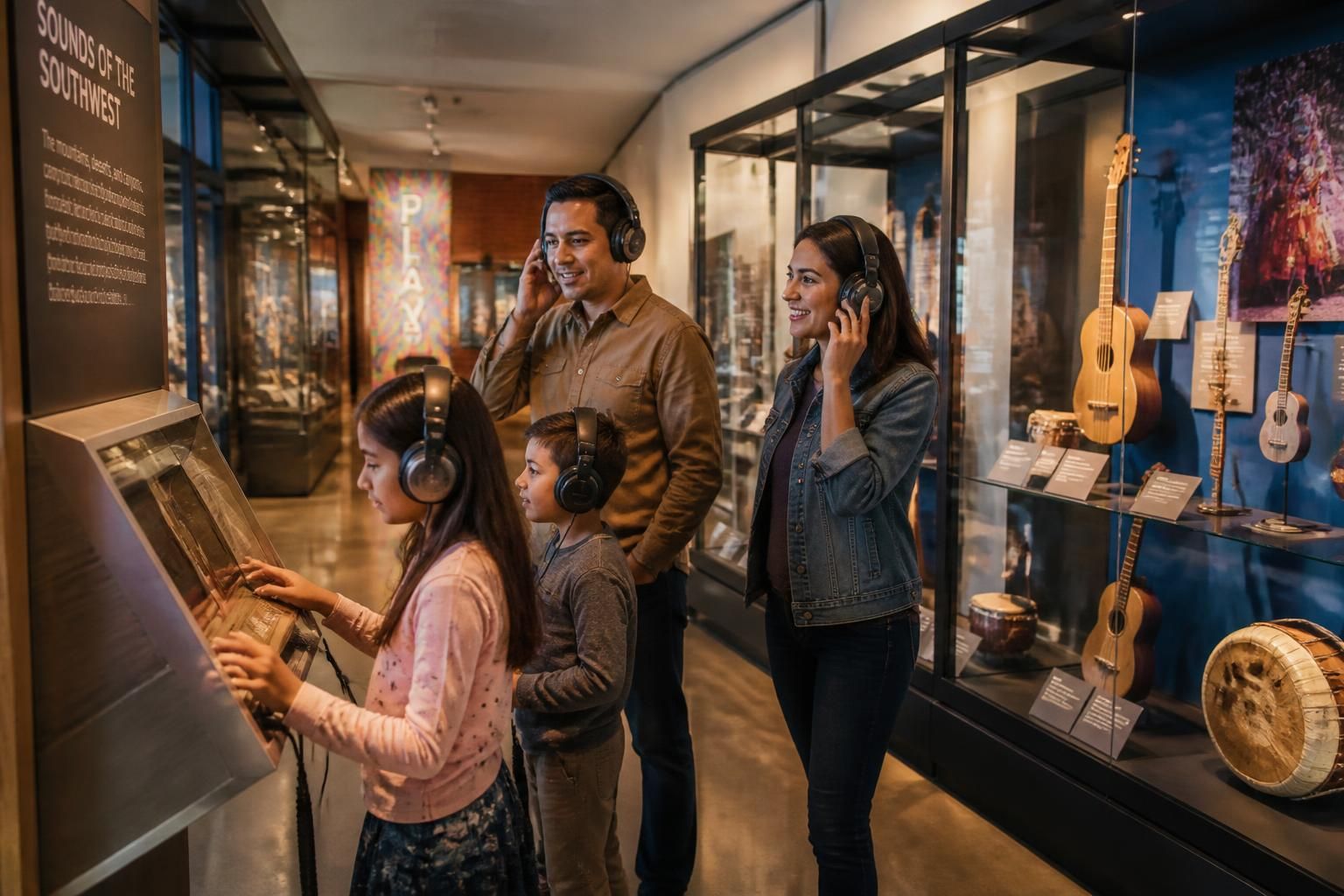
MIM’s strongest visitor advantage is that it does not rely solely on labels. Music is an art form that must be heard to be fully understood, and the museum’s audio and video systems respond to that reality. Guests can see instruments while also encountering the musicians, environments, and performance traditions connected to them. This approach makes the collection more intuitive for children, who may not yet have the vocabulary to interpret an instrument’s technical details.
These interactive exhibits are not interactive merely because they use screens or headphones. Their value lies in the connection between object and context. When a child sees a stringed instrument and then watches it being played in its cultural setting, the instrument becomes more than an unfamiliar shape. It becomes part of a human activity: dancing, storytelling, worship, celebration, or collective performance.
The Experience Gallery is particularly relevant for families because it allows guests to engage with instruments directly. Hands-on participation changes the learning dynamic. A child who strikes a drum, plucks strings, or experiments with a keyboard gains a basic understanding of cause and effect: hand movement creates vibration, vibration creates sound, and sound can be organized into rhythm or melody.
That simple discovery is important. Museums sometimes offer interactive stations that feel disconnected from the main galleries, but a music-focused environment can create a natural bridge between observing and doing. A child may first watch a performer playing a percussion instrument in a video, then later experiment with a related sound-making principle in a participation space. The experience has continuity.
| Visitor need | MIM feature | Family benefit |
|---|---|---|
| 🎧 Short attention span | Audio and video moments near displays | Children receive quick context without reading long text panels. |
| 🥁 Need for participation | Experience Gallery instruments | Hands-on play supports active, memorable learning. |
| 🌍 Curiosity about the world | Collections spanning 200+ countries and territories | Families can compare traditions through a familiar language: music. |
| 👪 Different ages in one group | Multiple ways to explore each gallery | Each visitor can engage at a comfortable level and pace. |
For cultural venues, MIM also provides a useful lesson in visitor experience design. Technology should not become a distraction from collections. It should clarify what an object means and reduce barriers to engagement. Audio is especially effective because it does not require guests to stare constantly at a screen. Visitors can keep looking at an instrument while listening, which preserves the physical presence of the artifact.
This is a principle that can also support guided tours. Smartphone-based audio systems can help groups hear explanations clearly without surrounding a guide or competing with ambient noise. In a museum setting, the most useful tools are often those that make interpretation feel easier rather than more technical. Families notice the result: fewer moments of confusion and more opportunities to talk about what they have just discovered.
A useful family prompt is to ask children, “What sound do you think this instrument makes?” before activating an audio example. After listening, ask whether the sound matched their expectation. This turns a brief exhibit stop into a small observation exercise without making the visit feel like homework.
The most effective museum technology does not replace human curiosity; it gives curiosity a clearer path. That path becomes even richer when a visit is connected to MIM’s programs and live events.
Family Activities at MIM Create an Educational Cultural Experience Beyond the Galleries
MIM extends its value beyond permanent displays through programs that give families a reason to return. Its calendar of Signature Events celebrates music and cultures from around the world with activities that may include performances, instrument-related crafts, demonstrations, and workshops. For parents, this format makes planning easier: a museum visit can become a complete cultural outing rather than a short stop between other Phoenix activities.
The museum also offers MIMkids programming tailored to different age groups. Mini Music Makers is designed for children from birth through age five, while Musical Adventures serves children ages six through ten. Junior Museum programming gives older children further ways to deepen their connection with the collection and cultural themes. Age-aware design is important because the same format does not work equally well for a toddler, an elementary-school student, and a teenager.
For younger children, an effective session may focus on repetition, rhythm, simple movement, and recognizable patterns. A child can clap along, identify fast and slow sounds, or notice the difference between a high and low pitch. These experiences build confidence. The goal is not early musical mastery; it is helping children understand that listening is an activity they can enjoy and practice.
For school-age visitors, the focus can become more comparative. Why are some instruments made from wood, metal, gourds, or animal skins? How does a community’s landscape influence the materials available? What happens when traditions travel with families moving from one country to another? These questions make the museum educational without forcing a lecture-based format.
A family from Scottsdale, for example, might choose a Signature Event because their ten-year-old has recently started percussion lessons. At the event, the child may encounter rhythmic traditions that differ from the school band repertoire. A younger sibling can join a craft activity, while adults watch a live performance. Everyone remains connected to the same overall theme, yet each person has an age-appropriate entry point.
Live programming also gives collections a sense of continuity. Historical instruments deserve careful preservation, but music itself is living culture. Seeing performers onstage reminds visitors that the traditions represented in galleries are not frozen in time. They continue to evolve, gain new audiences, and influence contemporary artists.
For families seeking reliable local planning information, the MIM guide to things to do in Phoenix offers a useful starting point before selecting a date. Checking the official schedule in advance is especially helpful during school holidays, when special activities, concerts, or family-oriented events may shape the best arrival time.
It is also useful to frame these activities as shared discovery rather than as enrichment assigned only to children. Adults often learn alongside younger visitors when an unfamiliar musical tradition is presented through rhythm, performance, and conversation. This shared learning is one reason the museum works so well for family groups.
🎶 A practical approach is to let each family member choose one activity or gallery theme before arrival. One child may choose drums, another may choose a country or region, and an adult may select an artist instrument. This creates ownership while preventing a visit from becoming overly rigid.
Programs become more meaningful when they invite families to participate together, not simply consume an activity side by side. A comfortable itinerary is the next ingredient that helps turn these opportunities into a smooth day out.
Planning a Comfortable MIM Visit for Families in Phoenix, Arizona
A successful day at MIM starts with realistic expectations. The museum is substantial, with a collection that can easily fill several hours. Families do not need to see every object to have a rewarding experience. In fact, trying to cover everything too quickly can reduce the enjoyment of the strongest galleries, audio moments, and participatory spaces.
The most effective strategy is to choose a few priorities before arriving. A family with young children may center the visit on the Experience Gallery, selected country displays, and a scheduled MIMkids activity. Families with older children can allow more time for artist galleries, regional comparisons, and conversations about how music travels across borders.
- 🕒 Check current hours and program times before leaving, especially during weekends, school breaks, and event dates.
- 🎧 Explain the listening system early so children understand that headphones are part of the discovery process, not a restriction.
- 🥤 Plan a break before energy drops instead of waiting until children are already tired or overstimulated.
- 🗺️ Choose three “must-see” moments and treat everything else as optional discovery.
- 💬 Use short questions such as “Which instrument looks hardest to play?” to keep the visit conversational.
Comfort also depends on pacing. Museums can be stimulating environments, particularly when a family encounters many sounds, images, stories, and display cases in succession. Alternating active and quiet moments helps. After a hands-on experience, spend time in a gallery where everyone can simply observe and listen. After a detailed historical display, choose a lighter stop that invites a quick reaction.
This approach supports accessibility as well. A family-friendly destination is not only one that welcomes children; it is one that recognizes different sensory needs, learning preferences, and mobility considerations. Clear routes, predictable rest points, and the ability to select a personalized path make a large museum more manageable for a wider range of guests.
Digital tools can support this planning without overcomplicating it. A smartphone can hold tickets, event details, parking notes, a shared family checklist, and post-visit photos. For organizers and museums, mobile audio platforms such as Grupem demonstrate how guided content can be delivered through visitors’ own devices, reducing the need for complicated hardware while supporting clearer group communication. The key is to use technology in service of the visit, not to add another task for parents.
Families who want to pair MIM with another arts-focused stop can also explore this guide to a top arts museum in Phoenix. Combining cultural sites can work well for visitors staying more than one day, but MIM itself deserves enough time to avoid turning a rich experience into a rushed checklist.
Imagine the Rivera family arriving with two children after lunch. They begin with a short orientation, select one world region each, and agree to meet at the Experience Gallery after exploring nearby displays. Their visit has a structure, but it leaves room for surprise. The older child becomes absorbed by a video performance, while the younger child talks about an instrument shaped unlike anything seen at school.
A family museum day works best when the itinerary creates room for attention, rest, and unexpected discovery. Once the visit has been paced well, the museum’s worldwide collection can become a powerful setting for lasting conversation.
How MIM Connects Global Music, Curiosity, and Meaningful Learning
MIM’s central achievement is its ability to make a large international collection feel personal. A display may represent a country a child has never visited, but music provides an immediate point of contact. Rhythm can be felt physically. Melody can be recognized emotionally. Performance can communicate meaning even when lyrics are in an unfamiliar language.
This is why a museum focused on musical instruments can be particularly effective for family learning. Geography, history, craftsmanship, migration, religion, and popular culture can all be explored through a single object. A guitar may lead to a conversation about materials and sound production. A ceremonial drum may open discussion about community roles. An artist instrument may encourage questions about recording, performance, and cultural influence.
The collection’s scale gives these conversations depth. MIM is described as one of the world’s largest museums dedicated to musical instruments, and its holdings include thousands of instruments and associated items. Families should see this scale as an invitation to compare rather than as a demand to absorb everything. Notice how different communities solve similar musical problems: creating volume, keeping time, changing pitch, or carrying sound across a gathering.
A useful observation exercise is to choose two instruments from different regions that appear to have a similar role. They might both be plucked string instruments, flutes, or drums. Then compare their materials, shapes, performance posture, and sound. This helps children understand that cultures are distinct without presenting them as disconnected. Music reveals both diversity and shared human creativity.
The museum’s relevance also reaches beyond family leisure. Teachers can use a visit to support classroom themes in social studies, science, art, language, and geography. Tourism professionals can study its visitor flow and interpretive methods. Cultural organizations can examine how object-based storytelling becomes more accessible when paired with thoughtful sound design and short-form media.
For example, a school group preparing to study migration can begin with a discussion of how songs and instruments move with people. During a MIM visit, students may encounter instruments connected to diaspora communities or music genres shaped by multiple cultural traditions. Back in the classroom, they can map routes, identify influences, and discuss how identity is preserved and transformed through sound.
The visitor experience also demonstrates a key lesson for museums in 2026: digital interpretation is most useful when it supports attention to physical heritage. Screens, headphones, and video clips should not compete with real objects. At MIM, they can help visitors recognize why an instrument matters, how it is played, and what role it serves. The object remains the anchor.
Families can continue this learning after leaving. Ask each person to name one sound they remember, one country or culture they want to learn more about, and one instrument they would like to try. These simple prompts turn a day trip into an ongoing conversation and help children retain more than a few visual impressions.
MIM stands out because it makes global music approachable without flattening its cultural meaning. Its mix of collection depth, listening technology, hands-on discovery, and age-aware programming explains why it remains one of Arizona’s most compelling family destinations.
Why is MIM considered family-friendly?
MIM combines global instrument displays with audio, video, hands-on opportunities, age-specific MIMkids programs, and family events. These formats give children and adults several accessible ways to engage with music and culture.
What age groups can enjoy the Musical Instrument Museum?
The museum can work for toddlers, school-age children, teenagers, parents, and grandparents. Mini Music Makers is intended for ages 0–5, Musical Adventures serves ages 6–10, and other programs provide options for older children.
How long should families plan for a MIM visit?
A few focused hours can provide a satisfying visit, especially when families select priority galleries and include time for breaks. Guests who want to explore more deeply may choose to stay longer.
What makes MIM educational for children?
The museum links instruments to real performances, cultural settings, geography, craftsmanship, and history. Children can listen, observe, compare, and in selected spaces make music themselves.
