
Peu de temps ? Voici l’essentiel à retenir :
- ✅ The White House report critically examines how Native American history is represented at the Smithsonian, highlighting concerns about narratives focusing on oppression versus national achievements.
- ✅ The report calls for increased accountability and a shift toward emphasizing American exceptionalism in federally supported museums.
- ✅ Missteps to avoid include neglecting diverse perspectives and relying heavily on land acknowledgements and themes of dispossession without balance.
White House Report Highlights Controversy Over Native American History at Smithsonian Museums
The White House’s recent comprehensive report scrutinizing the Smithsonian Institution’s portrayal of Native American history has sparked significant debate among cultural institutions and political circles alike. Released amid the nation’s 250th anniversary celebrations, the report underlines the federal administration’s directive to realign museum narratives with a vision emphasizing American exceptionalism rather than contentious historical themes.
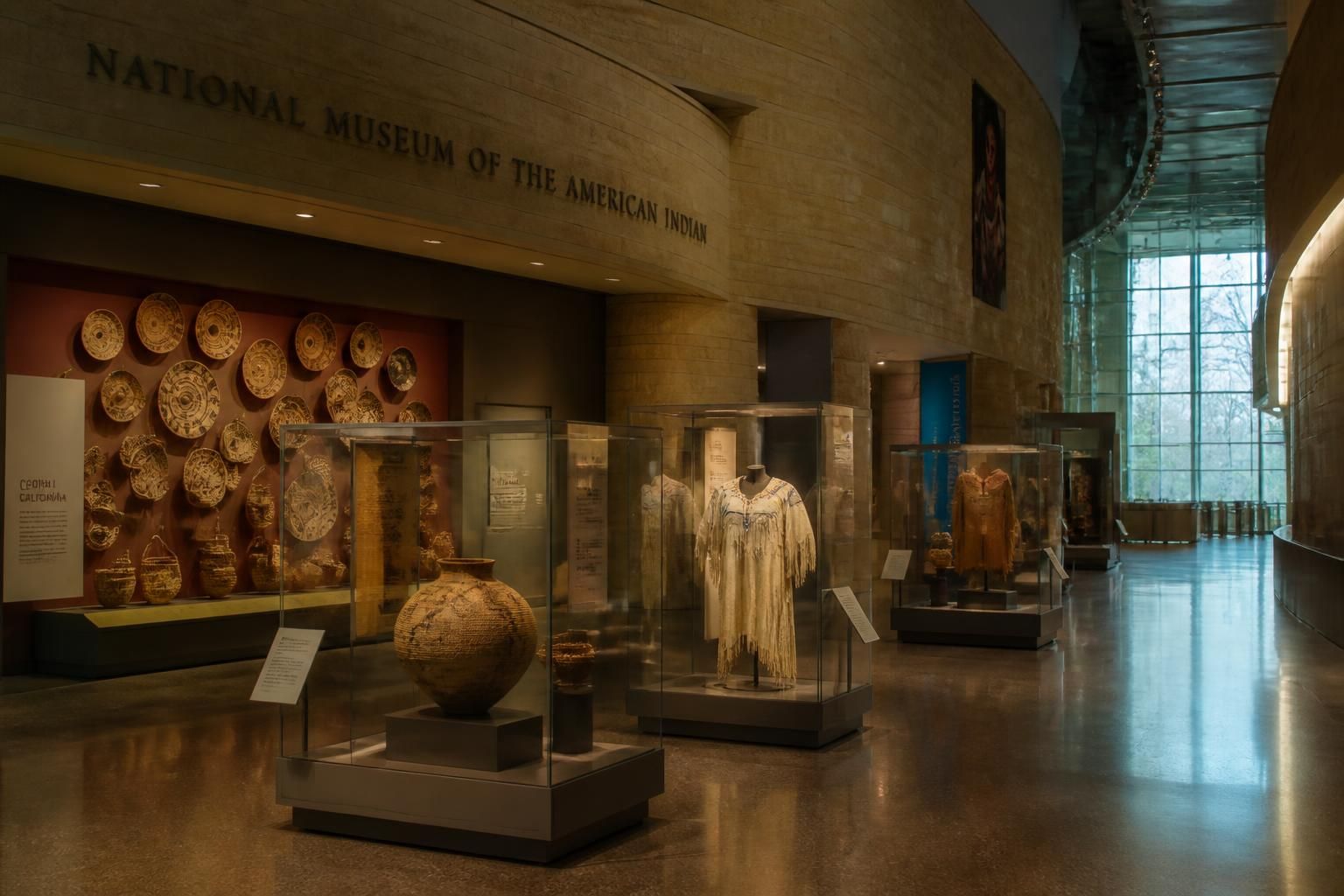
This report arises from Executive Order 14253, signed in late March 2025, mandating the review of exhibits, educational programs, and policies across eight Smithsonian museums, notably the National Museum of American History (NMAH) and the National Museum of the American Indian. These reviews focus on identifying “divisive” or “ideological” content deemed inconsistent with the administration’s cultural directives. This strategic move reflects a heightened sensitivity within political leadership to how cultural heritage and history are presented to the public.
One of the White House’s key critiques focuses on the National Museum of the American Indian’s Nation to Nation exhibition, which frames the history of the United States and Native nations as a narrative of sacrifice and dispossession. The introductory video, for example, points out that the rise of the United States came at the expense of numerous Native communities. This perspective has been characterized in the report as emphasizing oppression disproportionately, potentially overshadowing founding ideals.
Furthermore, the report specifically targets impactful exhibits and videos such as Suzan Shown Harjo’s The ‘Indian Problem’, wherein Harjo addresses forced removals of Indigenous populations as a form of genocide. Harjo, a distinguished curator and Presidential Medal of Freedom recipient, underscores the harsh realities faced by Native Americans during nation-building, bringing forth difficult truths that the report claims contradict a celebratory national historic narrative.
This critique extends to museum practices such as “land acknowledgements,” which recognize Indigenous peoples as the original inhabitants of certain territories. The White House report argues such acknowledgements contribute to a framing of American history that prioritizes themes of racial injustice, dispossession, and historical grievances over positive national accomplishments. The tension between these interpretations and traditional patriotic narratives lies at the heart of the public discourse on cultural representation.
Assessing Accountability and Representation in Museum Narratives of Native American History
Accountability in cultural heritage institutions is a growing area of focus amid calls to ensure balanced historical representation. The Smithsonian, as a preeminent public museum complex, holds significant responsibility in curating narratives that reflect both historical accuracies and the diverse perspectives of America’s peoples.
The White House report recommends increased oversight, highlighting specific Smithsonian leadership figures such as Monique Chism, Under Secretary for Education, and Anthea Hartig, Director of the NMAH, for their roles in embedding land acknowledgements in official programming. According to the critique, these practices symbolize a broader institutional acceptance of narratives the report finds politically charged.
However, such calls for accountability must be contextualized within the museum sector’s evolving standards for inclusivity and representation. Museums today not only preserve artifacts but serve as platforms for dialogue and education, where complex histories require conscientious curation. The challenge lies in balancing historical truth with a cohesive national story that resonates with visitors.
Best practices in museum curation involve:
- 🎯 Inclusive storytelling that respects Indigenous voices and cultural authenticity.
- 🎯 Transparent engagement with contested historical narratives.
- 🎯 Sustainable partnerships with tribal communities to co-develop exhibits.
- 🎯 Leveraging modern smart tourism technologies, like audio guides, to provide nuanced perspectives.
For example, integrating smart audio solutions into museum visits enables visitors to access layered content, offering both traditional and corrective viewpoints. This approach enriches the visitor experience while fostering critical thinking without politicizing the content artificially.
Impact of the Report on Smithsonian Exhibitions and Native American Cultural Heritage
The White House report’s release has initiated a palpable shift in how Smithsonian exhibitions addressing Native American history are approached. Emphasizing a perceived need to celebrate “American exceptionalism,” the directives encourage museums to reconsider narratives that foreground land dispossession, forced removal, and systemic inequalities.
The report’s calls align with the administration’s broader objective to reshape cultural institutions in a way that supports national unity and pride, but this has generated significant pushback from historians, Indigenous leaders, and scholars.
Key tensions emerge around the following points:
| ⚠ Aspect | 📌 White House Perspective | 📚 Academic/Native Perspective |
|---|---|---|
| Representation of Native History | Focus on positive achievements of the United States and downplaying narratives of oppression. | Emphasis on historical realities of land loss, treaty violations, and cultural survival. |
| Use of Land Acknowledgements | Seen as undermining patriotism and national unity. | Recognized as important acts of respect and reconciliation. |
| Exhibit Content Direction | Pressure to align exhibits with a patriotic framework. | Advocacy for truthful, comprehensive storytelling including Indigenous voices. |
| Institutional Accountability | Calls for leadership to remove ideological bias in programming. | Support for collaborative governance with tribal input to ensure authenticity. |
These contrasting views signal that Smithsonian museums are at a cultural crossroads with significant implications for Native American cultural heritage preservation and interpretation. The friction illustrates the challenge of addressing complex histories within federally funded institutions without alienating stakeholders.
Shifts in Museum Practices Amid Political and Cultural Pressures on Native American History
Smithsonian museums are navigating unprecedented political and social pressures that affect exhibit curation and educational programming. These pressures stem not only from the White House’s directives but also from increasing public demand for museums to serve as authentic witnesses to historical truths and facilitators of cultural understanding.
Under scrutiny, curators and museum leadership must balance these sometimes competing demands by adopting transparent strategies that respect the cultural sensitivity inherent in Native American history. Key strategic shifts include:
- 🛠 Prioritizing collaborative exhibit development with Native communities to maintain cultural authority and voice.
- 🛠 Enhancing visitor engagement through innovative technology such as smart audio guides that allow personalized exploration of sensitive topics.
- 🛠 Revising narrative frameworks to present multifaceted histories that go beyond simplified patriotic or victimhood narratives.
- 🛠 Implementing accountability measures to document decision-making processes related to exhibit content and programming.
For instance, utilizing smart audio technology, as offered by Grupem’s platform, museums can tailor the delivery of content to accommodate diverse visitor perspectives, promoting a more equitable and immersive educational experience.
This evolving practice ensures cultural heritage is neither diminished by politicization nor oversimplified for broader appeal. It recognizes the responsibility cultural institutions hold in mediating history responsibly for contemporary audiences and future generations.
Improving Smithsonian’s Native American History Exhibits through Smart Tourism and Technology
Integrating smart technologies such as Grupem’s advanced audio systems offers promising pathways for Smithsonian museums to enhance both accessibility and depth in presenting Native American history. Smart tourism solutions allow curators and educators to layer complex narratives within a unified exhibition space effectively.
Benefits of incorporating these technologies include:
- 🎧 Enhanced accessibility for diverse audiences, including multilingual audio guides.
- 🎧 Ability to present multiple perspectives side by side, aiding critical reflection.
- 🎧 Real-time updates and content customization to address current socio-political sensitivities.
- 🎧 Greater visitor autonomy in navigating exhibits according to interest and cultural background.
Some museums have successfully implemented smart audio tours that combine expert commentary with oral histories from Indigenous communities, thereby fostering authentic representation and deeper engagement.
Moreover, embedding interactive digital content encourages visitors to confront complex themes such as land rights, treaty history, and cultural resilience within a neutral yet informative framework. This approach mitigates potential ideological disputes by prioritizing educational value and user experience.
In practical terms, museums can start by piloting smart guides during special exhibits or key anniversaries, thereby collecting data on visitor engagement and refining content accordingly. The Smithsonian’s adaptation to these innovations could serve as a benchmark for federally supported museums nationwide.
| 🔧 Feature | 🌟 Benefit | 📈 Impact on Visitor Experience |
|---|---|---|
| Multilingual Audio | Broader audience reach | Increased inclusivity and understanding among diverse visitors |
| Layered Content | Multiple viewpoints presented | More nuanced understanding of Native American history |
| Interactive Elements | Engagement with cultural narratives | Enhanced emotional connection and learning retention |
| Real-time Updates | Current and relevant information | Maintains topicality and avoids outdated content conflicts |
What prompted the White House to review Smithsonian’s Native American exhibits?
The review was ordered following Executive Order 14253 aimed at ensuring federally supported museums align with a focus on American exceptionalism, criticizing what it described as divisive historical narratives.
Why is the ‘land acknowledgment’ practice controversial in this context?
While land acknowledgements recognize Indigenous peoples as original land inhabitants, critics argue they emphasize dispossession and complicate patriotic narratives, which has fueled the report’s critique.
How can smart tourism technologies improve visitor experiences regarding Native American history?
Smart audio guides and interactive digital content offer layered storytelling, multiple perspectives, and personalized options that enrich understanding without politicizing the material.
What roles do Native American leaders and historians play in Smithsonian exhibits?
They provide critical perspectives, cultural authority, and collaborate on content to ensure authenticity and respect for Indigenous histories.
